 Bellingham Siding
 What "Primed Wood Siding" Actually Is
When people say "primed wood siding," they usually mean solid wood boards — cedar, pine, fir, or finger-jointed spruce — that have been coated with a factory or job-site primer before installation. The primer is meant to seal the wood and give paint something to grip. It is not a finished, weatherproof surface. It is a base coat, and the finished performance of the siding depends almost entirely on what happens after it goes on the wall: how well it's caulked, how soon it gets a topcoat, and how it's maintained for the next twenty or thirty years.
This is different from engineered wood products like LP SmartSide, which use resin-treated strand board with a factory finish, and different again from fiber cement, which contains no wood fiber susceptible to rot at all. Plain primed wood is the oldest and, in some ways, the most honest siding material on the market — it is what it looks like. That honesty is also where its problems start.
Why Homeowners Still Consider It
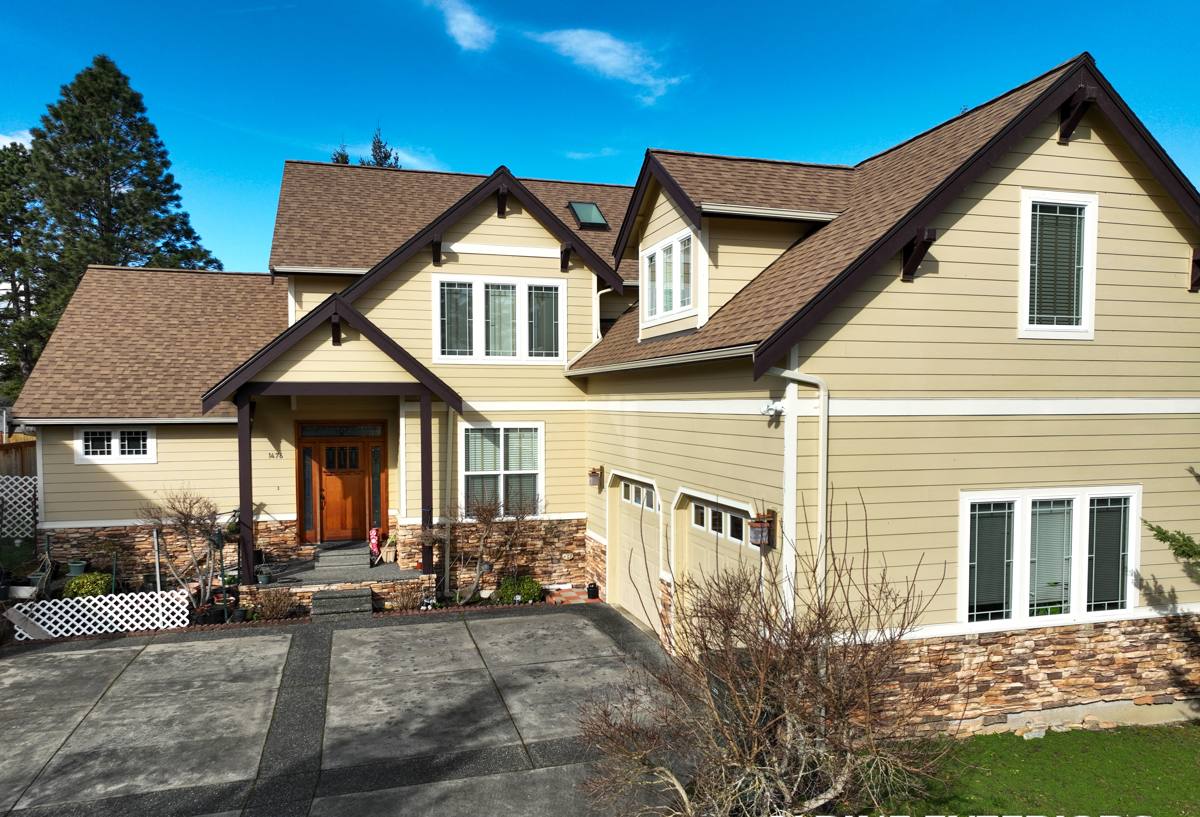
We still get asked about primed wood siding regularly, and there are real reasons for that. It has a warm, authentic look that some homeowners feel manufactured products can't fully replicate, especially on older Bellingham homes in neighborhoods like Fairhaven or the York district where wood siding is part of the original character. It's also often the lowest material cost per square foot at the lumber yard, which makes it attractive on paper before installation and maintenance costs are factored in.
Some homeowners also inherit wood siding on a house they've purchased and want to patch or extend it rather than replace the whole elevation. That's a reasonable instinct — matching existing material can make sense for a small repair. It's a different decision than choosing wood siding new, for a whole house, in Whatcom County's climate.
What Primed Wood Gets Right
We're not going to pretend wood siding is a bad product with nothing going for it. In fairness:
- Repairability: A damaged board can often be cut out and replaced without disturbing the whole wall, which isn't always true of other siding systems.
- Refinishing flexibility: You can change color completely with a new coat of paint whenever you want, without replacing the material.
- Authentic texture: Real wood grain reads differently than any manufactured texture, and some architectural styles genuinely call for it.
- Lower upfront material cost: Raw primed boards are typically cheaper per square foot than fiber cement or engineered products before labor and lifecycle costs are considered.
These are legitimate advantages. Where wood siding runs into trouble is not the material itself in a dry climate — it's what happens to that material here, on the wet side of the Cascades, a few miles from salt water.
Bellingham's Climate: Salt Air, Driving Rain, and a Long Moss Season
Salt Air
Homes anywhere near Bellingham Bay or the Salish Sea coastline deal with a low, steady dose of airborne salt. Salt is hygroscopic — it pulls moisture out of the air and holds it against whatever surface it lands on. On primed wood, that means the paint film and the primer coat underneath it are under more constant moisture stress than they would be inland. Fasteners and any exposed metal flashing corrode faster too, which matters because failed flashing is one of the most common paths water takes into a wood-sided wall.
Driving Rain
Whatcom County doesn't just get a lot of rain — a good portion of it arrives sideways, pushed by wind off the Strait of Georgia and the Sound. Driving rain finds every gap in a wood siding installation: hairline cracks in caulk, nail holes that weren't sealed, butt joints where two boards meet. Wood siding depends on its paint film and caulking to keep that water out, and both degrade faster under wind-driven rain than under straight-down rain.
A Long Moss Season
Bellingham's tree cover and shaded lots mean moss and algae have a long growing season on north-facing and shaded walls — often nine months of the year or more. Moss doesn't just look bad on wood siding; it holds moisture directly against the surface for extended periods, which accelerates paint failure and, eventually, wood decay underneath. On a home shaded by mature evergreens, which describes a lot of Bellingham lots, this is a year-round maintenance factor, not an occasional one.
The Maintenance Reality Homeowners Don't Always See Coming
Primed siding is, by definition, unfinished. The primer coat is meant to be topcoated with real paint within a matter of weeks, not months — manufacturers are usually specific about this window, and missing it lets UV and moisture start breaking down the primer before the finish coat ever goes on. After that, the ongoing maintenance schedule looks something like this:
| Task | Typical Interval in Bellingham's Climate | Why It Matters Here |
|---|---|---|
| Full repaint | Every 5-8 years (often sooner on south/west walls, shaded sides may vary) | Sun and driving rain break down the paint film unevenly across exposures |
| Caulk inspection and touch-up | Annually | Wind-driven rain exploits any caulk failure at joints and trim |
| Moss and algae removal | 1-2 times per year on shaded walls | Long moss season holds moisture against the surface |
| Spot repair of soft/rotted boards | As discovered, often at butt joints and bottom courses | Once paint film fails, wood is exposed to constant regional moisture |
None of this is unusual for wood siding anywhere — it's simply what wood siding requires. The difference in Bellingham is that the climate compresses the maintenance calendar. A repaint cycle that might stretch to ten or twelve years in a drier region often needs attention closer to five to eight here, and skipping a cycle has faster consequences.
How Primed Wood Actually Fails
When we've replaced failed wood siding, the pattern is usually the same regardless of the specific wood species. It's rarely a dramatic, obvious failure — it's a slow one:
- Paint film thins and cracks at the most exposed points first: south and west walls, butt joints, and anywhere end grain is exposed.
- Water gets behind the paint film at those crack points and is held there by caulk that's still mostly intact, which traps moisture rather than shedding it.
- The wood underneath begins to swell, cup, or soften, usually starting at the bottom edge of a board or at a butt joint.
- By the time soft wood is visible or a board is clearly failing, moisture has often been working on it from behind for a season or more.
This is why wood siding failures often look sudden to a homeowner — a soft spot appears seemingly overnight — when in fact the moisture pathway had been open for a long time. It's also why patch repairs on old wood siding sometimes fail again within a couple of years: the repair addresses the visible board, not necessarily the flashing or caulking detail that let water in to begin with.
Cost Over the Life of the Siding
Material cost at purchase is only part of the picture. When we walk homeowners through the real cost of ownership, we look at labor for repainting, spot repairs, and the risk of hidden moisture damage over a comparable ownership period:
| Factor | Primed Wood Siding | James Hardie Fiber Cement |
|---|---|---|
| Upfront material cost | Lower | Moderate to higher |
| Finish | Field-applied paint required soon after install | Factory-baked ColorPlus finish, no immediate paint needed |
| Repaint cycle | Roughly every 5-8 years in this climate | ColorPlus finish typically holds well beyond 10-15 years before repainting is considered |
| Moisture/rot risk | Ongoing, tied to paint film condition | Non-combustible fiber cement is not susceptible to rot |
| Warranty structure | Varies by lumber source; often limited or none on the material itself | Manufacturer-backed, transferable limited warranty |
Over a fifteen- to twenty-year ownership window, the repainting labor alone on wood siding often equals or exceeds the difference in upfront material cost compared to fiber cement — and that's before accounting for any moisture-related repairs.
Why We Install James Hardie Instead
We made a decision as a company to stop installing primed wood siding, along with several other products, and put James Hardie fiber cement on every home we side. It comes down to matching the product to this specific climate rather than to what's cheapest at the yard or most familiar to a homeowner. Hardie's fiber cement is non-combustible, doesn't feed moisture-driven rot the way wood fiber does, and comes with a factory-applied ColorPlus finish baked on under controlled conditions — not a field-applied primer that depends on the weather cooperating during installation week.
Hardie also engineers specific product lines, including HZ formulations, for regions with exactly the kind of moisture exposure Whatcom County sees. Combined with a strong transferable warranty, that means we can install one system, install it correctly to spec, and stand behind it without asking a homeowner to commit to a repainting schedule dictated by our local weather. We'd rather have that conversation honestly upfront than sell wood siding and see a homeowner back in five years with a maintenance bill they didn't budget for.
A Quick Checklist Before You Commit to Wood Siding
If you're still weighing wood siding for a Bellingham home — new construction, a repair, or a full re-side — these are the questions worth answering honestly before you commit:
- Is the wall shaded for a significant part of the day, and will moss be a realistic ongoing issue?
- Are you prepared for a repaint cycle roughly every 5-8 years, including the labor cost of scaffolding or lifts on a two-story wall?
- Who is inspecting and re-caulking joints annually, and is that realistically going to happen?
- Does the product come with a real material warranty, or does the warranty apply only to the finish coat you apply yourself?
- Have you priced the total cost of ownership over 15-20 years, not just the material cost at installation?
- Is the wall exposed to prevailing wind and driving rain off the Sound, or relatively sheltered?
If you're weighing your options for a siding project in Bellingham, we're happy to walk your home, look at your specific exposures, and give you a straightforward, no-pressure estimate — including an honest comparison of what different materials would actually cost and require over time.