 Bellingham Siding
 Why Siding Quotes Vary So Much
Ask three contractors to price the same Bellingham home and you'll often get three different numbers, sometimes a long way apart. That's not because someone is padding the bid or someone else is cutting corners — siding pricing is genuinely made up of several moving parts, and every home mixes them differently. Understanding those parts is the fastest way to tell a fair quote from a lowball number that's going to grow once the crew shows up.
This page walks through what actually moves the price on a siding replacement in Bellingham and Whatcom County, without pretending we can hand you a fixed number sight unseen. Nobody honest can do that over the phone.
The Big Four Cost Drivers
Almost every siding estimate comes down to four things: how much wall area you're covering, what's involved in removing what's already there, what material you choose, and how complicated the house is to work around.
Square Footage and Wall Complexity
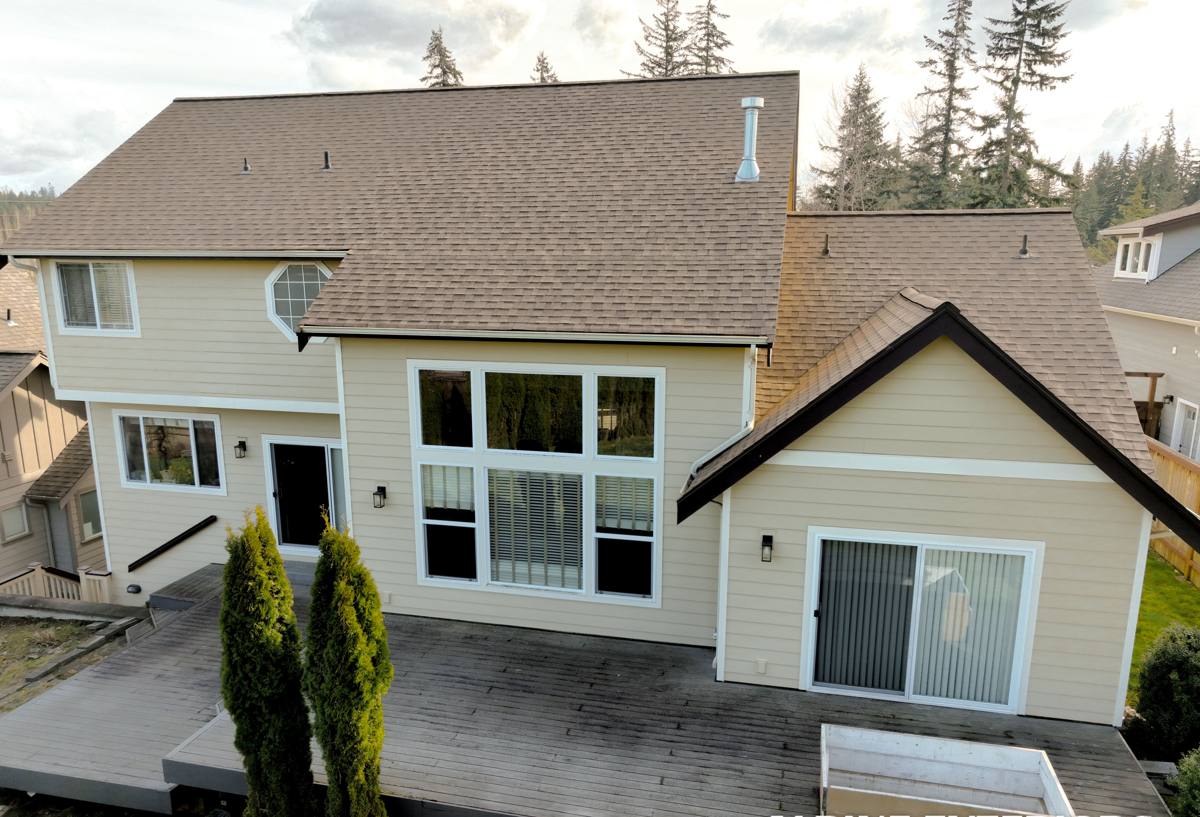
Total siding area is the starting point, but a simple rectangular ranch and a house with dormers, bump-outs, and a lot of trim can have similar square footage and very different labor hours. Cutting around windows, corners, gables, and roof intersections takes time no matter what material you pick, and more cuts means more waste and more precision work.
Stories and Access
Second-story and steep-lot homes need scaffolding or lift equipment, which adds cost before a single board goes up. Bellingham's hillside neighborhoods and lots with limited side-yard access can turn a straightforward job into one that needs extra staging time.
Tear-Off vs. Overlay
One of the biggest swings in price is whether the old siding comes off or stays in place.
- Full tear-off: Removes the old siding down to the sheathing, lets the crew inspect and repair any hidden rot or water damage, and gives the new siding a clean, flat surface. Costs more upfront but is the only way to actually know what's behind the wall.
- Overlay: New siding goes over the old material. Cheaper and faster, but it traps whatever moisture or damage is already there, and it's a poor fit for a wet climate like ours. We don't recommend it, and it's not something we install.
In a region that sees as much driving rain as Whatcom County, sheathing condition matters more than in drier climates. If a contractor is quoting an overlay to save you money, ask what happens to any rot that's already hiding under the old siding — because it's still there, just covered up again.
Material Choice
Material is where the biggest cost differences show up, both in the sticker price and in what you'll spend over the next 20 years. Here's a straightforward comparison of the products homeowners in this area usually ask about.
| Material | Relative Upfront Cost | Maintenance | How It Handles a Wet, Salt-Air Climate |
|---|---|---|---|
| Vinyl | Lowest | Low, but fades and can crack in cold | Doesn't rot, but seams and gaps let moisture behind the panel; can warp near heat sources |
| Primed wood or spruce | Low to moderate | High — repainting on a regular cycle | Absorbs moisture readily; vulnerable to rot without diligent upkeep |
| LP SmartSide (engineered wood) | Moderate | Moderate — factory or field finish needs monitoring at cut edges and seams | Engineered to resist moisture better than raw wood, but any breach in the finish exposes wood fiber to swelling |
| Cedar | Moderate to high | High — staining or sealing every few years | Naturally rot-resistant species, but still an organic material that needs upkeep in a wet, mossy environment |
| James Hardie fiber cement | Moderate to higher | Low — factory ColorPlus finish, no repainting cycle for years | Non-combustible, engineered moisture and climate resistance, holds up well to salt air and sustained rain when installed to spec |
The lowest number on a quote is almost always the lowest-cost material, not the lowest lifetime cost. Vinyl and unfinished wood products can look competitive on day one and then cost you in recaulking, repainting, or early replacement by year twelve or fifteen. That's the trade-off worth weighing, not just the invoice total.
Why Bellingham's Climate Belongs in the Cost Conversation
Whatcom County sits right on Bellingham Bay, and that proximity to salt water is part of the equation whether you notice it or not. Salt-laden air accelerates corrosion on fasteners and metal trim, and it's harder on finishes that weren't engineered for a marine environment. Add in a rainy season that runs long and heavy, and moss that gets a real foothold on north-facing walls and anything shaded by trees, and you've got a climate that's genuinely tougher on siding than a lot of the country realizes.
That's why the material conversation isn't just about looks or budget — it's about what's actually going to survive out here. A product that performs fine in a dry inland climate can struggle here, and a contractor who's only worked in milder conditions may not price in the extra prep, flashing, and finish quality that this region demands.
Labor, Permits, and Prep Work
Beyond material and tear-off, a fair quote should account for:
- Sheathing repair or replacement if rot is found during tear-off
- House wrap or weather-resistive barrier, correctly lapped and taped
- Flashing at windows, doors, and roof-to-wall intersections — this is where most water intrusion actually starts
- Trim, corner boards, and caulking details
- Disposal of the old material
- Permit fees, which vary depending on scope and whether the City of Bellingham or Whatcom County has jurisdiction over your address
Skimping on any of these to hit a lower number is the most common way a siding job fails early. The siding itself is often the smallest risk in the system — the flashing and water management behind it is what actually keeps a wall dry.
Finish: Factory-Applied vs. Field-Painted
A factory-applied finish, like the ColorPlus system used on Hardie products, is baked on under controlled conditions and backed by its own warranty. Field-painted siding — whether it's primed wood, cedar, or site-painted fiber cement — depends on weather conditions during installation and the quality of the paint crew, and it starts a repainting clock that a factory finish doesn't.
What a Realistic Estimate Should Include
When you're comparing bids, don't just look at the bottom-line number. A trustworthy estimate should spell out:
- Tear-off vs. overlay, stated explicitly
- The exact material and product line, not just "fiber cement" or "engineered wood"
- Whether sheathing repair is included or billed as a change order if damage is found
- What underlayment and flashing details are included
- Whether the finish is factory-applied or field-painted, and what that finish is warrantied for
- Cleanup and disposal
- Timeline, including likely weather delays given our rainy stretches
If a quote is missing several of these, it's not necessarily dishonest — but it's incomplete, and incomplete quotes are where surprise costs come from later.
Why We Standardized on James Hardie
We install James Hardie fiber cement exclusively — no vinyl, no LP SmartSide, no Cemplank, no Allura, no primed spruce, no cedar. That's not a marketing position, it's a practical one built on what actually holds up in this climate over decades, not just the first few years. Hardie's HZ product lines are engineered for regional moisture and temperature conditions, the material is non-combustible, the ColorPlus factory finish removes the repainting cycle that wood and field-painted products carry, and the warranty is transferable if you sell the home. When it's installed to spec — correct flashing, correct fastening, correct clearances — it's the product we've found performs best against everything a Bellingham winter and a salt-air summer throw at a wall.
We won't tell you every other product on the market is bad. Vinyl, LP SmartSide, and cedar each have real strengths and legitimate reasons homeowners choose them elsewhere. We simply won't install products where we think the long-term maintenance burden or moisture performance doesn't match what this climate demands, and we'd rather be straightforward about that than quote something we don't stand behind.
Getting an Accurate Number for Your Home
The only way to get a real cost is to have someone walk your specific house — measure the walls, check the current siding and sheathing condition, and talk through which material fits your budget and your home's exposure. If you'd like a free, no-pressure estimate for your Bellingham home, we're happy to take a look and walk you through the numbers honestly, with no obligation attached.