 Bellingham Siding
 When Siding Damage Raises a Real Question
Every siding problem eventually forces the same decision: patch it, or replace it. For homeowners in Bellingham, that question tends to show up sooner than it does in drier parts of the country. Salt-laden air off the Salish Sea, long stretches of driving rain, and a moss season that can run from October through May all put steady pressure on exterior walls. A small repair that would hold up fine in Eastern Washington can fail again within a year here if the underlying cause isn't addressed.
This page walks through how to tell the difference between a legitimate repair situation and one where replacement is the more honest, cost-effective answer. There's no universal rule — it depends on the material, the age of the siding, and what's happening behind it, not just what you can see from the driveway.
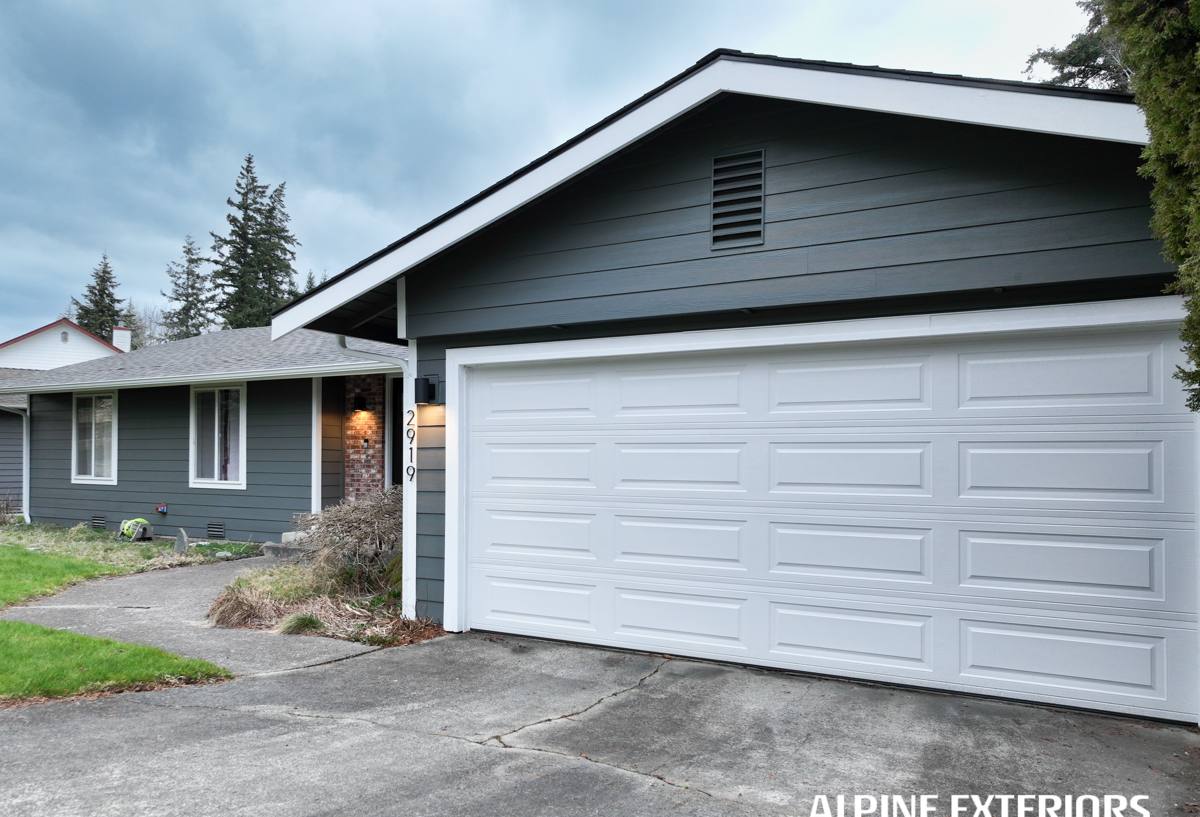
Signs Your Siding Can Still Be Repaired
Repair is a reasonable option when the damage is isolated, recent, and hasn't had time to spread moisture into the wall assembly. Some situations where a targeted repair genuinely makes sense:
- A single panel or board cracked by impact — a fallen branch, a ladder, a lawn tool — with no rot in the area around it
- Caulking failure at trim or seams on siding that is otherwise sound and less than 10-15 years old
- Isolated nail pops or fastener failure on an otherwise stable installation
- Minor color fading or chalking on a small section that doesn't affect the material's integrity
- A recent leak that was caught early, before water tracked down into the sheathing
In these cases, a repair costs a fraction of replacement and can genuinely extend the life of what's already on the house — as long as the rest of the siding is in reasonable shape and the material is one that still takes a repair well.
Where Repairs Get Complicated
Repairs get harder to justify with certain materials. Vinyl siding is difficult to color-match once it's faded, since manufacturers change dye lots and discontinue colors. Cedar and primed spruce that have started to check or cup usually have moisture already inside the wood fiber, so a surface patch doesn't address the actual problem. LP SmartSide with edge swelling is often a sign the factory edge seal has been compromised, and that tends to keep going even after a local repair.
Signs Full Replacement Is the Smarter Call
Replacement becomes the more responsible option once damage is no longer isolated, or once it points to a problem with the material or installation itself rather than a one-time event. Watch for:
- Soft, spongy spots when you press on the siding — a strong indicator of rot or saturated substrate underneath
- Damage repeating in the same areas year after year, especially north- and west-facing walls that take the brunt of Bellingham's weather
- Visible gaps, buckling, or warping across multiple sections rather than one spot
- Persistent moss or algae growth that keeps returning within months of cleaning
- Siding original to a house built more than 20-25 years ago, nearing or past its expected service life
- Any sign that water has reached the house wrap or sheathing — staining, swelling, or a musty smell from inside
The general pattern: if the problem is contained to a small area and recent, repair it. If it's spread out, recurring, or tied to moisture that's already gotten past the surface, replacement is what actually solves the problem instead of deferring it.
Why Whatcom County Weather Speeds Up This Decision
Bellingham's climate isn't uniquely harsh, but it's persistently damp in a way that shortens the window between "small repair" and "needs replacement." A few specific factors matter here:
Salt Air and Driving Rain
Proximity to the water means airborne salt settles on exterior surfaces and accelerates the breakdown of fasteners, caulking, and unprotected wood fiber. Combine that with wind-driven rain common to Whatcom County storms, and water gets pushed into laps, seams, and fastener holes that would stay dry in a calmer climate.
Moss Season
Bellingham's long wet season creates ideal conditions for moss and algae on north-facing and shaded walls. Beyond the cosmetic issue, moss holds moisture against the siding surface for months at a time, which is exactly the kind of sustained dampness that turns a small crack into a rot problem.
Temperature Swings
Even mild freeze-thaw cycles cause repeated expansion and contraction in siding materials, which stresses caulked joints and fastener points. Over years, that cycling is often what turns a tight seam into a gap that lets water in.
Weighing the Cost Factors
Cost is rarely as simple as "repair is cheaper." A repair on a wall with underlying moisture damage can cost more over five years than doing the replacement correctly once. Here's how the two options generally compare:
| Factor | Repair | Full Replacement |
|---|---|---|
| Upfront cost | Lower | Higher |
| Addresses hidden moisture/sheathing damage | No — surface only | Yes — sheathing and house wrap are exposed and can be corrected |
| Color/material match | Often imperfect, especially on older siding | Uniform, new finish across the whole house |
| Expected lifespan added | A few years, depending on cause | Decades, with a proper warranty |
| Risk of recurring issue | Higher if root cause isn't fixed | Low, if installed correctly |
| Best suited for | Isolated, recent, cosmetic damage | Widespread wear, moisture intrusion, aging material |
The honest answer for a lot of homes we look at in Bellingham is that a repair quote and a replacement quote aren't really competing for the same problem — they're solving different problems, and the visible damage doesn't always tell you which one you actually have.
What's Underneath Matters as Much as What's on Top
Siding is the visible layer, but the house wrap, flashing, and sheathing behind it are what actually keep water out of the wall assembly. A contractor who only looks at the siding surface can miss the real issue. When we evaluate a home, part of the job is checking whether water has already reached those layers — because if it has, replacing the siding without addressing what's behind it just sets up the same failure again in a few years.
This is also where a repair-only approach can quietly become the more expensive path. Patching over a wall section with compromised sheathing may look fine for a season or two, but the moisture problem is still there, working on the framing.
If You're Replacing, the Material Choice Matters
When replacement is the right call, the material you choose determines how long the decision holds up. We've installed a lot of siding materials over the years, and at this point we only install James Hardie fiber cement — not because every other product is without merit, but because of specific trade-offs that matter in a climate like ours.
Vinyl
Vinyl is affordable and low-maintenance in mild climates, but it can become brittle in cold snaps, fades unevenly over time, and doesn't hold up as well against wind-driven debris. In a coastal wind environment, that brittleness matters more than it does further inland.
LP SmartSide and Engineered Wood
Engineered wood products have improved over the years, but they remain sensitive to sustained moisture at cut edges and seams — exactly the conditions Bellingham's wet season creates. Once moisture gets into the edge, swelling tends to follow.
Cedar and Primed Spruce
Real wood siding has genuine appeal, but it demands ongoing maintenance — re-staining or repainting on a cycle, and vigilance against moss, rot, and insect activity. In a climate this wet, that maintenance burden is real and recurring, not occasional.
Why We Standardized on James Hardie
James Hardie fiber cement is non-combustible, engineered specifically for high-moisture and coastal climates in its HZ product lines, and comes with a factory-applied ColorPlus finish that resists fading far better than field-applied paint. It doesn't swell at cut edges the way engineered wood can, and it carries a strong transferable warranty when installed to manufacturer spec. For a house that has to stand up to salt air, driving rain, and months of damp shade every year, it's the product we're willing to put our name behind.
How We Evaluate Your Siding
When we walk a property, we're not just looking at whether the siding looks worn. We check moisture readings at suspect areas, look for soft spots and staining that indicate what's happening behind the surface, and consider the age and material of the existing siding against what a repair could realistically accomplish. That assessment is what tells us — and you — whether a repair is a legitimate fix or just a delay before a bigger project.
If you're staring at a section of damaged siding in Bellingham and aren't sure which way to go, it's worth getting a straight, no-pressure look before committing either way. We'll tell you honestly if a repair will hold, and if it won't, what a proper replacement looks like. Reach out for a free estimate using the form below.