 Bellingham Siding
 Fairhaven's Exterior Environment
Fairhaven sits close enough to the water that homes here take on a different kind of weather load than houses further inland in Whatcom County. Salt-laden air off Bellingham Bay works its way into exterior materials year-round, driving rain comes in sideways during fall and winter storms, and the long stretch of gray, damp months between October and April keeps north- and shade-facing walls wet for weeks at a time. On top of that, mature tree cover in and around the neighborhood means moss and algae get a real foothold on siding, trim, and roofing that doesn't dry out quickly between rain events.
None of this is unusual for the Pacific Northwest, but it does mean exterior materials chosen for a home in a drier climate zone, or installed without attention to drainage and ventilation, tend to fail faster here than the manufacturer's marketing suggests. A siding, roofing, window, or deck project in Fairhaven has to be built for this specific environment, not a generic one.
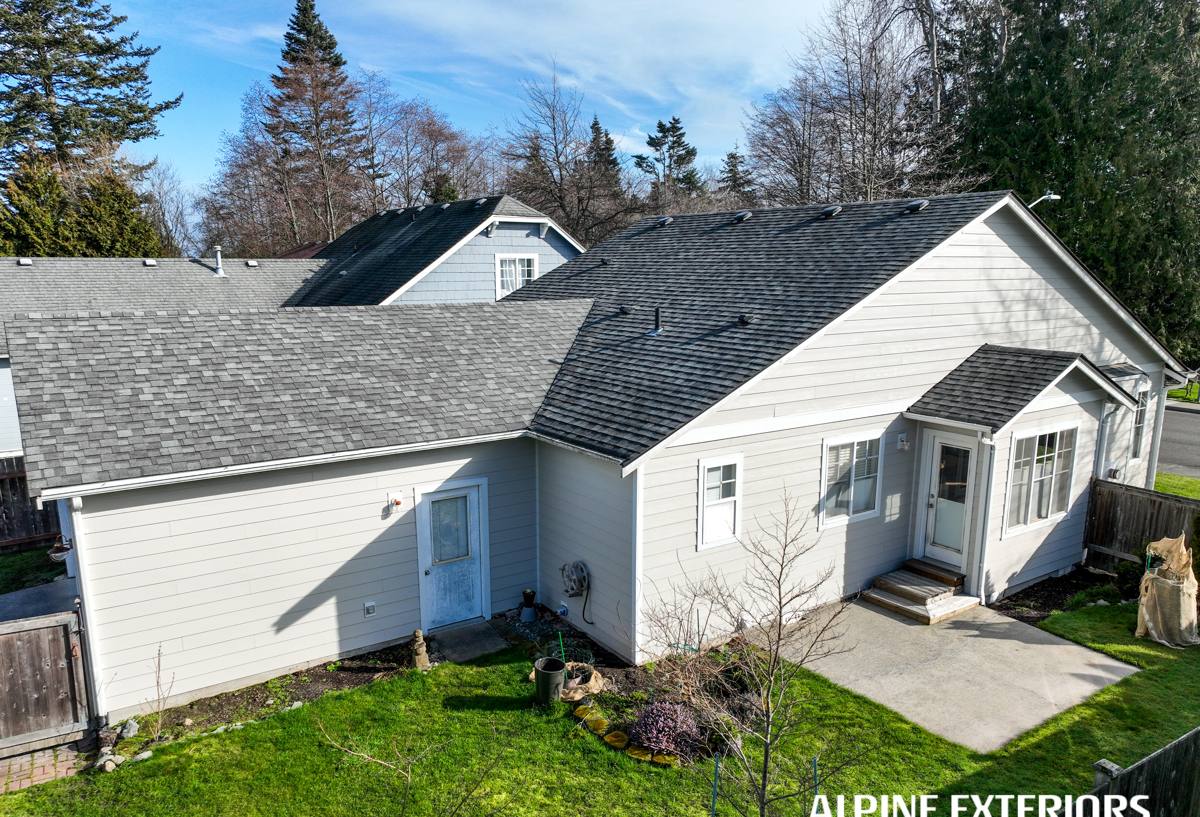
What Salt Air, Rain, and Moss Actually Do to a Home
Salt Air
Airborne salt is corrosive to exposed metal fasteners, flashing, and hardware, and it accelerates the breakdown of finishes that aren't formulated to resist it. On wood-based or wood-look siding, salt exposure combined with moisture speeds up swelling, checking, and paint failure. It's a slower, quieter problem than storm damage, but over a decade or two it adds up.
Driving Rain
Wind-driven rain doesn't just fall on a house — it gets pushed sideways and upward into laps, seams, and trim joints. A wall system that isn't detailed correctly (proper flashing, correct lap exposure, sealed penetrations) will let water behind the cladding eventually, even if the surface material itself is fine. Once water gets behind siding, the sheathing and framing behind it are what actually suffers.
Moss and Sustained Dampness
Shaded, north-facing walls and anything under tree canopy in Fairhaven can stay damp for extended stretches in winter. That's ideal for moss and algae growth, which holds moisture against the surface even longer and can stain or degrade materials that aren't resistant to it. Roofs, in particular, take the brunt of this, but siding and trim in shaded side yards see it too.
Why We Standardized on James Hardie Fiber Cement
We install James Hardie fiber cement siding exclusively. We don't install vinyl, LP SmartSide, Cemplank, Allura, primed spruce, or cedar, and that's a deliberate standard, not an oversight. Each of those products has legitimate uses and reasonable arguments in its favor — but for a marine, high-moisture climate like Whatcom County's, we found the long-term trade-offs didn't hold up as well as fiber cement does.
- Vinyl is inexpensive and low-maintenance but expands and contracts with temperature swings, can warp or crack in impacts, and its appearance is limited by how it's manufactured.
- Wood-based composite and engineered wood siding perform well when maintained on a strict schedule, but they're more sensitive to sustained moisture exposure than fiber cement, which matters in a climate where walls stay wet for days at a stretch.
- Primed spruce and cedar are traditional, attractive choices, but both require ongoing painting, caulking, and moisture vigilance to hold up in a coastal, high-rainfall environment — upkeep that's easy to fall behind on.
James Hardie fiber cement is non-combustible, doesn't swell or rot from moisture the way wood-based products can, and holds its factory-applied ColorPlus finish far longer than field-applied paint. Hardie also engineers specific product lines (its "HZ" designations) for different climate zones, so what we install here is matched to the wet, moderate Pacific Northwest climate rather than a one-size-fits-all national spec.
How James Hardie Fits a Fairhaven Home
Fiber cement's core ingredients — cement, sand, and cellulose fibers — make it dimensionally stable in a way wood and vinyl aren't. It doesn't expand and contract enough to loosen fasteners or open seams the way vinyl can in temperature swings, and it doesn't absorb and hold water the way untreated or under-maintained wood products do. That matters directly here: a wall that spends a third of the year damp needs a cladding material that isn't degrading every time it gets wet.
The factory-baked ColorPlus finish also matters in a climate with heavy UV in summer and constant damp in winter — field-applied paint has to be redone on a cycle, and each recoat is a maintenance cost and a chance for gaps to open up. A factory finish backed by its own warranty removes a lot of that guesswork.
Comparing Common Siding Options for a Coastal Whatcom County Home
| Material | Moisture Resistance | Maintenance | Typical Lifespan Considerations |
|---|---|---|---|
| Vinyl | Doesn't absorb water, but seams and laps can let water behind it | Low, but limited repair options if damaged | Can warp, fade, or crack over time, especially with temperature swings |
| Cedar / primed spruce | Absorbs moisture; needs sealed, maintained surface | High — regular painting and caulking | Shorter if maintenance schedule slips |
| Engineered wood composite | Better than raw wood, sensitive to sustained wet exposure | Moderate | Manufacturer warranty terms vary by moisture exposure |
| James Hardie fiber cement | Does not swell, rot, or absorb water like wood-based products | Low — factory finish, occasional cleaning | Engineered by climate zone with a strong transferable warranty |
Signs a Fairhaven Home's Exterior Needs Attention
Because damage from salt, rain, and moss builds slowly, it's often visible before it's obvious. Some signs worth a closer look:
- Paint that's peeling, bubbling, or chalking, especially on shaded or north-facing walls
- Soft spots, visible swelling, or a spongy feel when siding is pressed near the bottom courses
- Persistent moss, algae, or black streaking that comes back shortly after cleaning
- Gaps opening at trim joints, corners, or where siding meets window and door frames
- Rust staining around fasteners or metal flashing
- Rooms that feel drafty or damp along exterior walls
- Visible daylight or water staining in an attic or crawlspace near the roofline
Roofing, Windows, and Decks in the Same Climate
Siding is only one piece of a home's defense against Fairhaven's weather, which is why we also handle roofing, windows, and decks rather than treating siding as an isolated project. A roof under constant moss pressure needs proper ventilation and moisture-shedding detailing at valleys and penetrations, or it feeds water problems straight down into the wall system below. Windows that aren't properly flashed and sealed are one of the most common entry points for wind-driven rain, regardless of how good the siding around them is. And decks exposed to the same driving rain and damp shade need materials and fastening details that account for standing water and prolonged wetness, not just sun exposure.
Treating these as one connected exterior system, rather than four separate trades, is part of why a local crew that handles all of them tends to catch problems a single-trade contractor might miss — a leak that shows up as a stain on an interior wall might actually originate at a window flashing or a roof valley, not the siding itself.
How the Details Work Together
| Exterior Component | Fairhaven-Specific Risk | What Correct Installation Addresses |
|---|---|---|
| Siding | Wind-driven rain behind laps, sustained wall moisture | Proper lap exposure, flashing at penetrations, drainage plane behind cladding |
| Roofing | Moss and algae growth, valley and penetration leaks | Ventilation, correct underlayment, sealed flashing details |
| Windows | Water intrusion at frame and sill | Proper flashing integration with the wall's water management |
| Decks | Standing water, prolonged dampness in shaded areas | Fastening and material choices suited to constant moisture cycling |
What a Siding Replacement Project Actually Involves
A siding replacement isn't just swapping old material for new. On most homes we're also checking what's behind the existing siding — the condition of the sheathing, the state of any existing weather barrier, and whether there's evidence of moisture damage that needs to be addressed before new siding goes on. Installing James Hardie over a compromised substrate defeats the point of using a better material in the first place.
Once the substrate is confirmed sound (or repaired where it isn't), the process generally includes removing old siding and trim, installing or verifying a proper weather-resistant barrier, flashing all windows, doors, and penetrations, and installing the Hardie planks, panels, or shingles per manufacturer specification — including the fastening pattern, lap exposure, and clearances that keep the product's warranty valid. Corner boards, trim, and caulking details matter as much as the field siding itself, since that's often where water problems start.
Why a Local Crew Matters Here
A lot of siding problems in this part of Whatcom County trace back to installation details that work fine in a drier climate but fail here — insufficient flashing overlap, wrong caulk in a joint that needs to breathe, or siding installed tight to the ground with no drainage gap. A crew that works in Bellingham and the surrounding area regularly sees how homes actually perform through a full wet season, not just how they look on installation day. That local, repeated exposure to the same climate conditions is what informs decisions like flashing details, drainage gaps, and which Hardie product line fits a given wall's sun and shade exposure.
What to Look for When Hiring an Exterior Contractor
- Manufacturer-specific installation training or certification, not just general carpentry experience
- A written scope that specifies flashing and weather barrier details, not just "install siding"
- Clear communication about what's found once old siding or roofing is removed
- Proper licensing and insurance, verifiable independently rather than taken on faith
- A willingness to explain product trade-offs honestly, including why they do or don't recommend a given material for your specific home
- Local references or a local physical presence, so there's accountability after the job is done
Getting Started
If you're noticing paint failure, persistent moss, soft spots, or drafts along an exterior wall in Fairhaven, it's worth getting a straightforward look at what's going on before it becomes a bigger repair. We offer free, no-pressure estimates for siding, roofing, window, and deck projects — use the form below to get one scheduled.