 Bellingham Siding
 Building Exteriors for the Puget Neighborhood of Bellingham
Homes near Puget sit close enough to the water and the weather patterns coming off Bellingham Bay and the greater Puget Sound region that their exteriors take a different kind of beating than a house twenty miles inland. Salt-laden air, wind-driven rain that finds every gap in a wall system, and a long, wet moss season that can run eight or nine months out of the year all add up over time. We've built our siding, roofing, window, and deck work around what actually happens to a building envelope in this specific part of Whatcom County, not around a generic weatherproofing checklist written for a drier climate.
This page is about siding first, because siding is the single largest surface on most homes and the first line of defense against everything the Puget area throws at a structure. But we'll also touch on how roofing, windows, and decks fit into the same moisture-management picture, because on a coastal Pacific Northwest home, none of those systems work in isolation.
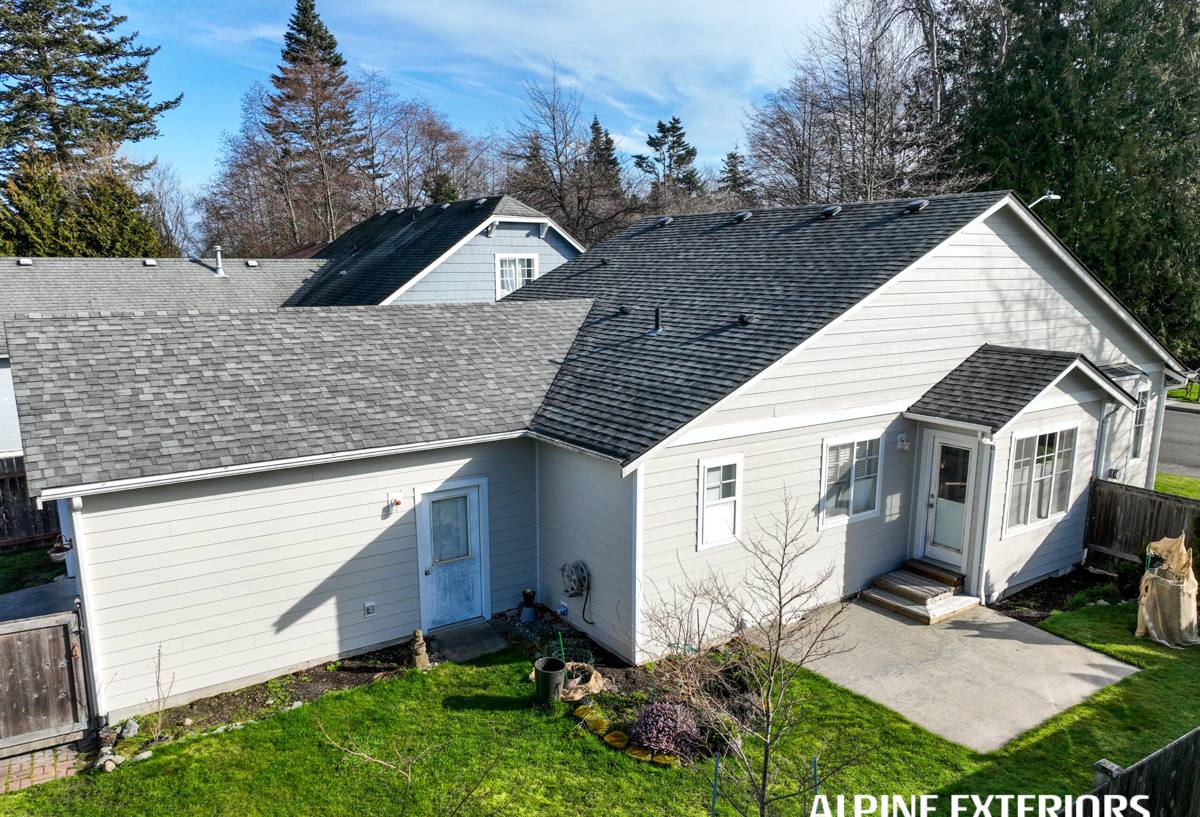
What the Local Climate Actually Does to a House
Salt Air and Corrosion
Proximity to saltwater doesn't just mean an occasional salty breeze — it means airborne salt particles settling on every exterior surface, day after day, year after year. Salt accelerates corrosion in fasteners, flashing, and any metal trim that isn't rated for a marine-influenced environment. It also interacts with certain siding materials in ways that shorten their usable life, particularly anything with exposed wood grain or a finish that isn't fully sealed on all six sides.
Driving Rain
Bellingham doesn't get the heaviest rainfall totals in the state, but what falls here often comes sideways. Wind off the Sound pushes rain horizontally into wall assemblies, which means siding isn't just shedding water that runs straight down — it's resisting water that's being driven into seams, laps, and butt joints under pressure. A siding system with poor water management at the joints will eventually let moisture behind the cladding, and once that happens, the sheathing and framing are exposed to problems most homeowners can't see until they're expensive.
Moss, Algae, and the Long Wet Season
Shaded, north-facing walls and anything under tree cover in and around Puget stay damp for extended stretches, which is exactly what moss and algae need to establish themselves on a siding surface. Once organic growth takes hold, it holds moisture against the material even longer, compounding the problem. Some siding materials resist this better than others — porosity and surface texture both matter a great deal here.
Why We Standardized on James Hardie Fiber Cement
We install James Hardie fiber cement siding exclusively. We don't install vinyl, LP SmartSide, Cemplank, Allura, primed spruce, or cedar, and that's a deliberate professional standard, not a sales preference. Here's the reasoning, laid out honestly:
- Non-combustible core: Fiber cement doesn't burn, which matters increasingly in Washington as wildfire smoke and ember exposure become part of the conversation even west of the Cascades.
- Dimensional stability: Hardie's fiber cement doesn't expand and contract with moisture the way wood-based products do, which means fewer open joints for driving rain to exploit over time.
- Factory-applied ColorPlus finish: The finish is baked on in a controlled factory environment rather than field-applied, which gives more consistent coverage and better long-term color retention than job-site painting — especially relevant given how much UV and moisture cycling this region's siding sees.
- Climate-engineered HZ product lines: Hardie manufactures HZ5 formulations specifically for wetter, harsher climates, which is a better match for coastal Whatcom County than a general-purpose product.
- Warranty structure: Hardie backs its products with a strong, transferable warranty, which matters both for peace of mind and resale value.
None of this means other products are without merit — vinyl is inexpensive, LP SmartSide has a following, and cedar has real aesthetic appeal. But when we weighed moisture behavior, maintenance burden, installation sensitivity, and long-term performance in a salt-air, high-rain coastal environment, fiber cement was the clear standard for the homes we put our name behind.
Siding Options Compared
| Material | Moisture Behavior in Coastal Climate | Maintenance | Why We Do or Don't Install It |
|---|---|---|---|
| James Hardie Fiber Cement | Dimensionally stable, resists water intrusion at joints when installed to spec | Low — factory finish holds up for years | Our exclusive product; engineered for wet, coastal exposure |
| Vinyl | Can warp or buckle with temperature swings; seams rely on overlap, not seal | Low, but limited repair options when damaged | Not installed — appearance and repairability trade-offs don't fit our standard |
| LP SmartSide (Engineered Wood) | Treated to resist moisture but still wood-based; edges are vulnerable if cut or damaged on site | Moderate — cut edges need careful sealing | Not installed — moisture sensitivity at installation is a real long-term risk here |
| Cedar | Naturally moisture-tolerant but needs ongoing sealing/staining in a wet climate | High — regular refinishing required | Not installed — maintenance burden is significant in this rainfall pattern |
| Primed Spruce / Cemplank / Allura | Varies; generally more installation-sensitive or less climate-matched than Hardie HZ lines | Moderate to high | Not installed — doesn't meet our fiber-cement-only standard |
How We Approach a Siding Project Near Puget
Assessment First
Before we talk product colors or timelines, we look at the actual condition of the wall system — what's currently on the house, whether there's existing moisture damage behind the cladding, how the house is oriented relative to prevailing wind and rain, and where moss or algae has already established itself. That assessment shapes the plan more than any catalog page does.
Water Management Details
Correct installation in a driving-rain climate is as much about flashing, house wrap, and joint detailing as it is about the siding panel itself. Hardie makes a good product, but a good product installed without proper weather-resistive barrier integration, correct fastener placement, and attention to butt joints and penetrations will still let water in. We follow manufacturer installation specifications closely because that's what keeps the warranty valid and, more importantly, what actually keeps water out.
Trim, Flashing, and Fastener Selection
Given the salt-air exposure around Bellingham Bay and the Sound, we pay particular attention to fastener and flashing material selection so corrosion doesn't become the weak point in an otherwise well-installed system.
Roofing, Windows, and Decks: The Rest of the Envelope
Siding doesn't work in isolation. A roof with worn flashing at wall intersections will feed water into a siding system no matter how well the siding itself is installed. Windows with failing seals let wind-driven rain track down into wall cavities behind the cladding. Decks attached to the house create another penetration point that needs correct flashing to keep water from migrating into the wall assembly at the ledger board. We handle all four — siding, roofing, windows, and decks — because on a coastal Pacific Northwest home, treating them as one connected water-management system produces a better result than treating each as a separate project.
Signs a Home Near Puget May Need Attention
- Visible moss or algae growth on siding, especially on shaded or north-facing walls
- Soft spots, discoloration, or bubbling paint near the base of exterior walls
- Gaps opening up at siding joints or around trim boards
- Rust staining running down from fasteners or metal flashing
- Higher-than-expected heating bills, which can point to moisture-compromised insulation behind siding
- Visible warping, cupping, or delamination on existing siding boards
Why a Local Crew Matters
A crew that works Whatcom County homes regularly knows what a Puget-area wall assembly is actually up against — not from a training manual, but from having pulled old siding off houses in this exact climate and seen what wind-driven rain and salt exposure do over ten or twenty years. That experience shapes decisions on the job: where to add extra flashing attention, which walls need the most careful joint sealing, how to sequence work around the region's rain patterns so materials aren't installed wet. It also means we're accountable locally — we're not a crew that installs and moves on to the next state.
What to Expect From the Process
Planning and Product Selection
We walk through Hardie's HZ product lines and ColorPlus finish options, matched to what makes sense for the home's exposure and the homeowner's preferences.
Preparation
Existing siding is removed, the wall is inspected for hidden moisture damage, and any necessary sheathing repair or house wrap replacement happens before a single new panel goes up.
Installation
Panels, trim, and flashing go in following Hardie's specifications, with particular attention to joints and penetrations given the driving-rain exposure common in this area.
Final Walkthrough
We review the completed work with the homeowner, covering warranty documentation and any basic care recommendations specific to a coastal exposure.
Cost Factors to Understand
| Factor | Why It Matters Here |
|---|---|
| Extent of hidden moisture damage | Coastal wall assemblies more often have hidden sheathing damage that adds repair scope once old siding is removed |
| Home size and wall complexity | More corners, penetrations, and trim details mean more flashing and joint work |
| Product line and finish selection | Hardie HZ lines and ColorPlus options vary in price point |
| Accessibility | Site conditions around the home affect labor and staging time |
| Bundled work | Combining siding with roofing, window, or deck work can reduce overall disruption and sometimes overall cost versus separate projects |
We don't quote a project without seeing the home first — anything else would be a guess, and coastal wall assemblies have too much hidden variability for a guess to be useful.
Get a Straightforward Estimate
If you're weighing a siding replacement — or noticing moss, soft spots, or gaps starting to show up on a home near Puget — we're glad to take a look and walk you through what we're seeing, with no pressure to move forward. Reach out for a free estimate using the form below.