 Bellingham Siding
 Exterior Work Built for Silver Beach's Waterfront Conditions
Silver Beach sits close to Bellingham Bay, and that proximity to the water shapes almost everything about how a home's exterior ages here. Homes in this part of Bellingham deal with a combination most inland neighborhoods don't see in the same intensity: salt-laden air rolling off the bay, wind-driven rain that hits siding sideways instead of straight down, and long stretches of gray, damp months where surfaces simply don't get a chance to fully dry out. Add in the mature tree cover common to older Whatcom County neighborhoods, and you've got a near-perfect environment for moss, algae, and slow moisture intrusion to take hold.
None of that means a home in Silver Beach is doomed to constant repairs. It means the exterior has to be chosen and installed with those specific stresses in mind, rather than treated the same way you'd treat a house on the dry side of the mountains.
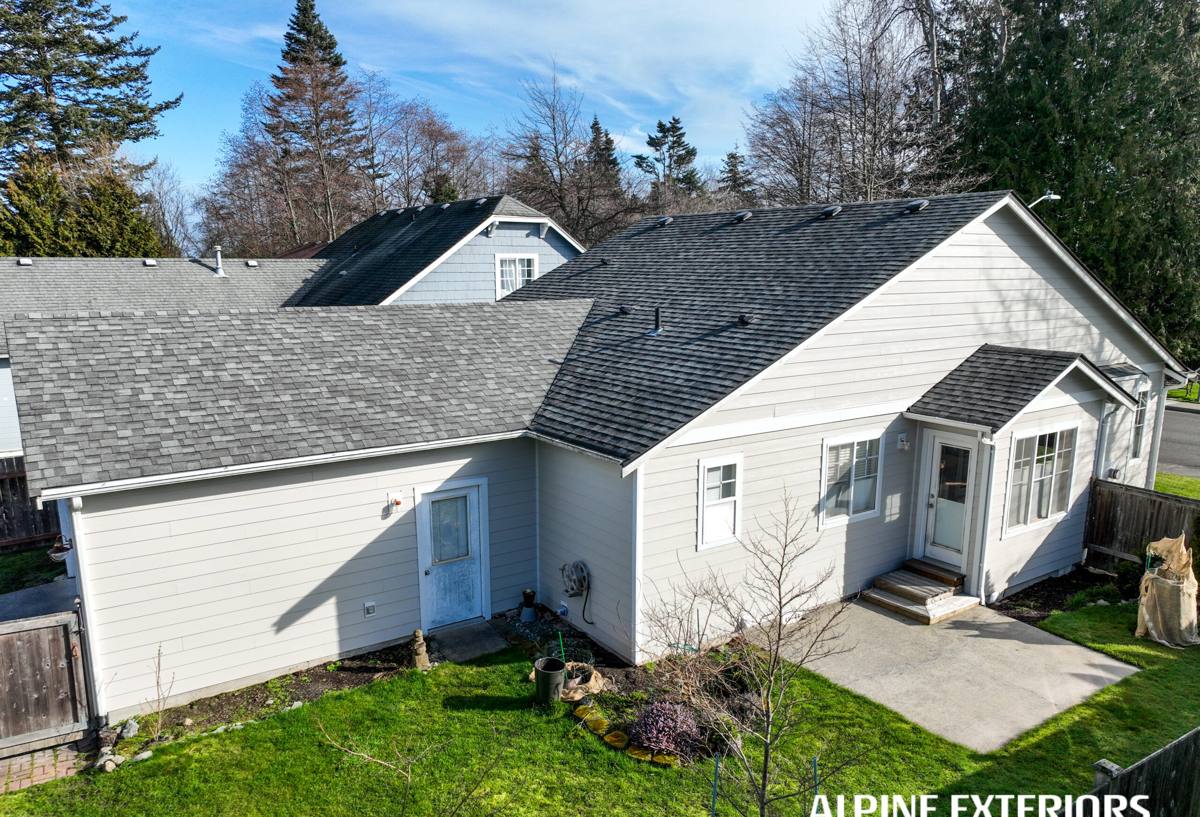
What Salt Air and Marine Exposure Actually Do to a Home
Salt air isn't just an inconvenience — it's chemically active. Airborne salt accelerates corrosion on anything metal: nails, flashing, hardware, gutter fasteners, and trim screws. On siding materials that rely on paint film or factory coatings to keep moisture out, salt exposure combined with constant humidity speeds up coating breakdown at the surface. Once a coating starts to chalk or crack, the substrate underneath is exposed to the next problem: water.
Why This Matters for Material Choice
This is one of the biggest reasons we don't install every siding product on the market. Materials that depend heavily on maintaining an intact paint film to stay protected — wood-based panels, primed spruce, and similar products — are more vulnerable in a marine-influenced neighborhood like Silver Beach, because the coating is doing more of the protective work and has less margin for error when it's degrading faster than it would fifteen miles inland.
Driving Rain and the Wall Assembly Behind the Siding
Bellingham gets plenty of rain, but the more damaging pattern near the water is wind-driven rain — storms off the Strait and the Sound that push moisture horizontally into wall surfaces, seams, and butt joints instead of letting it run off vertically. This kind of exposure finds weak points fast: caulked joints that were never meant to be a primary water barrier, undersized flashing, and siding installed too close to grade or decking.
A proper installation in this environment isn't just about the siding panel itself. It includes:
- Correct water-resistive barrier and flashing detail at every window, door, and penetration
- Rain-screen or drainage gap where the assembly calls for it, so incidental moisture can drain and dry
- Proper clearance between siding and grade, decks, and roof lines
- Sealed and back-primed cut edges where the manufacturer requires it
- Fasteners and flashing rated for coastal exposure
Skipping any one of these steps is how a fifteen-year siding job turns into a five-year problem, regardless of what material is on the wall.
Moss, Algae, and the Long Wet Season
Whatcom County's wet season stretches long, and shaded, north-facing walls near mature trees rarely get a full dry-out between storms. That's the recipe for moss and algae growth on roofing and siding surfaces. Beyond the cosmetic issue, sustained moss growth holds moisture directly against the surface it's growing on, which is exactly the kind of prolonged dampness that shortens the life of coatings and, over time, the substrate underneath.
What Helps
Good roof and gutter maintenance that keeps water moving off the roof and away from siding, trimming back vegetation that keeps walls shaded and damp, and choosing exterior materials engineered to resist moisture-related damage all reduce how much of a foothold moss and algae can get. It's also why we pay close attention to gutter and roof condition when we're out for a siding estimate — the systems work together, and a clogged gutter dumping water down a wall undoes a lot of good siding work.
Why We Install Only James Hardie Fiber Cement Siding
We made a deliberate decision to install one siding product line: James Hardie fiber cement. That's not brand loyalty — it's a standard we hold because of what neighborhoods like Silver Beach demand from an exterior.
Non-Combustible, Moisture-Resistant Composition
Fiber cement is made from cement, sand, and cellulose fibers, not wood. It doesn't rot, delaminate, or feed the kind of moisture-driven decay that wood-based and wood-fiber siding products are prone to in a wet marine climate. That matters directly for the salt-air and driving-rain conditions described above.
HZ5 Engineering for This Climate
James Hardie engineers its products in zones matched to regional climate exposure. The HZ5 formulation used in this part of the Pacific Northwest is built to hold up against sustained moisture and freeze-thaw cycling better than a generic, one-size-fits-all product.
ColorPlus Factory Finish
Rather than relying on a field-applied coat of paint as the primary defense, Hardie's ColorPlus finish is baked on at the factory in multiple coats, under controlled conditions, and backed by its own finish warranty. In a neighborhood where coatings take a beating from salt air and UV, that factory-cured finish holds color and integrity longer than most site-applied paint jobs.
What We Don't Install, and Why
We don't install LP SmartSide, vinyl, Cemplank, Allura, primed spruce, or cedar. Some of these are perfectly reasonable products in the right setting — but each comes with a trade-off (higher maintenance, coating dependency, moisture sensitivity, or a warranty structure we're not comfortable standing behind) that we think is a poor match for Bellingham's coastal exposure. We'd rather install one product well and stand behind it fully than offer several options and hedge on which one actually holds up here.
Comparing Common Siding Approaches Near the Water
| Factor | Wood-Based Panel Siding | Vinyl Siding | James Hardie Fiber Cement |
|---|---|---|---|
| Moisture/rot resistance | Coating-dependent | Doesn't rot, but seals/joints can trap moisture behind it | Cement-based, does not rot |
| Fire resistance | Combustible | Combustible, can deform under heat | Non-combustible |
| Coastal/salt air durability | Coating wears faster in salt air | Can become brittle with age and UV/salt exposure | Engineered coastal-grade (HZ5) formulation |
| Finish longevity | Repaint every several years | Color molded in, but fades over time | Factory ColorPlus finish, long warranty |
| Warranty structure | Varies, often shorter | Varies by manufacturer | Strong transferable manufacturer warranty |
Roofing, Windows, and Decks: The Rest of the Envelope
Siding is only one piece of how a Silver Beach home handles moisture. We also handle roofing, windows, and decks because these systems share the same job: keeping wind-driven rain and marine humidity out of the structure.
Roofing
A roof that's shedding water properly, with clean gutters and valleys, protects the siding below it from constant runoff and moss transfer. Roof condition is one of the first things we check on a siding estimate here.
Windows
Window flashing and seals are common failure points in driving-rain conditions. Old or improperly flashed windows are one of the most frequent sources of hidden water damage we find when we open up a wall during a siding replacement.
Decks
Decks that sit too close to siding, or that were built without proper ledger flashing, funnel moisture directly into the wall assembly behind them. Addressing decks alongside siding avoids leaving an obvious weak point untouched.
What a Siding Project Typically Involves Here
Every home is different, but a straightforward sequence applies to most Silver Beach projects: removal of existing siding, an assessment of the sheathing and water-resistive barrier underneath (this is often where hidden damage from long-term moisture is found), correction of any flashing or drainage issues, installation of the new water-resistive barrier and rain-screen detailing as needed, and then installation of James Hardie panels or lap siding to manufacturer spec.
Questions Worth Asking Before You Start
- Is there any visible moss, staining, or soft spots on the current siding, especially on shaded or bay-facing walls?
- Are gutters and downspouts directing water fully away from the foundation and walls?
- Do any windows or doors show signs of past water intrusion around the frame?
- Is the current siding original to the home, or has it already been replaced once?
- Are there trees or vegetation keeping any exterior walls shaded and slow to dry?
Why a Local Crew Matters in This Neighborhood
A crew that works across Bellingham and Whatcom County regularly sees how homes near the bay actually perform over time — which details fail first, which walls take the worst of the weather, and what installation choices hold up versus what looks fine on install day but fails in year three. That kind of pattern recognition doesn't come from a spec sheet; it comes from working on homes in this exact kind of exposure, season after season.
If you're weighing a siding, roofing, window, or deck project for a home in Silver Beach, we're glad to take a look and give you a straightforward, no-pressure estimate — just fill out the form below.