 Bellingham Siding
 Cordata: A Growing Corner of North Bellingham
Cordata is one of the newer, faster-growing neighborhoods in Bellingham, with a mix of housing stock that ranges from established homes to newer construction going up on what used to be open land near the north end of the city. That mix matters for siding decisions. Older homes in the area are often due for a second or third re-side, while newer builds are frequently finished in materials that were chosen for upfront cost rather than long-term performance in a Pacific Northwest coastal climate. Either way, the exterior of a Cordata home is doing real work every day of the year, and Whatcom County's weather doesn't take it easy on cheap materials.
We work throughout Bellingham and Whatcom County, and Cordata is a neighborhood we're in regularly for siding, roofing, window, and deck projects. Being local means we're not guessing at what this climate does to a house — we see the same failure patterns repeat on the same types of siding, year after year, and we've built our business around installing the one product line we trust to hold up here.
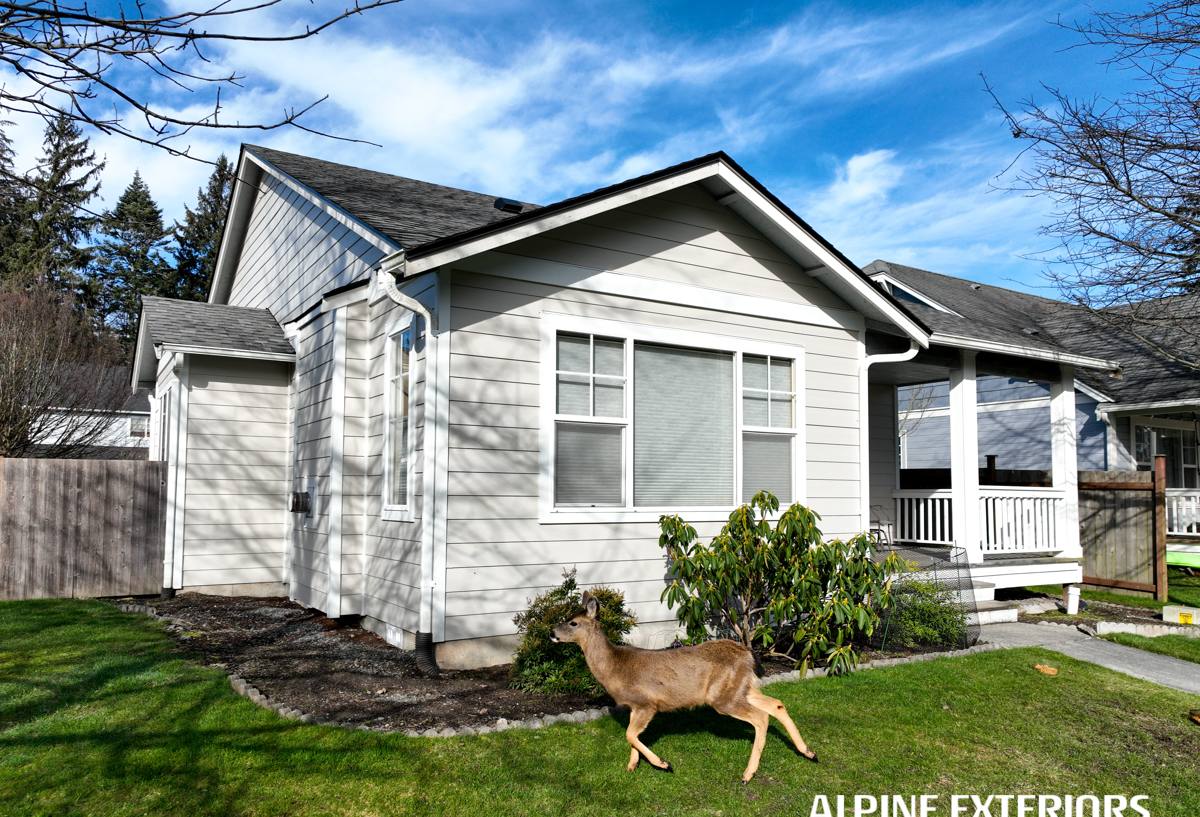
What Bellingham's Climate Actually Does to Your Siding
Bellingham sits close enough to the water that homes throughout Whatcom County, including Cordata, deal with a combination of salt-tinged air, near-constant moisture, and long stretches without direct sun. None of that is dramatic on its own. The damage comes from repetition — the same conditions hitting the same siding, week after week, for years.
Salt Air and Moisture
Proximity to Bellingham Bay and the Salish Sea means airborne salt is a real, if often overlooked, factor for homes across the region. Salt-laden moisture accelerates corrosion on fasteners and trim, and it can speed up the breakdown of coatings and adhesives on siding products that aren't engineered to resist it.
Driving Rain
Whatcom County doesn't just get rain — it gets wind-driven rain that hits siding at an angle instead of falling straight down. That matters because it pushes moisture into seams, laps, and butt joints that a straight-down rain would never reach. Siding systems that rely on paint film or caulk alone to keep water out are the ones that fail first under these conditions.
The Long Moss Season
Shade, moisture, and mild temperatures are a perfect combination for moss and algae growth, and that season runs long here — often most of the year on north-facing walls and shaded elevations. Moss holds moisture against the siding surface far longer than open air would, which is exactly the condition that causes rot in wood-based products and delamination in lower-grade composite siding.
Why We Only Install James Hardie Fiber Cement
We install James Hardie fiber cement siding exclusively. We don't install vinyl, LP SmartSide, primed spruce or cedar, or other fiber cement brands like Cemplank or Allura. That's not a marketing position — it's the result of watching how different siding materials actually hold up in exactly the conditions Cordata and the rest of Whatcom County deal with.
Fiber cement is non-combustible, dimensionally stable, and doesn't absorb and swell with moisture the way wood-based products do. James Hardie's HZ5 product line is engineered specifically for climates like ours — colder, wetter regions where freeze-thaw cycles and sustained dampness are the norm rather than the exception. The factory-applied ColorPlus finish is baked on under controlled conditions, which gives it better adhesion and UV resistance than a field-applied paint job, and it comes with its own finish warranty separate from the substrate warranty.
How It Compares
| Factor | James Hardie Fiber Cement | Vinyl | Wood / Engineered Wood |
|---|---|---|---|
| Moisture response | Dimensionally stable, won't swell or rot | Won't rot, but can warp or gap over time | Absorbs moisture; prone to swelling and rot without diligent maintenance |
| Fire rating | Non-combustible | Combustible, can melt or deform | Combustible |
| Coastal/salt air durability | Engineered for climate zones like ours | Generally stable, but seams and fasteners are weak points | Salt air accelerates finish breakdown and decay |
| Finish longevity | Factory ColorPlus finish, separate warranty | Color is through-body but can fade; no separate finish system | Requires repainting/restaining on a recurring cycle |
| Maintenance | Occasional wash, no repainting cycle | Low, but repairs are visually difficult to match | Regular painting, caulking, and moisture monitoring |
None of this means other products are junk — vinyl and engineered wood both have a place in the market. But we've made a business decision to stand behind one system, install it correctly every time, and be able to tell a Cordata homeowner exactly how their siding will perform in twenty years, not just how it looks on day one.
What a Siding Project Looks Like for a Cordata Home
Every project starts with an honest look at the existing exterior, not just a sales pitch. On a re-side, that means checking what's happening behind the current siding — sheathing condition, existing moisture damage, and how the original installation handled flashing and water management. On new siding for previously bare walls, it means getting the water-resistive barrier, flashing details, and fastening pattern right from the start, since those details matter more to long-term performance than the siding product itself.
Our General Process
- On-site inspection and honest assessment of current siding, trim, and any moisture or rot issues
- Written estimate with product, color, and scope clearly laid out — no vague allowances
- Removal of old siding and inspection of sheathing, with repairs addressed before anything new goes up
- Installation of weather-resistive barrier and flashing details sized for wind-driven rain, not just vertical rainfall
- James Hardie siding installed to manufacturer specification, including proper fastener type and spacing
- Final walkthrough so you understand what was done and what maintenance, if any, to expect
Roofing, Windows, and Decks: The Rest of the Exterior
Siding doesn't work in isolation. A roof that's shedding water improperly, windows with failed flashing, or a deck that's trapping moisture against the house can all undermine even a well-installed siding job. Because we handle roofing, windows, and decks in addition to siding, we can look at a Cordata home's exterior as one connected system rather than a set of unrelated components.
Where These Systems Overlap
- Roof edges and gutters that dump water directly onto siding rather than away from it
- Window flashing that's been painted over or improperly integrated with the siding's weather barrier
- Deck ledger boards attached directly to siding without proper flashing, a common source of hidden rot
- Trim and fascia that have failed before the siding itself, letting water in from above
When we're on-site for a siding estimate, we'll flag anything we see in these other areas honestly, even if it's not part of the scope you called us about.
Signs Your Siding Needs Attention
Most siding failure in this region is gradual, which is exactly why it tends to get missed until it's expensive to fix. A few things worth checking, especially on north- and west-facing walls that take the brunt of driving rain and stay shaded longest:
- Persistent moss or algae growth that comes back within weeks of cleaning
- Soft spots, especially near the bottom of walls, around window trim, or where a deck attaches to the house
- Paint that's peeling or bubbling rather than just fading, which often points to moisture trapped underneath
- Visible gaps at seams, corners, or butt joints where caulking has failed
- A musty smell in an adjacent interior wall or rising utility bills that suggest failing insulation behind the siding
Any one of these on its own isn't necessarily an emergency, but ignoring several at once usually means the problem is further along than it looks from the ground.
What Affects the Cost of a Siding Project
Every home is different, and we don't publish blanket pricing because it would be misleading. That said, the main variables that move the number are consistent across most Cordata projects:
| Factor | Why It Matters |
|---|---|
| Home size and wall complexity | More corners, gables, and cutouts mean more material waste and labor time |
| Condition of existing sheathing | Rot or moisture damage found during tear-off adds repair scope before new siding goes on |
| Siding profile and trim detail | Lap width, board-and-batten sections, and trim treatments affect material and labor |
| Access and site conditions | Multi-story sections, tight lot lines, or landscaping can affect staging and labor time |
| Color and finish selection | Factory ColorPlus finishes vary slightly in cost by color family |
We walk through all of this in person before giving you a number, so you know what you're paying for and why.
Why It Helps to Hire a Local Crew
A crew that works Whatcom County regularly knows what this climate does to a house before they ever pull a tape measure. That's not just familiarity with the weather in general terms — it's knowing which elevations in a given neighborhood take the worst of the wind-driven rain, how long moss season really runs on a shaded north wall, and what flashing details tend to get skipped by crews that don't work here full time. It also means we're accountable locally if something needs a follow-up visit, not a call center for a company based somewhere else.
If you're weighing a siding replacement, a roof that's due, aging windows, or a deck that needs attention, we're happy to come take an honest look at your Cordata home and put together a straightforward, no-pressure estimate. There's no obligation — just a clear picture of what your home needs and what it would take to do it right.