 Bellingham Siding
 Why Fairhaven's Climate Changes How a Deck Should Be Built
Fairhaven sits close enough to the water that salt-laden air, wind-driven rain, and long stretches of damp, low-light weather are just part of owning a home here. That combination is harder on an outdoor deck than most homeowners realize. Salt air accelerates corrosion on anything metal. Driving rain finds its way into end grain, fastener holes, and any gap where two boards meet. And Bellingham's long wet season, especially under tree cover or on north-facing decks, gives moss and algae months at a time to get established before a deck ever fully dries out.
None of this is a reason to avoid composite decking. It's a reason to build it correctly for this specific environment instead of treating a Fairhaven deck the same way you'd build one in a drier inland climate. The board matters, but the framing underneath it, the fasteners, the airflow, and the drainage details matter just as much — often more, since those are the parts that fail quietly and don't show up until there's already damage.
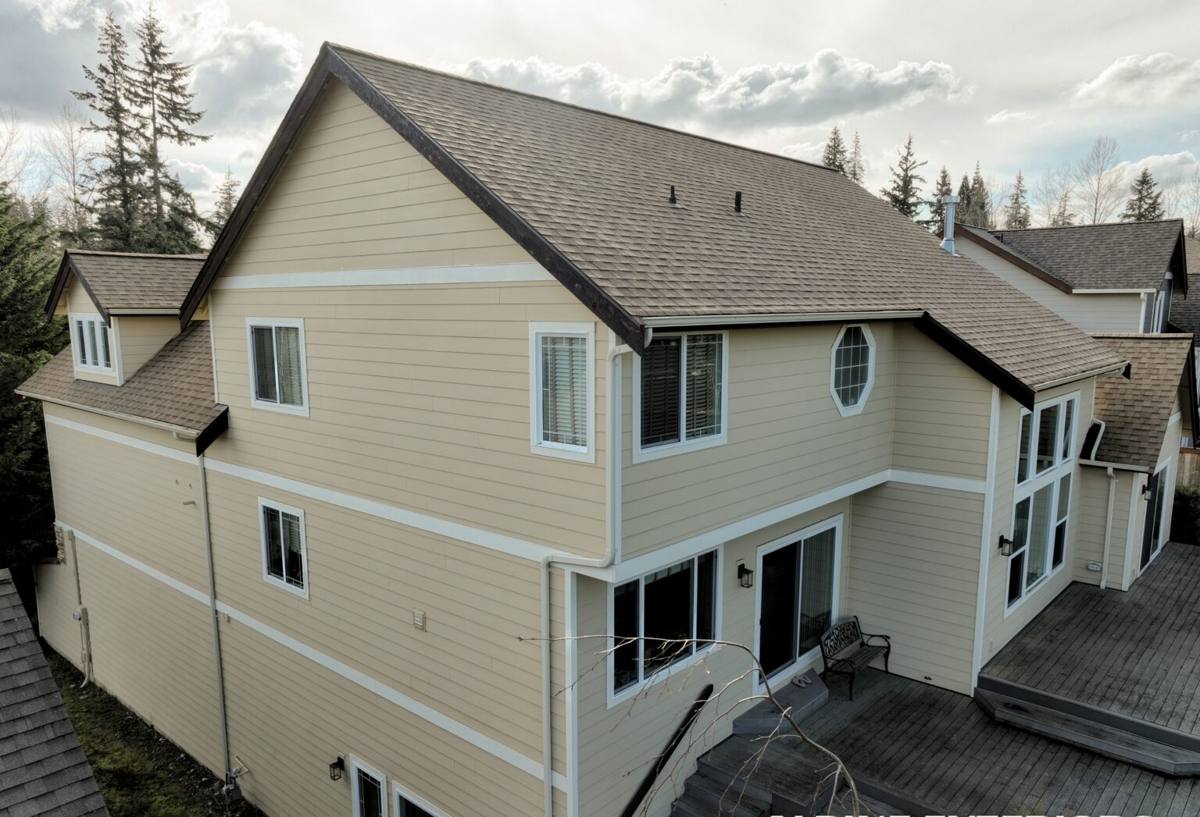
What a Correctly Built Composite Deck Includes
Composite decking is popular precisely because it doesn't rot, splinter, or need annual staining the way wood does. But a composite deck is only as good as what's underneath it and how it was fastened together. A board that's rated for decades of exposure can still fail early if it's installed on a substructure that traps moisture or with hardware that corrodes in salt air.
Framing and Substructure
In Whatcom County's climate, we treat the substructure as the part of the job that determines whether the deck lasts. That means pressure-treated or naturally durable framing lumber, proper joist spacing for the specific composite product being used (composite boards often require tighter joist spacing than wood, especially at angles or stair treads), and joist tape or flashing on top of the framing to keep standing water off bare wood. Where a deck attaches to the house, the ledger board connection needs proper flashing so water is directed away from the wall assembly rather than into it — this is one of the most common failure points we find on older decks in this area.
Fasteners and Hardware
Salt air is hard on standard hardware. We use stainless steel or coated fasteners rated for coastal exposure, and hidden fastener systems where the product allows, since exposed screw heads are both a cosmetic issue and a place where corrosion starts. Cutting corners on hardware is invisible on installation day and expensive five years later.
Comparing Decking Approaches for a Coastal Bellingham Property
| Approach | How It Handles Salt Air & Rain | Ongoing Maintenance | Typical Lifespan Here |
|---|---|---|---|
| Capped composite decking | Cap layer resists moisture absorption and staining; core is protected from direct wetting | Periodic cleaning to stay ahead of moss and pollen film | 25–30+ years with correct installation |
| Uncapped composite decking | More prone to surface moisture absorption and mold growth in shaded, damp areas | More frequent cleaning; more susceptible to staining | Shorter service life in high-moisture spots |
| PVC decking | Fully synthetic, no wood fiber to hold moisture; very stable in wet climates | Low; mainly rinsing off organic buildup | Comparable to or longer than capped composite |
| Pressure-treated wood | Requires ongoing sealing to resist rain intrusion and rot; salt air accelerates fastener corrosion | Annual cleaning and re-sealing/staining | 10–15 years before major repair or replacement is typical |
We install capped composite and PVC decking as our standard recommendation for Fairhaven properties because both hold up to the moisture load without the annual maintenance cycle wood decking demands. We're glad to walk through specific manufacturer options and their warranty terms during an estimate — the right choice depends on your budget, sun exposure, and how the deck will be used.
Our Installation Process
- Site assessment: We look at drainage, sun/shade exposure, existing structure (if it's a replacement), and how close the deck sits to grade or vegetation, since shaded, poorly ventilated decks are the ones that grow moss fastest.
- Framing and structural work: Any existing framing is inspected for rot or corrosion before new decking goes on. New framing is built to current code and spaced correctly for the chosen composite product.
- Moisture management: Joist tape, ledger flashing, and proper slope away from the house are installed before a single deck board is laid down.
- Board installation: Boards are installed with the fastening system specified by the manufacturer, with attention to expansion gaps — composite material moves with temperature, and gaps that are too tight cause buckling.
- Railings, stairs, and trim: Fascia boards, stair stringers, and railing posts are finished to match, with the same corrosion-resistant hardware used throughout.
- Final walkthrough: We go over care and cleaning specific to your product and your deck's exposure before we consider the job done.
Railings, Stairs, and Finish Details
The details that get overlooked on a deck build are usually the ones exposed to the most water. Stair stringers and treads see more direct rain exposure than the main deck surface and need the same attention to drainage and fastener quality. Railing posts that penetrate the deck surface are a common leak point if they aren't properly flashed and sealed where they meet the framing below. Fascia boards along the outer edge trap moisture behind them if there's no airflow gap, which is exactly the kind of hidden, shaded, damp spot moss and mildew prefer. We treat these as structural details, not just trim.
Keeping a Fairhaven Deck Moss-Free and Looking Good
Even the best composite decking benefits from a little seasonal attention in a climate like ours. None of this is heavy work — it's mostly about staying ahead of buildup before it sets in.
- Sweep off leaves, needles, and organic debris regularly, especially in fall and under tree canopy — trapped debris holds moisture against the board surface.
- Rinse the deck a few times a year with a garden hose and a soft-bristle brush to remove the thin film of pollen, dust, and organic matter that gives moss and algae something to grow on.
- Keep gutters and downspouts near the deck clear so runoff isn't concentrated onto one section of boards.
- Trim back vegetation that shades the deck and blocks airflow, particularly on the north or shaded side of the house.
- Check railing posts and stair connections once a year for any sign of movement or water staining at the joints.
- Avoid pressure washing at close range or high PSI on composite boards — it can damage the cap layer; a garden hose and brush is usually enough.
What Composite Decking Costs in Fairhaven
Cost depends heavily on deck size, height off grade, railing style, and the specific product line you choose. Rather than quote a number that won't match your project, here's what actually moves the price:
| Factor | Why It Affects Cost |
|---|---|
| Deck size and shape | More square footage and more cuts (angles, curves) increase material and labor |
| Height above grade | Taller decks need more substructure, railings, and often stairs |
| Composite product tier | Entry-level capped composite vs. premium PVC or high-end composite lines vary significantly in material cost |
| Existing structure condition | A replacement over sound, code-compliant framing costs less than a full tear-out and rebuild |
| Railing and trim style | Cable, glass, or metal railing systems cost more than standard composite balusters |
| Site access | Decks with difficult material access (steep lots, tight side yards) add labor time |
We give a firm, itemized number after seeing the site — not a rough guess over the phone — because the framing condition and access alone can change the scope significantly.
Why Hire a Crew That Already Works in Fairhaven
A lot of decking problems in this area trace back to a build that would have been fine somewhere drier — standard fastener spacing, no ledger flashing, boards installed tight with no room to move seasonally. None of those are obvious defects on installation day. They show up two or three wet seasons later as staining, soft spots, or a railing post that's started to work loose.
Working regularly in Bellingham and Whatcom County means we're not guessing at how a deck will hold up here — we're building to what this specific coastline and climate actually demand, from the flashing details to the hardware grade to how tight or loose to run the board gaps. That's the difference between a deck that needs attention in a few years and one that's still solid decades out.
If you're planning a new deck or replacing one that's showing its age, we're happy to take a look and put together a straightforward, no-pressure estimate. There's no cost and no obligation — just an honest assessment of what your project actually needs. Use the form below to get started.