 Bellingham Siding
 Why South Hill Roofs Age Differently
South Hill sits up on the slope above downtown Bellingham, which means homes here catch weather that flatter neighborhoods don't deal with quite the same way. The elevation and the exposure to Bellingham Bay give South Hill houses a mix of salt-laden air, wind-driven rain that gets pushed sideways under eaves and around dormers, and long stretches of shade from mature trees that keep roof surfaces damp well after a storm has passed. None of that is unique to one street or another — it's a neighborhood-wide condition, and it's the reason a roof that would hold up fine in a drier inland part of Whatcom County can fail early up here if it wasn't built for these conditions in the first place.
A new roof installation on a South Hill home isn't just about swapping old shingles for new ones. It's about building the whole system — underlayment, flashing, ventilation, and the finish material — to handle salt air corrosion, sustained moisture, and moss growth that never really takes a season off. Get that system right the first time and you're looking at decades of low-maintenance performance. Get it wrong and you're back up there dealing with leaks, rot, and moss removal within a few years.
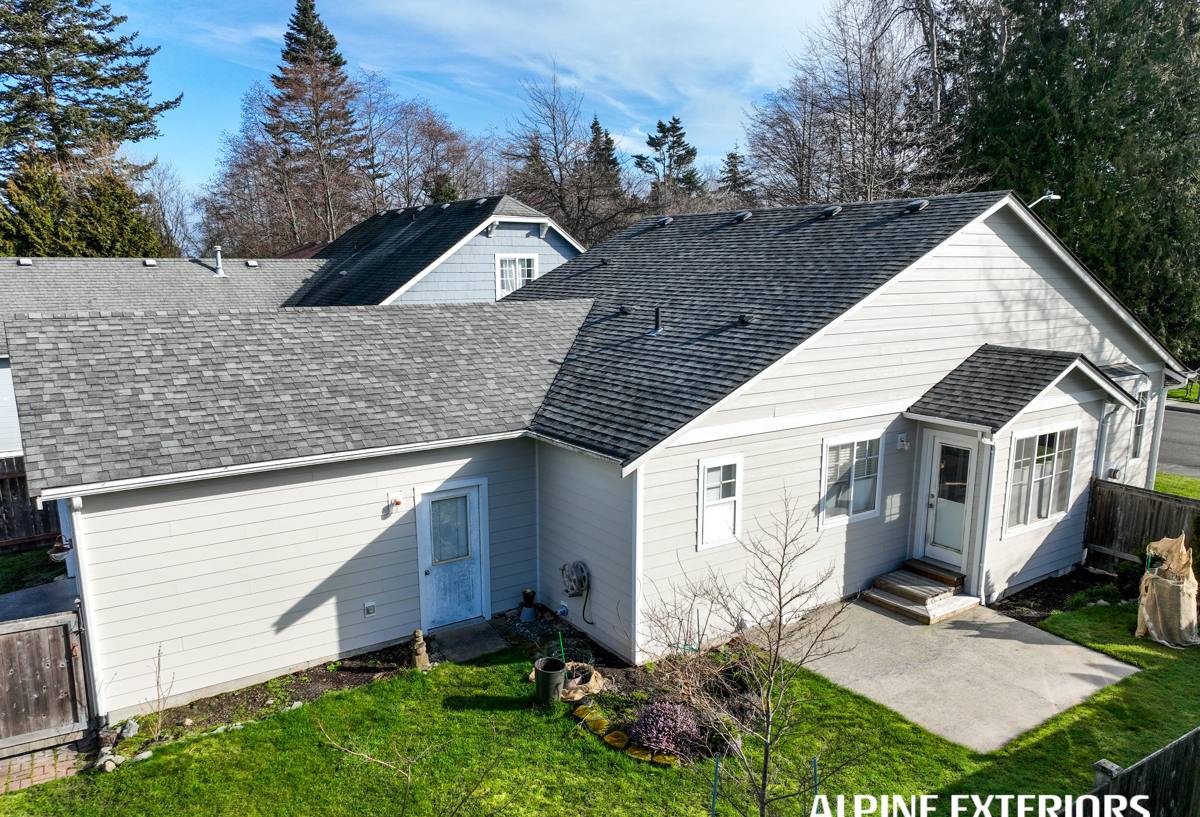
What Correct Installation Actually Involves
"New roof" covers a lot of ground, and the difference between a roof that lasts and one that doesn't usually comes down to details most homeowners never see once the job is finished. On a South Hill home, we pay particular attention to a handful of things that matter more here than they would somewhere drier and lower down.
Underlayment That Handles Sustained Moisture
Standard felt underlayment is fine in dry climates. It's not what we'd choose for a South Hill roof that stays damp for days after every Pacific frontal system rolls through. We install synthetic or self-adhered underlayment in vulnerable areas — valleys, eaves, and around penetrations — because it holds up to prolonged moisture exposure without breaking down the way older felt products can.
Ice and Water Protection at the Eaves
Whatcom County doesn't get heavy ice damming the way colder inland regions do, but South Hill's shaded, north-facing sections and occasional cold snaps still create conditions where meltwater or driving rain can back up under the shingle edge. A proper eave membrane stops that water before it reaches the roof deck.
Flashing That's Sized for Wind-Driven Rain
Wind off the bay doesn't just fall on a roof — it pushes rain sideways, up under laps, and into any gap in the flashing around chimneys, skylights, and wall intersections. We use step flashing and counter-flashing sized generously and installed in the correct sequence with the roofing material, not just caulked over as an afterthought.
Ventilation Sized for the Actual Attic
Balanced intake and exhaust ventilation keeps the roof deck at a stable temperature and lets moisture escape instead of condensing on the underside of the sheathing. On homes with older, undersized ventilation, this is often the single biggest factor in how long a new roof will actually last.
Material Options for a South Hill Roof
There isn't one "best" roofing material for every South Hill home — the right choice depends on your roof's pitch, how much shade and tree cover you have, your budget, and how much long-term maintenance you're willing to take on. Here's how the common options stack up against the specific conditions up here.
| Material | How It Handles Salt Air & Rain | Moss Resistance | Typical Lifespan |
|---|---|---|---|
| Architectural asphalt shingles | Good, with quality underlayment and flashing | Moderate — benefits from copper/zinc strips | 25–30 years |
| Standing seam metal | Excellent with proper coating and fasteners | High — sheds moss more easily than shingles | 40–50+ years |
| Synthetic composite (cedar look) | Good — doesn't absorb moisture like real wood | Moderate to high | 30–50 years |
| Cedar shake | Requires diligent maintenance in this climate | Low without regular treatment | 20–30 years with upkeep |
We don't typically recommend untreated cedar shake for South Hill homes with significant tree cover. It's not that cedar is a bad product — it's that the maintenance burden of keeping it moss-free and properly treated in a shaded, damp microclimate is higher than most homeowners want to sign up for. If you love the look, a synthetic composite that mimics cedar's profile gives you the appearance without the same upkeep demands.
Moss Season and What It Means for Your Roof
Whatcom County's moss season runs long — realistically, conditions favor moss growth from fall through spring, and shaded South Hill lots with mature conifers see it worse than most. Moss isn't just cosmetic. It holds moisture against the roofing material, lifts shingle edges as it grows, and can work its way under flashing over time.
A correct new roof installation addresses this at the source rather than leaving you to fight it every year:
- Zinc or copper control strips installed near the ridge, so rain washing down the roof carries trace metal ions that inhibit moss and algae growth
- Adequate roof ventilation so the deck and shingles dry out between rain events instead of staying damp
- Flashing and valley details that don't create low spots where debris and moisture collect
- A material choice that matches your actual sun exposure — heavily shaded sections sometimes warrant a different approach than sun-exposed slopes on the same house
None of this eliminates the need for periodic roof cleaning and gutter maintenance, but it substantially reduces how often you need to deal with it and how aggressive the moss growth gets between cleanings.
Our Installation Process
Every South Hill roof job follows the same core sequence, adjusted for the specifics of your house:
- Inspection and estimate. We walk the roof and attic, note the pitch, ventilation, flashing points, and any deck damage, and give you a written scope and price before any work starts.
- Tear-off and deck inspection. Old roofing comes off down to the deck, and we check the sheathing for rot or soft spots — common where old flashing has failed — and replace only what's actually damaged.
- Underlayment and flashing installation. Eave protection, synthetic underlayment, and all flashing go in before a single shingle or panel is installed.
- Ventilation work. We correct intake and exhaust balance where needed, which sometimes means adding intake vents at the soffit or upgrading ridge ventilation.
- Roofing material installation. Installed to manufacturer specification, including proper nailing patterns and exposure — two of the most common places corners get cut on rushed jobs.
- Final walkthrough. We review the finished roof with you, cover warranty details, and answer any maintenance questions before we leave.
Signs Your South Hill Roof Needs Replacement, Not Repair
Not every roof problem calls for full replacement. But there are signals that tell us patching won't hold, especially on a roof that's already dealing with years of salt air and moisture exposure:
- Granule loss heavy enough that you can see bare shingle mat in multiple areas, not just one spot
- Shingles that are curling, cupping, or cracking across a large portion of the roof rather than a single localized area
- Soft or spongy decking felt underfoot during inspection, indicating moisture has reached the sheathing
- Persistent moss growth that returns quickly after cleaning, suggesting the underlying moisture problem hasn't been solved
- A roof already past 20–25 years old showing any of the above — at that age, repair costs rarely make sense compared to replacement
- Daylight visible through the roof deck from inside the attic, or active leak staining on the ceiling
Permits, Timing, and Working Around Bellingham Weather
Roof replacement in the City of Bellingham typically requires a building permit, which we handle as part of the project so you don't have to navigate that process yourself. Scheduling on South Hill also means working around the reality of local weather — we watch forecasts closely and plan tear-off days for stretches of drier weather whenever the season allows, and we keep the roof deck protected with tarping if conditions shift mid-project. Most straightforward residential re-roofs take one to three days once work begins, though steeper or more complex rooflines can take longer.
What to Ask Any Roofing Crew Before You Hire Them
Whether you go with us or someone else, these are the questions that separate a solid contractor from one who'll leave you with problems in a few years:
- Are you licensed and insured to work in Washington State, and can you provide proof?
- What underlayment and flashing materials do you use, specifically, and why?
- How do you handle ventilation calculations for my specific attic?
- What's the manufacturer warranty on the materials, and what's your own workmanship warranty?
- Can you walk me through how you'll protect my landscaping and gutters during tear-off?
- Do you have experience with homes in this specific neighborhood and its conditions?
Why a Crew That Already Works South Hill Makes a Difference
A roofing crew that regularly works South Hill homes already knows which streets sit in heavier shade, where the wind off the bay tends to hit hardest, and which older homes in the area were built with ventilation that's since become inadequate for the roofing products now available. That familiarity shows up in fewer surprises during tear-off and a roof system that's specified correctly the first time, rather than a generic installation that happens to be located in Bellingham.
It also means we're a known, reachable presence in the neighborhood rather than a crew that shows up once and disappears. If a warranty question comes up or you want an honest opinion on how your roof is holding up five or ten years down the line, you're calling a local outfit that's still around and still working in Whatcom County.
Get a Straight Answer on Your Roof
If your South Hill roof is showing its age, or you just want an honest read on how many years it's got left, we're happy to take a look. The estimate is free, there's no pressure attached to it, and you'll get a clear explanation of what we see and what it would take to fix it right. Use the form below to get started.