 Bellingham Siding
 Decks in Fairhaven Face a Different Set of Conditions
Fairhaven sits close to Bellingham Bay, and that proximity to salt water changes what a deck has to survive. Salt-laden air corrodes unprotected metal faster than it will a few miles inland, driving rain off the water finds its way into any joint that wasn't sealed correctly, and the shade from mature trees on many Fairhaven lots keeps decking damp long after a storm has passed. None of that means a deck can't last decades here — it means the material choices, fasteners, and drainage details matter more than they would on a dry, sunny lot on the east side of Whatcom County.
We build and replace decks for homes throughout Bellingham, and Fairhaven's older housing stock, sloped lots, and closeness to the water come up often enough that we plan for them from the first site visit rather than treating them as surprises mid-project.
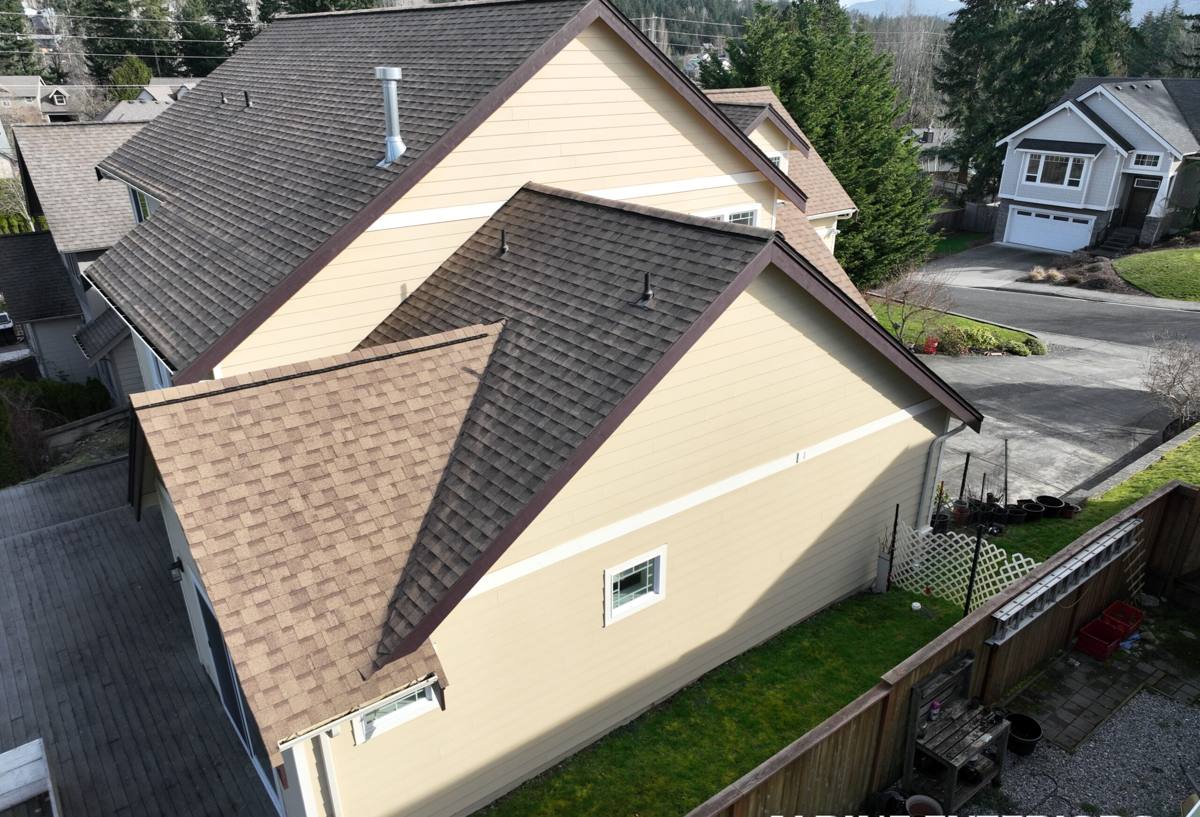
What Bellingham's Marine Climate Does to a Deck Over Time
Salt Air and Metal Fasteners
Standard galvanized fasteners are fine for a lot of the country, but within a mile or two of salt water they corrode noticeably faster. Once a fastener starts rusting, it weakens, stains the surrounding wood or composite, and can eventually fail. This is one of the most common problems we find when we're called out to look at an aging Fairhaven deck — the framing is often still structurally sound, but the hardware has given out.
Moss, Shade, and Standing Moisture
Whatcom County's long wet season means moss and algae growth is a fact of life on any north-facing or heavily shaded deck surface. Left alone, moss holds moisture against the decking, which accelerates rot in wood and can make composite and even PVC boards slippery and unsightly. A deck built with the wrong slope, tight board spacing, or no airflow underneath will grow moss faster and dry out slower than one built to shed water properly.
Driving Rain and End-Grain Exposure
Wind off the bay pushes rain sideways, not just straight down. Cut ends, stair stringers, and any exposed end-grain on wood decking take on water from angles a lot of installers don't account for. Sealing or capping those cut edges — and detailing flashing at the ledger board where the deck meets the house — is where a lot of long-term water damage either gets prevented or gets built in.
What a Correctly Built Deck Actually Involves
A deck is only as good as what's underneath it. The visible decking gets all the attention, but the framing, footings, and fasteners are what determine whether it's still solid in fifteen years.
Footings and Framing
Footings need to be sized and set below frost depth per Bellingham's building code, and on the sloped or uneven lots common in Fairhaven, that sometimes means deeper or more numerous footings than a flat-lot deck would need. Framing lumber should be rated for ground contact where it's close to soil, and the ledger connection to the house — the single most common failure point on older decks — needs proper flashing and lag bolts or structural screws, not nails.
Fasteners and Hardware
Given the salt air here, we default to stainless steel or high-grade coated fasteners and connectors rather than standard galvanized hardware, especially for anything within a few blocks of the water. It costs more up front. It also means we're not back in five years replacing rusted-out joist hangers.
Drainage and Airflow
Proper board spacing, a slight slope away from the house, and enough clearance underneath the deck for air to move all reduce how long moisture sits on the structure after Bellingham's frequent rain. This is design work, not an afterthought — it has to be planned before the first footing goes in.
Choosing Decking Material for a Fairhaven Home
There's no single right answer here — it depends on your budget, how much upkeep you want to do, and how close your lot is to the water. Here's how the common options actually compare in this climate:
| Material | Upfront Cost | Maintenance | Coastal/Moisture Performance | Typical Lifespan |
|---|---|---|---|---|
| Pressure-treated wood | Lowest | Annual cleaning, periodic sealing | Needs regular sealing to resist moss and rot near the bay | 10-15 years |
| Cedar | Moderate | Sealing/staining every 1-2 years | Naturally rot-resistant but still needs upkeep in wet shade | 15-20 years |
| Composite | Higher | Occasional washing | Resists rot well; some boards can hold surface moisture and grow algae if not cleaned | 20-25 years |
| Capped/PVC composite | Highest | Rinse as needed | Best moisture and moss resistance of the group; fully sealed board won't absorb water | 25+ years |
For heavily shaded, water-facing sections of a Fairhaven property, we often recommend capped composite even when the rest of the deck is a different material, simply because that's usually the spot that fights moss hardest. We're honest about trade-offs either way — wood costs less and looks the way a lot of Fairhaven's older homes call for, but it asks more of you in upkeep. We won't push a product on you that doesn't match your budget or your maintenance appetite.
Designing Around Fairhaven's Lots and Housing Character
A fair number of homes in and around Fairhaven are older, with lots that slope toward the water or sit close to mature trees. That affects deck design in a few practical ways:
- Sloped lots often need a taller substructure, which means more attention to railing height and code compliance, plus bracing for stability.
- Decks going onto older homes need the ledger connection evaluated carefully — older sheathing and framing don't always accept fasteners the way new construction does.
- Shaded, tree-close lots benefit from wider board gaps and better underdeck airflow to fight the moss problem before it starts.
- Where a home has real architectural character, we try to match rail style and decking tone to the house rather than defaulting to whatever's cheapest or fastest to install.
Permitting in Bellingham
Most new decks and full replacements in the City of Bellingham require a permit, particularly once you're above a certain height off grade or attaching structurally to the house. We handle that process as part of the job rather than leaving it for the homeowner to sort out — it's one less thing to chase down, and it protects you if the deck is ever inspected for a home sale down the line.
Our Process for a Fairhaven Deck Project
We keep this straightforward because a deck project shouldn't feel complicated on the homeowner's end.
- Site visit and assessment. We look at slope, sun/shade exposure, existing structure if it's a replacement, and how close the lot sits to the water — that last point affects our fastener and material recommendations.
- Design and material selection. We walk through the options honestly, including cost and upkeep trade-offs, and land on a plan that fits your budget and how you actually use the space.
- Permitting. We pull what's required with the City of Bellingham before work starts.
- Demo (if replacing) and build. Old decking, framing, and any rotted or corroded hardware come out; new footings, framing, and decking go in to code.
- Final walkthrough. We go over the finished deck with you, including basic care so it holds up through Bellingham's wet season.
Keeping a Fairhaven Deck in Good Shape Year-Round
Even a well-built deck needs some seasonal attention in this climate. A short checklist we give homeowners:
- Sweep leaves and debris off the deck regularly in fall — trapped organic matter is what feeds moss growth over winter.
- Rinse or lightly scrub shaded, north-facing areas a couple of times a year to knock back algae and moss before it gets established.
- Check railings and stair connections annually for looseness, especially after a hard winter storm off the bay.
- Inspect fastener heads and hardware for rust streaking — early corrosion is easier and cheaper to address than a failed connection.
- Keep gutters and downspouts near the deck clear so runoff isn't dumping extra water onto the structure.
- Re-seal wood decking on the schedule appropriate to the product — don't wait until it's visibly graying or cupping.
Why It Matters to Hire a Crew That Already Works Fairhaven
A deck built by someone unfamiliar with this specific stretch of coastline often looks fine on day one and shows problems two or three winters in — the fastener corrosion, the moss buildup, the water finding its way behind a poorly flashed ledger board. We work throughout Bellingham and Whatcom County, and Fairhaven's mix of older homes, sloped lots, and salt air exposure is a pattern we plan for by default, not something we're figuring out on your project. That shows up in the hardware we spec, the drainage details we build in, and the material recommendations we make before you've even asked.
If you're planning a new deck or looking at replacing one that's showing its age, we're happy to take a look and give you a straightforward assessment. Reach out for a free, no-pressure estimate using the form below.