 Bellingham Siding
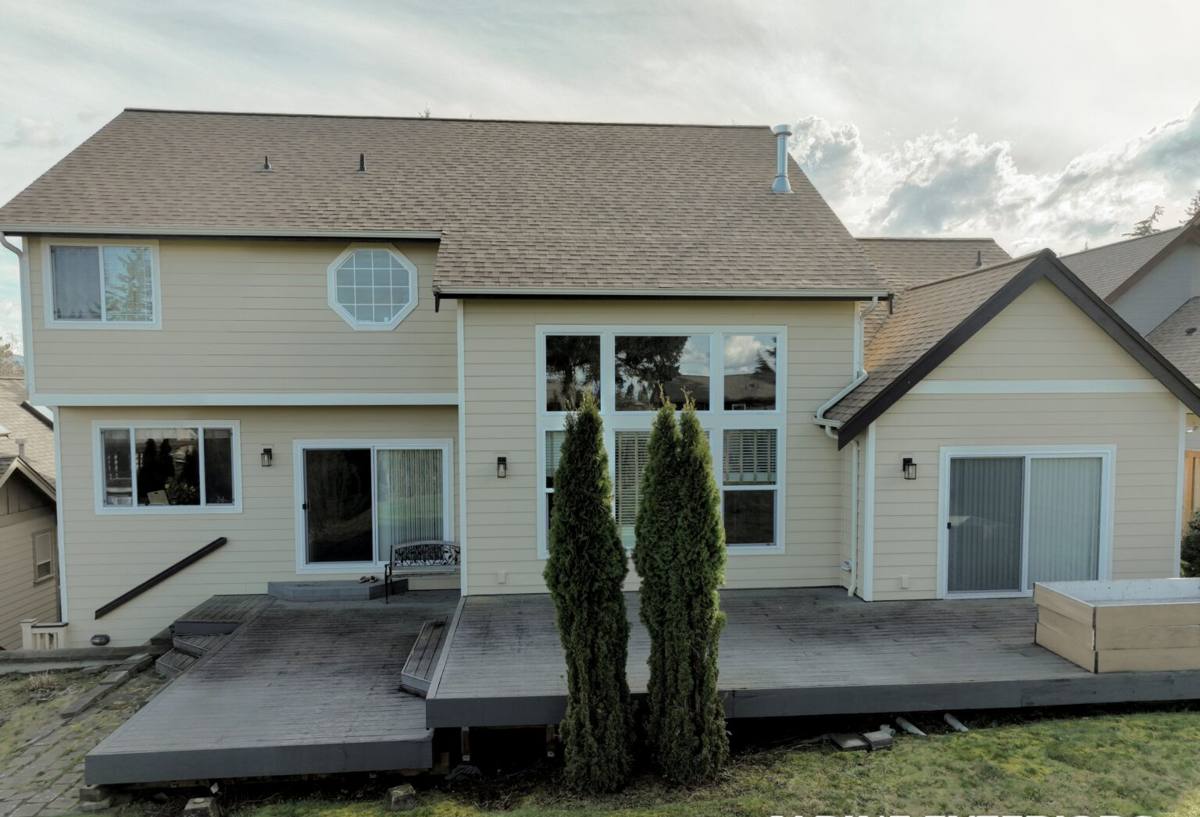
 Composite Decking Built for Columbia's Weather
The Columbia neighborhood sits close enough to Bellingham Bay and Whatcom Creek that its homes take a steady beating from moisture-heavy air, wind-driven rain, and the long gray stretch of fall and winter when nothing outdoors truly dries out. That combination is hard on wood decking in particular. Untreated or under-maintained boards cup, gray unevenly, and grow moss in the shaded spots faster than most homeowners expect. Composite decking was designed for exactly this kind of exposure, which is why it has become the default recommendation we give Columbia homeowners who are tired of re-staining a deck every year or chasing soft spots with a screwdriver.
This page is specifically about composite deck installation and replacement for homes in and around Columbia. It's not a general decking overview — it's what we've learned installing and repairing decks in this part of Bellingham, where salt-laden air off the bay, sustained rain events, and a moss season that can run six months or more all factor into how a deck should be built and maintained.
Why Salt Air and Driving Rain Change the Job
Coastal proximity matters more than most homeowners realize. Salt-laden moisture accelerates corrosion on fasteners, hardware, and any exposed metal flashing. It also settles into porous surfaces and holds moisture longer than dry inland air would. Add Whatcom County's driving rain — often coming in sideways during winter storms — and you get water intrusion at the ledger board, the rim joist, and any point where the deck meets the house.
A composite deck that looks correct from the top can still fail underneath if the substructure wasn't built for this climate. The decking itself is the most visible part of the job, but the framing, flashing, and fastener choices underneath it are what actually determine whether the deck is still solid in fifteen years.
Where Water Actually Gets In
- Ledger-to-house connection, if flashing wasn't properly layered and sealed
- Fastener penetrations in the decking surface, especially with face-screwed boards
- Stair stringers and post bases sitting in standing water or wet soil
- Gaps between boards that are too tight, trapping debris and moisture against the substructure
- Rim joists and beams without a drip edge, letting water track back into end grain
What Correct Composite Installation Involves
Composite boards themselves resist rot, but the framing underneath them is still almost always pressure-treated wood, and that wood needs protection. A correct installation in this climate includes a few things that are easy to skip and hard to notice once the deck is finished:
Framing and Substructure
Joists and beams sized and spaned correctly for the load, with hardware rated for exterior and, where salt exposure is a factor, corrosion-resistant coated or stainless fasteners rather than standard galvanized.
Joist Protection
Self-adhering joist tape over the top of every joist before boards go down. This single step is one of the biggest differences between a deck that lasts and one that starts rotting from the frame up in under ten years — the tape keeps standing water off the exposed wood grain where screws puncture it.
Ledger Flashing
Proper step or Z-flashing at the ledger board, integrated with the house's existing water-resistive barrier or siding, not just caulked over. This is the single most common failure point we find on decks we're called to repair.
Fastening System
Hidden fastener clip systems where the board profile allows it, which avoid face-screw penetrations that create hundreds of small water entry points across a deck surface. Where face screws are necessary, correctly rated composite deck screws with the right coating for coastal exposure.
Ventilation and Drainage
Adequate gap beneath the deck framing for airflow, and grading or drainage away from post bases and stair landings so water doesn't pool against the structure after Whatcom County's heavier rain events.
Composite vs. Wood in a Wet, Coastal Climate
We're not against wood decking as a category — cedar and other decking woods have their place, and there are homeowners who prefer the look and are willing to keep up with annual maintenance. But given Columbia's exposure to sustained moisture and salt air, composite is the more honest recommendation for most homeowners who want a deck they're not constantly maintaining.
| Factor | Wood Decking | Composite Decking |
|---|---|---|
| Annual maintenance | Staining/sealing needed most years to prevent moisture damage | Occasional washing; no staining or sealing required |
| Moss and algae resistance | Porous surface holds moisture, moss establishes quickly in shade | Denser surface sheds moisture faster; capped boards resist staining |
| Splintering / cupping | Common as boards age and dry unevenly between rain events | Doesn't splinter; dimensionally stable board to board |
| Upfront material cost | Generally lower per board | Higher per board, offset by lower lifetime maintenance cost |
| Fastener exposure over time | Face screws loosen and back out as wood moves | Hidden-fastener systems available; less surface disruption |
Choosing Between Capped Composite and PVC
Not all composite boards are built the same, and this is where an honest conversation matters more than a sales pitch. Uncapped composite — an older generation of product that's mostly phased out — absorbs moisture at a much higher rate and is more prone to mold staining in a climate like ours. We generally steer Columbia homeowners toward fully capped composite, where a polymer shell wraps the board on all sides, because it handles standing moisture and shaded, moss-prone areas noticeably better.
Solid PVC decking is another option worth mentioning. It's fully synthetic, doesn't rely on wood fiber content at all, and holds up extremely well in constant-moisture conditions. It costs more than capped composite and has its own installation sensitivities — PVC expands and contracts more with temperature swings, so gapping and fastening have to be done to spec. For a shaded, damp deck footprint, it's a legitimate upgrade to discuss; for a more typical Columbia backyard deck, capped composite is usually the right balance of cost and performance.
Our Process, Start to Finish
- On-site assessment. We look at the existing structure (if replacing a deck), sun and shade exposure, drainage patterns, and how close the deck sits to grade or to standing water sources.
- Honest scope and estimate. We tell you what the substructure actually needs — sometimes a deck just needs new decking and hardware, sometimes the framing has to come out entirely. We don't pad the scope, and we don't hide problems to win the bid cheap.
- Permitting. Deck work in the City of Bellingham and unincorporated Whatcom County often requires a permit depending on height, size, and attachment to the house. We handle that step rather than leaving it on you.
- Demolition and framing. Old decking and, where needed, old framing come out. New framing goes in sized and fastened for the actual load and span, with corrosion-resistant hardware.
- Joist tape and flashing. Every joist gets protected before a single composite board goes down. Ledger flashing is tied into the house's existing water management, not just sealed over the top.
- Composite installation. Boards are laid with correct spacing for expansion, fastened with hidden clips where the profile allows, and finished with matching fascia, stair treads, and trim.
- Final walkthrough. We walk the deck with you, check fastening, railing security if railings were part of the scope, and go over basic care so the deck performs the way it's built to.
Moss, Algae, and the Long Wet Season
Whatcom County's moss season isn't a minor seasonal nuisance — for a shaded deck under trees or on the north side of a house, it can run from early fall through late spring. Composite decking doesn't eliminate moss and algae entirely; nothing outdoors in this climate is immune. What it does is remove the porous wood surface that moss roots into and stains permanently. On a capped composite board, surface growth generally sits on top of the material rather than embedding into it, which makes periodic cleaning far more effective than it ever is on aging wood.
Board spacing and airflow underneath the deck also matter here more than people expect. A deck built tight to the ground with poor ventilation stays damp longer after every rain event, which gives moss and mildew more time to establish. Correct substructure height and gap spacing during installation reduce this significantly.
What It Costs — and What Drives the Range
We don't publish fixed prices because every deck is different, but the factors below are what actually move the number up or down on a composite deck project in this area.
| Cost Factor | Why It Matters |
|---|---|
| Deck size and shape | Square footage and the number of angles, stairs, and level changes drive labor time |
| Existing substructure condition | Reusable framing costs less than full tear-out and rebuild |
| Board tier (capped composite vs. PVC) | Material cost per square foot varies significantly by product line |
| Fastening system | Hidden fastener clips add labor time but improve surface appearance and longevity |
| Railing and stair scope | Composite or metal railing systems add materially to total cost |
| Site access and grading | Sloped lots or difficult access near the water increase labor and equipment needs |
Deck Care Checklist for Columbia Homeowners
- Rinse or lightly wash the deck surface a few times a year, more often in heavily shaded spots
- Sweep leaves and organic debris off the boards before they sit through a rain cycle
- Keep gutters and downspouts near the deck clear so runoff isn't dumping directly onto the surface
- Check railing posts and stair connections annually for movement
- Trim back overhanging branches to reduce shade and debris buildup on the worst-affected sections
- Address any soft or spongy spots immediately rather than waiting — it's almost always a framing issue, not the composite itself
Why a Local Crew Matters for This Job
A composite deck built by a crew that doesn't work this area regularly can still look fine on installation day. The problems show up two or three winters later, once the ledger flashing has been tested by real driving rain, once the joist protection has been tested by a full wet season, and once the fastener hardware has been tested by salt air. We work in Bellingham and the surrounding Whatcom County neighborhoods, including Columbia, as a matter of routine — this isn't a one-off climate for us, it's the baseline we build every deck to handle.
If you're considering a new composite deck or replacing an aging wood deck in Columbia, we're happy to come take a look and give you a straightforward assessment — no pressure, no inflated scope. Use the form below to request a free estimate.