 Bellingham Siding
 Fiber Cement Siding for Ferndale's Coastal Climate
Ferndale sits close enough to the Strait of Georgia and Bellingham Bay that salt-laden air is a daily fact of life for anything mounted on the outside of a house. Add Whatcom County's long, wet winters and the shaded, slow-drying north and west walls common on rural and wooded Ferndale lots, and you have a climate that is genuinely hard on exterior materials. Wood siding checks, cups, and rots. Vinyl goes brittle and fades. Cheaper composite products swell at the edges the first time they take on water and don't fully let it back out. Fiber cement, installed correctly, is built to shrug off exactly this combination of salt, moisture, and moss pressure — which is why it's the only siding material we install on Ferndale homes.
This page is specifically about fiber cement siding work in Ferndale — not a general overview of the product. If you're comparing this to a generic siding page, the difference is in the details below: what this particular stretch of Whatcom County does to a house, and what a correctly installed fiber cement system needs to hold up against it.
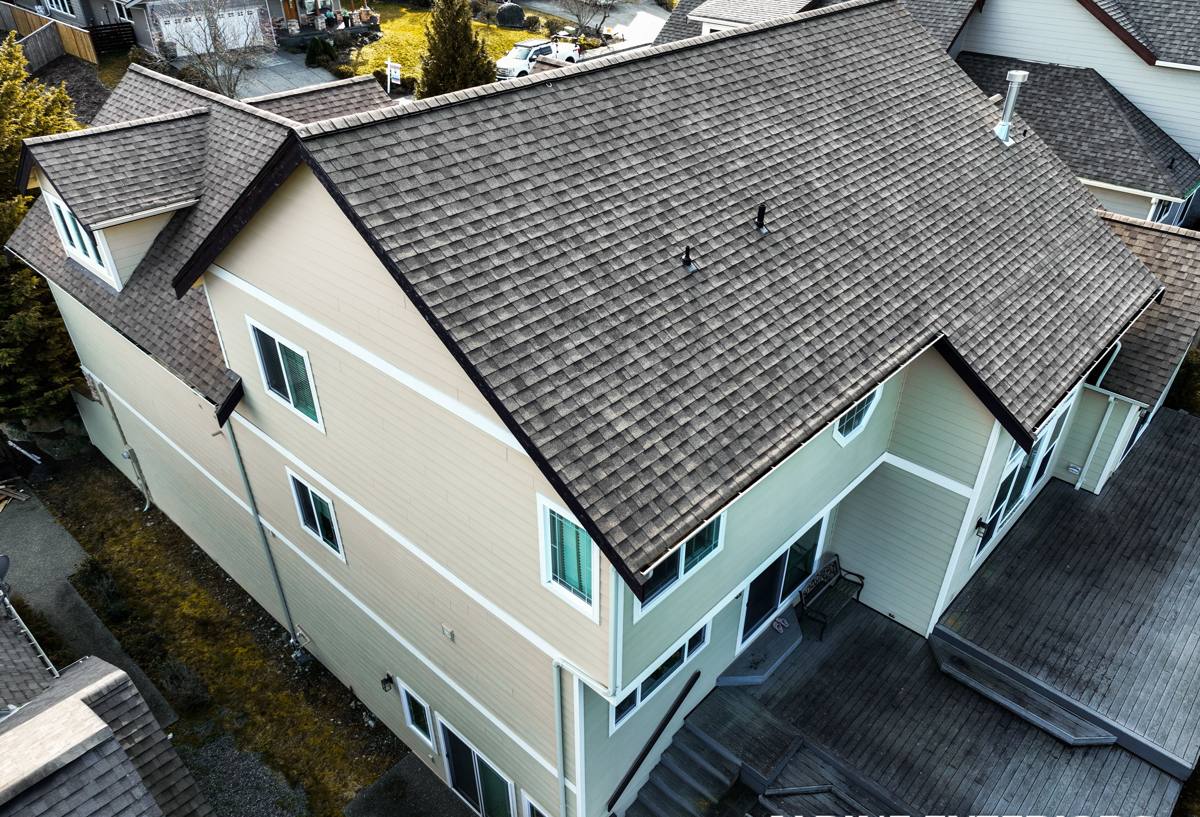
What Ferndale's Climate Actually Does to Siding
Salt Air and Corrosion
Airborne salt from the Strait doesn't just affect homes directly on the water. It travels inland on prevailing winds and settles on exterior surfaces across Ferndale, accelerating corrosion of exposed fasteners, flashing, and any metal trim that isn't rated for coastal exposure. Over years, this is one of the most common reasons older siding systems fail at the fastener line long before the siding panels themselves wear out.
Driving Rain
Storms coming off the water don't just fall straight down — wind-driven rain gets pushed sideways into wall assemblies, especially on west- and south-facing elevations. That means water intrusion risk isn't limited to horizontal surfaces; it's a factor at every seam, joint, and penetration on the exposed sides of the house.
Moss and Prolonged Dampness
Ferndale's tree cover and the region's extended damp season create ideal conditions for moss and algae growth on siding, trim, and especially north-facing walls that rarely see direct sun. Moss holds moisture against the surface far longer than open air would, which is a slow but steady threat to any material that isn't dimensionally stable when wet.
Why Fiber Cement Is the Right Match for This Environment
James Hardie fiber cement siding is engineered from cement, sand, and cellulose fiber — a composition that doesn't rot, doesn't support the kind of organic growth that feeds on wood fiber, and doesn't expand and contract with moisture the way wood or lower-grade composites do. It's also non-combustible, which matters increasingly to Whatcom County homeowners thinking about regional wildfire risk in dry summer months, even in a generally wet climate. For Ferndale specifically, the properties that matter most are:
- Dimensional stability when repeatedly wetted and dried through the region's long rainy season
- A factory-applied ColorPlus finish that resists fading and doesn't need repainting on the same cycle as field-painted wood
- A surface that sheds moss and algae far more easily than wood siding, especially with basic periodic cleaning
- Resistance to the freeze-thaw swings that occur during Whatcom County's occasional cold snaps
We install James Hardie exclusively — not LP SmartSide, not vinyl, not other fiber cement brands like Allura or Cemplank. That's a deliberate standard, not a sales preference, and we're upfront with Ferndale homeowners about why: Hardie's HZ5 product line is specifically engineered for cold, wet climates like ours, the ColorPlus finish and fastening requirements are backed by a strong transferable warranty, and the manufacturer's install specifications are precise enough that we know exactly what a correct job looks like on this coastline.
What a Correct Installation Involves
Fiber cement siding is only as good as the assembly behind it. In a high-moisture, salt-exposed environment like Ferndale, the details below aren't optional extras — they're the difference between a system that lasts decades and one that fails from the inside out while looking fine from the curb.
Weather-Resistive Barrier and Drainage Plane
A properly lapped weather-resistive barrier goes on before the siding, giving any water that gets past the cladding a way to drain back out rather than sit against the sheathing. On homes exposed to driving rain off the Strait, this drainage plane is doing real work, not just satisfying code.
Flashing at Every Penetration
Windows, doors, hose bibs, light fixtures, and vents all need proper flashing integrated with the water-resistive barrier — installed in the correct shingle-lap order so water is always directed outward and down, never trapped behind the siding.
Fastener Selection
Given the salt air common to Ferndale, fastener corrosion resistance is not a place to cut corners. Hardie specifies corrosion-resistant fasteners for coastal-influenced environments, and following that spec — rather than using whatever's on the truck — is part of what a correct install looks like here.
Proper Clearances and Gaps
Siding needs clearance from grade, roofing, decks, and other transitions, plus caulked or capped joints sized correctly per Hardie's fastening and joint guidelines. Panels installed tight against trim or with insufficient ground clearance are a common cause of premature moisture damage on older Whatcom County homes we've re-sided.
HardieTrim and Accessory Matching
Corner boards, fascia, and trim pieces need to be from a compatible, purpose-built system rather than mismatched materials that expand and contract differently than the field siding, which opens gaps over time.
Our Process for Ferndale Siding Projects
- On-site assessment — we look at your home's exposure (how much direct weather, sun, and shade each elevation gets), current siding condition, and any signs of existing moisture damage before we recommend anything.
- Sheathing and barrier inspection — once old siding comes off, we check the sheathing for hidden rot or damage, which is common on older homes in this climate, and address it before anything new goes on.
- Weather barrier and flashing installation — installed to manufacturer spec at every seam, window, door, and penetration.
- Hardie panel, plank, or shingle installation — fastened per Hardie's specifications for our climate zone and exposure category.
- Trim, caulking, and final detailing — the finish work that determines how clean the lines look and how well the joints perform over time.
- Walkthrough — we go over the finished work with you before calling the job done.
Why Hiring a Crew That Already Works in Ferndale Matters
Siding installation guidelines aren't one-size-fits-all across climates — Hardie itself publishes different fastening and clearance specs by climate zone. A crew that mostly works inland or in drier parts of the state may not default to the coastal-appropriate fastener grade, flashing sequence, or clearance details that matter here. A crew that regularly works Ferndale and the surrounding Whatcom County coastline already treats those details as standard practice, not an afterthought, because they've seen firsthand what happens to a house when they're skipped.
Cost Factors for Ferndale Fiber Cement Projects
Every home is different, but the factors below are what typically move the price on a Ferndale siding project. We won't quote a number without seeing the house, but this gives you a sense of what drives the estimate.
| Factor | Why It Matters Here |
|---|---|
| Existing sheathing condition | Hidden moisture damage under old siding is common in this climate and adds repair scope before new siding goes on |
| Home size and wall complexity | More corners, dormers, and trim details mean more labor and material |
| Siding profile chosen | Lap plank, shingle-style, and panel systems vary in material and labor cost |
| Trim and accessory scope | Full trim replacement to match the new siding system costs more than reusing sound existing trim |
| Site access | Wooded or tight-access Ferndale lots can add time for material staging and scaffolding |
| Removal and disposal | Tear-off and haul-away of old siding, especially older materials, factors into overall cost |
Signs Your Ferndale Home May Need New Siding
- Persistent moss or algae staining that returns quickly after cleaning
- Soft spots, bubbling, or visible warping, especially on north- or west-facing walls
- Paint that's failing faster than the typical repaint cycle, suggesting moisture is getting behind the surface
- Visible gaps at trim, corners, or window and door edges
- Rusting or corroded fasteners visible on the siding surface
- Rising energy bills that may point to a compromised weather barrier behind aging siding
Get a Free, No-Pressure Estimate
If your Ferndale home is showing wear from years of salt air, driving rain, or moss, we're happy to take a look and give you an honest read on what your siding actually needs — no pressure, no obligation. Fill out the form below to schedule a free estimate.