 Bellingham Siding
 Why Silver Beach Homes Need a Different Approach to Windows
Silver Beach sits close enough to the water and to mature tree cover that its homes take a different kind of weather beating than houses further inland in Whatcom County. Moist air moves through the neighborhood for much of the year, tree canopy keeps roofs and siding shaded and damp longer after a storm, and older housing stock in the area often still carries its original single-pane or early-generation dual-pane windows. Those windows were never built for the energy codes or moisture realities we deal with today.
When we talk about "energy-efficient windows" for this neighborhood, we're not just talking about a lower heating bill, though that's real. We're talking about keeping bulk water and humid air out of your wall cavities, cutting down on condensation on cold mornings, and reducing the draft you feel sitting near a window in January. Get the product and the installation right, and all of those problems improve together. Get either one wrong, and you can end up with a window that looks new but still leaks air, fogs up, or lets moisture into the framing behind it.
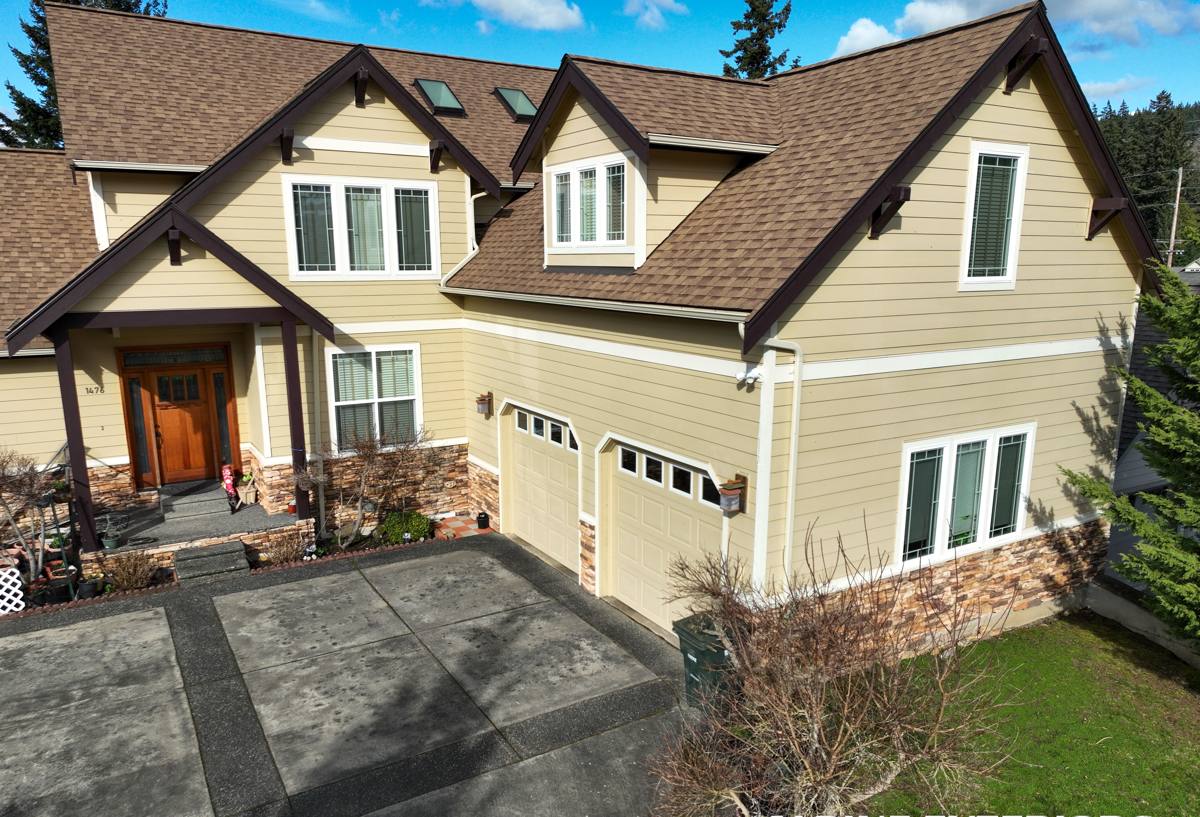
What Bellingham's Climate Actually Does to Windows
Salt Air and Corrosion
Homes near the water anywhere in Whatcom County are exposed to airborne salt that finds its way into hardware, weep holes, and metal fasteners. Over years, that exposure can corrode cheap window hardware, pit aluminum components, and accelerate finish failure on frames that weren't rated for coastal exposure. It's a slow process, but it's a real one, and it's why we pay attention to frame material and hardware quality, not just glass performance.
Driving Rain
Wind-driven rain doesn't fall straight down — it gets pushed sideways into wall assemblies, and windows are one of the most common places for it to find a way in. A window that's watertight in a still, gentle rain can still leak during a sideways storm if the flashing, sill pan, and sealant details weren't done correctly. This is almost always an installation issue, not a product issue.
Moss Season
Bellingham's long stretch of cool, wet months keeps moss and algae growing on north-facing surfaces, shaded trim, and anywhere moisture sits without enough sun or airflow to dry it out. Around windows, that means trim and sills that stay damp longer are more likely to hold onto growth, and wood components that aren't detailed and finished properly can start to soften or rot underneath it.
What a Correct Energy-Efficient Window Job Actually Involves
Replacing a window is not just swapping the sash and calling it done. A correct job in this climate has several parts that all have to work together:
- Removing the old unit and inspecting the rough opening and sill for hidden rot or moisture damage before anything new goes in
- Installing a proper sloped sill pan so any water that does get past the exterior seal drains back out instead of pooling
- Flashing the opening correctly — integrated with the house wrap or weather-resistive barrier, not just caulked over the top
- Choosing a frame material and finish suited to salt air and constant moisture exposure, not just the lowest-cost option
- Selecting glass performance (U-factor and solar heat gain coefficient) that matches how much sun a given wall of the house actually gets
- Sealing and insulating the gap between the new frame and the rough opening without over-packing it, which can bow the frame
- Finishing exterior trim and caulk lines so water sheds away from the window rather than sitting against it
Skip any one of these steps and you can end up with a window that performs fine on paper but fails in practice — usually as a leak, a draft, or premature rot a few years down the road.
Frame Materials: What Holds Up Here
There's no single "best" window material for every house — it depends on your budget, your home's style, and how exposed a particular wall is to weather. Here's how the common options generally compare for a home in this climate:
| Frame Material | Moisture & Salt Air Tolerance | Maintenance | Typical Fit |
|---|---|---|---|
| Vinyl | Good — won't rot or corrode, seams are the main watch point | Low | Most budget-conscious replacements |
| Fiberglass | Very good — dimensionally stable, resists moisture well | Low | Homes wanting durability without wood upkeep |
| Wood (unclad) | Requires diligent upkeep in constant damp exposure | High | Historic homes prioritizing original appearance |
| Wood-clad (aluminum or vinyl exterior) | Good — exterior shell protects the wood core | Moderate | Homes wanting a wood interior look with better exterior durability |
| Aluminum | Prone to condensation and corrosion without a thermal break | Moderate | Best avoided near the water unless thermally broken |
Our standard is to steer homeowners away from unclad wood or non-thermally-broken aluminum on walls that take direct weather, not because those materials are bad products, but because they demand a level of upkeep that most owners don't want to sign up for once they understand what this climate does to exposed wood and bare metal year after year.
Glass Performance: U-Factor and Solar Heat Gain
Two numbers matter most on the label: U-factor (how much heat escapes through the glass — lower is better for our cool, cloudy climate) and solar heat gain coefficient, or SHGC (how much solar warmth passes through). In Whatcom County, we're generally more concerned with keeping heat in than keeping it out, so most homes do best with a low U-factor and a moderate-to-higher SHGC on sun-exposed walls, and a lower SHGC on walls that get harsh afternoon glare. Argon-filled double-pane units are the standard baseline; triple-pane can make sense on north-facing rooms or homes right along the water where wind exposure is constant, but it's a real cost jump and not always worth it for every wall of the house.
Our Process
- On-site assessment. We look at your existing windows, check for signs of hidden moisture damage around openings, and talk through which rooms and walls take the worst weather.
- Product recommendation. We recommend frame material and glass package by wall exposure, not a one-size-fits-all spec for the whole house.
- Written estimate. You get a clear scope and price before any work starts — no surprise add-ons mid-project.
- Removal and opening inspection. Old units come out carefully so we can check the rough opening and sill for damage before installing anything new.
- Installation with proper flashing and sill pans. This is the step that determines whether the window actually stays watertight through a sideways rainstorm.
- Finish and cleanup. Trim, caulking, and site cleanup so the job looks as good as it performs.
Signs Your Silver Beach Home May Need Window Replacement
- Visible condensation or fogging between the panes of a dual-pane window (a sign the seal has failed)
- Soft or discolored wood trim around the window frame
- Noticeable drafts near the window even when it's fully closed and latched
- Difficulty opening, closing, or locking the window smoothly
- Moss or dark staining building up on sills or trim that never fully dries out
- Rising energy bills without a clear explanation elsewhere in the house
- Visible daylight or gaps around the frame from outside
Cost Factors Worth Understanding
Window replacement pricing varies by opening size, frame material, glass package, and how much of the surrounding trim or siding needs to be opened up to do the job right. As a general rule, vinyl runs less than fiberglass, which runs less than wood-clad, and triple-pane glass adds more cost than a straightforward argon-filled double-pane unit. We'll always break down where your money is going in a written estimate rather than handing you a single lump number, so you can see which choices are driving the price and where there's room to adjust if your budget is tight.
Why It Matters to Hire a Crew That Already Works Silver Beach
A contractor who's worked this specific stretch of Bellingham knows what to expect before they ever pull the old window out — which wall orientations take the worst driving rain, how much moss buildup to plan around on shaded elevations, and why a sill pan detail that's optional in a drier climate is not optional here. That local familiarity shows up in fewer surprises during the job and a finished window that's actually built for the conditions it has to survive, not just installed to a generic national spec sheet.
If you're weighing whether it's time to replace windows on your Silver Beach home, we're happy to take a look and give you an honest read on what's going on — no pressure, no obligation. Fill out the form below for a free estimate.