 Bellingham Siding
 Why Barkley Homes Take a Different Kind of Weather Beating
Barkley sits close enough to Bellingham Bay and the Salish Sea that salt-laden air reaches the neighborhood's siding year-round, not just on stormy days. Add in the wind-driven rain that comes through Whatcom County off the water — rain that hits walls at an angle instead of falling straight down — and you've got two of the three conditions that wear out exterior materials faster here than in drier parts of the state.
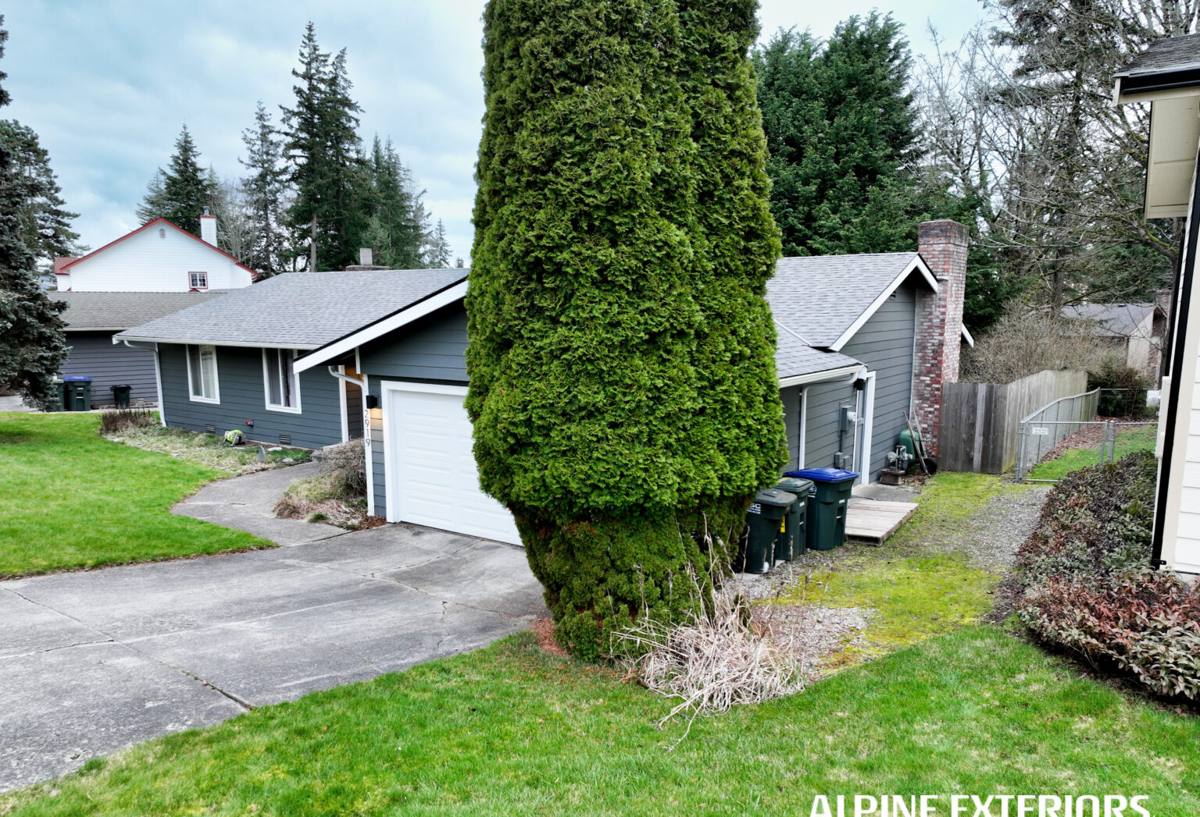
The third is shade and moisture. Many lots in and around Barkley have mature tree cover, which is great for privacy but keeps siding damp longer after a storm and creates ideal conditions for moss and algae growth on north-facing walls from fall through spring. Put salt air, sideways rain, and a long moss season together, and you have a climate that punishes any siding product that doesn't handle sustained moisture exposure well.
What James Hardie Brings to This Specific Environment
James Hardie fiber cement siding is engineered in climate-specific formulations, and the HZ5 product line is built for regions like ours — areas with high moisture exposure and freeze-thaw cycles. It's non-combustible, it doesn't rot, and it doesn't feed wood-destroying insects the way wood-based products can. The factory-applied ColorPlus finish is baked on under controlled conditions, which means it resists fading and holds up to UV and moisture exposure far better than a coat of field-applied paint.
None of that is marketing language — it's the reason we standardized on this one product instead of carrying multiple siding brands. A material that's engineered for wet coastal climates and backed by a real manufacturer warranty is a better long-term bet for a Barkley home than a product chosen mainly on upfront price.
Why We Don't Install Everything on the Market
We get asked why we don't offer vinyl, LP SmartSide, or other fiber cement brands alongside Hardie. The honest answer is that carrying five different products means being an expert in none of them, and installation quality matters more than brand name when a wall is exposed to this much moisture. We chose to specialize in one system, learn its details cold, and install it correctly every time rather than spread a crew thin across products with very different moisture behavior and installation requirements.
Choosing the Right Hardie Line for a Barkley Home
Not every Hardie product fits every house, and part of doing this job right is matching the product to the home instead of defaulting to one option.
- HardiePlank lap siding — the most common choice, available in multiple widths and in smooth or cedarmill (woodgrain) texture, works on most standard homes in the area.
- HardieShingle — staggered-edge or straight-edge panels used as accent siding on gables or dormers, common on homes with more Craftsman-style detailing.
- HardiePanel — used for a vertical board-and-batten look, often paired with lap siding for a mixed-material appearance.
- HardieTrim — matching trim boards for corners, window casing, and fascia so the whole exterior system is consistent.
ColorPlus offers a range of factory finishes, and picking one that suits the home's style (and holds up visually against the muted, overcast light common here) is part of the consultation, not an afterthought.
What a Correct Installation Actually Involves
Fiber cement siding is only as good as the installation behind it. In a wet climate like this one, a few details matter more than they would in a drier region.
The Drainage Gap
Hardie's installation instructions for our region call for a rainscreen or drainage gap behind the siding rather than mounting it directly against the wall sheathing. That gap lets any moisture that gets behind the siding drain and dry out instead of sitting against the wall assembly. Skipping this step is one of the most common corners cut on lower-bid jobs.
Flashing and Fastening
Every window, door, and roofline intersection needs proper flashing so water is directed out and away from the wall, not into it. Fasteners have to be the correct type, driven to the correct depth — not overdriven, which crushes the material and creates a weak point, and not underdriven, which leaves siding loose over time.
Joint Treatment and Clearance
Not every seam is meant to be caulked; Hardie specifies which joints should be sealed and which should be left as designed. Siding also needs proper clearance from grade, roof lines, and decks so it isn't sitting in standing water or wicking moisture from below — a detail that matters even more in a region that sees this much annual rainfall.
Mistakes We See on Poorly Installed Jobs in This Area
Because Hardie is a forgiving-looking material, installation shortcuts don't always show up right away — they show up two, five, or ten years later as moisture damage, cracking, or paint failure at the seams. Some of what we run into on tear-offs and repair calls:
- Siding nailed tight against the sheathing with no drainage gap, trapping moisture behind the wall
- Missing or improperly lapped flashing around windows and roof intersections
- Every joint caulked solid instead of following the manufacturer's specified joint treatment
- Siding installed too close to grade, decks, or roof lines, allowing constant moisture contact
- Fasteners overdriven or placed outside the manufacturer's nailing zone
None of these are visible from the curb the day the job wraps up. They show up later, which is exactly why installation quality matters more than which brand is on the truck.
Cost Factors for a Barkley James Hardie Project
Every home is different, so we don't quote a flat per-square-foot number without seeing the house. But the factors that move a project's cost are consistent:
| Factor | Why It Matters |
|---|---|
| Home size and wall complexity | More corners, gables, and roof intersections mean more cutting, flashing, and labor time |
| Existing siding removal | Full tear-off exposes the sheathing for inspection and repair, which is necessary for a correct install |
| Sheathing or framing repair | Moisture-related rot found during tear-off has to be repaired before new siding goes on, not covered over |
| Plank profile and texture | Wider planks, shingle accents, or board-and-batten detailing add material and labor cost over a standard lap job |
| Trim and color selection | Custom trim packages and certain ColorPlus finishes carry different material costs |
| Site access | Multi-story walls, tight lot lines, and mature landscaping around the home affect scaffolding and labor time |
Our Process, Start to Finish
- On-site inspection and estimate — we look at the current siding, the wall assembly where visible, and any existing moisture damage before quoting anything.
- Detailed proposal — a written scope specifying the Hardie line, profile, color, and trim package, not a vague allowance.
- Tear-off and sheathing check — old siding comes off, sheathing is inspected, and any rot or damage is repaired before new material goes up.
- Installation to manufacturer spec — drainage gap, flashing, fastening, and joint treatment done according to Hardie's requirements for this climate zone, not shortcuts.
- Final walkthrough and warranty registration — we walk the finished job with the homeowner and make sure the manufacturer warranty is properly registered.
Why a Crew That Already Works in Barkley Matters
Barkley has its own mix of housing — some newer construction alongside updated older homes — and a crew that's already worked in the neighborhood has a feel for how these homes were built and where moisture problems tend to show up first. That's not something you can fully substitute with a generic quote from a contractor unfamiliar with Bellingham's permitting process or Whatcom County's weather patterns.
There's also a practical side: if something needs a warranty follow-up or a touch-up down the road, a local crew can get back out to the property without treating it as a special trip. That responsiveness matters more once the project is done and you're the one living with the result.
Questions Worth Asking Any Contractor Before You Hire
- Do you install a drainage gap behind the siding, and can you explain why?
- Will you do a full tear-off, or install over the existing siding?
- Who is responsible for flashing at windows, doors, and rooflines?
- Is the manufacturer warranty registered in the homeowner's name after the job?
- Have you worked in this neighborhood or climate zone before?
Living With Hardie Siding Through Whatcom County's Moss Season
A correctly installed Hardie exterior needs far less upkeep than wood or vinyl, but it's not zero-maintenance in a climate like this. An annual gentle rinse (low pressure, not a direct pressure-washer blast) clears moss and algae buildup before it takes hold. Keeping gutters clear and trimming back vegetation that shades north-facing walls helps those areas dry out faster between storms. It's also worth a quick visual check of caulking and trim joints once a year, since catching a failed seal early is a lot cheaper than dealing with the moisture damage that follows if it's ignored for a few seasons.
If you're weighing siding options for a home in Barkley, we're happy to take a look and give you a straight, no-pressure estimate — including an honest read on whether your current siding has any of the installation issues covered above. There's no obligation, just use the form below to get started.