 Bellingham Siding
 Why Blaine Roofs Wear Differently Than Roofs Ten Miles Inland
Blaine sits right on Semiahmoo Bay, and that changes what a roof has to survive. Salt-laden air moves off the water and settles on every exposed surface, including your roof. Combined with Whatcom County's long wet season and the wind-driven rain that comes with winter storms off the Strait of Georgia, roofing materials here take a harder beating than the same products would a short drive inland. Add in the moss that thrives in our shaded, damp shoulder seasons, and you've got three separate stressors working on a roof at the same time: corrosion, water intrusion, and organic growth that holds moisture against the surface.
Metal roofing handles this combination better than most materials when it's specified and installed correctly for a coastal environment. It handles it poorly when it isn't. The difference almost always comes down to material choice, fastener selection, and flashing detail — not the fact that it's "metal."
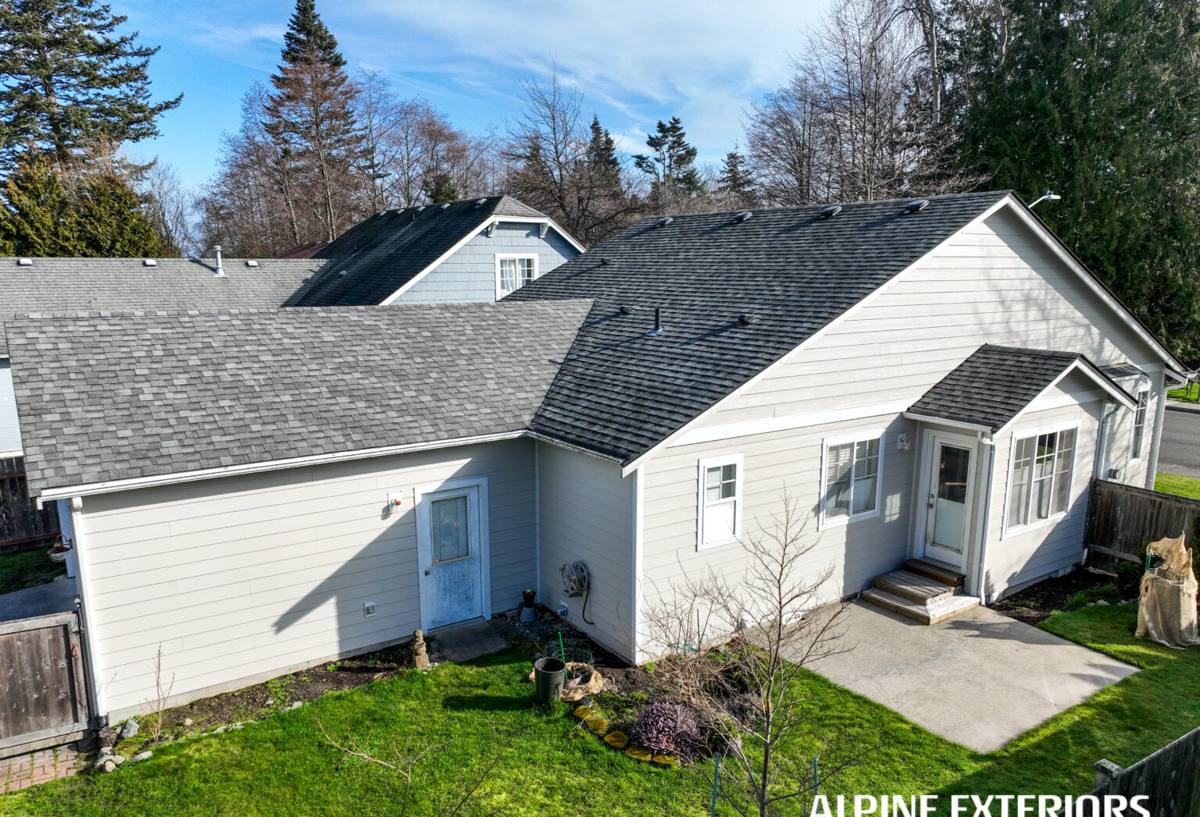
What Salt Air Actually Does to a Metal Roof
Salt air doesn't destroy a roof overnight. It works slowly, through a process called galvanic corrosion, which speeds up wherever two dissimilar metals touch and stay damp — a steel fastener in an aluminum panel, for example, or an unprotected cut edge. In a coastal town like Blaine, those small oversights show up years faster than they would in Bellingham proper or further inland in Whatcom County.
Where corrosion typically starts
- Cut panel edges that weren't sealed or coated after fabrication
- Fasteners that don't match the panel's metal type
- Flashing laps facing the prevailing wind and salt spray direction
- Low-slope sections where salt residue and moisture sit longest between rains
- Coastal-facing gutters and drip edges that trap standing moisture
None of these are exotic problems. They're standard failure points that a crew familiar with coastal installs already designs around, because they've seen what happens when they're overlooked.
Choosing a Panel and Finish That Actually Belongs on a Blaine Roof
Not every metal roofing product sold in Washington is a good fit for a bay-front or near-bay property. This is a judgment call we make based on trade-offs, not brand marketing.
Steel vs. aluminum near the water
Steel panels with a quality coating perform fine across most of Whatcom County, but aluminum has a real advantage within a mile or two of saltwater — it doesn't rust the way steel eventually can once a coating is compromised. The trade-off is cost and, on some product lines, a softer panel that needs careful handling during installation to avoid dents. For homes directly exposed to bay winds, we generally steer clients toward aluminum or a marine-grade coated steel, and explain why up front rather than defaulting to whatever's cheapest.
Finish matters as much as base metal
A PVDF (Kynar-type) paint finish holds color and resists chalking far longer than lower-grade polyester coatings, which matters more here than in a dry climate because UV plus salt residue accelerates finish breakdown. We'd rather spend the extra time explaining finish tiers than install something that looks dull in five years and blame the weather.
What a Correct Metal Roof Installation Involves
A metal roof is only as good as the details underneath it. In a high-moisture, salt-exposed area like Blaine, a few of these details matter more than they would elsewhere.
Underlayment and moisture barrier
We use a synthetic, high-temp underlayment rated for the sustained damp conditions common here, with self-adhered ice-and-water membrane at eaves, valleys, and any low-slope transitions — the places wind-driven rain is most likely to find a way under the panels.
Fastening and flashing
Fasteners are matched to the panel metal to avoid galvanic reaction, and all cut edges are sealed rather than left bare. Flashing at chimneys, vents, and wall transitions is lapped and sealed to shed water even when rain is coming in sideways, which it regularly does off the water.
Ventilation
Proper ridge and soffit ventilation keeps condensation from forming under the panels from the inside — a problem that shows up as rust or rot from underneath, invisible until it's advanced. This gets skipped more often than it should on quick metal roof jobs.
Moss and Debris: The Slower-Moving Threat
Metal roofing resists moss far better than asphalt shingles or cedar, but "resists" isn't "immune." Moss and organic debris can still build up in valleys, around penetrations, and anywhere panels meet at a low angle, especially on tree-shaded lots common around Blaine and greater Whatcom County. Trapped debris holds moisture against the panel and its fasteners, which is exactly the condition that speeds up corrosion and finish breakdown.
- Keep gutters and valleys clear going into fall and again after major windstorms
- Trim back overhanging branches that shed needles or leaves onto the roof
- Have flashing and fastener heads checked every couple of years, not just when there's a visible leak
- Rinse visible moss growth gently rather than pressure-washing, which can damage coatings and seals
Metal Roofing Compared to Other Common Options in This Climate
| Factor | Metal Roofing | Asphalt Shingle | Cedar Shake |
|---|---|---|---|
| Typical lifespan here | 40–60 years with correct install | 18–25 years, less near salt air | 20–30 years, higher maintenance |
| Moss resistance | High | Low to moderate | Low |
| Salt air durability | High if metal/finish matched to exposure | Moderate, granule loss over time | Moderate, prone to splitting |
| Upfront cost | Higher | Lowest | Mid to high |
| Maintenance needs | Low, periodic fastener/flashing checks | Moderate, moss and granule loss | High, regular treatment needed |
The upfront cost gap is real, and we won't pretend otherwise. What closes that gap over time is fewer repairs, fewer moss treatments, and not re-roofing again in twenty years.
Our Process for Blaine Homeowners
The process doesn't change dramatically because a home is on the water, but a few steps get extra attention.
- On-site inspection — we walk the existing roof, check the deck condition, note wind exposure and shading, and identify any existing moss or corrosion patterns before quoting anything.
- Material recommendation — based on exposure, we'll tell you plainly whether standard coated steel is fine or whether the extra cost of aluminum or a higher-tier finish is worth it for your specific lot.
- Tear-off and deck check — old roofing comes off and the deck is inspected for any moisture damage before new underlayment goes down; this is where hidden problems get found, not hidden.
- Installation — panels, fasteners, flashing, and ventilation installed to the standards above, not shortcuts specific to faster inland jobs.
- Walkthrough and cleanup — we review the finished roof with you, including what routine maintenance actually looks like for your specific site.
Why a Crew Already Working in Blaine Makes a Difference
A roofing crew that only occasionally works this far north in Whatcom County will treat a Blaine job like any other Bellingham-area roof. That's a mistake, and it's usually an honest one — they simply haven't run into the specific combination of salt exposure, prevailing wind direction off the bay, and moss cycle enough times to have adjusted their defaults. A crew that regularly works Blaine and the surrounding coastal areas has already made the material and detailing calls above dozens of times, knows which spots on a given roofline take the worst of the wind-driven rain, and isn't guessing at what "coastal-grade" actually needs to mean here versus a marketing term on a spec sheet.
Local familiarity also matters for permitting and code requirements specific to Whatcom County, and for knowing realistic timelines around our wettest months, when a rushed tear-off with no cover in place is how a small job turns into an expensive interior repair.
Signs Your Blaine Home May Need a New Metal Roof or Repair
- Rust streaks or discoloration at fastener heads or panel seams
- Chalky, faded finish that's lost its original color and sheen
- Visible moss buildup in valleys or along low-slope sections
- Loose or lifted panels after a windstorm
- Water stains on interior ceilings near exterior walls or chimneys
- A roof original to a home built more than 30–40 years ago with no upgrades since
Any one of these on its own might not be urgent. Several together, especially on a home with direct bay exposure, are worth having looked at before the next winter storm cycle.
If you're weighing options for a Blaine home, we're happy to take a look and give you a straight read on condition, materials, and realistic cost — no pressure, no upsell script. The estimate form below gets you started.