 Bellingham Siding
 Why Siding Repair Calls Look Different in Columbia
Columbia is one of Bellingham's older, established neighborhoods, which means a lot of homes here are wearing their second or third exterior finish. That mix of home ages — older builds alongside newer infill — means we see almost every siding failure mode in this one part of town: old wood clapboard rotting at the butt joints, aging vinyl that's cracked and bowed from decades of sun and cold cycling, and fiber cement that was installed correctly but has taken a beating at one or two spots. What almost every one of those homes has in common is exposure to the same climate: cool, wet winters, mature tree cover that keeps siding shaded and slow to dry, and enough proximity to Bellingham Bay that salt-laden air is part of the equation.
That combination — moisture that lingers, shade that keeps it lingering longer, and airborne salt that accelerates corrosion of fasteners and trim — is why siding repair in this neighborhood is rarely just cosmetic. A cracked board or a gap at a window trim isn't just an eyesore; in Whatcom County's wet season it's an entry point that stays wet for months at a time. We've built our repair process around that reality rather than a generic "patch and paint" approach.
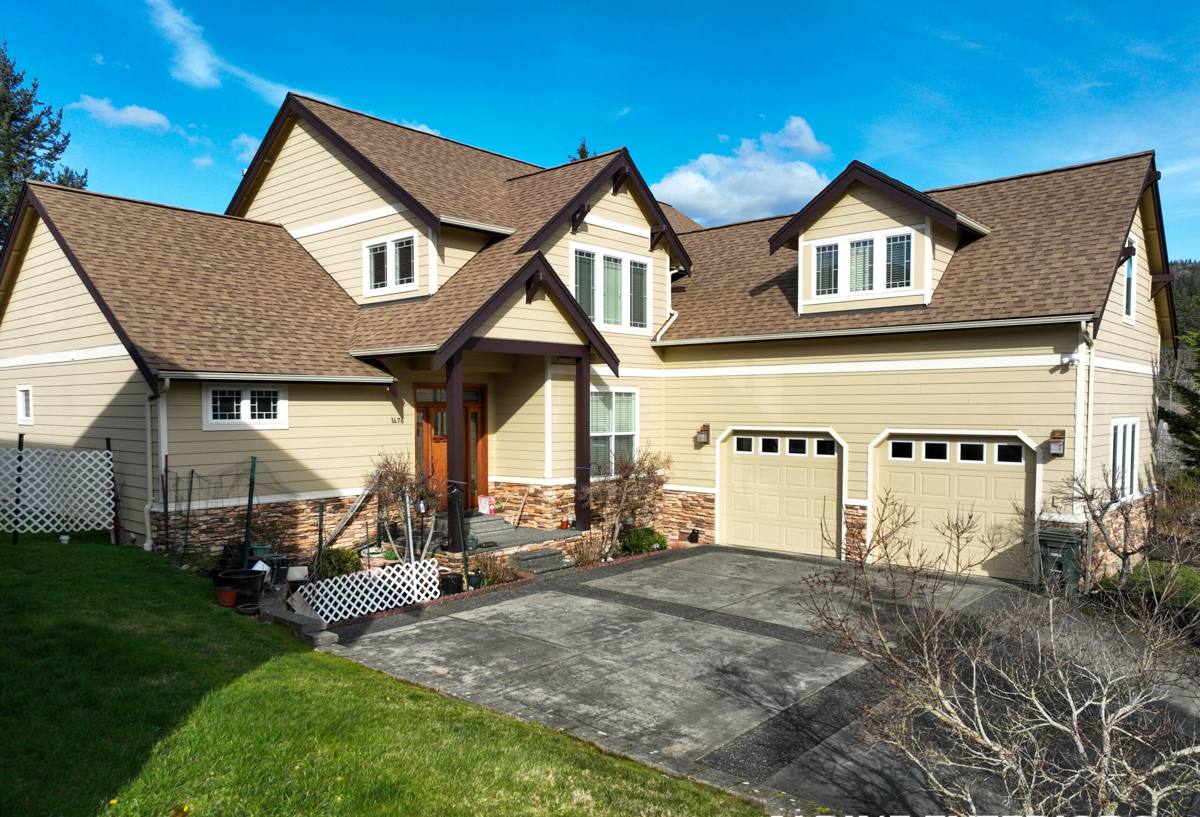
Signs a Columbia Home Needs Siding Repair, Not Just a Fresh Coat of Paint
Most homeowners call us after noticing one obvious problem, but a proper inspection almost always turns up two or three related issues nearby. Here's what we look for on every visit:
- Soft or spongy spots when you press on the siding — usually a sign moisture has gotten behind the surface
- Visible cracking, splitting, or buckled boards, especially near ground level or under downspouts
- Paint that's peeling or bubbling in a localized area rather than across the whole wall (often points to trapped moisture, not just age)
- Gaps or separation at butt joints, corners, and trim where caulking has failed
- Persistent moss or dark streaking on siding that stays shaded most of the day
- Rust staining running down from nail heads or fasteners
- Rot or discoloration around window and door casings, which usually means water has been tracking behind the cladding for a while
Any one of these can be a contained, inexpensive fix. But because Columbia's tree canopy keeps a lot of exterior walls damp longer after every storm, we always check the framing and sheathing behind a damaged section before we call it "just cosmetic." Patching over hidden rot doesn't fix anything — it just hides the problem until it's bigger and more expensive.
Repair vs. Replacement: How We Actually Make the Call
Homeowners often assume any siding damage means a full re-side. That's not true, and a contractor who tells you everything needs replacing without inspecting first isn't being straight with you. The honest answer depends on how much of the wall is affected, what's causing the damage, and what the material underneath looks like.
| Factor | Points toward repair | Points toward replacement |
|---|---|---|
| Extent of damage | Isolated to one or two wall sections | Spread across multiple elevations |
| Cause | One-time impact, failed caulking, a single bad board | Systemic moisture intrusion, poor original installation, wrong product for the climate |
| Sheathing/framing condition | Dry and sound once opened up | Soft, rotted, or showing long-term water damage |
| Age of existing siding | Relatively recent, product still performs well | Original material near or past its practical service life |
| Color/finish match | Factory finish or paint color still available or blendable | Discontinued finish, heavy fading makes patches obvious |
In Columbia we lean toward repair whenever the underlying structure is sound — there's no reason to replace an entire elevation because of one damaged board. But we won't sell you a patch job on a wall where the sheathing is already compromised. That's a short-term fix that costs you twice.
What a Correct Repair Actually Involves
A repair done right isn't just swapping a board and caulking the edges. Our process on a typical siding repair includes:
- Removing the damaged section carefully so we can inspect the house wrap, flashing, and sheathing behind it
- Drying out and, if needed, repairing or replacing any compromised framing or sheathing before anything new goes back on
- Confirming flashing and water-resistive barrier details are correct at the repair — this is where most future leaks start if it's skipped
- Installing new material with proper fastening, clearances, and joint treatment to match manufacturer specs
- Sealing and finishing the repair so it blends with the surrounding siding as closely as the existing material allows
Skipping step two — the part nobody sees once the wall is closed back up — is the single biggest reason repairs fail again within a year or two. It's also the step a lot of quick patch jobs skip, because it takes longer and isn't visible in the finished result.
Why We Only Repair and Install James Hardie Fiber Cement
When a repair calls for new material — because the damaged section can't be salvaged, or because a homeowner decides it's time to address a whole elevation — we use James Hardie fiber cement, and only James Hardie. We don't install LP SmartSide, vinyl, Cemplank, Allura, primed spruce, or cedar, even for small repair patches.
That's not brand loyalty for its own sake. Fiber cement is non-combustible, holds up to sustained moisture exposure far better than wood-based or engineered wood products, and doesn't develop the swelling or edge-flaking that vinyl and OSB-based sidings are prone to after years of Pacific Northwest rain. Hardie's ColorPlus factory finish is also baked on and warranted separately from the substrate, which matters a lot on a repair: matching a small patch to weathered original siding is far more reliable when both are the same engineered product with a documented finish, rather than trying to blend a different material or a field-applied paint color into an existing wall.
We'll be candid that this does limit our options on a repair-only job: if your home currently has vinyl or wood siding, we can still repair it, but if you're looking at replacing a full wall section, we'll walk you through why we'd recommend transitioning that section to Hardie rather than continuing with the original product — and we'll explain the trade-offs honestly so you can decide.
The Bellingham Moss and Moisture Cycle, and What It Means for Repairs
Whatcom County's repair season runs longer than people expect. The combination of salt air off the bay, driving rain that comes in sideways during winter storms, and a moss season that can run from early fall through late spring means siding here rarely gets a long dry stretch to fully recover between wet periods. On shaded lots — which describes a lot of Columbia's tree-lined streets — moss and algae growth can hold moisture directly against siding surfaces for weeks at a time, which accelerates whatever damage was already starting at a compromised seam or joint.
This is why we tell Columbia homeowners not to wait until a problem is visible from the street. A small gap at a corner post or a hairline crack near a downspout doesn't look urgent in July. By the time it's obvious in January, moisture has usually had months to work on the sheathing behind it. Catching these early is the difference between a half-day repair and a multi-week project.
Practical Maintenance Between Repairs
- Keep gutters and downspouts clear so runoff isn't sheeting down the siding face
- Trim back vegetation that keeps siding shaded and damp longer than the rest of the house
- Rinse visible moss and algae buildup before it gets a chance to hold moisture against the surface
- Recaulk trim and joint sealant on a schedule rather than waiting for visible gaps
- Walk the exterior after any major windstorm to check for loosened or displaced boards
Our Process for a Columbia Siding Repair Call
We keep the process straightforward because most repair calls don't need to be complicated:
- Inspection. We look at the damaged area and check surrounding sections, corners, and penetrations that tend to fail at the same time.
- Honest assessment. We tell you plainly whether this is a contained repair, a larger repair, or something that's better addressed as a partial or full re-side, and why.
- Written estimate. No pressure, no upsell tactics — a clear scope of work and price before anything starts.
- The repair itself. Done to the standard above: open it up, check what's behind it, fix what needs fixing, close it back up correctly.
- Follow-up. If we find something during the repair that changes the picture — hidden rot, a bigger moisture issue — we stop and talk to you before proceeding, not after.
Questions Worth Asking Before You Hire Anyone for a Siding Repair
- Will you inspect behind the damaged siding, or just patch what's visible?
- What happens if you find rot or moisture damage once the wall is opened up?
- What material will you use for the repair, and will the finish match the existing siding?
- Is the flashing and water-resistive barrier being checked or replaced at the repair site?
- What's covered under warranty, and for how long?
Why Hiring a Crew That Already Works Columbia Matters
Repair work is unforgiving of guesswork. A crew that already does regular work in this neighborhood has a working sense of which streets sit in near-constant shade, which lots catch the worst of the winter wind off the bay, and which older homes tend to have specific original construction quirks around window trim and corner details. That familiarity means fewer surprises once a wall is opened up, and it means we're not learning Bellingham's climate behavior on your house. It also means when we tell you a patch will hold up through the next moss season, that's based on having seen how repairs in this neighborhood actually perform over time, not a generic estimate.
If you've got a section of damaged, cracked, or moisture-stained siding on a Columbia home, we're happy to take a look and give you a straight answer on what it actually needs. Request a free, no-pressure estimate using the form below, and we'll walk the property with you before recommending anything.