 Bellingham Siding
 Building Decks for Sehome's Specific Conditions
Sehome sits close enough to Bellingham Bay and the Salish Sea that homes here deal with a combination most inland Whatcom County neighborhoods don't: salt-laden air moving in off the water, long stretches of driving rain in fall and winter, and a moss and algae season that can run eight months or more on anything shaded or north-facing. A deck built without that combination in mind will show it early — soft spots at the ledger board, corroded fasteners, slick green film on the walking surface, and rot starting from the inside of joists where nobody looks until a board gives way underfoot.
We build and replace decks specifically for this kind of exposure. That means picking materials and hardware rated for coastal moisture, framing details that actually shed water instead of trapping it, and a finish schedule that accounts for how much rain this part of Bellingham sees compared to areas further from the water.
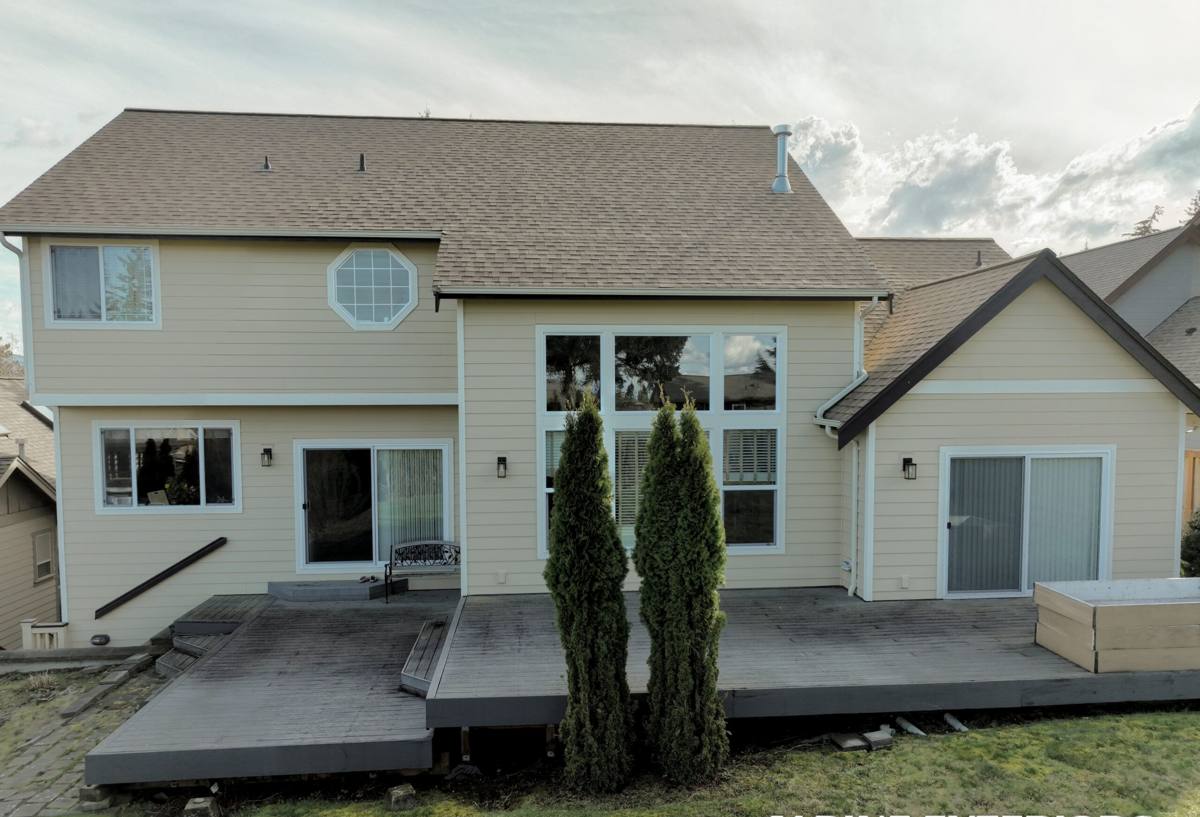
What a Correctly Built Deck Needs Here
Water Has to Have Somewhere to Go
The single biggest cause of early deck failure in this climate isn't the decking material — it's water that gets trapped and never dries. Flat ledger connections, tight board spacing, and joists sitting directly on beams without a drainage gap all create pockets where moisture sits through our wet months. A correctly built deck is pitched slightly away from the house, uses proper flashing at the ledger, and leaves enough airflow underneath and between boards that everything actually dries between storms.
Salt Air Changes What Hardware You Can Use
Standard galvanized fasteners hold up fine in a lot of the country. Close to the bay, they corrode faster than most homeowners expect, and a corroding fastener doesn't fail quietly — it stains the wood around it, weakens the connection, and eventually needs to be dug out and replaced. We use stainless steel or coated fasteners rated for coastal/marine exposure on every deck we build in this area, including the structural connectors, not just the visible screws.
Moss Doesn't Just Make a Deck Slippery
Moss and algae growth on a deck surface is more than a slip hazard, though that alone matters on stairs and landings. Moss holds moisture against the decking material around the clock, which accelerates rot in wood and can dull or degrade the surface of composite products over time. Decks built with airflow underneath, gapped boards, and a surface material chosen for this climate resist moss buildup far better than decks that trap moisture against a shaded surface.
Decking Material Comparison
There's no single right answer for every Sehome property — shade, sun exposure, budget, and how much maintenance a homeowner wants to do all factor in. Here's how the common options actually perform in this specific climate:
| Material | Moisture/Moss Behavior | Maintenance | Typical Lifespan Here |
|---|---|---|---|
| Pressure-treated lumber | Needs regular sealing to resist moss and rot; end grain is most vulnerable | Annual cleaning, re-sealing every 1-2 years | 10-15 years with upkeep |
| Cedar | Naturally rot-resistant but still needs sealing in this rainfall; ages to gray if untreated | Cleaning and oil/sealant every 1-2 years | 15-20 years with upkeep |
| Composite decking | Won't rot; some early composite products stained or stayed damp in shade, newer capped composites shed moisture much better | Periodic washing to prevent surface moss film | 25+ years, varies by product line |
| PVC decking | Fully moisture-resistant, best option for consistently shaded or damp areas | Occasional washing | 25-30+ years |
We'll walk through these trade-offs against your specific lot — how much shade the deck gets, whether it's under trees that drop debris, and what upkeep level you actually want to commit to — rather than pushing one product on every job.
Framing and Fasteners: What's Underneath Matters More Than What's on Top
A beautiful deck surface over an undersized or poorly protected substructure is a problem waiting a few years to happen. For decks we build or rebuild in Sehome, that means:
- Joists and beams sized and spaced to local building code, not just what "looks sturdy"
- Ledger board properly flashed and bolted, never just nailed, where the deck attaches to the house
- Joist tape or equivalent protection on top of framing members to keep standing water out of the wood
- Stainless or coated structural hardware throughout, not only on visible fasteners
- Post bases that keep wood posts off concrete or soil contact points
- Adequate clearance underneath for airflow and drainage, not a deck sitting nearly on grade
None of this is visible once the deck is finished, which is exactly why it's worth asking a contractor to walk you through it before the boards go down.
Our Custom Decks Process
1. On-Site Assessment
We look at sun and shade exposure, drainage on the lot, how close you are to the water, and — for replacements — what's actually going on with the existing structure before quoting anything. Rot and hidden fastener corrosion are common enough on older Sehome decks that we check ledger and joist condition directly rather than assuming.
2. Design and Material Selection
We talk through layout, railing style, stairs, and material options against your budget and how much maintenance you want long-term. This is where the shade/sun and moss discussion actually shapes the recommendation, not a generic pitch.
3. Permitting
Most new decks and many deck replacements in and around Bellingham require a permit, particularly above certain heights or when structural work like ledger attachment is involved. We handle that process rather than leaving it for the homeowner to figure out.
4. Demolition (Replacements Only)
For a replacement, we remove the old structure and check the ledger connection and any framing that will be reused. If we find rot or damage behind the house's siding at the ledger point, we flag it before closing anything back up — that's not a place to guess.
5. Framing and Flashing
This is the step that determines how the deck ages, covered above. We don't skip flashing or drainage detailing to save time.
6. Decking, Railing, and Finish Work
Boards are installed with proper gapping for drainage and expansion, railings are set to code height and spacing, and stairs are built to consistent rise and run — inconsistent stair dimensions are a common safety issue we see on older DIY and budget-built decks.
7. Final Walkthrough
We go over care instructions specific to the material you chose, including how often it should be cleaned given the shade and moisture conditions on your particular property.
Railings, Stairs, and Code Considerations
Guardrail height, baluster spacing, and stair rise/run are all governed by building code, and inspectors in Whatcom County jurisdictions check these details closely — for good reason, since they're the most common source of injury on a poorly built deck. Beyond meeting minimums, we pay attention to how railing design holds up to the weather here: horizontal cable or thin metal balusters can develop surface corrosion faster in salt air than solid wood or vinyl options, which is worth factoring into the design conversation rather than discovering a few years in.
Maintaining a Deck in a Moss-Prone Climate
Even a well-built deck needs some seasonal attention here. A simple maintenance rhythm goes a long way:
- Sweep leaves and debris off the surface regularly in fall — trapped organic matter is where moss growth starts
- Wash the deck surface at least once or twice a year with a deck-safe cleaner to remove early moss and algae film
- Check and clear gaps between boards so water and debris don't build up
- Inspect railings and stair connections annually for looseness or corrosion at fastener points
- Re-seal wood decking on the schedule appropriate to the product — don't wait until it's visibly graying and absorbing water
- Keep an eye on the area right where the deck meets the house siding, since that's the most common spot for hidden moisture problems to develop
Why a Crew That Already Works in Sehome Makes a Difference
A deck contractor who mainly works drier, inland projects can still build something structurally fine on paper and have it underperform here. Knowing how much rain this specific area sees compared to the rest of Whatcom County, how fast moss establishes on a shaded north wall near the bay, and which fastener and flashing details actually matter in salt air isn't something you pick up from a general how-to guide — it comes from building and repairing decks in these exact conditions. We're not guessing at what Sehome's climate does to a deck over ten or fifteen years; we've seen it, and we build accordingly from the start.
Get a Free, No-Pressure Estimate
Whether you're planning a new custom deck or replacing one that's showing its age, we're glad to take a look and give you an honest assessment — what's salvageable, what isn't, and what it would take to build something that actually holds up to Sehome's weather. Fill out the form below for a free estimate, no obligation.