 Bellingham Siding
 Decks Built for South Hill's Hillside Weather
South Hill sits up above downtown Bellingham with some of the best sightlines to Bellingham Bay and the San Juans in the county — which is exactly why so many homes here have decks, or want one. It's also a spot where the weather does real work on outdoor structures. You're catching salt-laden air off the water, long stretches of driving rain through fall and winter, and shade from mature trees that keeps surfaces damp and slow to dry. Put those three together and you get moss, algae, and slow-motion wood decay on any deck that wasn't built with this specific climate in mind.
A deck built the same way you'd build one in Spokane or Boise won't hold up the same way here. The framing, the fasteners, the decking material, and even the layout all need to account for Whatcom County's wet marine climate. That's the whole point of this page — what a deck actually needs to survive and look good on a South Hill lot, not a generic rundown of deck options.
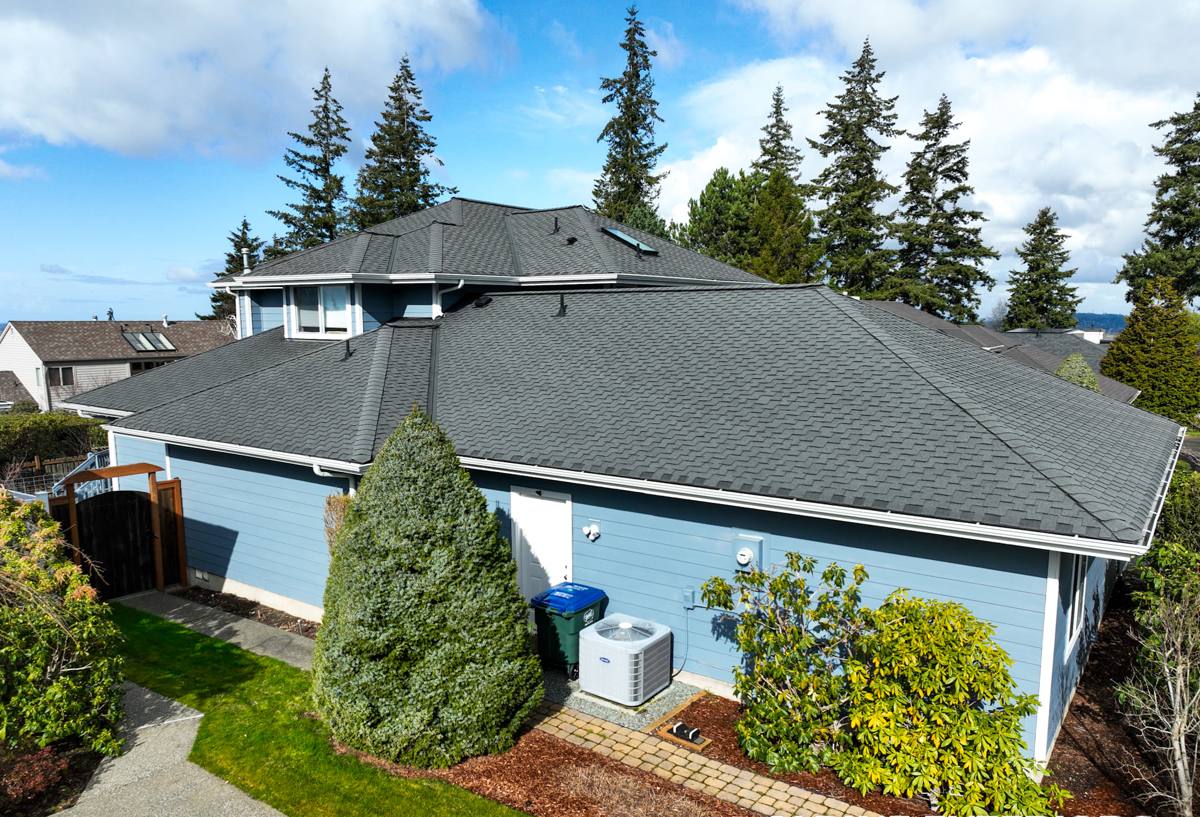
What South Hill's Terrain Does to a Deck
A lot of South Hill lots are sloped, and many homes were built decades ago with framing and foundations sized for the codes and expectations of their era. Both of those things change how a deck should be designed and attached.
Sloped and View-Oriented Lots
Elevated, view-facing decks are common up here, and they carry more structural demand than a ground-level patio deck — taller posts, more wind exposure, and often a need for guardrails at heights where a fall matters. On a slope, footing depth and placement take more thought than on a flat lot, and drainage below the deck has to be planned so runoff doesn't just pool against the house foundation or a retaining wall.
Older Home Attachment Points
Where a deck attaches to the house — the ledger board — is the single most common failure point on older homes. If the rim joist behind the siding has any hidden rot, or if the original construction didn't flash that connection properly, a new deck can look great and still be unsafe within a few years. On an older South Hill house, we check that connection before we ever talk about decking material, because no amount of nice railing or composite boards fixes a ledger that's attached to soft wood.
Decking Material: What Actually Holds Up Here
Every decking material handles constant moisture and shade differently, and in a neighborhood with real tree cover and salt air, that difference shows up faster than the sales brochures suggest. Here's how the common options actually perform in this climate, not in a lab.
| Material | Moss/Algae Resistance | Maintenance | Realistic Lifespan Here |
|---|---|---|---|
| Pressure-treated fir/pine | Low — needs regular cleaning and re-sealing | Annual wash, re-stain every 2-3 years | 15-20 years with upkeep |
| Cedar | Moderate — naturally rot-resistant but still grows moss in shade | Cleaning plus periodic oil/sealer | 20-25 years with upkeep |
| Composite (capped) | Good — resists rot, still needs periodic washing | Occasional wash, no staining | 25-30+ years |
| PVC decking | Best — non-organic surface, least food source for moss | Lowest — soap and water | 30+ years |
None of these are maintenance-free in a place that gets this much rain and shade — moss will grow on almost any horizontal surface that stays damp and doesn't see direct sun, including composite and PVC. The difference is how much damage that moss does while it's there, and how hard it is to clean off. We'll walk through the real trade-offs — cost, look, and upkeep — for your specific lot rather than push one product across the board.
Framing, Footings, and Flashing: The Part You Don't See
The decking boards get all the attention, but the structure underneath is what determines whether the deck is safe and dry in ten years. On South Hill jobs, three things get extra attention:
- Ledger flashing: proper metal flashing and a water-resistive barrier behind the ledger board, so rain doesn't wick into the house framing at the attachment point
- Footing depth and bearing: footings sized and placed for the actual soil and slope on your lot, not a one-size-fits-all spec
- Joist protection: joist tape or an equivalent moisture barrier on top of framing lumber, since exposed cut ends and fastener holes are where rot starts first in a wet climate
Skipping any of these doesn't show up on day one. It shows up in year five or six, as soft spots, staining on the siding above the ledger, or a railing post that's gone spongy at the base. We build to the framing details that matter here, even where they add a little labor a homeowner would never see or ask about.
Permits
Most new decks and deck rebuilds in Bellingham and unincorporated Whatcom County require a building permit, especially once you're above a certain height or attaching to the house. Requirements and thresholds vary depending on your exact location and the scope of work, so we handle that check as part of the estimate rather than asking you to guess.
Fasteners and Hardware: Where Salt Air Wins If You Let It
Bellingham's proximity to the water means anything metal on an exposed deck is exposed to salt-laden moisture, not just plain rain. Standard galvanized fasteners can start showing rust streaks on the decking within a couple of seasons in that environment, especially on higher, more exposed South Hill decks.
- Stainless steel or high-grade coated fasteners rated for coastal/marine exposure
- Hidden fastener systems on composite and PVC decking, which also reduce the small gaps where moss and debris collect around screw heads
- Post bases and structural connectors rated for exterior/wet-use, not interior-grade hardware
- Railing hardware matched to the railing material so dissimilar metals aren't corroding against each other
This is a small line item on an estimate that makes a real difference in how the deck looks and performs after five winters of driving rain and salt air.
Our Process for South Hill Deck Projects
- Site walk: we look at slope, drainage, existing structure (if it's a rebuild), sun/shade exposure, and how the deck ties into the house
- Design and material discussion: honest trade-offs on decking material, railing style, and layout based on your budget and how you'll use the space
- Permit handling: we confirm what's required for your address and pull the permit as part of the job
- Structural work first: footings, framing, ledger flashing, and joist protection — the parts that determine how long the deck lasts
- Decking, railing, and finish work: installed with fasteners and hardware suited to this climate
- Final walkthrough: we go over care and maintenance specific to the material you chose before we call it done
Keeping a South Hill Deck Looking Good Year-Round
Whatever material you choose, a little seasonal attention goes a long way in this climate. Homeowners who stay ahead of it get noticeably more life out of their deck than those who let moss and moisture sit.
- Sweep leaves and debris off the deck surface regularly in fall, especially in shaded areas
- Wash the deck at least once a year to remove moss and algae before it gets a grip on the surface
- Check and clear gaps between boards so water and debris don't sit and hold moisture against the framing below
- Inspect railing posts and the ledger connection annually for soft spots, rust streaks, or gaps in flashing
- Re-seal or re-stain wood decking on the schedule the product actually needs in a wet climate, not just when it looks faded
Why a South Hill-Familiar Crew Matters
Every neighborhood in Bellingham deals with the same regional climate, but South Hill's mix of slopes, older homes, and view-oriented decks adds layout and structural questions that a generic deck crew may not think through. A crew that's worked this neighborhood knows to check the ledger attachment on an older house before quoting decking material, knows how footings behave on a sloped lot, and has already seen what salt air and shade do to hardware and moss growth over a few winters. That experience shows up as fewer surprises during construction and a deck that's still solid a decade out, not just on install day.
If you're planning a new deck or need to replace one that's showing its age, we're happy to take a look and give you a straight assessment — what your lot and home actually need, what it will cost, and why. Reach out for a free, no-pressure estimate using the form below.