 Bellingham Siding
 Building Decks for a Marine Climate, Not a Catalog Photo
A deck built from a plan meant for a dry inland climate does not hold up the same way in Puget. This part of Bellingham sits close enough to the water that homes deal with salt-laden air, wind-driven rain that comes in sideways instead of straight down, and a moss season that can stretch from October well into spring. A deck here isn't just outdoor furniture — it's a structure that has to shed water fast, resist corrosion, and stay safe underfoot when it's covered in wet moss and algae for months at a time. We build decks in this area with those conditions as the starting point, not an afterthought.
Most of the deck failures we get called out to inspect in Whatcom County aren't decking board problems — they're structural problems hidden underneath boards that looked fine from the top. Rot at the ledger board, rusted fasteners, undersized or poorly flashed framing. A deck that looks good in year one and starts failing in year five almost always has a mistake buried in the framing or attachment details, not the surface material.
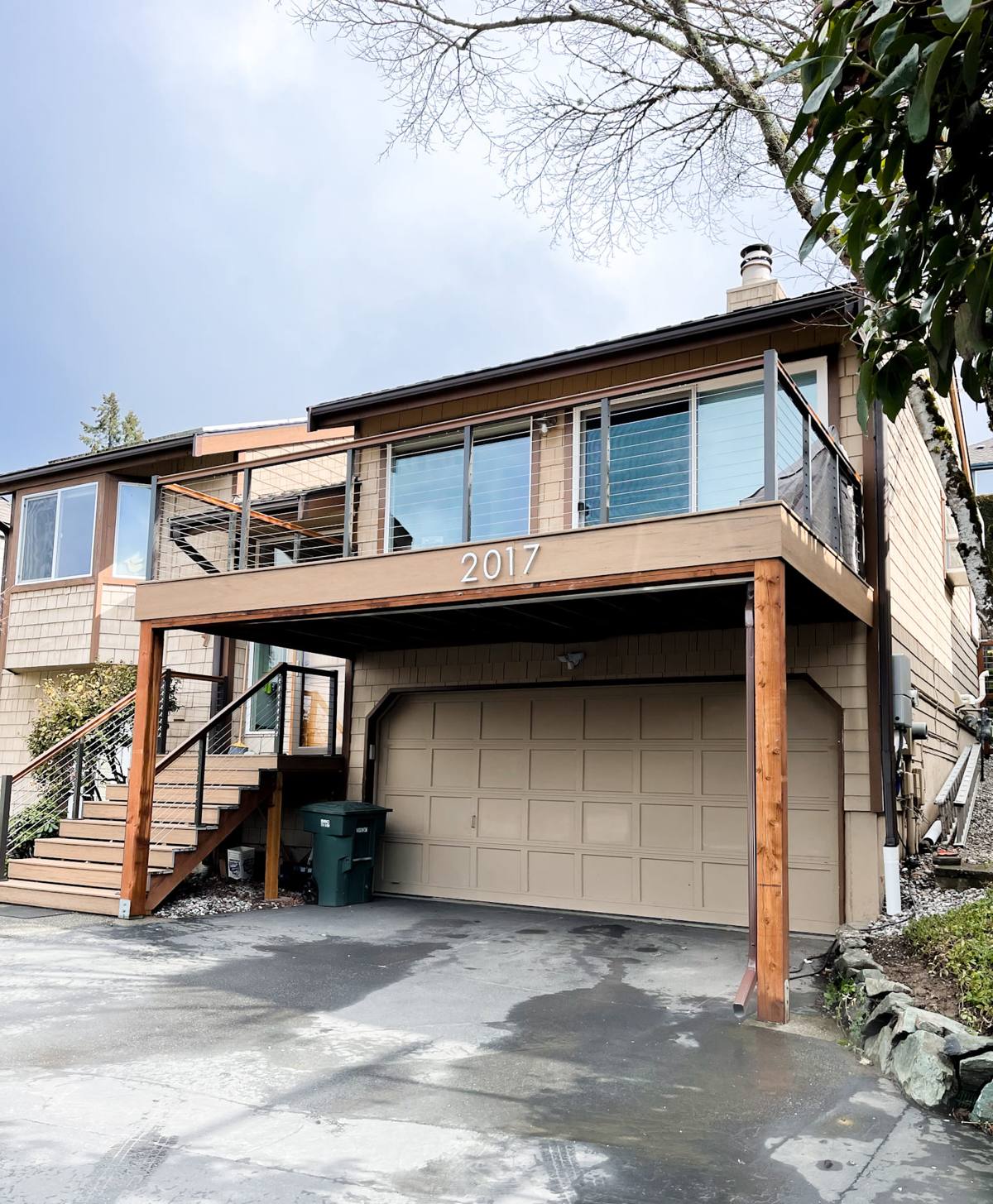
What Puget-Area Homes Actually Need From a Deck
Salt Air and Corrosion
Proximity to Puget Sound means airborne salt settles on everything outdoors, including metal hardware. Standard galvanized fasteners and connectors that would last decades in a dry inland town can start showing surface corrosion within a few years out here, and once corrosion starts on a structural connector, it doesn't stop on its own.
Driving Rain and Water Management
Storms off the Sound frequently bring rain at an angle, which means water gets pushed under railings, into ledger connections, and behind fascia in ways that straight-down rain never would. Flashing details that would be "good enough" in a calmer climate leave gaps that let water track exactly where you don't want it — into the house band joist or down into a support post.
Moss, Algae, and Slip Risk
Bellingham's long wet season means any horizontal wood or composite surface that doesn't drain and dry well will grow moss. Beyond the cosmetic issue, moss and algae on a deck surface are genuinely slippery, and moss that's allowed to sit holds moisture against the board underneath it, accelerating rot in real wood and staining in composite.
Choosing a Decking Material for This Climate
There's no single "best" decking material — there's a best material for your budget, your maintenance appetite, and how much sun versus shade the deck gets. Here's how the common options actually perform in a Puget Sound-adjacent climate:
| Material | How It Handles This Climate | Maintenance | Typical Lifespan Here |
|---|---|---|---|
| Pressure-treated fir/hem-fir | Affordable, but absorbs moisture readily; needs a real moisture barrier and gapping to avoid cupping and rot | Annual cleaning, re-stain/seal every 2-3 years | 10-15 years with upkeep |
| Cedar | Naturally more rot- and insect-resistant than fir, ages well but still needs sealing to resist moss staining | Cleaning plus sealant every 2-3 years | 15-20 years with upkeep |
| Composite decking | Doesn't absorb water or rot, but can still grow surface moss/algae in shaded, damp spots without regular washing | Periodic washing, no staining or sealing | 25-30+ years |
| PVC/capped polymer decking | Fully moisture-resistant surface, best option for heavily shaded or low-airflow deck areas prone to moss | Occasional washing | 25-30+ years |
We're honest with clients about the trade-offs: composite and PVC cost more up front but remove the moss-and-rot maintenance cycle almost entirely, which matters a lot on a deck that sits in shade near mature trees or on the north side of a house where it doesn't get much sun or wind to dry out.
Fasteners and Hardware Matter More Than the Boards
In a salt-air environment, we spec stainless steel fasteners and connectors for anything structural — ledger bolts, joist hangers, post bases — rather than standard galvanized hardware. It costs more, but a corroded joist hanger is a structural failure waiting to happen, and it's not something you can inspect without pulling boards. We'd rather build it right the first time than have a homeowner deal with a hidden hardware failure years later.
What a Correct Deck Build Actually Involves
Ledger Attachment and Flashing
The connection where the deck attaches to the house is the single most important detail on the whole structure, and it's the one point where water intrusion causes the most expensive damage — to the house itself, not just the deck. Correct ledger flashing (proper Z-flashing, house wrap integration, and a gap or drainage path behind the ledger) keeps wind-driven rain from tracking behind the board and into your wall framing.
Footings and Post Bases
Whatcom County's frost depth and drainage-prone soils mean footings need to be sized and set correctly, not guessed at. Post bases should hold the post above the deck surface — wood or composite posts sitting directly on or in concrete trap moisture and rot from the bottom up, which is one of the most common failure points we see on older decks in this area.
Joist Spacing and Board Gapping
Tighter joist spacing and correct board gapping both matter for drainage. Boards laid without enough gap trap water and debris between them, which is exactly what feeds moss growth. This is a detail that's easy to get "close enough" on and still have it look fine on installation day, but it shows up as staining and soft spots within a couple of wet seasons.
Railings and Guards
Railing posts need solid blocking and correct fastening to meet code and actually hold up to real-world lateral force — leaning, kids playing, someone grabbing the rail on a wet, mossy step. We build railing attachments as a structural detail, not a finishing touch.
Our Deck-Building Process for Puget-Area Homes
- On-site assessment — we look at sun exposure, drainage, existing structure (if it's a rebuild), soil conditions, and how the deck's location will handle wind-driven rain off the Sound.
- Design and material selection — sized to your house, your budget, and how much maintenance you actually want to do long-term.
- Permitting — most new decks and many rebuilds in Whatcom County require a permit; we handle that paperwork so it's not on you to figure out.
- Framing — ledger flashing, footings, posts, and joists built to handle both structural load and this climate's moisture exposure.
- Decking and railing installation — correct gapping, fastening, and hardware selection based on the material chosen.
- Final walkthrough — we go over maintenance expectations specific to your deck's material and sun/shade exposure before we consider the job done.
Maintaining a Deck Through Whatcom County's Wet Season
Whatever material you choose, a little seasonal maintenance goes a long way toward avoiding moss buildup and slip hazards through the wet months:
- Sweep leaves and debris off the deck regularly in fall — trapped organic matter is what moss and algae feed on.
- Wash the deck surface (a stiff broom and deck cleaner, or a careful low-pressure wash) at least once before the wet season and once during it if shaded areas start showing green film.
- Check and clear any gaps between boards that have filled with debris — restoring drainage prevents standing water.
- Inspect railings and stair connections annually for looseness, especially after the first hard windstorm of the season.
- For wood decks, reseal on the schedule recommended for your specific product — skipping a cycle in this climate accelerates moss staining and cupping.
- Look underneath the deck occasionally for signs of moisture staining, rust on hardware, or soft wood near the ledger.
Permits and Local Considerations in Whatcom County
New decks and most substantial deck rebuilds in and around Bellingham typically require a building permit, and decks above a certain height or attached to the house usually need to meet specific guardrail, footing, and attachment code requirements. Homes in and near Puget can also fall under additional considerations depending on proximity to shoreline or critical areas, which is worth checking before design work goes too far. We handle the permit process as part of the job rather than leaving homeowners to sort out code requirements on their own.
Why It Matters to Hire a Crew That Already Works in Puget
A deck contractor who mostly works drier, inland jobs will often use the same fastener specs, the same flashing details, and the same material assumptions they'd use anywhere else — and those assumptions don't hold up here. A crew that regularly builds and repairs decks in the Puget area already knows which corners of a lot tend to stay damp longest, which hardware actually holds up to salt air over time, and which material choices are worth the extra upfront cost versus which ones just mean more maintenance later. That local pattern recognition is the difference between a deck that needs real attention again in five years and one that's still solid in twenty.
If you're planning a new deck or need to replace one that's showing its age, we're happy to come take a look and give you a straightforward, no-pressure estimate — just fill out the form below.