 Bellingham Siding
 Deck Repair Built for Columbia's Climate, Not a Generic Checklist
Columbia is one of Bellingham's older, well-established neighborhoods, and that means a lot of decks here were built in a different era — different lumber grades, different fastener standards, and often no real plan for how Whatcom County weather would age them. A deck repair that works in a dry inland climate doesn't hold up the same way a few miles from Bellingham Bay. Salt-laden air, driving rain that comes in sideways off the water, and a moss season that can run half the year all work on a deck differently than they work on siding or roofing, and they work on it faster than most homeowners expect.
We repair decks in Columbia and the surrounding Bellingham neighborhoods regularly enough to know which failures are cosmetic and which ones are structural, and we don't sell a full replacement when a targeted repair will genuinely hold up. This page walks through what we actually look for, what correct repair work involves, and how our process runs from first call to final walkthrough.
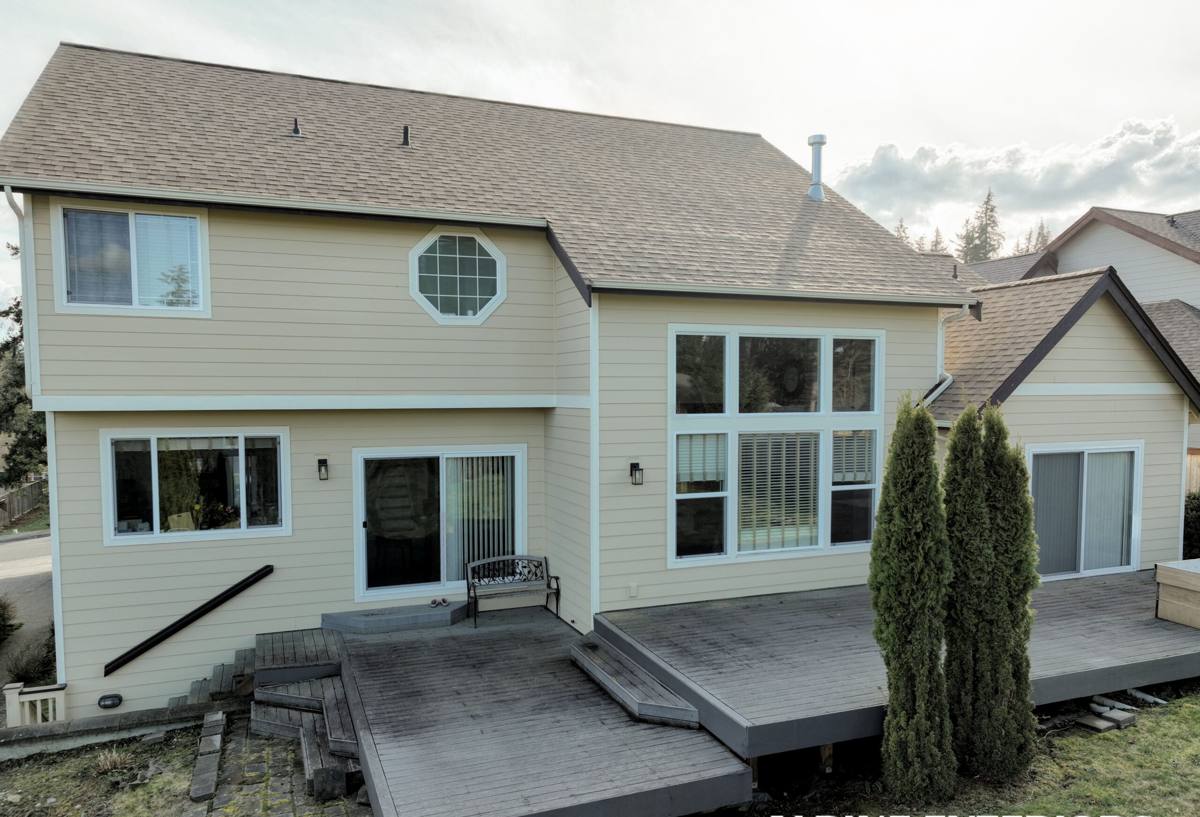
How Whatcom County Weather Actually Damages a Deck
Salt Air and Metal Fatigue
Bellingham's proximity to the water means airborne salt reaches decks even a fair distance inland, and it's hardest on the parts homeowners never look at closely: joist hangers, structural screws, and any galvanized hardware that isn't rated for coastal exposure. Once fasteners start to corrode, they lose holding strength well before the rust is visible from the top of the deck. A repair that only addresses the decking boards and ignores the hardware underneath is a repair that fails again in a year or two.
Driving Rain and Water Intrusion
Rain in this region rarely falls straight down. Wind off the water pushes it at an angle, which drives moisture into places a deck's original builder may not have flashed or sealed for — ledger board connections, stair stringers, and the end grain of boards where they meet a house wall. End grain soaks up water far faster than the face of a board, so rot often starts at butt joints and fastener holes long before the rest of the deck looks weathered.
Moss, Shade, and Trapped Moisture
Columbia's tree cover and the marine layer that sits over Bellingham for much of the fall through spring create ideal moss conditions on any deck that doesn't get full sun. Moss itself isn't structural damage, but it holds moisture against the wood constantly, and it makes boards slick and unsafe underfoot long before rot sets in. A deck that's shaded most of the day needs a different maintenance and repair approach than one that dries out quickly.
Signs a Columbia Deck Needs Repair
Most deck problems give warning signs well before anything fails outright. Here's what we tell homeowners to check for, or to point out when they call us:
- Soft or spongy spots when you walk across the decking, especially near the house or stairs
- Boards that have cupped, split, or pulled away from fasteners
- Rust streaks below screw heads or joist hangers
- A railing that flexes or wobbles when you lean on it
- Green or black staining that keeps coming back after cleaning
- Gaps opening up where the deck meets the house (ledger board separation)
- Stair stringers that feel less solid than they used to
- A musty smell coming from underneath the deck
Any one of these can be minor on its own. Several together, especially near the ledger board or stairs, usually mean the repair needs to go deeper than replacing a few boards.
What a Correct Deck Repair Actually Involves
A repair that's done right starts underneath the deck, not on top of it. We check the framing before we touch the surface boards, because replacing decking over compromised joists or a failing ledger connection just hides the real problem for a while.
Structural Inspection First
This means checking the ledger board attachment to the house, probing joists for soft spots (especially where they meet the ledger or a beam), and checking post bases and footings for movement or rot at ground contact. In a wet climate, ground-contact rot is one of the most common issues we find, and it's invisible from above.
Fastener and Hardware Review
Every joist hanger, structural screw, and bolt gets checked for corrosion, not just visually but for actual holding strength. In a salt-air environment, hardware that looks intact can still have lost significant strength. We replace with fasteners and connectors rated for the exposure, not just whatever matches what's already there.
Decking and Railing Repair
Once the structure underneath is sound, we address the surface: replacing rotted or cupped boards, resetting loose railings, and re-securing stair treads. We match board spacing and fastening patterns to the rest of the deck so repaired sections don't stand out or perform differently than the original.
Drainage and Airflow
Because moss and trapped moisture are such a persistent issue here, part of a correct repair is making sure water actually sheds off the deck and air can move underneath it. That can mean adjusting board gaps, clearing blocked drainage paths, or trimming back vegetation that's keeping a section of the deck shaded and damp longer than it needs to be.
Repair or Replace? How We Actually Decide
Homeowners in Columbia often expect us to push a full replacement, but a well-built deck with isolated damage is usually a better candidate for repair than people assume. Here's the general breakdown we use when we're on site:
| Condition Found | Usually Repairable | Usually Needs Replacement |
|---|---|---|
| Rot location | Isolated to a few boards or one framing member | Widespread through multiple joists, beams, or the ledger |
| Fastener condition | Localized corrosion, structure otherwise sound | Corrosion throughout the hardware system |
| Post/footing condition | Solid footings, isolated post damage | Footings shifted, cracked, or undersized for current code |
| Deck age and design | Sound original construction, good bones | Original build was undersized or poorly detailed for this climate |
| Surface wear | Cosmetic wear, moss, minor cupping | Boards failing across most of the deck surface |
We'll tell you honestly which category your deck falls into. If a repair is genuinely the right call, that's what we'll recommend and price — we don't have any reason to talk you into more work than the deck needs.
Our Deck Repair Process
- Inspection and assessment — we check the deck from the ground up, including underneath, before quoting anything
- Written scope and estimate — you get a clear breakdown of what's being repaired and why, not a vague lump sum
- Structural repairs first — framing, ledger connections, and hardware are addressed before any surface work
- Surface and railing repair — decking, stairs, and railings are repaired or replaced to match the existing deck
- Final walkthrough — we check the repair with you before calling the job done
Materials and Fasteners for a Coastal Whatcom County Climate
What we use for a repair depends on what's already there and what will actually hold up in this environment. For framing repairs, we favor properly rated pressure-treated lumber and structural connectors specified for coastal or high-moisture exposure rather than standard interior-rated hardware. For decking board replacement, the right call depends on the existing material: matching wood-to-wood keeps a natural deck consistent, while composite boards can make sense where moss and moisture have been a recurring problem and the homeowner wants to reduce future maintenance. Neither is universally "better" — it's a trade-off between upfront cost, appearance, and how much upkeep you want to do going forward, and we'll walk through that trade-off honestly rather than push one option.
What Deck Repair Typically Costs
Every deck is different, but here are the general factors that move the price up or down:
| Factor | Effect on Cost |
|---|---|
| Extent of structural damage found underneath | Largest single factor — hidden framing or ledger issues add cost |
| Number of boards needing replacement | Scales with square footage affected |
| Railing and stair condition | Adds cost if hardware or stringers need rebuilding |
| Material choice for replaced sections | Composite generally costs more upfront than matching wood |
| Access to the deck | Second-story or hard-to-reach decks take more labor |
We won't quote a number without seeing the deck, because the framing condition underneath is usually what determines the real scope — and that's exactly what a phone estimate can't tell you.
Why Hire a Crew That Already Works in Columbia
A crew that regularly works Bellingham neighborhoods like Columbia already knows what this climate does to a deck over time, which means less guesswork during the inspection and fewer surprises once repair work is underway. We know to check ledger connections for driving-rain intrusion, to expect corrosion on hardware that's only a few years old near the water, and to plan for moss and shaded areas rather than treat them as one-off problems. That local familiarity with Whatcom County's marine climate is part of what makes a repair actually last, rather than needing to be redone in a couple of wet seasons.
If your deck in Columbia is showing soft spots, loose railings, recurring moss, or you're just not sure whether it needs a repair or a full rebuild, we're happy to take a look. Reach out for a free, no-pressure estimate using the form below.