 Bellingham Siding
 Deck Repair Built for Happy Valley's Weather, Not a Generic Climate
A deck in Happy Valley works harder than a deck almost anywhere inland. Bellingham sits right on the water, so homes here deal with salt-laden air moving off Bellingham Bay, long stretches of driving rain that comes in sideways instead of straight down, and a moss season that can run from early fall through late spring. None of that is unusual for Whatcom County, but it adds up differently on a deck than it does on siding or roofing. A deck is horizontal, it takes standing water and debris directly on its surface, and its structural members are often the last thing anyone looks at until something gives way underfoot.
We repair decks in this neighborhood on a regular basis, and the failure patterns are consistent enough that we can usually tell what we're dealing with before we even get a ladder out. This page covers what actually goes wrong with decks around here, what a correct repair looks like, and how we approach the work so you're not paying to fix the same problem twice.
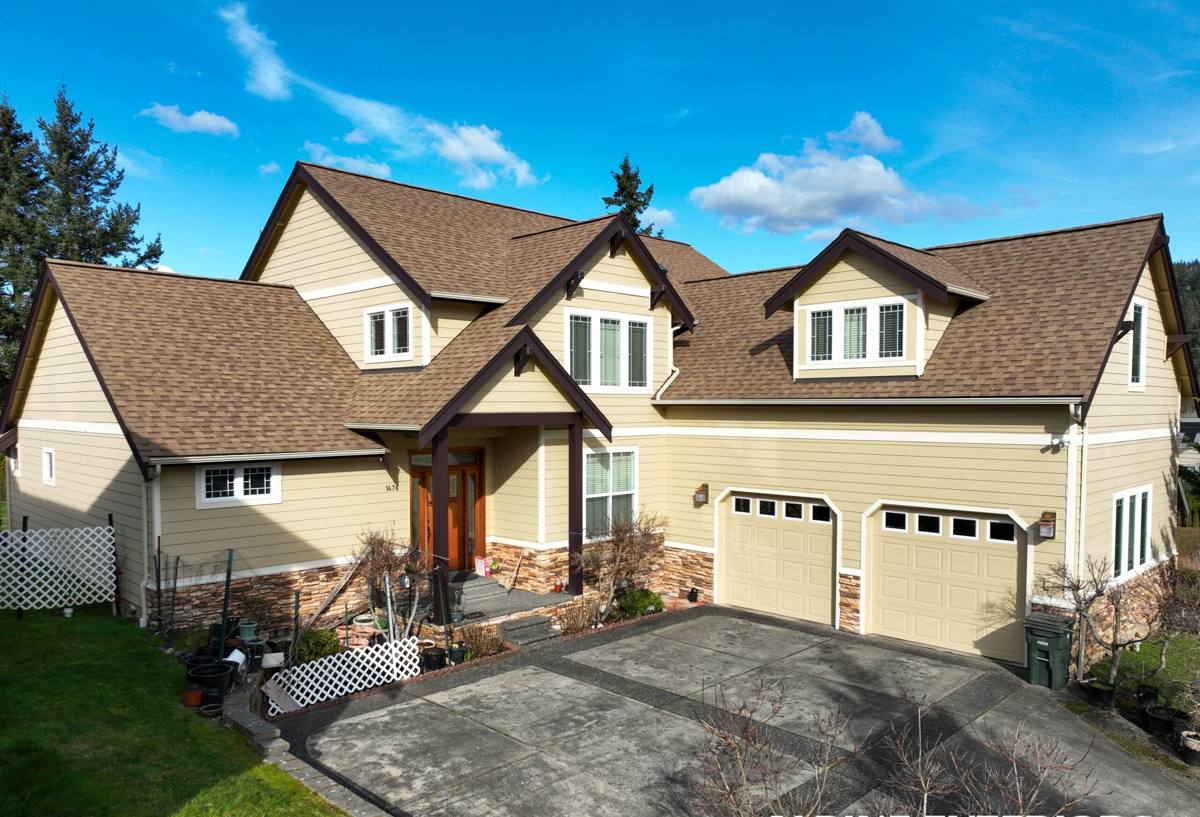
Warning Signs a Bellingham Deck Needs Attention
Most deck problems don't announce themselves with a dramatic failure. They show up as small clues first, usually in the wettest, shadiest parts of the deck. If you're noticing any of the following, it's worth having someone look before the next wet season sets in:
- Boards that feel spongy, springy, or slightly soft when you walk across them
- Gaps opening up where the deck meets the house (the ledger board connection)
- Rust streaks bleeding out around nails, screws, or metal hardware
- Railings or posts that wobble or flex when you lean on them
- Green or black film building up on boards that stay shaded most of the day
- A musty smell coming from underneath the deck, especially after rain
- Nail heads popping up or fastener holes widening around screws
- Visible daylight or gaps at stair stringers or where joists meet beams
Any one of these on its own might be minor. Several at once, especially clustered near the ledger board or under a tree canopy, usually means moisture has been getting in for a while.
What a Correct Deck Repair Actually Involves
Start with the Structure, Not the Surface
It's tempting to judge a deck by how the decking boards look, but the boards are the easiest and cheapest part to replace. The parts that actually keep a deck safe are underneath: the ledger board that bolts the deck to the house, the joists that carry the load, the posts and footings that hold the whole thing up, and the hardware connecting all of it. A repair that only addresses worn-looking boards while ignoring a rotting ledger or an undersized joist is a cosmetic fix, not a real one.
We check the ledger board connection first on every job. This is the single most common point of hidden failure on decks in wet climates, because it's the one spot where wood, flashing, and fasteners all meet at the exact seam where the house and deck join. If flashing was installed incorrectly, or missing altogether, water tracks behind it every time it rains and slowly rots the framing from the inside where you can't see it.
Then the Framing and Hardware
From there we check joists, beams, posts, and footings for rot, checking, and movement, and we look at every joist hanger, post base, and structural screw for rust or corrosion. Salt air accelerates corrosion on standard hardware faster than people expect, and once a joist hanger starts rusting through, it loses holding capacity well before it looks obviously bad.
Finally, the Surface
Decking boards, railings, and stairs come last, once we know the structure underneath is sound. Replacing boards on a deck with a compromised frame is a waste of good material.
Repair, Partial Replacement, or Full Rebuild?
Not every damaged deck needs to come down. The right scope depends on how much of the structure is affected and how old the rest of the deck is relative to its expected lifespan. Here's how we generally think about it:
| Scope | Typical Trigger | What's Involved | Best Fit For |
|---|---|---|---|
| Spot Repair | A few soft boards, one loose railing post, isolated rust | Replace individual boards or hardware, re-secure connections | Otherwise sound decks under 15 years old |
| Partial Replacement | Rot at the ledger, several failing joists, aging railings | Rebuild the affected framing section, replace decking in that zone | Decks with good bones but one weak area |
| Full Rebuild | Widespread rot, undersized original framing, outdated railing code | Remove and reframe from the ledger out, new decking and railings | Decks near or past their structural lifespan |
An honest inspection should tell you which category you're in before any work starts. If a contractor quotes a full rebuild without first checking the framing, or quotes a quick board swap without ever probing the ledger, ask more questions.
Decking Material Options for a Wet, Shaded Climate
Material choice matters more here than it does in drier parts of the country, because everything on a Bellingham deck spends more time wet. Here's how the common options actually perform in this climate, in plain terms:
| Material | Moisture Behavior | Maintenance | Typical Lifespan Here |
|---|---|---|---|
| Pressure-Treated Lumber | Resists rot well if sealed and maintained; end cuts and fastener holes are vulnerable points | Needs re-sealing every 1–2 years in this rainfall | 15–20 years with upkeep |
| Cedar | Naturally rot-resistant, but softer and more prone to surface checking under constant wet-dry cycling | Regular sealing and moss treatment recommended | 15–20 years with upkeep |
| Composite | Doesn't rot or absorb water the way wood does, but can still grow surface algae/moss film in shade | Low maintenance; periodic cleaning to prevent slick surfaces | 25+ years, backed by manufacturer warranty |
We don't push one material over another as a blanket rule — the right call depends on your budget, how much shade the deck sits in, and how much upkeep you actually want to do. What we will say plainly: whatever decking you choose, the framing underneath needs to be built and fastened correctly, because that's what determines whether the deck is actually safe, regardless of what the top surface looks like.
Moss, Algae, and Drainage: The Part Homeowners Underestimate
Moss on a deck isn't just cosmetic. It holds moisture against the wood surface far longer than bare boards would, it makes stairs and walking surfaces genuinely slippery, and in shaded spots it can come back within a season of cleaning if the underlying moisture source isn't addressed. Decks under mature trees or on the north side of a house are the most affected, since they get less direct sun to dry out between rains.
Good drainage matters just as much as moss removal. Deck boards need enough gap and airflow underneath to dry out between storms, and any spot where water pools instead of shedding off the edge is a spot that will develop problems faster than the rest of the deck. Part of a proper repair includes checking board spacing, slope, and under-deck ventilation, not just scrubbing off what's visible on top.
| Deck Exposure | Moss/Moisture Risk | Recommended Attention |
|---|---|---|
| Full shade under tree canopy | High — slow drying, heavy moss return | Annual cleaning, consider trimming overhead branches |
| Partial sun, mixed exposure | Moderate | Cleaning every 1–2 years, watch north-facing corners |
| Open exposure, more wind and rain | Lower moss risk, higher wind-driven rain exposure at the ledger | Check flashing and ledger seal more closely |
Permits, Code, and Safety in Whatcom County
Deck repair isn't always a permit-required project, but structural work — reframing, replacing a ledger connection, or changing railing height or spacing — often is, depending on scope. Building codes also set minimum requirements for guardrail height, baluster spacing, and stair rise/run that older decks sometimes don't meet, since those requirements have been updated over the years. Part of doing this correctly is flagging where an older deck falls short of current code and giving you a straight answer on what needs to change versus what's optional.
This matters most on railings and stairs, since those are the components most directly tied to someone's safety, and they're also the parts most likely to have been altered or patched informally over a deck's lifetime.
Our Process for Deck Repairs in Happy Valley
- Inspection first. We check the ledger, framing, hardware, and surface, and we probe suspect wood rather than just looking at it, since rot often runs deeper than it appears from the surface.
- A clear scope and honest estimate. You get a written explanation of what's actually wrong, what category of repair it falls into, and what it will cost — not a vague number.
- Correct materials and fasteners. Given the salt air here, we use fasteners and hardware rated for coastal, corrosive exposure rather than standard hardware that will rust prematurely.
- Structural work before cosmetic work. Framing and connections get addressed before any new decking goes down.
- Code check on railings and stairs. We flag anything that doesn't meet current safety requirements so you can decide how to handle it.
- Clean handoff. Job site cleaned up, debris hauled, and a plain explanation of what maintenance (if any) the repaired areas will need going forward.
What to Expect in a Proper Repair Quote
- A physical inspection of the ledger board, framing, and hardware — not just a surface walkthrough
- A written scope that separates structural work from cosmetic work
- Fastener and hardware specifications appropriate for coastal exposure
- A straight answer on whether a permit applies to your specific scope
- Clear pricing with no vague allowances buried in the fine print
Why Local Experience in Happy Valley Actually Matters
A deck repair crew that already works in this part of Bellingham has seen how the neighborhood's tree cover, terrain, and building stock behave in practice, not just in theory. That means recognizing the difference between a deck that's been shaded and slowly moss-damaged for a decade versus one with a single bad storm season behind it, and it means already knowing which fastener and flashing details hold up against the wind-driven rain and salt air that Whatcom County sends through most of the year. It also means being realistic about scheduling around our wet season, since some structural repairs are better timed for drier stretches rather than squeezed in during the heaviest rain months.
Local experience also shows up in smaller, practical ways — knowing that a repair scoped in October needs different sequencing than the same repair scoped in July, or recognizing when a deck's problems trace back to a landscaping change (more shade, less airflow) rather than the deck itself aging normally.
Get a Straight Answer on Your Deck
If your deck has soft spots, rust stains, moss that keeps coming back, or railings that don't feel as solid as they used to, it's worth getting an honest look before another wet season adds to the damage. We offer free, no-pressure estimates for Happy Valley homeowners — use the form below to get one scheduled.