 Bellingham Siding
 Why Decks in Sunnyland Wear Out Faster Than the Instructions Say
Every deck material sold in the Pacific Northwest comes with a lifespan estimate printed by a manufacturer who has never stood on a deck in Whatcom County in February. Sunnyland's mix of mature street trees, close-set older lots, and proximity to Bellingham Bay means a deck here deals with more than "rain." It deals with driving rain that comes in sideways during a windstorm, salt-tinged air off the bay that speeds up corrosion on anything metal, and a moss season that can run from October well into April. None of that shows up on a lumber tag, but it shows up on the deck itself — usually as soft boards, rusted fasteners, and a slick green film across anything that doesn't get direct sun.
None of this means a deck in Sunnyland can't last. It means the build has to account for the actual conditions instead of a generic spec sheet. That's the difference between a deck that needs full replacement again in eight years and one that goes twenty-five.
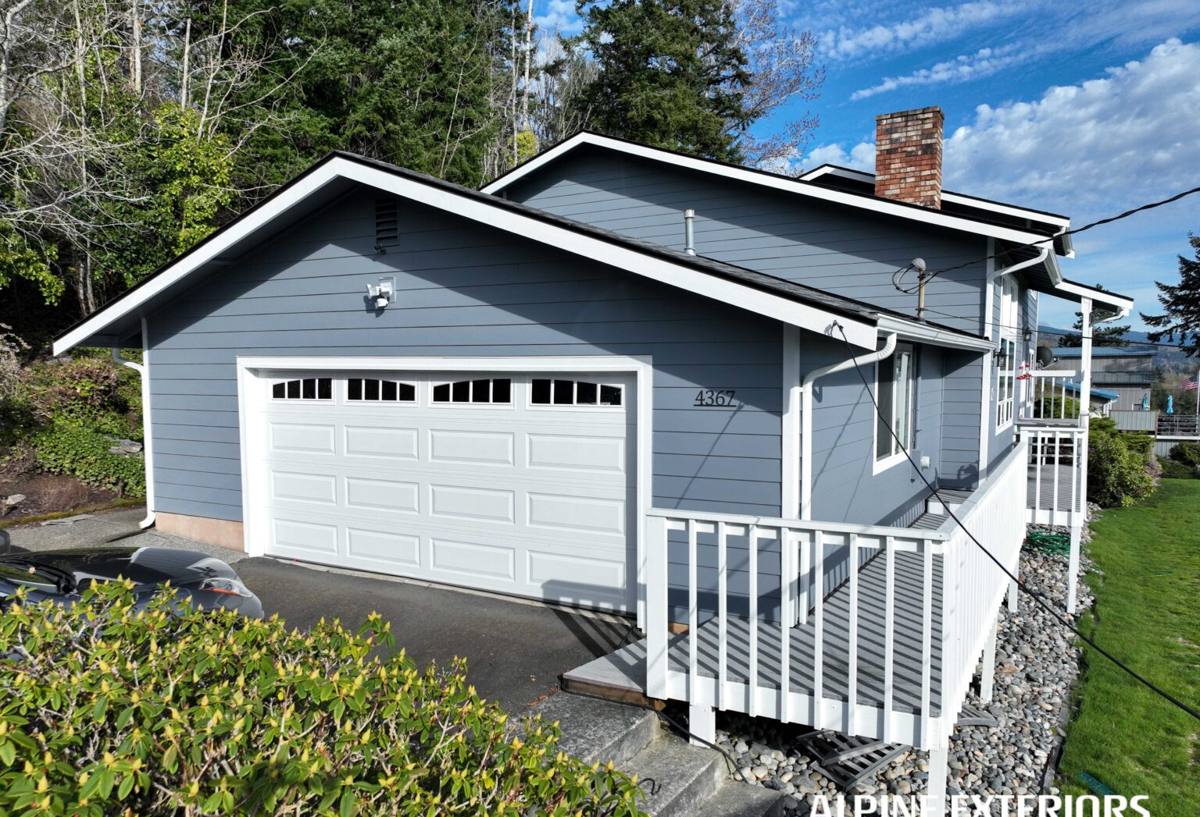
The Ledger Board: Where Most Deck Failures Actually Start
When we get called out to look at a failing deck, the ledger board — the piece that bolts the deck framing to the house itself — is almost always part of the story. It's the connection point where wood meets wood meets siding meets weather, and it's the hardest spot on the whole structure to keep dry.
A lot of decks built years ago, especially additions to older homes common throughout Sunnyland, were fastened with lag screws instead of through-bolts, and installed with little or no flashing between the ledger and the house's siding or sheathing. That was standard practice at the time. It is not standard practice now, for a good reason: water finds that gap, runs behind the siding, and sits against the band joist and ledger where it can't dry out between storms. Given Bellingham's wet season length, that slow rot can go on for years before anyone notices the deck has started to sag, pull slightly away from the house, or feel spongy near the house line.
A correct ledger connection uses corrosion-resistant through-bolts (not just screws), proper flashing that directs water out and away from the house rather than behind it, and a small air gap so the ledger isn't sitting flush and trapping moisture against the wall. It's not a glamorous part of the job, but it's the part that determines whether the deck is still solid in fifteen years or soft again in five.
Choosing a Decking Material for a Wet, Mossy Climate
There's no universally "best" decking material — there's a best material for your budget, your maintenance appetite, and how much sun your particular deck gets. A deck tucked under mature trees on a north-facing lot behaves very differently than one that gets full afternoon sun, even a few blocks apart.
| Material | How It Handles Our Moisture & Moss | Maintenance Needed | Realistic Lifespan Here |
|---|---|---|---|
| Pressure-treated fir/hem-fir | Resists rot chemically, but end grain and fastener holes are still vulnerable; moss grows readily in shaded areas | Re-seal or stain every 1–2 years; regular moss/algae cleaning | 10–15 years with upkeep |
| Cedar | Naturally rot-resistant heartwood, attractive, but softer surface stains and shows moss faster in shade | Annual cleaning, re-stain every 1–3 years | 12–18 years with upkeep |
| Composite (wood-plastic blend) | Doesn't rot, but can develop a surface mildew film in shaded, low-airflow spots if not cleaned | Periodic washing; no staining/sealing required | 20–25+ years, backed by manufacturer warranty |
| PVC / capped polymer | Fully sealed surface, best moisture and moss resistance of the common options | Occasional washing | 25–30 years, typically longest warranty |
We're honest with clients that composite and PVC cost more upfront than treated lumber. The trade-off is fewer weekends spent re-staining a deck that's shaded half the year and greener than it should be by December. Wood is still the right call for some budgets and some homeowners who like the natural look and don't mind the maintenance — we'll lay out the real trade-offs rather than push whatever has the best margin.
What a Correct Deck Replacement Actually Involves
Footings and Framing
A deck is only as good as what's underneath it. Footings need to sit below frost depth per local code and bear on undisturbed or properly compacted soil — not just poured against whatever grade happens to be there. Joists get sized for the actual span and load, not the minimum that happened to work on the old deck. If the old footings were undersized, poured too shallow, or have shifted with years of Whatcom County's wet-dry soil cycles, we're not going to build a new deck on top of them and call it done.
Flashing and Fasteners
Beyond the ledger flashing already covered, every joist top should get a strip of self-adhering flashing tape before decking goes down. It sounds minor. It's the difference between water sitting in a screw hole and rotting a joist from the inside, versus water sheeting off before it ever reaches bare wood. Given the salt content in air coming off the bay, we also spec coated or stainless fasteners rather than the cheapest galvanized option — bare or lightly coated screws corrode faster here than they would inland, and a rust-streaked deck surface is one of the most common complaints we hear about older installs.
Railings and Guardrails
Guardrail height, baluster spacing, and stair rail requirements are all set by code, and they get checked at inspection. Older decks built before current code was adopted are frequently out of compliance — spacing too wide, height too short — even if the homeowner never noticed a problem. Replacement is the natural point to bring all of it up to current standard.
Permits and Code in Bellingham and Whatcom County
Most deck replacements that involve new framing, a raised deck, or attachment to the house require a permit, whether the project falls under City of Bellingham jurisdiction or unincorporated Whatcom County. Requirements cover the structural items above — footing depth, ledger attachment method, guardrail height and spacing, stair rise and run — and the deck gets inspected before it's signed off. Skipping the permit might save a little time up front, but it becomes a real problem at resale, when a buyer's inspector or the county has no record of a legal deck attached to the house. We pull permits as a standard part of the job, not an upsell.
Our Deck Replacement Process
- On-site assessment. We look at the ledger connection, framing, footings, and current decking to see what's actually failing versus what's cosmetic.
- Material and layout conversation. We walk through decking options, railing style, and any layout changes, with honest cost and maintenance trade-offs for your specific site conditions — sun exposure, tree cover, and how the space gets used.
- Permit submission. We handle the paperwork through the correct jurisdiction and wait for approval before demo begins.
- Demolition and structural inspection. Old decking, railings, and framing come off; this is when hidden ledger or joist rot gets confirmed and addressed, not painted over.
- Framing, flashing, and ledger reattachment. New or repaired framing, corrosion-resistant fasteners throughout, joist tape, and a properly flashed ledger connection.
- Decking, railings, and stairs installed to the material and layout agreed on up front.
- Final inspection. The jurisdiction signs off before we consider the job finished.
Signs Your Current Deck Needs More Than a Cleaning
- Soft or spongy spots underfoot, especially near the house or around post bases
- Visible gap or movement where the ledger meets the house siding
- Rust streaking down from screw heads or metal hardware
- Persistent moss or algae film that returns within weeks of cleaning
- Railings that flex or feel loose when leaned on
- Stair stringers that have visibly sagged or split
Cost Factors for a Sunnyland Deck Replacement
Every deck is priced on its own specifics, but the same handful of factors move the number up or down on almost every job we quote:
| Factor | Why It Matters |
|---|---|
| Deck size and footprint | More square footage means more material, more fasteners, more labor hours |
| Decking material chosen | Treated lumber, cedar, composite, and PVC span a wide cost range per square foot |
| Condition of existing framing | Rotted joists, a failed ledger, or undersized footings mean structural rebuild, not just a surface swap |
| Height and stairs | A raised deck with stairs and a second guardrail run costs more than a low platform deck |
| Railing style | Basic wood balusters cost less than composite, metal, or cable rail systems |
| Permit and inspection scope | Larger or higher decks typically mean more inspection steps built into the timeline |
We give straight, itemized numbers rather than a single vague figure, so you can see exactly what's driving the cost and where there's room to adjust the scope if needed.
After the Install: Keeping a New Deck Ahead of the Weather
A properly built deck still needs a little seasonal attention in this climate — the goal is to make that maintenance light, not eliminate it entirely.
- Sweep leaves and debris off the deck surface regularly through fall, before they trap moisture against the boards
- Rinse or lightly scrub shaded areas where moss tends to establish, especially heading into winter
- Check that gaps between boards stay clear so water drains through instead of pooling
- Inspect the ledger-to-house line once a year for any new gap, staining, or softness
- Re-seal or re-stain wood decking on the schedule appropriate to the product — don't wait until it's visibly gray and weathered
- Keep gutters and downspouts near the deck clear so roof runoff isn't dumping extra water onto or under the structure
Why a Crew That Already Works Sunnyland Matters
Deck problems in this neighborhood tend to rhyme with each other — older homes with additions built to older code, similar tree cover and shade patterns, the same bay-driven weather hitting every block a little differently depending on exposure. A crew that's already replaced decks in Sunnyland and the surrounding Bellingham neighborhoods isn't guessing at how a north-facing deck under a big maple is going to hold up compared to one with full southern exposure two streets over — we've seen both, and we build accordingly.
That local familiarity also speeds up the parts homeowners don't see: knowing the permitting process for the jurisdiction your address falls under, knowing what inspectors here are actually checking for, and knowing which material and fastener choices hold up to Whatcom County's specific combination of salt air, long wet seasons, and moss pressure rather than a generic national spec.
If your deck is showing any of the warning signs above, or you're just planning ahead, we're happy to come take a look. There's no pressure and no obligation — just a straight assessment of what's actually going on and what it would take to fix it right. Use the form below to request a free estimate.