 Bellingham Siding
 Siding in Edgemoor: A Different Set of Problems Than the Rest of Bellingham
Edgemoor sits close to Bellingham Bay, and that proximity changes what siding has to survive. Homes here deal with a mix most inland Whatcom County neighborhoods don't see in the same combination: salt-laden air drifting off the water, wind-driven rain that hits siding at an angle instead of falling straight down, and shaded, tree-covered lots where moss and algae get a long season to establish themselves. None of these problems are dramatic on their own. What they do is compound, quietly, over years — and by the time a homeowner notices soft trim, bubbling paint, or streaked green siding, the damage is usually further along than it looks from the ground.
We install siding across Bellingham and greater Whatcom County, and Edgemoor is one of the neighborhoods where we see the clearest gap between siding that was installed "to code" and siding that was installed for this specific site. The material matters, but so does the install — and in a neighborhood this close to salt water and this shaded by mature trees, both have to be right.
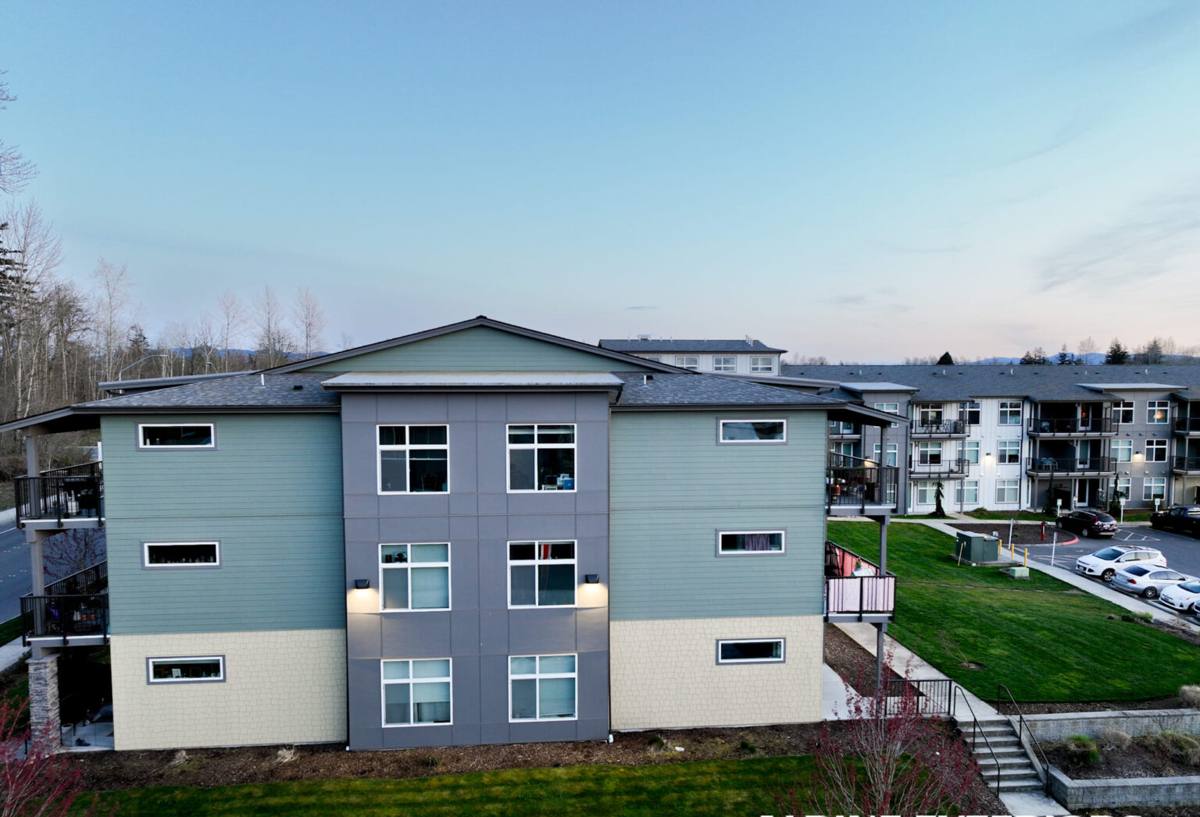
What Edgemoor's Climate Actually Does to Siding
Salt Air
Salt air doesn't just affect metal fasteners and flashing — though it does accelerate corrosion there. It also settles on siding surfaces and holds moisture longer than it would in a drier inland location. Paint films that aren't engineered for coastal exposure tend to chalk, fade, and lose adhesion faster near the water. Fastener and flashing choice matters more here than it does a few miles inland.
Driving Rain
Bellingham Bay generates wind patterns that push rain sideways into the west- and south-facing walls of homes in Edgemoor. Siding that relies on face-sealing (caulk and paint doing the work of keeping water out) struggles under sustained wind-driven rain. What holds up is a properly built water-resistive barrier, correct flashing at every penetration and horizontal transition, and rainscreen or drainage detailing behind the cladding — so any water that does get past the surface has somewhere to go besides the sheathing.
Moss and Algae Season
Edgemoor's tree canopy and proximity to the water mean shaded walls stay damp longer after every rain, and the growing season for moss and algae runs long — often most of the year. Siding with poor moisture tolerance can absorb that sustained dampness, which shows up as soft spots, swelling, or coating failure well before the siding is visually "worn out."
Why We Only Install James Hardie Fiber Cement
Given what Edgemoor's climate does to a wall over 15–20 years, we standardized on James Hardie fiber cement for every siding replacement we do — not just in this neighborhood, but company-wide. It's a non-combustible, cement-and-cellulose product that doesn't absorb and swell the way wood-based or foam-core products can, and it holds a factory-applied ColorPlus finish that's baked on and warrantied against fading and peeling — a real advantage in an area getting steady sun-and-salt cycling near the water.
James Hardie also makes climate-specific product lines (HZ5 for regions with wetter, cooler weather), which is the more honest engineering approach for a place like Whatcom County than a one-size-fits-all product. We don't install LP SmartSide, vinyl, Cemplank, Allura, or unfinished cedar or spruce siding — not because those products have no merit, but because we've made a professional call that fiber cement, installed correctly, is the better long-term fit for what this coastline does to a house. We'd rather stand behind one system we know cold than split our attention across several.
How Hardie Compares to What We Don't Install
| Factor | James Hardie Fiber Cement | Vinyl | Engineered Wood (e.g. LP SmartSide) |
|---|---|---|---|
| Moisture/swelling resistance | High — cement-based, doesn't swell | High, but seams can trap water behind panels | Moderate — wood fiber core can swell if compromised |
| Coastal/salt air performance | Strong with ColorPlus finish | Can chalk and become brittle over time | Coating wears; exposed edges are vulnerable |
| Moss/algae resistance | Good; doesn't feed organic growth | Good; smooth surface sheds spores | Lower; organic wood content can support growth if coating fails |
| Fire resistance | Non-combustible | Combustible | Combustible |
| Finish longevity | Factory finish, long warranty | Color molded in, can fade | Site- or factory-primed; repaint cycle needed |
What a Correct Siding Installation Involves in Edgemoor
The siding product is maybe half the equation. The other half is installation detail, and it's where most of the long-term failures we get called out to inspect actually originate. For a home in Edgemoor, a correct install means:
- A continuous, properly lapped water-resistive barrier (WRB) behind the siding — no gaps, no reliance on tape alone at seams
- Correct flashing at every window, door, and horizontal siding transition, integrated with the WRB so water sheds outward rather than behind the cladding
- A drainage gap or rainscreen strategy on walls most exposed to wind-driven rain, giving incidental moisture a path to escape
- Stainless steel or hot-dipped galvanized fasteners rated for coastal exposure, driven per Hardie's fastening schedule (not just "close enough")
- Correct clearance from grade, decks, and roof lines so siding isn't sitting in a moisture trap
- Field-cut edges sealed per manufacturer spec, since a factory-finished edge that's cut and left raw is a common entry point for moisture
- Proper caulking joints — sized and placed for movement, not just cosmetically filled
Any one of these done wrong won't necessarily cause an obvious problem in year one. It's the combination, over a decade of Edgemoor's wet winters and long moss season, that determines whether a siding job is still doing its job at year 15 or already needs remedial work.
Our Process for an Edgemoor Siding Project
1. On-Site Assessment
We walk the exterior with attention to sun/shade exposure, wind direction relative to the water, existing moisture damage (especially at trim, corners, and lower wall sections), and the condition of the sheathing once old siding starts coming off.
2. Tear-Off and Sheathing Check
We remove existing siding and inspect the sheathing underneath. In a neighborhood with Edgemoor's moisture exposure, it's common to find some degree of hidden damage behind older or improperly installed cladding — we address that before anything new goes up, not after.
3. Water Management Build-Out
WRB, flashing, and drainage detailing get installed and inspected before the first piece of Hardie board goes on. This step is invisible once the job is done, which is exactly why it's the step most likely to get shortcut by crews under time pressure — we don't shortcut it.
4. Hardie Installation
Panels or lap siding go up per James Hardie's fastening and clearance specifications, with attention to elevations facing the water and prevailing wind. Trim, caulking, and touch-up are finished to a factory-quality standard.
5. Final Walkthrough
We review the finished job with the homeowner, covering care and maintenance specific to a coastal, tree-shaded property — including what routine cleaning does and doesn't need to look like with fiber cement.
Why It Matters to Hire a Crew That Already Works Edgemoor
A crew that's done this work in Edgemoor already knows which elevations take the worst of the driving rain, how much shade a given lot is likely to hold onto after a storm, and where salt exposure tends to accelerate wear on fasteners and trim. That's not something you learn from a spec sheet — it comes from having stood on ladders on these specific streets, in this specific microclimate, enough times to know what actually happens to a wall here versus what happens on paper.
It also matters for permitting and code familiarity. Whatcom County and City of Bellingham requirements around exterior work, drainage, and in some cases proximity to shoreline areas can come into play depending on the property. A crew unfamiliar with the area may not flag those considerations early, which can slow a project down or create rework later.
Cost Factors for Siding Installation in Edgemoor
Every home is different, but the line items that tend to move the price on an Edgemoor project are fairly consistent:
| Factor | Why It Affects Cost |
|---|---|
| Sheathing condition after tear-off | Moisture-damaged sheathing found during tear-off needs replacement before new siding goes on |
| Home size and wall complexity | More corners, dormers, and trim details mean more labor and cut waste |
| Siding profile chosen | Lap siding, panel systems, and shingle-style Hardie products carry different material and labor costs |
| Access and site conditions | Mature trees, slopes, and tight lot lines common in Edgemoor can add setup time |
| Trim and accessory scope | Full trim replacement alongside siding costs more than reusing sound existing trim |
We give straight, itemized estimates rather than vague ranges once we've actually seen the home — that's the only way to price this kind of work honestly.
Signs Your Edgemoor Home May Need Siding Replacement Soon
- Persistent green or black streaking on shaded walls that returns shortly after cleaning
- Soft or spongy spots when pressing on siding or trim, especially near the ground or under windows
- Paint that's bubbling, peeling, or chalking heavily on water- or wind-facing elevations
- Visible gaps or separation at seams, corners, or trim joints
- A musty smell or interior wall staining that suggests moisture is getting past the exterior
- Siding that's more than 20–25 years old and has never been fully inspected behind the surface
If you're seeing any of that on a home in Edgemoor, or you just want a straight assessment of what your current siding can and can't handle through another Bellingham winter, we're happy to take a look. The estimate is free, there's no pressure, and you'll get a plain-English answer about what your house actually needs.