 Bellingham Siding
 Why Siding Takes More Punishment in Barkley Than Homeowners Expect
Barkley sits close enough to Bellingham Bay and the Nooksack lowlands that houses here deal with a combination most inland Whatcom County neighborhoods don't: salt-laced marine air, rain that comes in sideways off south and southwest storms, and a moss season that runs longer than most people realize. None of these on their own is unusual for Western Washington. Together, applied to the same siding boards year after year, they add up faster than homeowners expect — especially on north- and west-facing walls that stay damp longest after a storm.
Salt-tinged air accelerates corrosion on fasteners and metal flashing long before it does visible damage to the siding face itself. Driving rain finds every gap at a butt joint, a window trim return, or a poorly caulked corner and pushes moisture behind the cladding rather than letting it run off. And moss doesn't just grow on roofs — it colonizes horizontal siding laps, window sills, and anywhere water sits instead of shedding, holding moisture against the substrate for months at a stretch. A siding system that isn't specified and installed for this combination will show it first in Barkley, usually within a few winters.
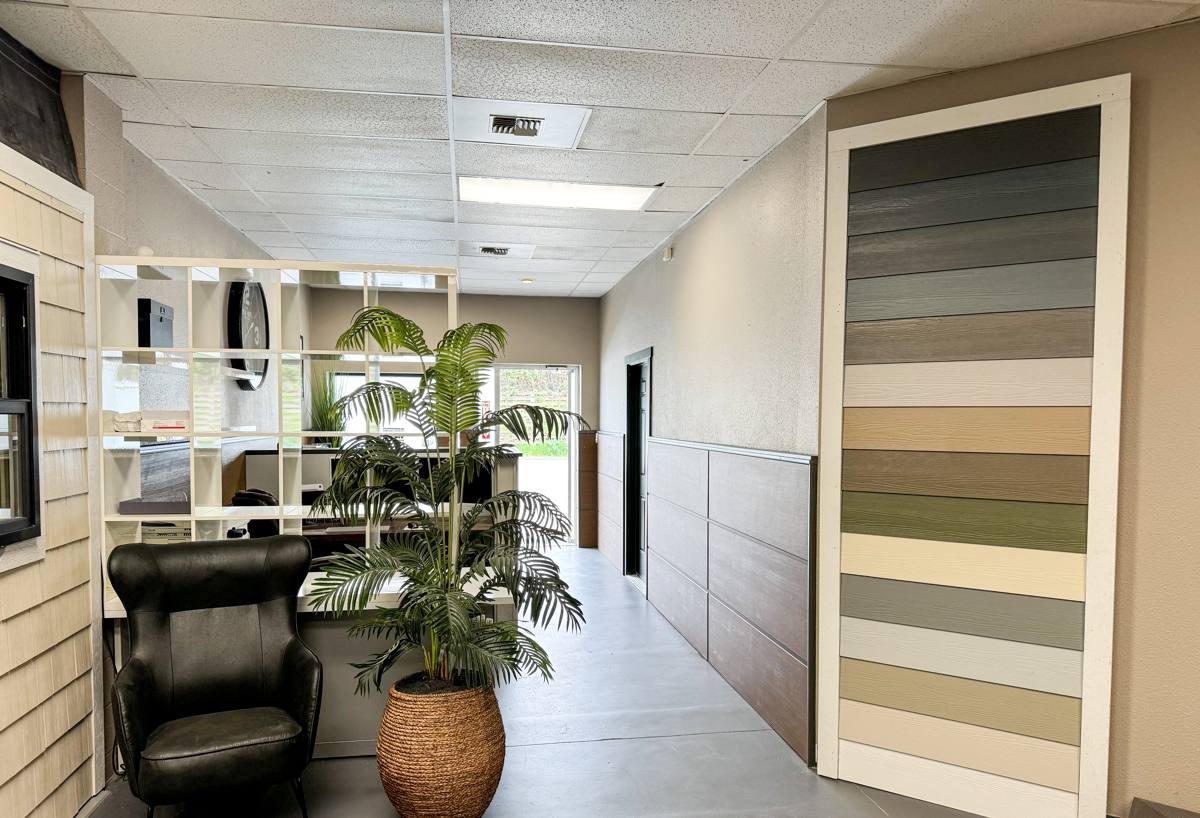
What a Correct Fiber Cement Installation Actually Involves
Fiber cement siding is only as good as the details underneath it. The board itself resists rot, pests, and fire, but the installation is what decides whether water gets managed or trapped. For a Barkley home, we treat the following as non-negotiable, not optional upgrades.
Clearance and Drainage
Every course of siding needs proper ground clearance and a gap above roof lines, decks, and patios so splash-back and standing water can't wick into the bottom edge. Behind the siding, a drainage plane — building wrap plus furring strips or a purpose-built rainscreen — gives any moisture that does get past the cladding a path to drain and dry instead of sitting against the sheathing.
Fastening and Joints
Butt joints are the single most common failure point on any fiber cement job, and they're where driving rain does the most damage if they're not detailed correctly. We back every joint, use the manufacturer's specified fastener pattern and embedment depth, and never rely on caulk alone to keep water out of a seam. Overdriven or underdriven nails both cause problems in this climate — overdriven crushes the board's edge and creates a wick point; underdriven leaves the board loose enough to work moisture in over time.
Caulking and Trim
Cut edges get sealed before they go up, not after. Trim, window returns, and penetrations get a compatible sealant rated for the coastal exposure, applied at the width and depth the manufacturer specifies — not just a bead run down the seam. Skipping this step is invisible on install day and shows up as staining or soft trim two or three winters later.
Why We Only Install James Hardie in This Climate
We install James Hardie fiber cement exclusively — we don't offer LP SmartSide, vinyl, Cemplank, Allura, or unfinished wood siding, and that's a deliberate standard, not a lack of options. For a marine-exposed neighborhood like Barkley, the reasons are practical rather than promotional:
- Climate-engineered product lines: Hardie's HZ product lines are formulated for specific regional exposure, including the wet, salt-influenced conditions common in coastal Whatcom County.
- Factory-applied ColorPlus finish: baked-on rather than field-painted, it resists the fading and chalking that driving rain and UV accelerate on site-painted or primed products, and it holds a cleaner surface that sheds moss spores better than a rough or porous finish.
- Non-combustible core: a real consideration given the wildfire smoke and ember-drift seasons that now reach into Western Washington summers, even in a generally wet climate.
- Warranty structure: a transferable, manufacturer-backed warranty that holds up if the home sells — something that matters more in a market where buyers ask directly what siding is on the house.
We'd rather stand behind one system we can install correctly every time than offer a menu of products with different moisture tolerances and different failure points in this specific climate.
How We Handle a Barkley Siding Project
- On-site assessment: we look at existing siding condition, wall orientation relative to prevailing wind and rain, moss buildup patterns, and any signs of trapped moisture at trim and butt joints before quoting anything.
- Tear-off and substrate check: once old siding is off, we inspect sheathing for rot or soft spots — common on the sides of the house that catch the most driving rain — and repair before anything new goes up.
- Moisture barrier and drainage plane: building wrap and rainscreen furring go in correctly, lapped and taped per spec, not just stapled up quickly to get to the visible work.
- Installation: Hardie panels, plank, or shingle siding installed to manufacturer fastening and clearance specs, with every cut edge sealed before it's set.
- Trim and detail work: window and door trim, corner boards, and any penetrations sealed with compatible, climate-rated sealant.
- Final walkthrough and cleanup: we check joints, caulking, and clearances with the homeowner before calling the job done.
Mistakes That Show Up First in Barkley's Climate
Some installation shortcuts don't cause visible problems for years in a drier climate, but they surface fast here:
- Butt joints caulked instead of properly backed and flashed — leads to staining and soft spots at seams within a couple of wet seasons.
- Siding installed with insufficient ground or roof clearance — invites splash-back rot at the bottom courses.
- No rainscreen or drainage gap behind the siding — traps moisture against sheathing where it can't dry between storms.
- Unsealed cut edges, especially at window and corner returns — the fastest path for water intrusion on an otherwise sound installation.
- Fastener corrosion from using the wrong nail or screw type for a marine-influenced environment.
What Influences the Cost of a Barkley Siding Job
Every home is different, but the same handful of factors move the price up or down on most Barkley projects:
| Factor | Why It Matters |
|---|---|
| Existing siding removal | Old wood, aluminum, or vinyl adds labor and disposal time; some substrates reveal hidden water damage once removed. |
| Sheathing or framing repair | Moisture-damaged sheathing found during tear-off has to be replaced before new siding goes on — this is the most common source of change orders. |
| Home size and wall complexity | Multiple stories, dormers, and cut-up wall lines take more time per square foot than a simple rectangular elevation. |
| Siding profile and finish | Lap, shingle, and panel styles install at different rates, and factory ColorPlus finishes vary slightly in cost by color and texture. |
| Trim and detail scope | Full trim replacement, corner boards, and frieze detailing add labor beyond the field siding itself. |
| Access and site conditions | Tight lots, slopes, and landscaping close to the house affect scaffolding and staging time. |
Why Hiring a Crew That Already Works This Neighborhood Matters
Barkley's mix of home ages and its exposure to weather coming off the water mean a crew that hasn't worked the area can miss things a local crew catches automatically — which wall typically takes the worst of the wind-driven rain, where moss tends to establish first, and how a given block's drainage handles a heavy fall storm. Familiarity with Bellingham's permitting process and Whatcom County code requirements also keeps a project moving instead of stalling on paperwork. None of this replaces sound installation technique, but it does mean fewer surprises mid-project and a better read on what a given home actually needs before work starts.
Maintaining Fiber Cement Siding in a Marine Climate
Correctly installed Hardie siding is low-maintenance, not no-maintenance. In a climate like Barkley's, a little attention keeps it looking and performing the way it should for decades:
- Rinse the exterior once or twice a year to clear salt residue and airborne grime before it builds up in the finish texture.
- Check caulk lines at trim, corners, and butt joints annually — sealant is the first thing to wear in a wet, wind-exposed climate.
- Keep gutters and downspouts clear so overflow doesn't run down the siding face during heavy rain.
- Trim back vegetation and clear debris that holds moisture against lower courses, where moss and mildew tend to start.
- Address any soft spots, staining, or loose boards early — in this climate, small gaps become bigger problems quickly once water finds a way in.
If you're weighing a siding replacement in Barkley and want a straight answer about what your home actually needs, we're happy to take a look and put together a free, no-pressure estimate.