 Bellingham Siding
 Happy Valley Roofs Face a Specific Set of Problems
Happy Valley sits close enough to the water and the tree canopy that its roofs deal with a combination most inland neighborhoods don't: salt-laden air drifting in off Bellingham Bay, long stretches of driving rain through fall and winter, and shade patterns from mature trees that keep certain roof slopes damp for days after a storm passes. None of that is unusual for Whatcom County, but it adds up differently on an asphalt shingle roof than it does on a sunny, open lot. Salt air accelerates the breakdown of metal flashing and fasteners. Sustained rain finds every gap in underlayment and flashing that a quick summer shower never would. And shade plus moisture is exactly the recipe moss and algae need to take hold.
None of this means asphalt shingles are the wrong choice for the neighborhood — they're still the most practical, cost-effective option for the vast majority of Happy Valley homes. It means the installation details matter more here than they would somewhere drier, and a roof that was installed correctly for a different climate will show its weaknesses faster in this one.
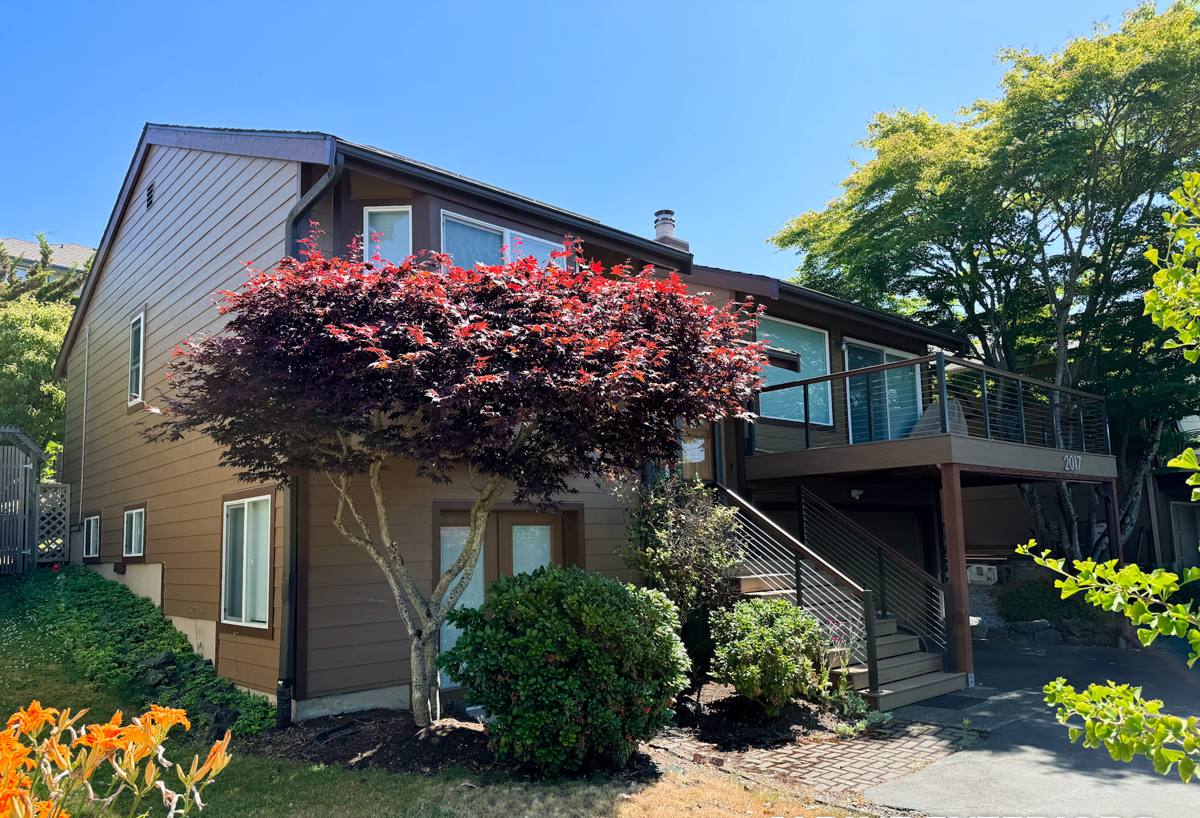
What a Roof in This Neighborhood Actually Needs
Ventilation That Matches the Moisture Load
A shingle roof sheds water on the outside, but it also has to manage moisture from the inside — warm, humid indoor air that rises into the attic. In a climate as damp as Bellingham's, balanced intake and exhaust ventilation isn't optional. Without it, moisture gets trapped under the deck, shingles fail from underneath long before their surface wears out, and in bad cases you end up with rot in the sheathing itself.
Underlayment and Flashing Built for Wind-Driven Rain
Rain in this area doesn't always fall straight down. Wind off the water pushes it sideways under shingle tabs and around flashing edges. That's why we treat underlayment coverage and flashing detail — at valleys, chimneys, skylights, and wall intersections — as the part of the job that actually determines whether a roof stays dry, not just a formality on the way to laying shingles.
Materials That Resist Algae and Moss, Not Just Look Good
Shaded slopes near mature trees stay damp longer, which is exactly where algae streaking and moss growth start. Shingles rated for algae resistance (often marketed with a copper- or zinc-based granule treatment) hold up noticeably better here than standard shingles, and that difference shows up as fewer dark streaks and less moss encroachment over the years the roof is up.
Comparing Shingle Options for a Coastal, Shaded Climate
| Shingle Type | Typical Lifespan Here | Moss/Algae Resistance | Best Fit |
|---|---|---|---|
| 3-tab (economy) | 15–20 years | Low unless treated | Budget-driven rentals or short-hold properties |
| Architectural (laminate) | 25–30 years | Moderate to high with algae-resistant granules | Most Happy Valley homes — best balance of cost and durability |
| Premium/designer architectural | 30+ years | High | Homes with heavy tree shade or higher wind exposure near the water |
We don't push the most expensive option on every roof. A lot of Happy Valley homes do perfectly well with a solid mid-tier architectural shingle, especially on sun-exposed slopes. Where we do steer people toward the algae-resistant or premium tier is on shaded north-facing slopes or roofs close to the water, where the cheaper option will show moss and streaking within a few years regardless of how well it's installed.
What a Correct Installation Actually Involves
A roof looks the same from the ground whether it was done right or done fast. The difference is underneath, and it's worth understanding what should be happening at each stage:
- Full tear-off, not an overlay. Installing new shingles over old ones hides deck problems and shortens the life of the new roof. We remove down to the deck so we can actually see what we're working with.
- Deck inspection and repair. Any soft, delaminated, or water-damaged sheathing gets replaced before anything new goes down. Skipping this is one of the most common shortcuts in the trade, and it's the one that causes the most expensive problems later.
- Ice-and-water shield at vulnerable points. Eaves, valleys, and penetrations get a self-adhering waterproof membrane underneath the standard underlayment — this is the backup layer that matters most in wind-driven rain.
- Synthetic underlayment across the full deck. More tear-resistant and water-resistant than old-style felt, and it holds up better during the install itself if weather turns before shingles go on.
- New flashing at every transition. Chimneys, skylights, sidewalls, and valleys get new metal flashing, not reused pieces bent back into place.
- Correct nailing pattern and shingle exposure. Manufacturer specs on nail placement and count directly affect wind resistance and warranty validity — this is a step that's easy to rush and hard to inspect once the roof is finished.
- Ridge and intake ventilation tied together. Exhaust at the ridge without matching intake at the eaves doesn't work — the two have to be sized and balanced as a system.
A Quick Checklist for Homeowners Getting Quotes
- Does the quote specify full tear-off, or does it leave room for an overlay?
- Is deck repair priced as an allowance, or is it vague/absent?
- Does it name the underlayment type and ice-and-water shield locations?
- Is flashing replacement explicit, or does it say "reuse existing where possible"?
- Does the quote address attic ventilation at all?
- Is the shingle warranty tied to a certified installation, and does the contractor carry that certification?
Our Process, Start to Finish
We start with an on-site inspection — not just a walk around the yard, but a look in the attic when accessible, a check of current ventilation, and an honest read on deck condition from what's visible at the eaves and any existing damage. From there we put together a written estimate that spells out shingle choice, underlayment, flashing scope, and any deck repair allowance, so there's no ambiguity about what's included before work starts.
On install day, we protect landscaping and walkways, tear off down to the deck, and don't cover up problems — if we find soft sheathing or old damage, we show it to you before replacing it, not after. We handle disposal of the old roofing ourselves, and we do a final walk-through and cleanup, including a magnetic sweep for nails, before we consider the job done.
Moss, Algae, and Keeping a New Roof Looking New
Moss doesn't just sit on top of shingles — over time it holds moisture against the surface and can lift shingle edges, which is how small growth turns into a leak path. On a newly installed roof with algae-resistant shingles, moss pressure is lower, but it isn't zero, especially on shaded slopes. We recommend a light annual check (or after major storms) rather than aggressive pressure washing, which can strip granules and shorten shingle life faster than the moss itself would. A soft brush or gentle low-pressure rinse, done carefully, is usually enough to keep growth from establishing.
Gutters matter here too. Clogged gutters back water up under the starter course at the eaves, which is a common, avoidable cause of edge rot on otherwise sound roofs in this area.
Signs a Happy Valley Roof Needs a Closer Look
- Granules collecting in gutters or at downspout outlets
- Dark streaking on north-facing or shaded slopes
- Visible moss patches, especially along ridges or valleys
- Curling, cupping, or cracked shingle edges
- Daylight visible through the attic roof deck
- Stains on interior ceilings after heavy rain
- Shingles missing or lifted after a windstorm
Any one of these on its own isn't necessarily an emergency, but they're worth a professional look rather than waiting for a leak to show up inside the house.
Why Local Experience in Happy Valley Actually Matters
Roofing standards and building code requirements don't change much from one Whatcom County neighborhood to the next, but the practical realities do. A crew that regularly works Happy Valley knows which slopes tend to hold moisture longer because of tree cover, understands how wind comes off the water and what that means for flashing details, and isn't guessing at what a normal moss cycle looks like versus a sign of deeper trouble. That familiarity doesn't replace good workmanship, but paired with it, it means fewer surprises and a roof that's built for the conditions it will actually face, not a generic install.
If you're weighing a repair against a full replacement, or just want an honest read on how much life is left in your current roof, we're happy to take a look. Use the form below to request a free, no-pressure estimate for your Happy Valley home.