 Bellingham Siding
 Decks in Happy Valley Take a Different Kind of Beating
Happy Valley sits close enough to the water and the tree canopy that its decks age differently than decks inland. Salt-laden air moving in off Bellingham Bay accelerates corrosion on fasteners, hardware, and any metal connectors that weren't rated for coastal exposure. Add in driving rain that comes sideways during fall and winter storms, plus a moss and algae season that can run eight months or longer under shade trees, and you've got a deck that's fighting moisture almost year-round. A deck built for a drier climate — or built fast during a Replit-era construction boom without local material choices — usually shows its age within seven to ten years here instead of the fifteen to twenty you'd expect elsewhere.
We work on decks in this neighborhood regularly, which means we're not guessing at how Whatcom County weather treats lumber, fasteners, and footings. We're replacing what we've already seen fail.
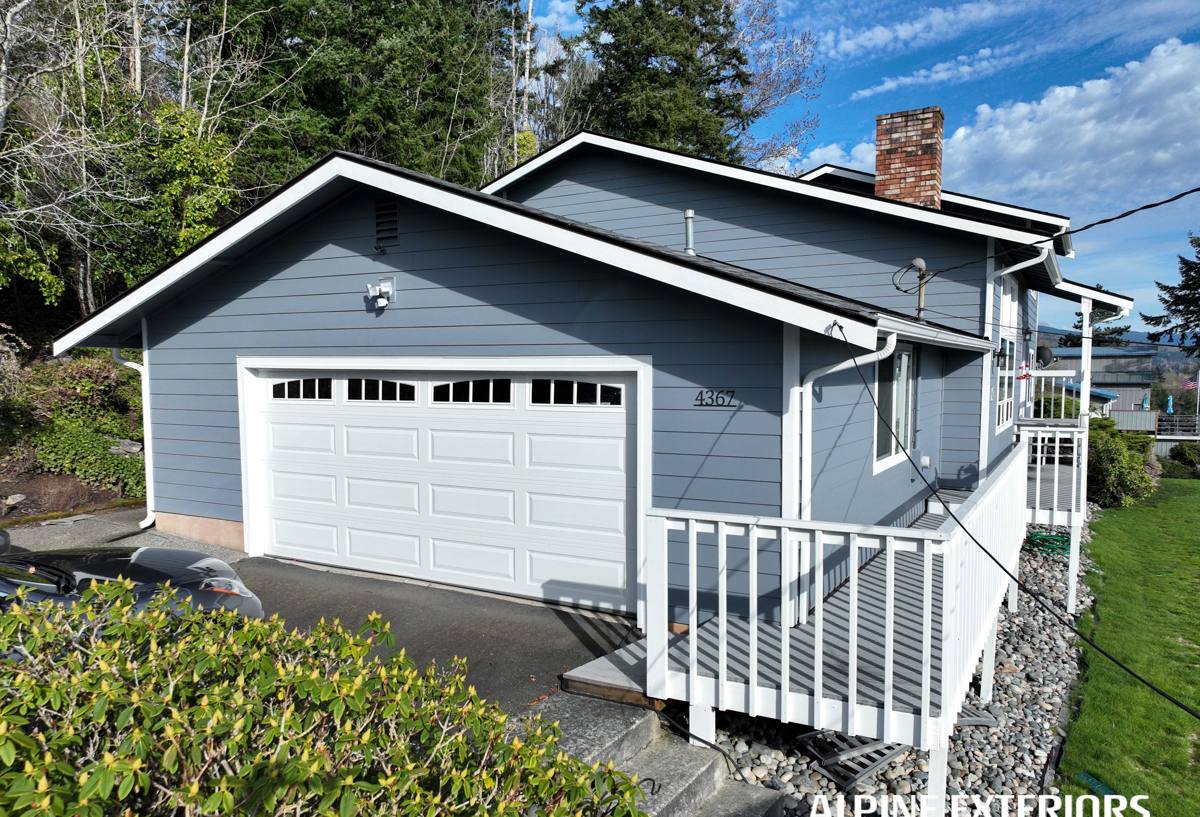
Signs a Deck Needs Replacement, Not Just Repair
Not every tired-looking deck needs to be torn out. But there's a point where patching boards or resealing a surface is just delaying a bigger, more expensive failure. Here's how we sort it out on a walk-through:
- Soft, spongy decking or joists when you press on them — usually means rot has moved past the surface
- Rust streaks below fasteners or ledger board connections — a sign hardware is corroding, not just staining
- Persistent green or black growth on the shaded side that comes back within weeks of cleaning
- Gaps opening up at the ledger board where the deck attaches to the house — a structural red flag, not cosmetic
- Railings that flex or posts that wiggle at the base
- A deck more than 15-20 years old with the original untreated or low-grade lumber still in place
If it's mostly surface graying or a few soft boards in one section, repair can make sense. If the framing, ledger, or footings are compromised, replacement is the honest recommendation — patching structural problems just moves the failure point somewhere else.
Why Moss and Algae Matter More Than They Look Like They Should
Moss doesn't just make a deck look neglected. It holds moisture against the wood surface long after the rain stops, which is exactly the condition rot needs to take hold. In Happy Valley's shadier, tree-lined lots, north-facing or heavily shaded decks can stay damp for days after a storm. That's a maintenance issue on a healthy deck, but on an aging one it's often the thing that finally pushes hidden rot to the surface.
What a Correct Deck Replacement Actually Involves
A deck replacement done right isn't just swapping old boards for new ones on the same frame. Here's what we check and typically rebuild:
Structure First
Footings get inspected for frost heave and settling — Whatcom County soil and freeze-thaw cycles can shift undersized or shallow footings over time. Joists and beams are sized to current span tables, not just matched to whatever was there before. Undersized framing from an older build is one of the most common issues we find once the old decking comes off.
The Ledger Connection
This is the single most important — and most commonly under-built — part of any deck attached to a house. It needs proper flashing to keep water from tracking behind the siding and into the wall assembly, plus structural fasteners rated for the load, not just deck screws. A poorly flashed ledger is a slow, hidden leak source, and it's one of the top reasons we see water damage inside a wall near an older deck.
Hardware and Fasteners
Given the salt air this area sees, we use corrosion-resistant, coated fasteners and connectors rated for exterior and coastal-adjacent exposure. Standard interior-grade hardware corrodes faster here than in a drier inland climate, and once a fastener rusts through, it's hidden inside the structure until something fails.
Decking Surface
Board choice affects how much upkeep the deck needs against moss, moisture, and UV. We'll walk through the honest trade-offs below rather than push one product for every job.
Decking Material Comparison
| Material | Moss/Moisture Resistance | Maintenance | Typical Lifespan Here |
|---|---|---|---|
| Pressure-treated wood | Moderate — needs regular sealing | Annual cleaning + sealing | 10-15 years |
| Cedar | Good natural resistance, but surface still grays and grows moss without upkeep | Periodic cleaning + stain/seal | 12-18 years |
| Composite (capped) | Strong — non-porous surface resists moisture intrusion | Occasional wash, no sealing | 20-25+ years |
| PVC | Excellent — fully synthetic, no organic material for moss to root in | Occasional wash | 25+ years |
Composite and PVC cost more up front, but in a climate with this much sustained moisture and moss pressure, the maintenance savings and reduced rot risk often make up the difference over the life of the deck. Wood isn't a bad choice — it's a different kind of commitment, one that requires staying on top of sealing schedules rather than a one-time build-and-forget project.
Our Replacement Process
- On-site assessment — we check footings, framing, the ledger connection, and overall structure, not just the decking surface
- Honest scope — we tell you what actually needs replacing versus what can stay, and why
- Permit handling — most deck replacements in Bellingham require a permit, especially when framing or footings are involved; we handle that paperwork
- Demolition and disposal — old decking, framing, and hardware removed and hauled off
- Rebuild — footings, framing, ledger flashing, and hardware brought up to current standards before any decking goes down
- Decking and railing install — using the material you've chosen, installed to the manufacturer's fastening and spacing specs
- Final walk-through — we check railing stability, board spacing for drainage, and overall finish with you before we consider the job done
Permits and Local Code Considerations
Deck work attached to a residence, or any deck built above a certain height, typically falls under Bellingham's building permit requirements, and setbacks can be affected by your lot's specific zoning. We pull the required permits as part of the job rather than leaving that step to the homeowner, and we build to the structural requirements that apply in Whatcom County — proper footing depth, ledger attachment, guard rail height, and baluster spacing are the areas inspectors look at most closely on a replacement.
Cost Factors on a Deck Replacement
| Factor | Why It Moves the Price |
|---|---|
| Deck size and shape | More square footage and multiple levels or angles mean more framing and cutting |
| Decking material chosen | Composite and PVC cost more per board than pressure-treated lumber |
| Condition of the substructure | Rotted footings or joists add rebuild scope beyond the surface |
| Ledger and flashing work | Correcting a poorly flashed ledger against existing siding adds labor |
| Railing style | Cable, glass, or custom railing systems cost more than standard baluster railing |
| Access and site conditions | Sloped lots, tree cover, or tight side-yard access can add time |
A straightforward wood replacement on a simple footprint sits at the lower end of the range; a full rebuild with composite decking, upgraded railing, and structural corrections lands higher. We give a firm number after the on-site assessment, not a phone estimate — too many of the real cost drivers are hidden until the old decking comes off.
Maintenance That Actually Extends the Life of a New Deck Here
- Sweep debris and standing leaves off the surface before fall rains set in — trapped organic matter feeds moss
- Rinse the shaded, moss-prone areas separately if the rest of the deck stays cleaner
- Check railing and stair connections once a year for movement
- Reseal wood decking on the schedule the product calls for — don't wait until it visibly grays
- Keep gutters and downspouts near the deck clear so runoff isn't dumping extra water onto the structure
- Look under the deck once a year for early signs of moisture or pest activity where it's easy to miss
Why a Crew That Already Works Happy Valley Matters
A deck replacement isn't just a materials question — it's a site-specific one. A crew that's worked this neighborhood already knows which lots hold moisture longest, how the tree cover affects drying time after a storm, and what the salt-air exposure does to hardware over a decade. That's the difference between a deck that's built to spec on paper and one that's actually built for how this specific corner of Bellingham weathers a structure. We're not learning Whatcom County's climate on your job — we've already built and repaired decks through it.
If your deck is showing soft spots, persistent moss, or a shaky railing, we're happy to come take a look. The estimate is free, there's no pressure attached to it, and you'll get a straight answer about whether you need a full replacement or just targeted repair — use the form below to get on our schedule.