 Bellingham Siding
 Lynden's Roofs Face a Different Kind of Wear
Lynden sits inland in the farm country of Whatcom County, a few miles south of the Canadian border, but the weather that shapes this region doesn't stop at any city line. Moist air moving in off the Salish Sea and Bellingham Bay rides the prevailing westerlies across the county, mixing with the damp, low-lying conditions typical of the Nooksack River valley. The result is a roofing climate defined by long stretches of wet-dry cycling, driving rain during fall and winter storm systems, and heavy moss pressure wherever trees shade a roofline. A shingle roof here doesn't fail the way one does in a dry inland climate — it fails at the seams, the flashing, and the spots where water is allowed to sit instead of shed.
That's the backdrop for every asphalt shingle job we do in Lynden. It's not about picking a shingle off a rack and nailing it down to code minimums. It's about building a roof assembly that assumes eight or nine months of the year will be wet, and that moss will try to grow wherever it gets the chance.
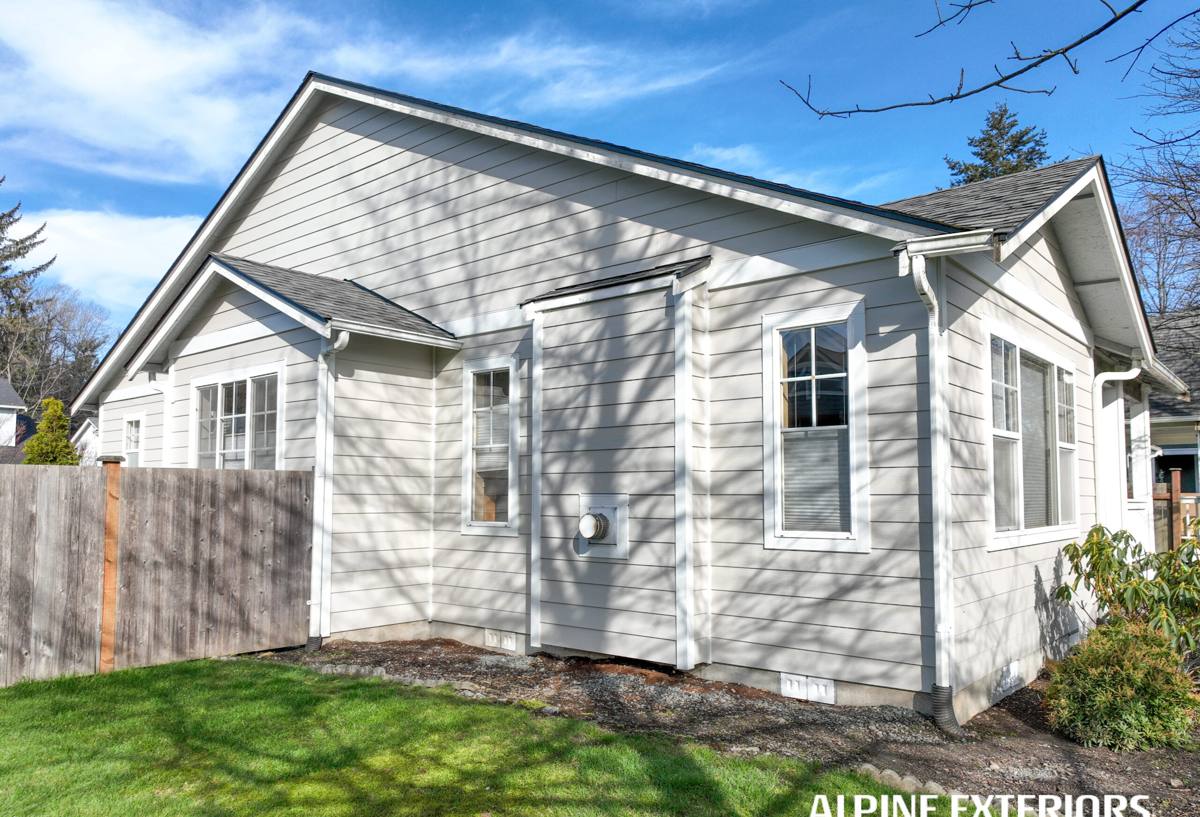
What a Correctly Installed Asphalt Shingle Roof Needs Here
Asphalt shingles are a proven, cost-effective roofing material almost anywhere in the country, including Whatcom County. The material isn't the weak link — the installation details are. A roof that's "close enough" in a drier climate can start leaking within a couple of seasons once it's dealing with sustained Pacific Northwest rain.
Underlayment and Water Protection
We install a synthetic underlayment across the full roof deck as the primary water barrier beneath the shingles, and we add ice-and-water shield membrane at the eaves, valleys, and any low-slope transitions where water tends to back up. Lynden doesn't get heavy sustained snow most winters, but cold snaps combined with shaded, north-facing eaves can still cause enough freeze-thaw cycling at the roof edge to force water backward under improperly protected shingles.
Flashing Details That Actually Stop Leaks
Most roof leaks trace back to flashing, not shingles. That means proper step flashing where a roof meets a sidewall, counter-flashing at chimneys, and kick-out flashing at the bottom of roof-to-wall intersections so water is directed into the gutter instead of behind the siding. Older farmhouses and additions around Lynden often have rooflines that were built in stages, which means extra transitions and valleys — exactly the spots that need the most attention, not the least.
Attic Ventilation
A balanced intake-and-exhaust system — soffit vents pulling air in, ridge vents letting it out — keeps the attic close to outdoor temperature and moisture levels. Without it, warm moist air gets trapped against the underside of the decking, which shortens shingle life from below and, in shaded, poorly ventilated attics, contributes to the same moss and algae growth homeowners are already fighting on the surface.
Signs Your Lynden Roof Is Telling You Something
Most roofs give warning signs well before a leak shows up on a ceiling. Worth checking for, especially after the wetter months:
- Granules collecting in gutters or at downspout outlets — a sign the shingle surface is wearing down
- Shingle edges curling, cupping, or lifting, especially on sun-exposed slopes
- Thick moss mats holding standing moisture against the shingle surface rather than letting it drain
- Daylight, staining, or a musty smell in the attic near the roof deck
- Missing or torn shingles after a windstorm, even just a few
- A roof approaching or past the practical lifespan of its shingle class
Choosing the Right Shingle for Whatcom County Weather
Not every asphalt shingle performs the same way under constant rain and moss pressure. We walk homeowners through the real trade-offs rather than just upselling the most expensive option.
| Shingle Type | Wind & Rain Performance | Moss/Algae Resistance | Typical Lifespan* |
|---|---|---|---|
| 3-tab (standard) | Adequate; lower wind rating | Standard granules only | Shorter end of the range |
| Architectural/laminate | Higher wind rating, better seal-down | Often available with algae-resistant granules | Mid-to-long range |
| Algae-resistant (AR) laminate | Same as architectural | Copper-infused granules resist streaking | Mid-to-long range |
| Impact-rated (Class 4) | Strong wind and impact rating | Depends on granule package | Longer end of the range |
*Actual lifespan depends heavily on installation quality, ventilation, slope, and how consistently moss and debris are kept off the roof — not just the shingle itself.
In a climate like ours, we lean toward architectural laminate shingles with algae-resistant granules as the practical default for most Lynden homes. They handle wind-driven rain better than 3-tab shingles and resist the dark streaking that constant moisture causes over time. That's our professional recommendation based on how these products perform in this specific climate, not a judgment on any manufacturer's full lineup.
What Drives the Cost of a Roof Replacement Here
Every roof is different, so we won't quote a number without seeing the actual roof. But the factors that move a bid up or down are consistent:
| Cost Factor | Why It Matters |
|---|---|
| Number of existing layers to tear off | More layers means more labor and disposal, and reveals deck condition sooner |
| Roof pitch and complexity | Steep, multi-valley, or multi-plane roofs take longer and require more safety setup |
| Decking condition underneath | Rotted or soft plywood/sheathing has to be replaced before new shingles go down |
| Ventilation upgrades | Adding or correcting soffit/ridge venting is worth doing during a full tear-off |
| Shingle class selected | Material cost scales with wind rating, warranty tier, and algae resistance |
| Access and staging | Steep lots, tree cover, or tight driveways affect equipment and material staging |
Our Installation Process, Start to Finish
- Inspection and measurement — we get on the roof, check the deck, flashing, and ventilation, and take accurate measurements before quoting anything.
- Tear-off and deck check — old roofing comes off down to the deck, and any soft or damaged sheathing gets flagged and replaced.
- Underlayment and flashing — synthetic underlayment, ice-and-water shield at vulnerable areas, and new flashing at every wall, chimney, and valley intersection.
- Shingle installation — installed to the manufacturer's nailing pattern and exposure specs, not shortcuts, so the warranty stays valid.
- Ventilation tie-in — ridge and soffit venting connected properly so the attic can actually breathe.
- Cleanup and magnetic sweep — old material, debris, and stray nails cleared from the property and landscaping.
- Final walkthrough — we go over the finished roof with the homeowner before calling the job done.
Moss, Algae, and Lynden's Long Wet Season
Moss is less about the shingle brand and more about shade, moisture, and airflow. A roof under mature trees, or with a north-facing slope that rarely sees direct sun, is going to fight moss no matter what's installed. What actually helps: keeping overhanging branches trimmed back so the roof gets more light and airflow, installing zinc or copper strips near the ridge on moss-prone slopes so rain carries trace minerals down the roof, and choosing algae-resistant granules where the roof's exposure calls for it.
What doesn't help long-term: pressure-washing shingles, which strips granules and shortens the roof's life, or letting thick moss mats sit through an entire wet season. We're upfront with homeowners that even a well-built roof in this climate needs an occasional moss check — it's part of owning a roof in Whatcom County, not a sign anything was installed wrong.
Why Hiring a Crew That Already Works in Lynden Matters
A roofing crew that works this area regularly knows which flashing details tend to fail first in this climate, how to schedule tear-offs around the rain windows that actually show up in the fall and winter forecast, and what local permitting and inspection expectations look like. That's different from a crew passing through who's used to a drier or more temperate climate and treats Whatcom County like any other job site. Roofing here rewards experience with the specific way this weather behaves — not just general roofing competence.
Caring for Your New Roof After Installation
A new asphalt shingle roof still needs basic upkeep to hit its full lifespan in this climate:
- Clean gutters at least twice a year so water isn't backing up under the eaves
- Check for moss buildup each spring and fall, especially on shaded slopes
- Trim back tree branches that overhang the roofline
- Have flashing and pipe boots inspected periodically — sealant and rubber components age faster than the shingles themselves
- Make sure attic insulation isn't blocking soffit vents, which chokes off the ventilation the roof depends on
If you're weighing a roof replacement or just want an honest read on how much life your current roof has left, we're happy to take a look and walk you through what we find — no pressure, no obligation. Use the form below to request a free estimate.