 Bellingham Siding
 Lynden's Weather and What It Does to a Roof Over Time
Lynden sits inland from Bellingham Bay, but it doesn't escape the marine air that moves through Whatcom County most of the year. Homes here still see long stretches of low, driving rain, damp shaded roof planes that never fully dry out between storms, and a moss season that can run from fall through spring. Add the wind that funnels down off the foothills and across open farmland, and a roof in Lynden is doing more work than it looks like from the ground.
None of that means a roof needs to fail early. It means the installation has to account for moisture that lingers, wind that finds any loose edge, and organic growth that will colonize a shaded, north-facing slope faster than most homeowners expect. A roof built for a drier climate, or installed without attention to the details below, tends to show its age in Whatcom County years before it should.
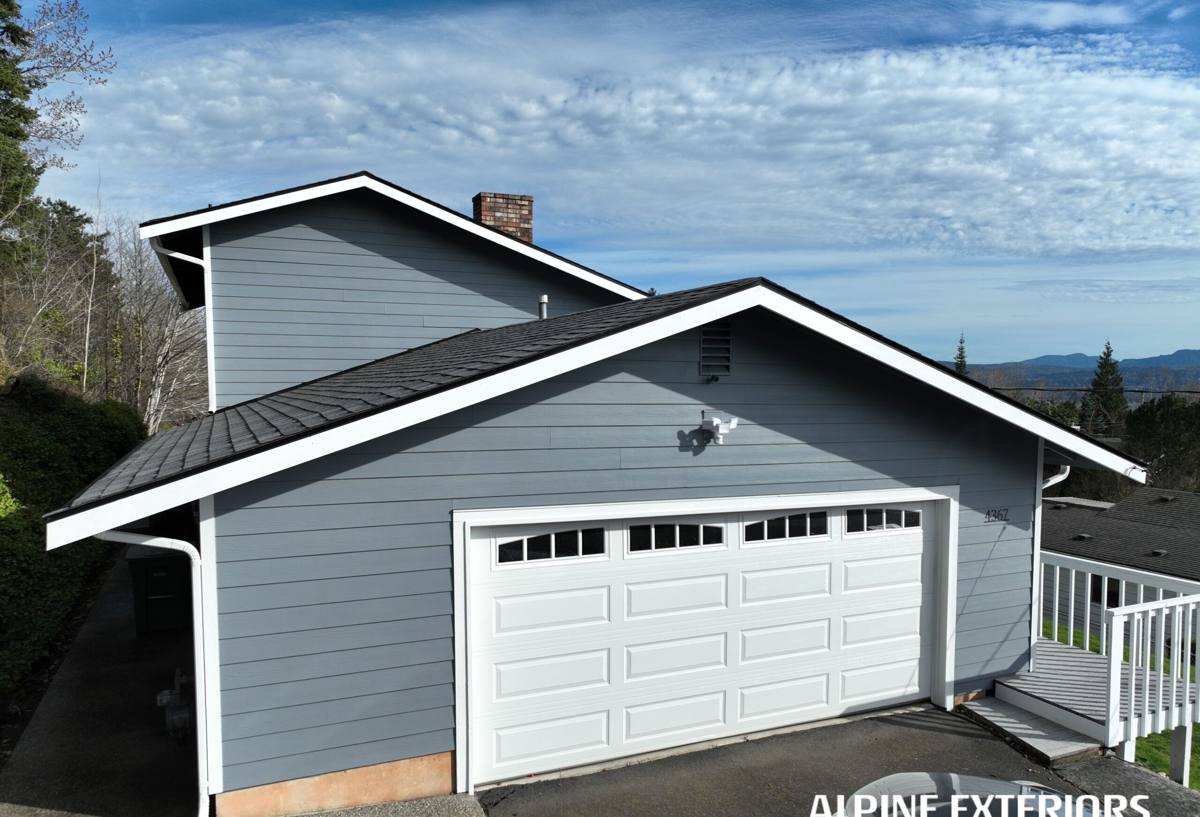
What a Correct New Roof Installation Actually Involves
"New roof" covers a lot of ground. The difference between a roof that holds up through twenty-plus Whatcom County winters and one that leaks by year eight almost always comes down to what's underneath the visible shingles, not the shingles themselves.
Tear-Off and Deck Inspection
A proper job starts with a full tear-off down to the sheathing, not an overlay on top of old material. That's the only way to actually see the deck. Any soft, delaminated, or water-stained plywood or OSB gets identified and replaced before anything new goes down. Skipping this step to save a day is the single most common shortcut that causes early failure — a beautiful new roof over a rotten deck is still a rotten deck.
Underlayment and Ice-and-Water Barrier
Given how much of the year Lynden roofs stay wet, the underlayment layer matters as much as the shingle. A self-adhering ice-and-water membrane belongs at eaves, valleys, and around penetrations — anywhere water tends to pool, back up under wind-driven rain, or funnel. The rest of the deck gets a synthetic underlayment, which sheds water better and holds up longer to a wet roof surface than old-style felt paper does.
Flashing and Penetrations
Flashing is where most roof leaks actually start, not in the field of the shingles. Chimneys, skylights, plumbing vents, and any wall-to-roof transition need new, properly lapped flashing — step flashing at walls, counter-flashing tucked into the surface above it, and new boots on every pipe penetration. Reusing old flashing to save material cost is a false economy on a driving-rain climate like this one.
Attic and Roof Ventilation
A roof that can't breathe traps moisture underneath it, which shortens the life of the deck and the shingles from below — invisibly, until it isn't. Balanced intake at the eaves and exhaust at the ridge keeps attic humidity and temperature in check year-round, which also reduces the moss-friendly damp-and-shaded conditions on the roof surface itself.
Choosing a Roofing Material for a Lynden Home
There's no single "best" material — the right choice depends on the roof's exposure, the home's style, and how much long-term maintenance the owner wants to take on. Here's how the common options stack up against Whatcom County's conditions specifically.
| Material | Moss/moisture resistance | Maintenance | Typical lifespan |
|---|---|---|---|
| Architectural asphalt shingle | Good with algae-resistant granules; needs periodic moss removal on shaded slopes | Low to moderate | 25–30 years |
| Standard 3-tab shingle | Fair; lighter granule coverage, more prone to moss and wind lift over time | Moderate | 15–20 years |
| Standing-seam metal | Excellent; smooth surface sheds moisture and resists moss far longer | Low | 40–50+ years |
| Cedar shake | Poor without diligent upkeep; absorbs moisture and is highly susceptible to moss and rot | High | 20–30 years with upkeep |
For most Lynden homes, a well-rated architectural asphalt shingle with algae-resistant granules is the practical middle ground — it handles the region's moisture well and keeps costs reasonable. Metal is worth the higher upfront cost on roofs with heavy shade or steep, hard-to-maintain slopes where moss removal would otherwise be a recurring chore. We can walk through the trade-offs for your specific roof rather than pushing one product across every house.
Moss and Algae: Managing a Long Moss Season
Moss doesn't care that Lynden is inland — it cares about shade, moisture, and organic debris, and Whatcom County supplies all three for a good part of the year. Left alone, moss holds water against the shingle surface, lifts shingle edges as it grows, and accelerates granule loss. On a new installation, we build in moss resistance from the start rather than treating it as an afterthought:
- Algae-resistant shingles with copper-infused granules on shaded or north-facing slopes
- Zinc or copper strips at the ridge on roofs with heavy tree cover, which release trace metal with rain runoff to inhibit regrowth
- Keeping overhanging branches trimmed back to cut down on shade and debris buildup
- Clean, correctly pitched valleys and gutters so water and debris don't sit and feed growth
None of this makes a roof maintenance-free — an annual soft wash or moss treatment is still worth doing on shaded roofs — but it changes how often that maintenance is needed and how much moss actually establishes itself between cleanings.
Signs Your Lynden Home Needs a New Roof
Roofs rarely fail all at once. Here's what tends to show up first on homes in this area:
- Granules collecting in gutters or at the base of downspouts
- Shingles that are cupping, curling, or cracking, especially on south- or west-facing slopes
- Visible moss or dark algae streaking that keeps returning after cleaning
- Soft or spongy spots when walking the roof, or sagging visible from the ground
- Daylight visible through the roof deck from inside the attic
- Water stains on interior ceilings or in the attic, particularly near chimneys, skylights, or vents
- A roof approaching or past 20–25 years old, regardless of how it looks from the street
Any one of these on its own doesn't necessarily mean a full replacement — but a roof showing several of them, especially the moisture-related ones, is usually past the point where patching makes sense.
What Drives the Cost of a New Roof
Every roof is priced individually, but the main variables are consistent: total roof area and pitch (steeper roofs take longer and require more safety setup), the number of layers being torn off, how much deck repair is needed once the old roofing comes up, the complexity of valleys, dormers, and penetrations, and the material chosen. A straightforward asphalt shingle re-roof on a simple gable roof will cost meaningfully less than a steep, cut-up roofline in standing-seam metal. We give a firm, itemized number after a physical inspection — not a phone estimate — because deck condition in particular can't be judged from a photo.
Our New Roof Installation Process, Step by Step
- On-site inspection and estimate — we walk the roof, check the attic, and assess deck condition, ventilation, and flashing points before quoting anything.
- Material selection — we go over the trade-offs above in the context of your specific roof and budget, not a one-size pitch.
- Permitting — we handle the permit through Whatcom County or the applicable jurisdiction so the job is documented and inspected properly.
- Tear-off and disposal — full removal of old roofing material, hauled off-site; the deck is inspected as it's exposed.
- Deck repair — any compromised sheathing is replaced before underlayment goes down, no exceptions.
- Underlayment, ice-and-water barrier, and flashing installation — the moisture-management layer that does most of the real work.
- Roofing material installation — installed to manufacturer specification, which is also what keeps the material warranty valid.
- Ventilation check and cleanup — intake and exhaust confirmed balanced, site swept and magnet-rolled for stray nails.
- Final walkthrough — we review the finished roof with you before calling the job done.
Why Hire a Crew That Already Works in Lynden
A roof crew that works this area regularly knows what to plan around: how to sequence a tear-off against a stretch of driving rain instead of getting caught mid-job with an open deck, which slopes on a typical Lynden lot are going to need extra moss mitigation, and how Whatcom County permitting and inspection actually runs in practice. That local familiarity shows up in fewer surprises — scheduling that respects the weather window, flashing details sized for the wind and rain this area actually gets, and a finished roof built for the climate it has to survive, not a generic install.
If you're weighing a new roof for a Lynden home, we're happy to take a look and give you an honest, no-pressure estimate — what your roof actually needs, what it'll cost, and why. Use the form below to get started.