 Bellingham Siding
 South Hill's Climate Is Tougher on Siding Than It Looks
South Hill sits up above downtown Bellingham with open exposure toward Bellingham Bay, and that position cuts both ways. The views are part of why people love living there, but that same exposure means homes on the hill take a harder hit from weather than houses tucked into more sheltered parts of Whatcom County. Salt-laden air off the water, driving rain that comes in sideways during fall and winter storms, and long stretches of shaded, damp shoulder seasons all work on exterior siding year after year. A siding job that would hold up fine in a drier inland climate can start failing early here if it isn't built for these specific conditions.
Salt Air and Marine Exposure
Homes with a clear line to the water pick up airborne salt that settles on exterior surfaces. Over time, salt exposure accelerates the breakdown of paint film, corrodes fasteners and metal trim that aren't rated for it, and speeds up the general weathering of any siding material that depends on a surface coating for protection. It's a slow process, which is exactly why it gets overlooked until a home is repainted for the third or fourth time in a couple of decades.
Driving Rain and Wind-Driven Moisture
Whatcom County doesn't get the heaviest rainfall totals in Western Washington, but South Hill's elevation and exposure mean wind-driven rain is a real factor, not a theoretical one. Rain that's pushed sideways by wind finds every gap in flashing, every unsealed joint, and every place where siding wasn't lapped correctly. On a hillside lot with fewer windbreaks than a home tucked into a valley, those details matter more than they would elsewhere.
A Long Moss Season
Bellingham's damp, mild fall-through-spring stretch gives moss and algae months to establish themselves on north-facing walls, shaded siding, and anywhere moisture sits without drying out quickly. Moss isn't just cosmetic — it holds water against the siding surface, and sustained moisture contact is what eventually causes rot in wood-based products and paint failure on painted surfaces. A siding system that resists moisture absorption and doesn't give organic growth anything to hold onto is a real, practical advantage in this climate, not a marketing point.
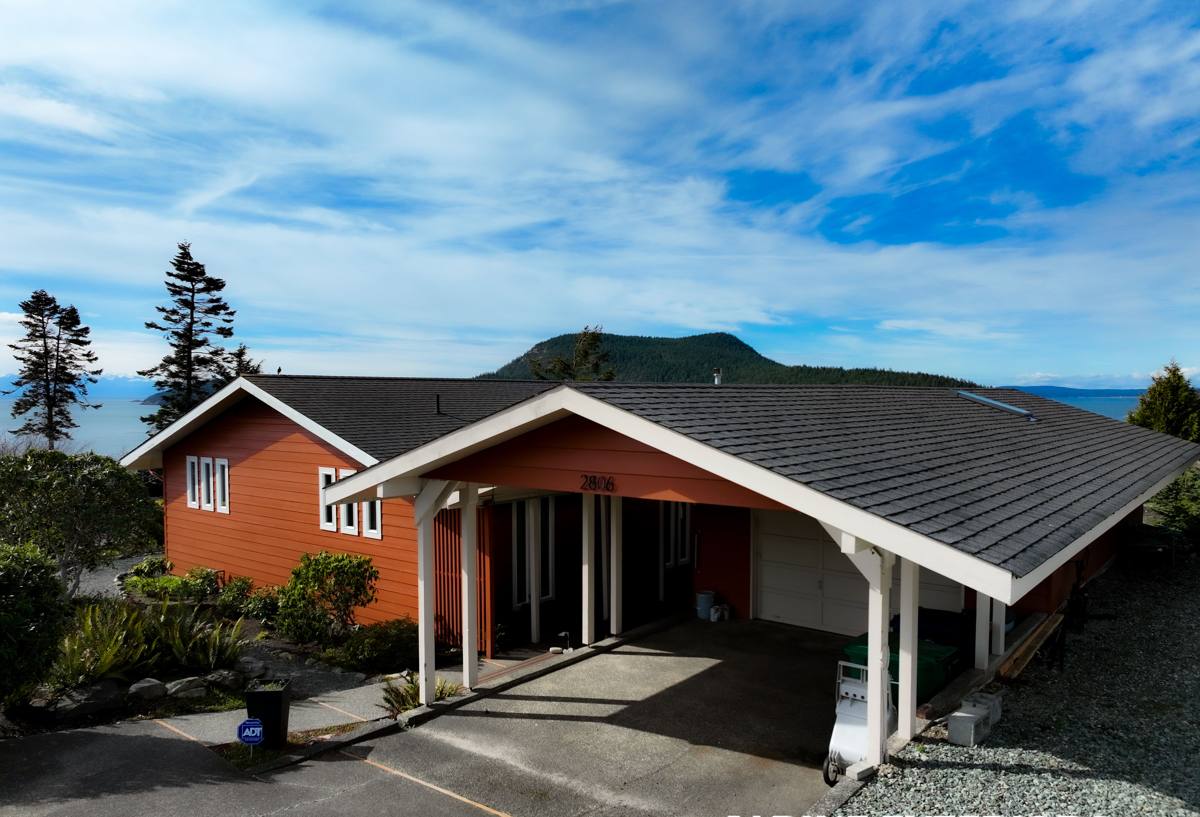
Why James Hardie Fiber Cement Is the Right Answer for This Neighborhood
We install James Hardie fiber cement siding exclusively, and South Hill's climate is a big part of why. Fiber cement is dimensionally stable — it doesn't swell, cup, or delaminate the way wood-based and some engineered wood products can when they take on repeated moisture. It's also non-combustible, which matters increasingly to insurers and to homeowners thinking about wildfire smoke and ember exposure even in a wetter region like ours. Hardie's ColorPlus finish is baked on at the factory under controlled conditions, which gives it better fade and wear resistance than a field-applied paint job, and it comes with a real, transferable warranty that stays with the house if you sell it.
None of that means every siding job with Hardie boards on it performs the same. The product only delivers on its warranty and its climate resistance when it's installed to the manufacturer's specifications — correct clearances, correct fastening, correct flashing and water management underneath it. That installation discipline is where most siding failures we get called out to inspect actually start, regardless of what material was used.
What a Correct Siding Installation Actually Involves
Tear-Off, Sheathing, and What's Underneath
A proper installation starts with removing the old siding down to the sheathing and actually looking at what's there. On older South Hill homes especially, this is where hidden rot, past water intrusion, or outdated wrap gets found. Covering over a problem with new siding just delays a much more expensive repair. Any damaged sheathing gets replaced before anything new goes up.
Weather-Resistive Barrier and Flashing Details
Underneath the siding, a correctly lapped weather-resistive barrier and properly integrated flashing at windows, doors, and roof-to-wall transitions are what actually keep wind-driven rain out of the wall assembly. The siding itself is the visible layer, but the water management system behind it is what determines whether a home stays dry through a Whatcom County winter. This is the part of the job that's invisible once it's finished — and the part most likely to be shortcut by a crew in a hurry.
Fastening, Clearances, and Finish
James Hardie specifies exact fastener types, spacing, and minimum clearances from grade, roof lines, and other surfaces. Those clearances exist specifically to keep siding from sitting in standing moisture or trapped debris — the same conditions that feed moss growth. Caulking, joint treatment, and touch-up painting at cut edges all affect long-term performance too, and skipping them is one of the more common corners cut on rushed jobs.
How Hardie Siding Options Compare
Homeowners on South Hill often ask how Hardie stacks up against other materials they've seen used around Bellingham. Here's an honest comparison based on how each performs against this area's specific conditions:
| Material | Moisture/Moss Resistance | Fire Rating | Typical Maintenance | Warranty Structure |
|---|---|---|---|---|
| James Hardie fiber cement | Strong — dimensionally stable, doesn't absorb and swell | Non-combustible | Occasional wash; factory finish resists fading | Long, transferable manufacturer warranty |
| Vinyl siding | Moderate — doesn't rot but traps moisture behind panels if installed poorly | Combustible, can warp near heat sources | Low, but cracks/fades over time and is hard to color-match if repaired | Prorated, often weaker over time |
| LP SmartSide (engineered wood) | Wood-based — depends heavily on correct installation and sealed edges | Combustible | Requires diligent edge sealing and repainting cycles | Manufacturer warranty with strict installation conditions |
| Cedar/primed spruce | Natural wood — absorbs moisture, needs regular refinishing | Combustible | Highest — periodic staining/painting and moisture monitoring | No manufactured product warranty; performance is installer-dependent |
This isn't a knock on every other product's design intent — vinyl and engineered wood siding both have legitimate uses and reasonable price points. It's why, given what South Hill's climate does to a wall assembly over twenty or thirty years, we made the decision to build our business around a single product system we can stand behind fully rather than install several products at different quality tiers.
Our Installation Process for South Hill Homes
Assessment and Product Selection
We start with an on-site walk of the home, looking at sun exposure, wind direction relative to the hill, existing moisture damage, and which Hardie product line and color fit both the house and the site conditions. A north-facing wall with heavy tree cover gets treated differently in the plan than a south-facing wall that dries out quickly.
Preparation and Protection
Landscaping, walkways, and windows get protected before tear-off starts. On sloped South Hill lots, we also account for site access and material staging so the job doesn't turn into extra mess or damage to the yard — hillside properties often have less flat staging area than a typical lot, and that has to be planned for up front, not improvised.
Installation and Quality Control
Installation follows Hardie's fastening and clearance specifications board by board, with flashing and water management details checked as the crew goes rather than after the fact. We inspect our own work against the manufacturer's installation requirements before calling a job finished, because that's what keeps the warranty valid and the siding performing the way it's supposed to.
Cost Factors for a South Hill Siding Project
Every home is different, but a few factors consistently move the price of a siding project up or down more than homeowners expect:
| Factor | Why It Matters |
|---|---|
| Extent of hidden sheathing damage | Rot found during tear-off has to be repaired before new siding goes on |
| Home size and wall complexity | Multiple gables, dormers, and trim details add labor beyond flat square footage |
| Site access and slope | Hillside lots can require more setup time for scaffolding and material staging |
| Product line and profile | Lap width, trim style, and specialty Hardie products vary in material cost |
| Existing moisture/moss damage | Extensive prior water intrusion adds both material and labor to make the wall assembly sound again |
What to Ask Before You Hire a Siding Contractor
A siding job is only as good as the crew installing it. Before hiring anyone for a South Hill project, it's worth asking:
- Are you a certified or factory-trained installer for the specific siding product you're proposing?
- Will you inspect and document the condition of my sheathing before installing new siding over it?
- What weather-resistive barrier and flashing approach will you use, and can you explain why?
- Does your installation keep the manufacturer's warranty intact, or does it use shortcuts that could void it?
- Can you walk me through how you'll protect my landscaping and manage debris on a sloped lot?
- Do you have experience with homes in this specific part of Bellingham, not just the general area?
Why Local Experience in South Hill Matters
A crew that's worked on South Hill before already understands the practical realities of the neighborhood — hillside access, the way salt air and shade patterns vary from one side of the hill to the other, and how quickly moss reestablishes itself on a wall that doesn't get afternoon sun. That local familiarity shows up in small decisions throughout a project: where extra flashing attention is worth it, which walls need a moisture-resistant approach even if they look fine today, and how to stage a job on a lot with limited flat space. It's the difference between a generic install and one that's actually built for the address it's going on.
If you're weighing a siding replacement on South Hill, we're happy to walk your home, look at what's actually going on with your current siding, and put together a straightforward estimate — no pressure, no sales script. Use the form below to get started.