 Bellingham Siding
 Why Birch Bay Siding Wears Differently Than Siding Ten Miles Inland
Birch Bay sits right on the water, and that changes what siding has to survive. Homes a short drive inland in Bellingham deal with plenty of rain, but they don't deal with the constant low-level salt exposure that comes off Birch Bay and the Strait of Georgia. Salt-laden air settles on siding, trim, and fasteners day after day, and over years it accelerates corrosion on anything metal and breaks down finishes that weren't built to take it. Add in wind-driven rain off the water and the deep shade and standing moisture that many Birch Bay lots hold under mature trees, and you've got three separate stressors working on the same wall at once: salt, water, and moss.
None of that is unusual for Whatcom County. It's just concentrated here. A siding job that would hold up fine in a drier, more sheltered part of Bellingham can fail faster on a waterfront or near-waterfront Birch Bay lot if it wasn't chosen and installed with that exposure in mind.
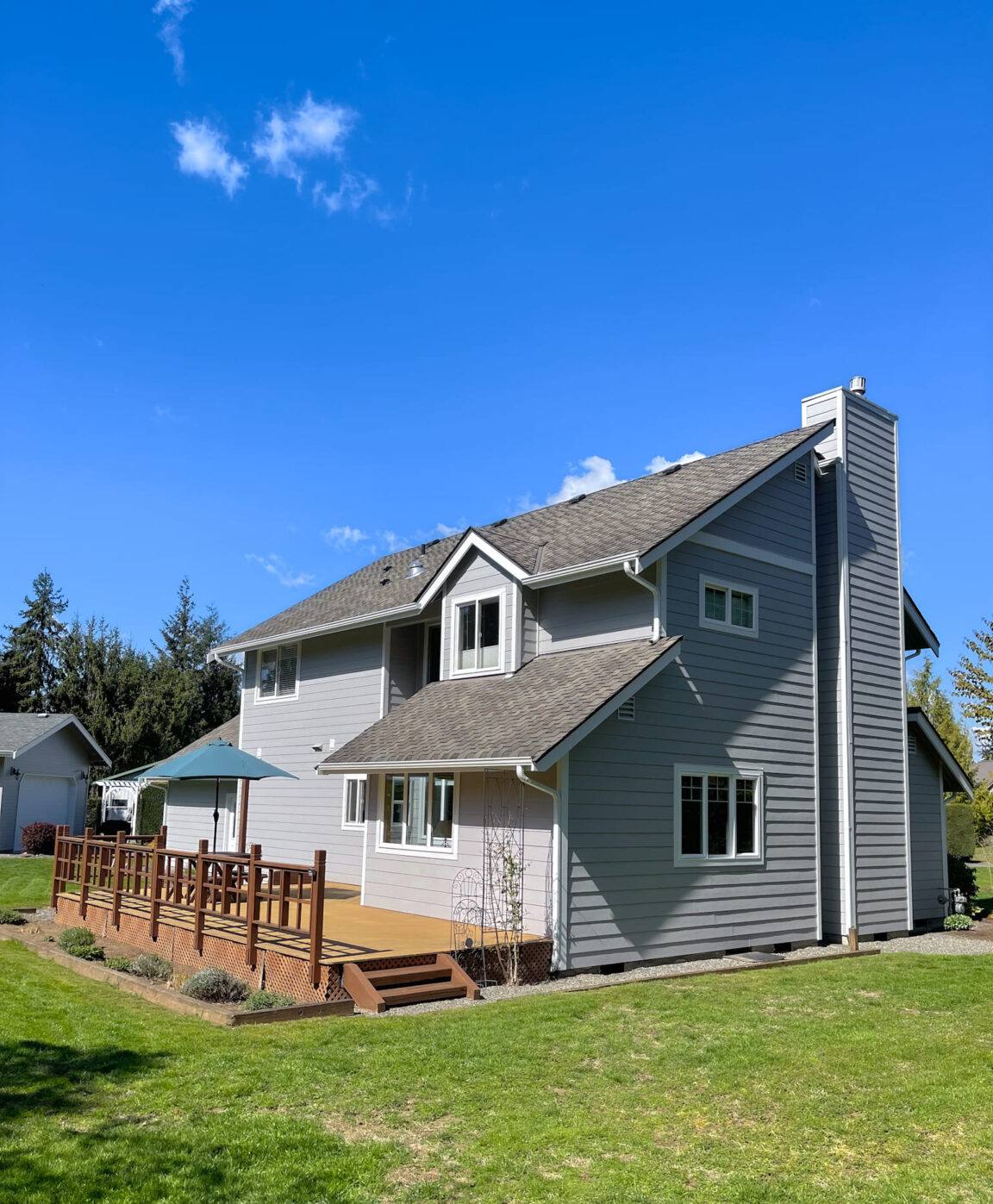
What Birch Bay's Climate Actually Does to Siding
Salt Air
Salt air doesn't just sit on the surface — it works into seams, fastener heads, and any spot where a coating has thinned or been scratched. Bare or poorly protected metal fasteners are usually the first thing to show it, with rust streaks bleeding down the face of the siding. Paint films and lower-grade finishes can chalk and fade faster under this kind of exposure than published product life expectancies suggest, because those numbers are rarely tested against a marine environment.
Driving Rain
Wind off the bay doesn't let rain fall straight down — it drives it sideways into wall assemblies, which puts more pressure on laps, seams, and flashing details than a calm-weather install ever gets tested against. A siding system with weak lap performance or a crew that rushes flashing at windows and trim will show water intrusion here well before it would in a more sheltered location.
Moss and Sustained Moisture
Whatcom County's long wet season means moss and algae get a real head start on any surface that stays damp — north-facing walls, areas under tree cover, and low clearance points near grade or roof lines. Moss holds moisture against the siding surface, and on materials that aren't dimensionally stable or don't resist moisture absorption well, that sustained dampness is what eventually leads to swelling, softening, or paint failure.
What This Means for Material Choice
We install James Hardie fiber cement siding exclusively, and Birch Bay is a good example of why. Hardie's HZ5 product line is specifically engineered for harsher, wetter climates like ours, and fiber cement itself doesn't absorb moisture the way wood-based products can, and it won't rot. That matters directly for the moss-and-moisture pattern above: a damp patch of moss sitting on Hardie siding is a cleaning issue, not a structural one.
The factory-applied ColorPlus finish also matters more here than in a drier climate. It's baked on under controlled conditions rather than field-applied, which gives it better adhesion and UV resistance than site-applied paint — a real advantage when the coating is fighting both sun and salt air instead of just sun. We back every install with stainless or coated fasteners appropriate to the exposure, because in a salt-air environment the fastener is often the weak point long before the siding panel itself is.
Material Comparison for a Salt-Air, High-Moss Environment
| Factor | James Hardie Fiber Cement | Vinyl | Wood / Primed Spruce |
|---|---|---|---|
| Moisture absorption | Does not absorb; won't rot | Doesn't absorb, but seams and J-channels trap water behind it | Absorbs readily; prone to swelling and rot |
| Salt air resistance | Factory finish holds up well; use corrosion-resistant fasteners | Can become brittle and discolored over time in coastal exposure | Finish breaks down faster; needs frequent recoating |
| Moss/algae resistance | Surface growth cleans off without damaging the substrate | Growth cleans off, but panels can warp from heat/cold cycling | Trapped moisture under moss accelerates rot |
| Fire resistance | Non-combustible | Melts/deforms under heat | Combustible |
| Typical maintenance | Occasional wash; repaint only if desired, not required for protection | Low, but limited repair options once damaged | Regular repainting/resealing required |
What a Correct Siding Replacement in Birch Bay Involves
Replacing siding isn't just pulling off old panels and nailing up new ones. In a coastal, high-moisture area, most of the long-term performance is decided by what happens before the new siding ever goes on the wall.
Tear-Off and Wall Inspection
Once the old siding is off, we inspect the sheathing and framing underneath for hidden rot or water damage — this is often the first time anyone has actually seen the condition of the wall in years, and it's common to find soft sheathing near old flashing failures or low corners that were retaining moisture.
Weather-Resistive Barrier and Flashing
A correctly installed water-resistive barrier and properly lapped flashing at every window, door, and penetration is what actually keeps driving rain out of the wall assembly — the siding itself is the second line of defense, not the only one. This is the step that separates a durable install from one that looks fine for a year or two and then leaks.
Fastening for the Environment
Fastener choice and placement is where salt-air jobs are won or lost. We follow Hardie's fastening specifications and use corrosion-resistant fasteners suited to a marine-influenced environment, driven at the correct depth so panels aren't over- or under-driven — both of which cause problems down the road.
Clearances and Drainage
Proper clearance from grade, roof lines, decks, and other surfaces keeps siding from sitting in standing water or trapped moisture, which is exactly the condition that lets moss and rot get started in the first place.
Finish Work
Caulking, trim, and touch-up paint at cut edges are finished to manufacturer spec so the factory finish's protection isn't compromised at the one place it's most vulnerable — an exposed, unsealed cut edge.
Our Process for a Birch Bay Home
- On-site inspection of existing siding, trim, and any visible moisture or moss damage
- Assessment of wall exposure — waterfront/near-waterfront sides typically need extra attention to flashing and fastener spec
- Written estimate covering tear-off, sheathing repair allowance, Hardie product line and color, and installation
- Sheathing inspection and repair once old siding is removed, documented before new siding goes up
- Installation to Hardie's published specifications, including fastener type and clearance requirements for coastal exposure
- Final walkthrough covering caulking, trim, touch-up paint, and basic care going forward
Signs Birch Bay Homeowners Should Watch For
- Rust streaking below fastener heads or trim
- Persistent moss or dark staining on north-facing or shaded walls that comes back quickly after cleaning
- Soft or spongy spots when you press on siding near the bottom courses or around windows
- Paint that's chalking, peeling, or fading unevenly, especially on the side of the house facing the water
- Visible gaps or separation at seams and corner trim after a windy, wet winter
Any one of these on its own might just mean it's time for maintenance. Several at once, especially combined with soft sheathing, usually means the wall assembly itself needs attention, not just new panels.
Cost Factors Specific to a Coastal Property
| Factor | Why It Affects Cost in Birch Bay |
|---|---|
| Sheathing condition | Waterfront exposure increases the odds of hidden rot behind old siding, which adds repair scope once discovered |
| Fastener and flashing upgrades | Corrosion-resistant fasteners and more careful flashing detailing take more labor time than a standard inland install |
| Access and site conditions | Sloped waterfront lots, seawalls, or limited staging space can add setup time |
| Product line selection | HZ5 panels and certain ColorPlus finishes cost more than base products but are worth it for this exposure |
| Scope of trim/soffit work | Salt-air corrosion often means trim and fascia need attention alongside the field siding |
Why a Crew That Already Works Birch Bay Matters
A contractor who mainly works drier, more sheltered neighborhoods can still do competent work, but they may not automatically account for a marine environment unless they're specifically thinking about it. A crew that regularly works Birch Bay and similar Whatcom County waterfront areas already knows to spec corrosion-resistant fasteners without being asked, already checks clearance and drainage more carefully on low, tree-shaded lots, and already recognizes what salt-air fastener corrosion or moss-driven rot looks like at first glance rather than diagnosing it from scratch. That local pattern recognition is what keeps a siding job from becoming a callback in three years.
Get a Free, No-Pressure Estimate
If your Birch Bay home's siding is showing rust streaks, stubborn moss, or soft spots, or it's simply due for replacement, we're happy to take a look and walk you through what we find — no obligation. Use the form below to request a free estimate.