 Bellingham Siding
 Why Decks in Sunnyland Wear Differently Than Decks Inland
Sunnyland sits close enough to Bellingham Bay that decks here take a different kind of beating than a deck built twenty miles inland in Whatcom County. It's not one big event that wrecks a deck in this neighborhood — it's the steady combination of salt-laden air off the bay, long stretches of driving rain, and a moss season that can run from October well into May. Wood decking that would hold up fine in a dry climate starts showing checking, graying, and soft spots within a few seasons here. Fasteners corrode faster. Anything that traps moisture against a board becomes a problem, not eventually, but within a year or two.
Composite decking exists specifically to deal with this kind of exposure, but only when it's specified and installed correctly for the site. A composite deck installed the same way you'd frame one in a dry inland town will still fail early in Sunnyland conditions — the material is only as good as the drainage, ventilation, and fastening decisions underneath it.
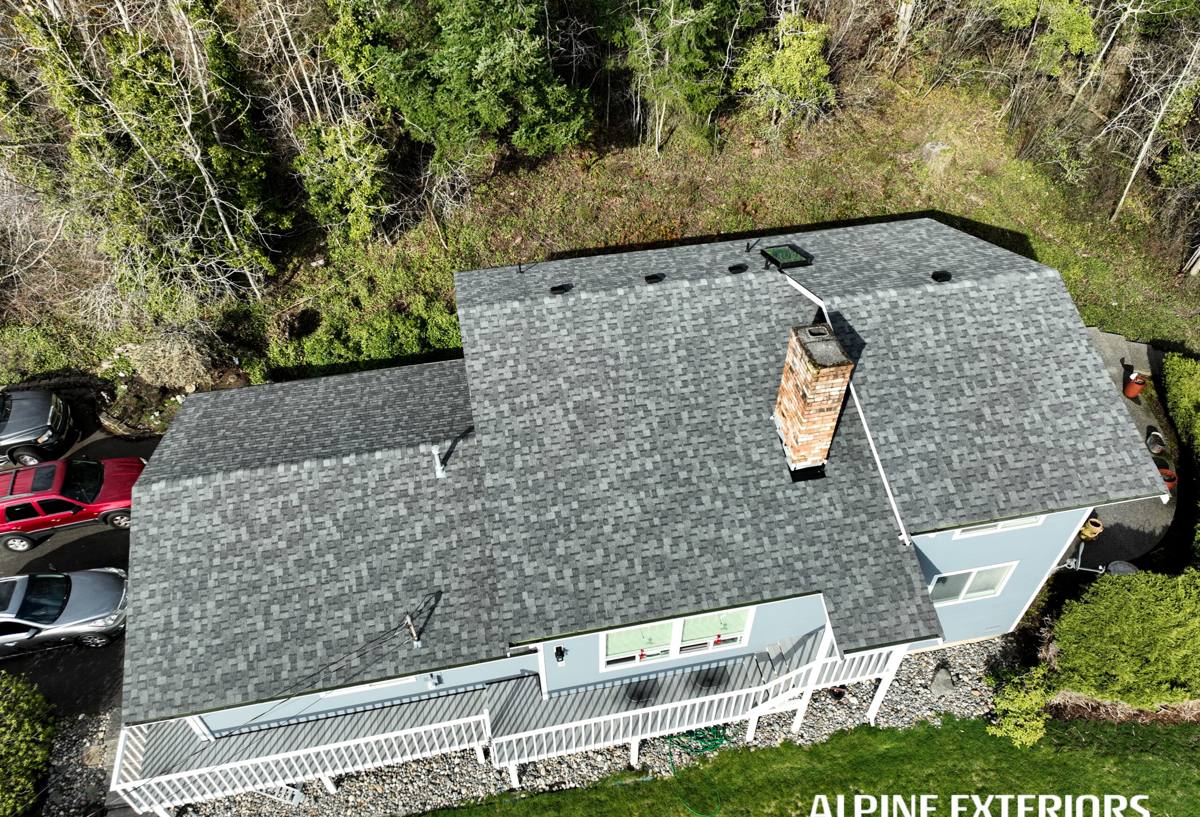
What Bellingham Bay Conditions Actually Do to a Deck
Salt Air
Airborne salt from the bay accelerates corrosion on any exposed metal — screw heads, joist hangers, railing brackets. It also settles into porous surfaces and can leave a dull film on decking over time if the surface isn't cleaned periodically. This is a maintenance issue more than a structural one, but it changes which fasteners and hardware we'll put in the ground.
Driving Rain
Rain here doesn't fall straight down most of the year. Wind off the water pushes it sideways, which means it gets up under railings, into end-grain cuts, and behind ledger boards in ways a calmer climate wouldn't test. Any gap in the flashing or a joist that isn't properly wrapped becomes an entry point for water that has nowhere to go once it's in.
A Long Moss Season
Moss and algae need shade, moisture, and time — Sunnyland's tree cover and the region's long wet stretch give them all three. On wood decking, moss holds water against the board and speeds up rot. On composite, moss mostly grows on the surface rather than into it, but it still needs to be washed off or it will stain the boards and make them slick underfoot.
Composite vs. Wood vs. PVC for This Climate
Homeowners in Sunnyland usually narrow it down to these three options. Here's how they actually perform under the salt air, rain, and moss conditions specific to this area — not in general, but here.
| Material | Moisture Behavior | Moss/Algae Resistance | Maintenance | Typical Lifespan Here |
|---|---|---|---|---|
| Pressure-treated wood | Absorbs water, swells and checks with wet/dry cycling | Low — moss roots into grain and holds moisture | Annual cleaning, periodic sealing/staining | 10-15 years before major repair |
| Capped composite | Core resists absorption; capped shell sheds water | Moderate — moss sits on surface, doesn't penetrate | Seasonal wash-down, no sealing needed | 25-30+ years |
| PVC/cellular decking | Fully water-resistant, no organic core to swell | Moderate to good, depending on surface texture | Seasonal wash-down | 25-30+ years |
We install composite most often in this neighborhood because it strikes the right balance of cost, appearance, and low upkeep for a bay-adjacent property. PVC is a reasonable alternative where a homeowner wants zero organic content in the board, but it costs more and some homeowners find the surface feel less wood-like. We don't push one brand over another as a matter of principle — we'll walk you through the real trade-offs for your specific deck.
Why We're Selective About Which Composite Boards We Install
Not every composite product on the market is built the same. Uncapped or lightly capped boards can absorb moisture at cut ends and fastener holes over time, which matters a lot in a climate that stays wet for months at a stretch. We favor fully capped boards with a solid manufacturer warranty structure, and we treat every cut end and fastener penetration as a moisture entry point that needs to be sealed or capped during installation — not left exposed because it's out of sight.
What a Correct Composite Deck Build Involves Here
The decking boards get most of the attention, but in this climate the framing underneath them determines whether the deck lasts 10 years or 30. Here's what we build into every Sunnyland composite deck:
- Joist tape or a moisture-resistant wrap on every joist top, so fastener penetrations don't become water pathways
- Corrosion-resistant, coated or stainless fasteners and hardware throughout, sized for the salt-air exposure this close to the bay
- Proper ledger flashing where the deck meets the house, with a drainage gap so wind-driven rain doesn't wick back into the wall assembly
- Joist spacing tightened to the composite manufacturer's spec, which is often closer than typical wood-deck spacing
- Adequate under-deck ventilation and drainage slope, so standing water and trapped humidity don't sit against the framing
- Hidden fastener systems on the decking surface where the product allows, reducing exposed metal and moss-catching screw heads
Skipping any one of these doesn't show up on install day. It shows up two or three winters later, when the deck looks fine on top but the framing underneath is already compromised.
Our Process for a Sunnyland Composite Deck
1. On-Site Assessment
We look at sun and shade exposure, proximity to trees (moss risk), how close the property sits to the bay, existing framing if this is a resurface job, and drainage around the footprint. This tells us how aggressive the moisture protection needs to be.
2. Product and Layout Selection
We walk through composite board options, colors, and railing systems with you, and lay out the board direction and picture-framing detail based on the deck's shape and how it's viewed from the house.
3. Permitting
Most deck work in Bellingham and unincorporated Whatcom County requires a permit, especially for anything attached to the house or built above a certain height. We handle that process rather than leaving it on the homeowner.
4. Demolition and Framing (or Framing Inspection)
On a rebuild, we tear out and inspect the ledger and posts for hidden rot before framing new. On a resurface over existing framing, we don't just lay new boards over old joists blind — we check the substructure first, because covering compromised framing with new composite decking just hides the problem for a few more years.
5. Decking, Fastening, and Trim
Boards go down to manufacturer spec with the fastening system appropriate to the product, followed by fascia, stair treads, and railing installation.
6. Final Walkthrough
We go over cleaning recommendations and what to watch for in year one, particularly around any shaded or tree-covered sections of the deck where moss will show up first.
Cost Factors for a Sunnyland Composite Deck
Every deck is different, but these are the variables that move the price most on jobs in this area. We won't quote a number without seeing the site, but this is what drives the range.
| Factor | Why It Affects Cost |
|---|---|
| Deck size and footprint shape | Square footage and the number of angles/cuts directly drive material and labor |
| Height above grade | Taller decks need more substantial framing, stairs, and often guardrails |
| Existing framing condition | Rot or undersized joists found during tear-off add repair cost before decking can go down |
| Board tier and railing system | Composite lines range from entry-level to premium; railing material (composite, cable, aluminum) varies widely |
| Site access | Tight lots, tree cover, or a deck that's hard to reach with equipment adds labor time |
Living With a Composite Deck in a Long Moss Season
Composite decking is low-maintenance, not no-maintenance. In a neighborhood with as much tree cover and rainy stretch as Sunnyland, a little seasonal care goes a long way toward keeping the deck looking and draining the way it should:
- Sweep debris and leaves off the deck regularly in fall, especially in shaded corners where moss gets a head start
- Wash the surface once or twice a year with a soft-bristle brush and a composite-safe cleaner — avoid pressure washers on close settings, which can damage the capped surface
- Check that drainage gaps between boards stay clear so water keeps moving instead of pooling
- Keep gutters and downspouts near the deck clear so runoff isn't dumping extra water onto or under the deck
- Inspect railing posts and stair connections annually for any movement, since hardware is what typically needs attention first in salt air
Why It Matters That We Already Work in Sunnyland
A crew that mostly builds decks inland doesn't necessarily know how much tighter the fastener spec needs to be this close to Bellingham Bay, or which shaded lots in this neighborhood need extra drainage detailing because of tree cover. We work in Whatcom County regularly, including Sunnyland, so the framing and fastening decisions on your deck come from what's actually held up here over time, not a generic spec sheet. That's the difference between a composite deck that still looks and drains right in year fifteen and one that needs railing and framing repairs by year six.
If you're weighing a new composite deck or replacing an aging wood deck in Sunnyland, we're happy to take a look and give you a straightforward, no-pressure estimate — just fill out the form below.