 Bellingham Siding
 Metal Roofing Built for Sunnyland's Marine Climate
Sunnyland sits close enough to the water and to Bellingham's tree cover that its roofs take a specific kind of beating year-round. It isn't one big storm that wears a roof out here — it's the steady combination of salt-laced air drifting in off the bay, long stretches of driving rain from fall through spring, and a moss season that can run most of the year in the shadier lots. A roof that's correctly matched to that combination will outlast one that was installed to a generic spec sheet. That's the difference we aim for on every metal roofing job we take in this neighborhood.
Metal roofing has real advantages in this kind of climate when it's installed correctly: it sheds water fast, it doesn't hold moisture the way organic roofing materials can, and it gives moss far less to grab onto. But "metal roof" isn't one product — panel type, fastener choice, underlayment, and flashing detail all matter more here than they would in a drier climate, and getting any one of them wrong shows up as a leak or premature wear within a few winters.
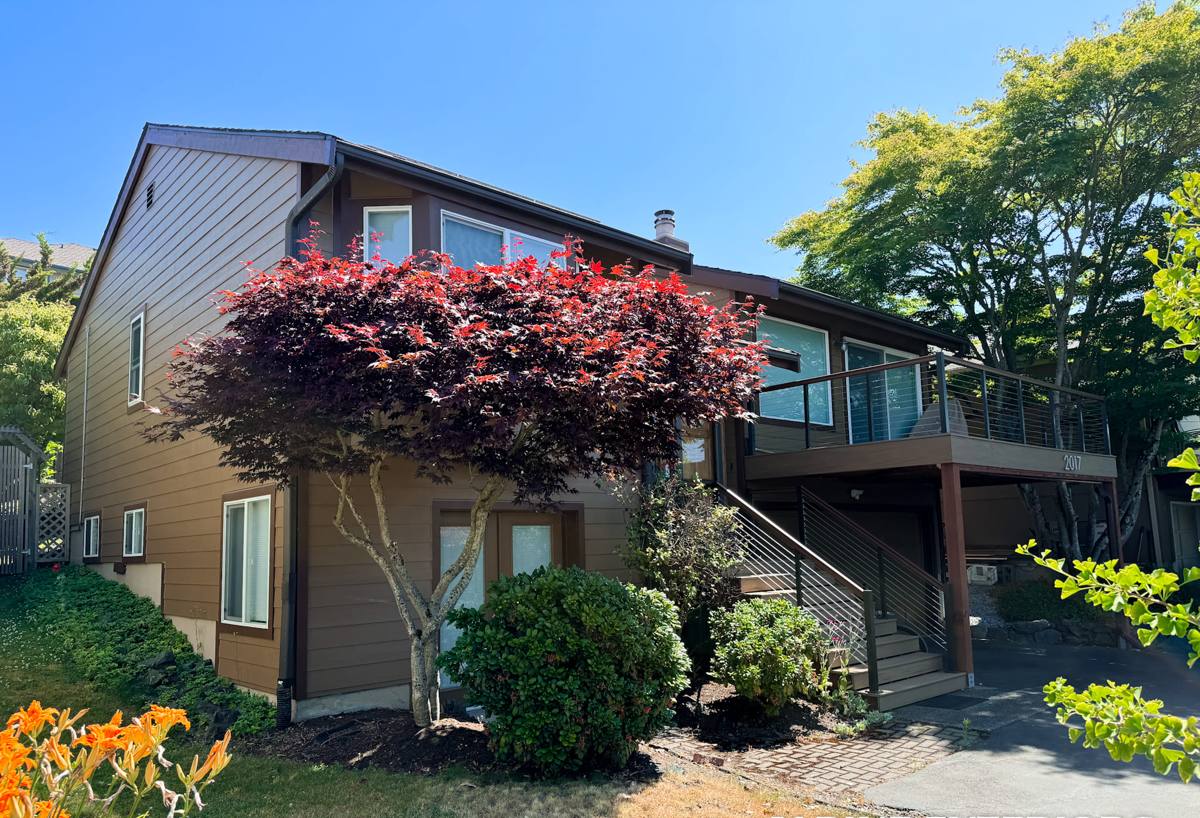
What Bellingham's Weather Actually Does to a Roof
Salt Air and Corrosion
Homes closer to the water deal with airborne salt that settles on roofing materials and accelerates corrosion at cut edges, exposed fasteners, and any spot where a coating has been scratched or worn through. Metal roofing handles this well when the panel finish, fastener coating, and flashing metal are all chosen to work together — mixing incompatible metals or leaving cut edges unsealed is where problems start.
Driving Rain
Whatcom County doesn't just get a lot of rain — a good portion of it comes in sideways during winter storms, which pushes water into laps, seams, and penetrations that would stay dry in a straight downpour. This is why underlayment selection and seam design matter as much as the panels themselves.
Moss and Shade
Sunnyland's mature trees are part of what makes the neighborhood pleasant to live in, but they also mean shaded roof sections that stay damp longer after every rain. Moss doesn't just sit on a roof cosmetically — its root structure holds moisture against the surface and can lift shingles or work into seams over time. Metal roofing is far less hospitable to moss than asphalt or wood, but it isn't immune, especially in valleys, around chimneys, and along shaded north-facing slopes.
What a Correct Metal Roofing Job Actually Involves
A metal roof is only as good as what's underneath it and how the details are handled. On every install we treat these as non-negotiable:
- A synthetic or self-adhering underlayment rated for the exposure, not just whatever is cheapest
- Ice-and-water shield or equivalent protection at eaves, valleys, and any low-slope transition
- Fasteners and flashing metals that are chemically compatible with the panel material — no mixed metals that accelerate corrosion
- Proper panel overlap and seam sealing matched to the specific driving-rain exposure of that roof face
- Ridge and soffit ventilation sized correctly, so trapped moisture isn't condensing against the underside of the panels
- Clean, sealed penetrations at every vent, pipe boot, and chimney flashing
None of this is unusual or proprietary — it's just the difference between a roof that's installed to look right on day one and one that's built to actually perform through twenty Bellingham winters.
Fasteners and Sealants Matter More Here
In a drier inland climate, a slightly inferior fastener or a sealant that's a year or two short of its rated life might not show a problem for a long time. In a marine climate with regular driving rain, that same shortcut shows up faster — as a rust streak, a soft spot in the underlayment, or a slow leak that's already done interior damage before anyone notices it from inside the attic.
Panel Types: What We Install and Why
Not every metal roofing product is the right fit for every home, and we're upfront about the trade-offs rather than pushing whichever option is easiest to install.
| Panel Type | Best Fit | Trade-offs |
|---|---|---|
| Standing seam (concealed fastener) | Homes wanting the cleanest look and longest maintenance-free run | Higher upfront cost; installation is less forgiving of shortcuts, so crew experience matters |
| Exposed-fastener panels | Budget-conscious projects, outbuildings, some roof pitches | Fasteners need periodic inspection and occasional re-torquing or replacement over the roof's life |
| Stone-coated steel | Homes wanting a traditional shingle or shake look with metal's durability | More surface texture can hold slightly more moss debris in shaded areas; needs regular clearing |
For most Sunnyland homes with meaningful tree cover, we lean toward standing seam or a well-detailed stone-coated system, since the smoother profiles shed moss-forming debris more easily than heavily textured options. But the right call depends on the specific roof, its slope, and the homeowner's budget — not a one-size answer.
How Our Process Works
1. On-Site Assessment
We start by actually getting on or above the roof, not estimating from photos. We check current decking condition, existing moss and moisture damage, ventilation setup, and how much shade and debris exposure each roof face gets.
2. Honest Scope and Estimate
We walk through panel options, what your roof's specific exposure calls for, and a realistic cost range — including what happens if we find decking damage once tear-off starts, so there are no surprise change orders sprung on you mid-project.
3. Tear-Off and Deck Prep
Old roofing comes off, decking is inspected and repaired where needed, and any existing moss or moisture staining is addressed at the source rather than covered over.
4. Underlayment and Flashing First
This stage doesn't show in the finished photos, but it's where most long-term leak problems are prevented or created. We don't rush it.
5. Panel Installation
Panels go down with fastener spacing, seam overlap, and metal compatibility matched to the panel manufacturer's specs and the roof's actual exposure — not a generic average.
6. Final Walkthrough
We walk the finished roof with you, point out ventilation and drainage details, and explain what routine maintenance (if any) that specific panel type needs going forward.
Metal Roofing vs. Asphalt for a Shaded, Rain-Heavy Lot
Asphalt shingles are a reasonable, lower-cost option and we're not going to tell you otherwise. But on a lot with real shade and consistent winter rain, asphalt's organic mat and granule surface give moss more to hold onto, and repeated moss removal shortens shingle life. Metal's smooth or lightly textured surface, combined with faster water shedding, means less moss establishment and less freeze-thaw stress on the roofing material itself. The trade-off is upfront cost — metal roofing typically costs more to install than asphalt, though it's also typically rated for a much longer service life, which changes the cost-per-year math over time.
Signs a Sunnyland Roof Needs Attention Now
- Moss visible on ridges, valleys, or north-facing slopes, especially spreading rather than isolated
- Rust streaking below fasteners or flashing on an existing metal roof
- Granule buildup in gutters (a sign of asphalt shingle wear, worth flagging if you're considering a switch to metal)
- Any interior ceiling staining after a heavy driving-rain storm
- Visible daylight or gaps at ridge caps, flashing edges, or pipe boots
- Panels or shingles that lift or flex noticeably in wind
Any one of these is worth a look before it becomes a bigger repair. None of them mean you automatically need a full replacement — sometimes it's a flashing fix or a moss treatment, and we'll tell you that straight if that's what the roof actually needs.
Why a Crew That Already Works This Neighborhood Matters
A roofing crew that regularly works Sunnyland and the surrounding Bellingham area already has a working sense of which roof faces catch the worst driving rain, which lots hold shade and moss longest, and how the salt-air exposure changes closer to the water. That's not a marketing point — it's the difference between a crew guessing at a generic install and one that's already calibrated its material choices and detailing to what this specific climate does to a roof over years, not just what it looks like on installation day.
We also know that Whatcom County permitting and inspection requirements can vary by project scope, and we handle that coordination as part of the job rather than leaving it for the homeowner to sort out.
Maintenance: What a Metal Roof Actually Needs Here
One of metal roofing's real advantages is how little ongoing maintenance it needs compared to asphalt or wood, but "little" isn't "none" in a moss-prone, rain-heavy climate. A basic annual check — clearing debris from valleys, confirming gutters are flowing freely, and a visual check of flashing and fasteners — goes a long way toward getting the full service life out of the material. We're happy to walk any homeowner through what to look for, whether or not we did the original install.
If you're weighing a metal roof for a Sunnyland home, or you've got moss, a leak, or an aging roof you want a straight opinion on, we're glad to come take a look. The estimate is free, there's no pressure attached to it, and you'll get a plain answer about what your roof actually needs — just fill out the form below to get started.