 Bellingham Siding
 Roof Repair Built for York's Weather, Not Just Any Roof
The York neighborhood sits close enough to Bellingham Bay and the surrounding wooded lots that its roofs take a different kind of beating than a roof twenty miles inland. You get a mix of salt-tinged air rolling in off the water, driving rain that comes in sideways during winter storms, and shade from mature trees that keeps moss growing nearly year-round. None of that is unusual for Whatcom County, but it adds up fast on a roof that isn't maintained with those specific stressors in mind. A repair crew that treats every roof the same way — dry-climate assumptions, generic materials, one-size-fits-all flashing details — ends up doing work that looks fine for a season and fails at the first hard winter.
Real roof repair in this part of Bellingham means understanding how moisture moves through a roof system here, where moss actually causes damage versus where it's cosmetic, and which repair details hold up through repeated wet-dry cycles rather than just one dry summer.
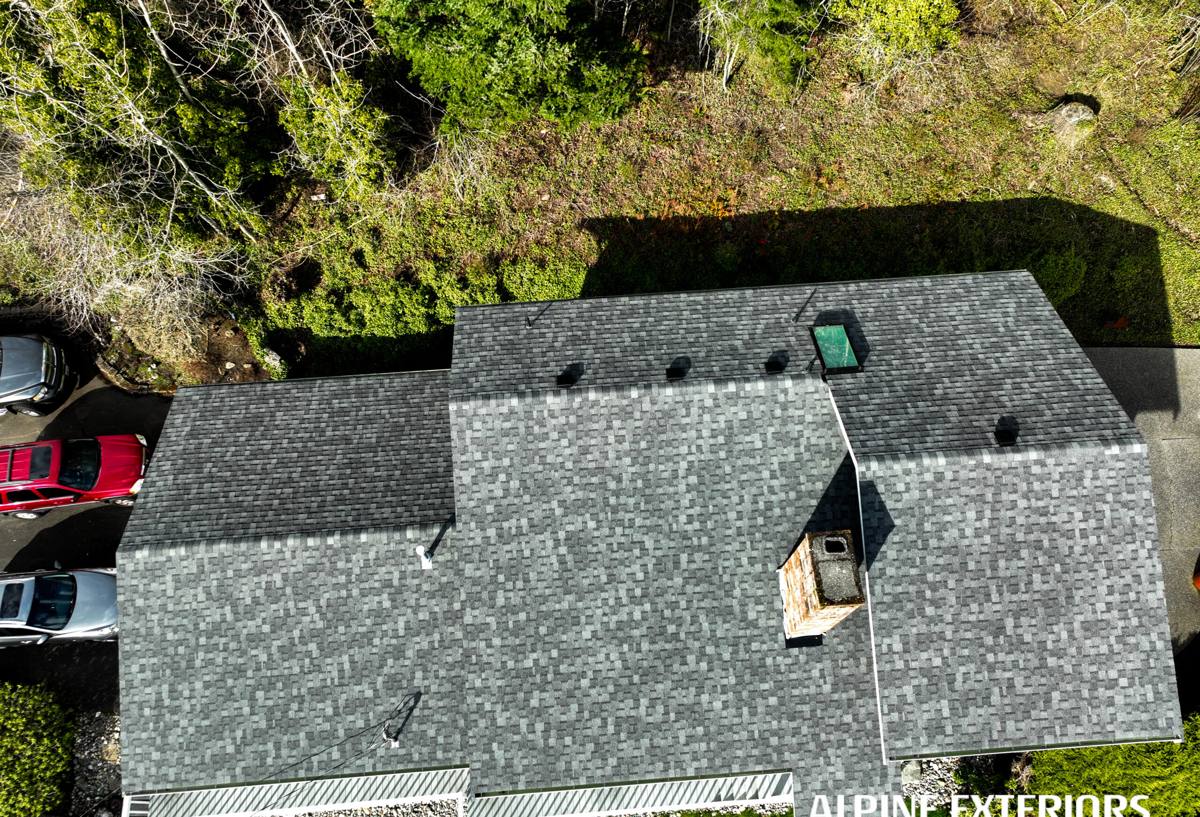
What York's Climate Actually Does to a Roof
Salt Air and Metal Fatigue
Homes closer to the water deal with airborne salt that accelerates corrosion on exposed metal — flashing, fasteners, gutter hardware, and any exposed nail heads. Galvanized materials that would last decades in a drier, inland climate can start showing rust streaks and pinholing years earlier near the bay. This is one of the most overlooked causes of slow, hard-to-trace leaks: the shingles look fine, but the metal underneath or around them has quietly failed.
Driving Rain and Wind-Driven Water
Storms here don't just drop rain straight down — wind pushes it sideways and up under laps, edges, and flashing that would stay dry in a calmer climate. Roofs need repair details that account for wind-driven water, not just gravity. That means proper lap direction, sealed fastener penetrations, and flashing that's mechanically secured, not just relying on sealant to do the work.
Moss and Shade
Tree cover across York keeps parts of many roofs shaded most of the day, which keeps them damp longer after every rain. Moss and algae take hold in those damp zones, and moss does real damage: its root-like structures lift shingle edges and granules, and thick moss mats hold water against the roof surface for days at a time. Left unaddressed, that moisture works its way under shingles and into the decking below.
Signs a York Home Needs Roof Repair Now
- Moss buildup along shaded roof edges, valleys, or the north-facing slope
- Rust streaks below flashing, vent boots, or exposed fasteners
- Granules collecting in gutters or at downspout outlets
- Curling, lifted, or cracked shingles, especially near roof edges
- Water stains on interior ceilings after wind-driven storms specifically (versus every rain)
- Soft spots or sagging when walking the roof (a sign of decking damage, not just surface wear)
- Daylight visible through the attic roof deck at joints or nail penetrations
Any one of these on its own might be minor. Several together, especially rust plus moss plus interior staining, usually point to a leak that's been developing for a while rather than something that just started.
What a Correct Repair Actually Involves
A lot of roof "repairs" amount to smearing sealant over a visible gap and calling it done. That approach almost never holds up in this climate, because it doesn't address why water was getting in. A correct repair follows a sequence:
- Diagnose the actual entry point. Water often travels along the underlayment or decking before showing up as a stain, so the visible damage and the real leak source can be several feet apart.
- Remove and inspect the decking underneath. If water has been getting in for a while, the plywood or sheathing beneath the shingles may be soft, delaminated, or rotted — that has to be cut out and replaced, not covered over.
- Replace underlayment in the repair zone. A patch job that reuses old, brittle underlayment is a shortcut that fails within a year or two.
- Correct the flashing detail. Whether it's a valley, chimney, vent, or wall intersection, the flashing has to be reinstalled with proper laps and fastening — not just re-sealed.
- Match and reinstall roofing material. Shingles or panels get reinstalled with correct nailing patterns and exposure so the repair blends structurally, not just visually.
- Clear moss and treat the surface. Any moss in or near the repair area gets removed by hand (not just power-washed, which can drive moisture and debris further under the shingles) and treated to slow regrowth.
Moss Removal Done the Right Way
Moss removal deserves its own mention because it's so often done badly. Pressure washing a mossy roof looks satisfying but can strip granules, force water under shingle laps, and shorten the life of the roofing material. The better approach is a soft-wash or hand-removal process: physically clearing moss growth without blasting the surface, followed by a treatment that discourages regrowth without damaging surrounding plants, gutters, or paint. On shaded York lots, this isn't a one-time fix — it's something to build into a yearly maintenance rhythm, usually timed for late summer or early fall before the wet season sets in.
Repair vs. Replacement: How We Make That Call
| Factor | Repair usually makes sense | Replacement usually makes sense |
|---|---|---|
| Roof age | Under 15-20 years, damage is localized | Near or past expected service life |
| Decking condition | Solid, dry, no widespread soft spots | Multiple soft or rotted areas found |
| Leak pattern | Single, identifiable source | Leaks in multiple unrelated areas |
| Moss/algae extent | Confined to shaded sections | Widespread across most of the roof |
| Shingle condition | Granule loss and curling are localized | Granule loss and curling are roof-wide |
We'll tell you honestly which side of that line your roof falls on. A repair that's really a stopgap before a replacement isn't a good use of your money, and we won't sell it to you as a permanent fix.
Materials and Details That Hold Up Near the Bay
Given the salt exposure and wind-driven rain common around York, we lean toward corrosion-resistant flashing and fastener materials over the cheapest available option, and we're deliberate about sealant use — sealant is a backup to a good mechanical detail, not a substitute for one. We also pay attention to ventilation during repairs: a roof that traps moisture in the attic will keep failing in the same spots no matter how many times you patch the exterior. Where a repair touches ridge or soffit venting, we make sure airflow is actually working, not just present.
We're also careful about mixing incompatible materials during a repair — for example, matching old versus new shingle types, or introducing metal that will react badly with what's already on the roof. Small inconsistencies like that are exactly the kind of thing that causes a "repaired" roof to leak again within a year or two.
Our Process for York Homeowners
- Inspection first. We walk the roof (weather permitting) and check the attic from inside, since attic staining and insulation condition tell us a lot that's invisible from the ground.
- Clear explanation. We show you what we found, what's causing it, and what options actually make sense — no pressure toward the most expensive option if a targeted repair will genuinely hold.
- Written scope and price. You get a specific description of what will be done, not a vague line item.
- Weather-aware scheduling. We plan repair work around Whatcom County's rain patterns so materials go down dry and have time to properly seal or cure.
- Cleanup. Old shingle debris, moss removal waste, and fasteners get cleared from the roof, gutters, and yard before we consider the job done.
Why Local Experience with York Roofs Matters
A crew that regularly works in and around York already knows which slopes tend to hold moss longest, how the tree canopy in different pockets of the neighborhood affects drying time after storms, and how proximity to the bay changes what materials are worth using. That's not something you can fully substitute with a generic inspection checklist. It shows up in small decisions — which flashing detail to prioritize, how aggressive to be about ventilation, when to flag a roof for full replacement instead of another patch — that add up to a repair that actually lasts through a Bellingham winter instead of one that needs revisiting every year.
We also know that homeowners here are often weighing repair costs against a lot of competing home maintenance priorities in a wet climate — gutters, siding, drainage — so we try to give repair recommendations that are honest about urgency rather than treating every issue as an emergency.
Maintenance That Extends the Life of a Repair
A good repair job is only half the equation; a bit of regular upkeep afterward keeps small issues from becoming repeat repairs.
- Clear gutters and downspouts at least twice a year, more often under heavy tree cover
- Check for new moss growth each fall before the wet season builds up
- Have flashing and vent boots inspected every couple of years, since these fail well before shingles typically do
- Keep overhanging branches trimmed back to reduce shade, debris, and moss-friendly conditions
- Address small leaks immediately rather than waiting — decking damage compounds quickly in this climate
Get a Straight Answer About Your Roof
If you're seeing moss buildup, rust stains, or signs of a leak on a York-area home, it's worth having someone look before the next round of winter storms. We offer a free, no-pressure estimate — we'll inspect the roof, explain what we find in plain terms, and give you a clear recommendation on repair versus replacement, with no obligation to move forward. Fill out the form below to get started.