 Bellingham Siding
 Asphalt Shingle Roofing Built for Ferndale's Climate
Ferndale sits close enough to the water and the fields north of Bellingham that its roofs take a different kind of beating than homes further inland. Salt-laden air drifts in off Bellingham Bay and the Strait, wind-driven rain comes sideways off winter storms, and the shaded, damp lots common around Ferndale keep moss growing on shingles nearly year-round. None of that is exotic weather — it's just relentless. A roof that's installed correctly for this specific combination of salt, rain, and moss will hold up. One that's installed to a generic spec, or patched together without attention to the details, tends to show its age early: streaking, granule loss, curling edges, and soft spots where moisture has been sitting under the shingle line longer than it should.
This page covers what we actually do when we install or replace asphalt shingle roofing on Ferndale homes — not a general overview of shingles, but the specific choices and steps that matter here in Whatcom County.
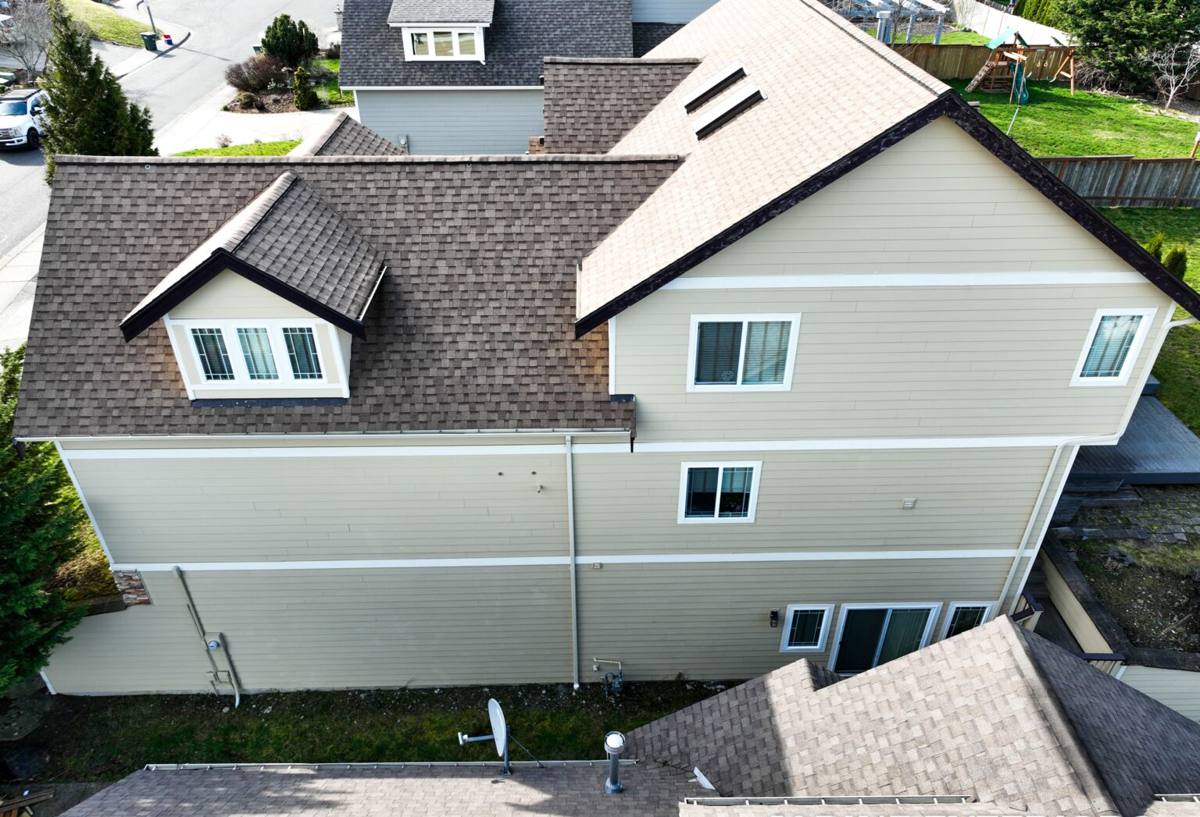
What Ferndale's Weather Actually Does to a Shingle Roof
Salt Air and Metal Fatigue
Ferndale isn't oceanfront, but it's close enough to tidal water that airborne salt reaches roofs, especially on the west- and north-facing sides of a house. Salt accelerates corrosion on exposed metal — nail heads, flashing, drip edge, and vent stacks. On a lot of roofs, the shingles themselves are still serviceable when the metal components underneath them start failing first. That's why we don't treat flashing and fasteners as an afterthought; they're picked and installed with the same attention as the shingles.
Driving Rain and Wind-Blown Water
Storms coming off the Strait of Georgia and Puget Sound don't always fall straight down. Wind-driven rain gets pushed sideways and upward under shingle tabs, especially at eaves, valleys, and anywhere the roof deck has an edge. A roof that only accounts for gravity-fed water — meaning water that just runs downhill — will leak in Ferndale conditions even if every shingle is nailed correctly. The underlayment and flashing details have to assume water will try to go sideways and up, not just down.
Moss, Shade, and Moisture Retention
Many Ferndale properties have tree cover or sit close to neighbring trees, and the region's damp, mild winters give moss a long growing season — often close to nine months out of the year in shaded spots. Moss holds moisture against the shingle surface, which speeds up granule loss and, over time, can lift shingle edges enough to let water underneath. Unlike a one-time storm event, moss damage is slow and cumulative, which is exactly why it gets ignored until it's expensive.
Quick Reference: What Causes What
| Condition | What it does to the roof | Where it shows up first |
|---|---|---|
| Salt air | Corrodes exposed metal, fasteners, and flashing | Vent stacks, drip edge, nail heads |
| Driving rain | Pushes water sideways/upward under shingle tabs | Eaves, valleys, roof-to-wall junctions |
| Moss and shade | Holds moisture, lifts shingle edges, strips granules | North-facing slopes, tree-shaded sections |
| Freeze-thaw swings | Stresses sealant strips and flashing joints | Ridge lines, penetrations |
What a Correct Installation Looks Like Here
A shingle roof that's going to perform in Ferndale isn't just "shingles nailed to plywood." The parts most homeowners never see are usually the parts that determine whether the roof lasts 15 years or 30.
Underlayment
We install a synthetic underlayment as the primary water barrier beneath the shingles, and we pay particular attention to ice-and-water shield or a comparable self-adhering membrane at eaves, valleys, and any low-slope transitions — the spots where wind-driven rain and pooling moisture cause the most trouble locally. This layer is doing real work in this climate, not just meeting a minimum code requirement.
Flashing
Flashing at chimneys, skylights, sidewalls, and roof-to-wall intersections gets replaced, not reused, whenever we're doing a full re-roof. Reused flashing is one of the most common causes of a "new roof that still leaks," and given the corrosive salt air here, old flashing is often more compromised than it looks from the ground.
Ventilation
Attic ventilation affects how much moisture builds up under the roof deck from the inside — condensation, not rain. Poor ventilation traps humid air against the underside of the sheathing, which shortens the life of the deck and the shingles above it regardless of how good the shingle installation is. We check intake and exhaust balance as part of every roofing job, not as an upsell.
Fasteners and Nailing Pattern
We use corrosion-resistant fasteners and follow the manufacturer's specified nailing pattern exactly — nail placement affects both wind rating and warranty validity. Under-driven or over-driven nails are a common cause of early shingle failure and are easy to miss on a rushed job.
Choosing a Shingle for This Area
Most Ferndale homes do well with a mid- to upper-tier architectural (laminate) asphalt shingle rather than a basic three-tab. Architectural shingles are heavier, have a stronger wind rating, and generally include algae-resistant granules — a real advantage given how long moss and algae season runs here. Three-tab shingles are lighter-duty and, in our experience, show wear from wind and moisture faster in this climate, though they remain a lower-cost option for budget-driven projects.
- Look for a shingle rated for high wind exposure (110 mph or better) given our exposed lots and storm patterns.
- Algae-resistant (copper-infused) granules meaningfully slow moss and algae growth compared to standard granules.
- Check the manufacturer's actual warranty terms — some require specific accessory products (starter strip, ridge cap, underlayment) from the same manufacturer to stay valid.
- Confirm the shingle's minimum installation temperature; cold, damp mornings here are common enough that this matters for sealant activation.
Our Process on a Ferndale Roofing Job
- Inspection and estimate. We walk the roof (or use a close visual/photo inspection when access is limited), check the attic for ventilation and moisture signs, and note flashing, deck, and moss conditions specific to the property.
- Scope and materials review. We go over shingle options, underlayment approach, flashing plan, and ventilation needs before any work starts, so there are no surprises mid-project.
- Tear-off and deck inspection. Full tear-off lets us actually see the roof deck. Soft, rotted, or delaminated sheathing gets replaced — this is not something that can be verified from photos or a roof-over.
- Underlayment and flashing installation. Self-adhering membrane at vulnerable spots, synthetic underlayment across the field, new flashing at every penetration and transition.
- Shingle installation. Installed to manufacturer spec for nailing pattern, exposure, and starter/ridge details.
- Ventilation check. Intake and exhaust vents confirmed or corrected as part of the same job.
- Final walkthrough and cleanup. Magnetic sweep for stray nails, debris removal, and a walk-through so you know what was done and why.
Repair, Partial Replacement, or Full Re-Roof?
Not every Ferndale roof needs a full tear-off. The right call depends on the roof's age, how localized the damage is, and what condition the deck is in underneath.
| Situation | Likely approach | Why |
|---|---|---|
| Isolated leak, roof under 10-12 years old | Targeted repair | Flashing or a small section of shingles is usually the culprit, not the whole roof |
| Heavy moss with granule loss on one slope | Section replacement + moss treatment | Localized damage from shade/moisture doesn't always mean the whole roof has failed |
| Roof nearing or past its rated lifespan | Full re-roof | Aging underlayment and flashing throughout make spot repairs a short-term fix |
| Visible sagging or soft decking | Full re-roof with deck replacement | Structural issues underneath won't be solved by new shingles alone |
Moss Management Between Roofing Jobs
Whatever shingle you choose, moss control is an ongoing part of roof ownership in this part of Whatcom County, not a one-time fix. A few habits go a long way between full inspections:
- Keep overhanging branches trimmed back to reduce shade and debris buildup on the roof surface.
- Have gutters cleared regularly — clogged gutters hold water against the eaves, which is exactly where wind-driven rain already causes problems.
- Avoid pressure-washing shingles; it strips granules and shortens shingle life faster than the moss itself does. Soft washing or manufacturer-approved treatments are safer.
- Have a professional check flashing and moss buildup every couple of years rather than waiting for a visible leak.
Why a Crew That Already Works Ferndale Matters
Roofing crews who work Ferndale regularly already know which slope orientations tend to hold moss the longest, which older subdivisions commonly have undersized attic ventilation, and how local wind patterns off the water tend to load a roof differently than an inland installation manual assumes. That local pattern recognition shows up in small decisions — where to add extra membrane, which flashing details to double-check, how aggressively to spec algae-resistant shingles — that a crew unfamiliar with the area might not think to make. It also means shorter response times for follow-up questions or warranty concerns, since we're not driving in from out of the county.
What This Typically Costs
Asphalt shingle roofing costs vary with roof size, pitch, number of layers being removed, deck condition, and shingle tier chosen. As a broad range, straightforward tear-off-and-replace jobs on typical single-family homes often run from the high single-digit thousands to the mid-teens in thousands of dollars, with complex rooflines, extensive deck repair, or premium shingle lines pushing higher. We don't quote a real number without seeing the roof — anything else is a guess. A written estimate after inspection is the only way to know what your specific roof actually needs.
If your Ferndale roof is showing moss buildup, granule loss, or you just want an honest read on how many years it has left, we're happy to take a look. Fill out the form below for a free, no-pressure estimate.