 Bellingham Siding
 Why a Barkley Deck Is a Different Job Than "a Deck Anywhere"
Barkley is one of Bellingham's more established planned neighborhoods, and the homes here tend to share a few things: mature landscaping, a mix of traditional and contemporary exteriors, and lots of outdoor living space tucked among trees. That last part matters more than most homeowners realize. A deck built in a sunny, open yard dries out fast after a storm. A deck built under tree cover, in the shade of a two-story home, or on the shaded side of a fence line in Barkley can stay damp for days at a time — and in Whatcom County, that damp period isn't rare. It's most of the year.
We're not going to pretend every deck problem here is exotic. Rot, loose railings, and cupped boards happen everywhere. But the speed at which those problems show up, and which materials and details prevent them, is genuinely different in a shaded, moisture-heavy neighborhood like Barkley than it is in a dry inland climate. This page covers what actually matters for a deck built for this specific setting — not a generic list of "deck tips."
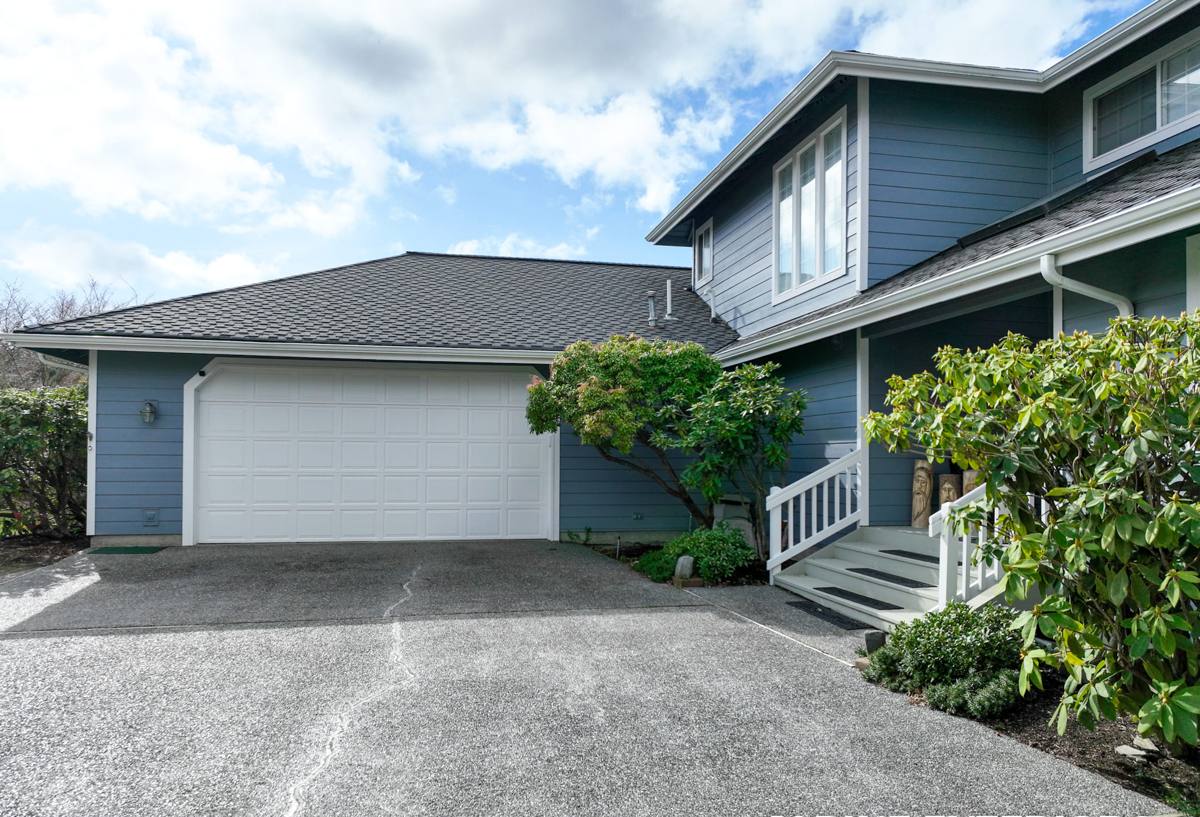
What Bellingham's Climate Actually Does to a Deck
Even away from the immediate waterfront, homes throughout Bellingham and the rest of Whatcom County sit close enough to Puget Sound that salt-laden air is a real factor on any exposed metal — fasteners, hardware, railing brackets, and hidden fastener clips all take more abuse here than they would inland. Combine that with driving rain that comes in sideways during fall and winter storms, and you get water finding its way into joints and connections that would stay dry in a calmer climate.
Then there's moss. Bellingham's long stretch of cool, wet weather — often eight or nine months of the year with regular moisture — gives moss, algae, and lichen plenty of time to establish themselves on any horizontal wood surface that doesn't dry out quickly. On a shaded deck, moss isn't just cosmetic. It holds moisture against the board surface, feeds on the wood fibers, and turns decking into a slip hazard when wet.
The Three Things That Fail First
- Fasteners and hardware — corrosion at screw heads, joist hangers, and structural connectors, especially with mismatched or non-rated metal
- The ledger connection — where the deck attaches to the house, if flashing is missing or done wrong, water gets behind the siding and into the rim joist
- Board surfaces in shaded zones — moss and algae buildup that softens wood fiber and creates a chronically slick walking surface
Choosing the Right Decking Material for a Barkley Yard
There's no single "best" decking material — there's the best material for your budget, your amount of shade, and how much upkeep you actually want to do. Here's how the common options hold up under Bellingham conditions specifically.
| Material | How It Handles Moss & Moisture | Maintenance | Typical Lifespan Here |
|---|---|---|---|
| Pressure-treated wood | Absorbs moisture readily; needs airflow and regular cleaning to resist moss in shaded spots | Annual cleaning, re-staining every 2-3 years | 15-20 years with upkeep |
| Cedar | Naturally more rot-resistant, but still needs sealing to shed water and resist algae staining | Cleaning and sealing every 1-2 years | 15-25 years with upkeep |
| Capped composite | Sheds water well; textured surfaces can still host surface moss in deep shade, but it doesn't feed into the board | Occasional wash-down, no sealing or staining | 25-30+ years |
| PVC decking | Fully synthetic, doesn't absorb moisture at all; best option for the shadiest, dampest yard corners | Occasional wash-down | 30+ years |
In practice, for a shaded lot in Barkley we're often steering homeowners toward capped composite or PVC in the areas that stay damp longest, and reserving wood for sunnier, more open sections of the same deck if that's the look they want. That's a professional judgment call based on drainage and sun exposure, not a one-size-fits-all recommendation — it's part of what we walk through on site.
The Structure Underneath Matters More Than the Boards
Homeowners naturally focus on decking material because it's what you see and walk on. But the framing underneath is what determines whether the deck is still safe and solid in fifteen years — and it's also where Whatcom County's wet climate does the most damage if it's built wrong the first time.
Footings
Frost depth and soil drainage vary across Bellingham lots, and Barkley's mix of newer construction and mature landscaping means soil conditions aren't uniform from yard to yard. Footings need to be sized and set to local code requirements, not guessed at — undersized or shallow footings are one of the most common causes of a deck that starts to shift or sag within a few years.
Framing and Fasteners
Every fastener, joist hanger, and structural screw in a deck exposed to this climate should be rated for exterior/coastal use — stainless steel or heavy-duty coated hardware, not standard interior-grade fasteners that will corrode within a few wet seasons. This is a small cost difference at build time and a major difference in how long the frame lasts.
Ledger Flashing
The ledger board — where the deck bolts to the house — is the single most important flashing detail on the entire project. Done right, it uses proper flashing and a water-resistant barrier that directs water away from the house framing. Done wrong, it's one of the most common sources of hidden rot behind siding, because driving rain pushes water right at that seam.
Design Choices That Fit a Barkley Home
Beyond materials and structure, a well-designed deck should account for how the sun and shade actually move across your specific lot, and how the deck connects visually to your home's existing exterior. A few things we think through with every Barkley project:
- Board orientation and spacing that lets water drain quickly instead of pooling in shaded corners
- Railing style that fits the home's architecture — many Barkley homes have a more traditional or craftsman look, which affects whether metal cable, wood, or composite rail systems look right
- Whether a partial roof or pergola makes sense over the highest-moss-risk section of the deck
- Stair and landing placement that accounts for slope and drainage on the lot
- If your property is part of a neighborhood with shared design expectations, making sure the finished deck fits in — we're happy to work from any guidelines you provide
Our Process, Start to Finish
- On-site walkthrough — we look at sun exposure, drainage, existing siding condition at the attachment point, and how you actually plan to use the space
- Material and layout discussion — honest trade-offs between wood, composite, and PVC based on your specific yard, not a sales pitch for whatever's most profitable
- Design and quote — a clear, itemized plan so you know what you're paying for before work starts
- Permitting — we handle the paperwork with the City of Bellingham or Whatcom County, whichever applies to your property
- Construction — proper footings, corrosion-resistant fasteners, correct ledger flashing, and decking installed to manufacturer specs
- Final walkthrough — we go over care and maintenance specific to the material you chose before we consider the job done
Keeping a Barkley Deck Looking Good for the Long Haul
No deck material is completely maintenance-free in this climate — some just need far less than others. Whatever you choose, a little seasonal attention goes a long way toward preventing the moss and moisture problems that shorten a deck's life here.
- Sweep leaves and debris off the deck regularly, especially in fall — trapped organic matter holds moisture and feeds moss
- Rinse or wash the surface a few times a year, more often in shaded areas, to keep moss and algae from establishing
- Check railings, stair connections, and ledger flashing once a year for loosening or corrosion, particularly after winter storms
- Re-seal or re-stain wood decking on the schedule the product calls for — don't wait until it's visibly gray and dry
- Keep gutters and downspouts near the deck clear so roof runoff isn't dumping extra water onto or behind the deck structure
- Trim back overhanging branches where practical to let more light and airflow reach shaded sections
Permits and Local Requirements
Most attached decks and any deck built above a certain height above grade require a building permit and guardrails under standard residential building code, and inspections typically check footing depth, ledger attachment, and railing height and spacing. Depending on where your Barkley property sits, permitting runs through the City of Bellingham or Whatcom County. We handle this as part of the project rather than leaving it for the homeowner to sort out — it's one less thing to worry about, and it protects you if you ever sell the home and a buyer's inspection looks at the deck.
Why Hire a Crew That Already Works in Barkley
A deck built by someone unfamiliar with this specific climate can look great on installation day and start showing problems within a couple of wet seasons — moss creeping across shaded boards, corrosion at fastener heads, water tracking in behind poorly flashed ledger boards. A crew that already works regularly in Bellingham and greater Whatcom County has already seen which details actually matter here: the fastener grade, the flashing detail, the material choice for a shaded yard versus a sunny one. That's not a marketing claim, it's just what repeat exposure to this climate teaches a crew over time.
If you're planning a new deck or replacing one that's showing its age, we're happy to come take a look at your Barkley property and put together a clear, honest estimate — no pressure, no obligation. Use the form below to get started.