 Bellingham Siding
 Board & Batten in a Setting Like Sudden Valley
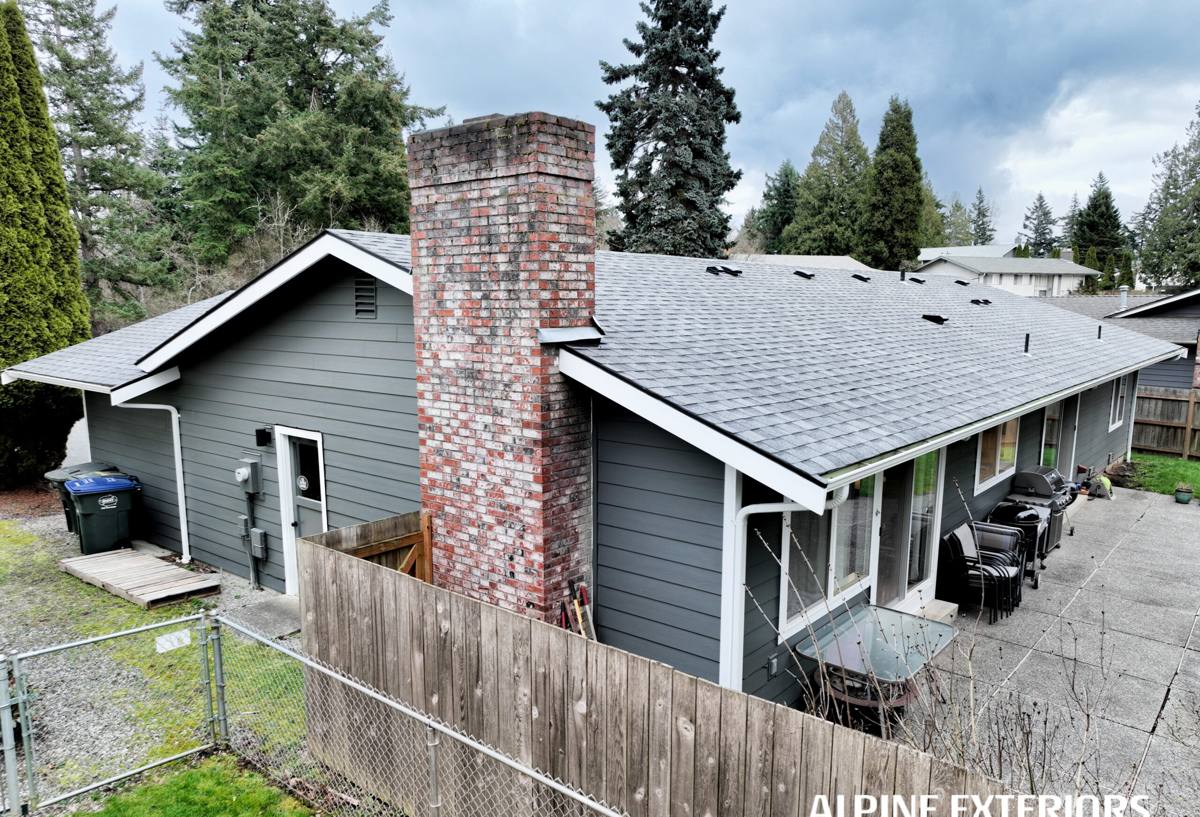
Sudden Valley's wooded, sloped lots and lake-adjacent setting are part of why board and batten keeps coming up when homeowners here start planning a re-side. The vertical lines read well against tall evergreens and rock retaining walls, and the style suits both the cabin-modern look many owners want and the more traditional homes built decades ago around the community. It's a good match for the setting — but it's also a style that punishes a sloppy installation faster than standard lap siding does, which matters a lot in a climate like this one.
Board and batten is a vertical siding system: wide flat panels (or sheets) installed vertically, with narrow battens covering the seams between them. Traditionally that was solid wood. Today it's built with engineered materials designed specifically to handle the seams, joints, and water paths that this style creates — and that engineering is exactly where quality separates fast.
What Whatcom County Weather Does to Vertical Siding
Homes around Bellingham deal with a specific combination: salt-laden air off the Sound, wind-driven rain that comes at the wall sideways rather than straight down, and a moss season that can run most of the year under tree cover. Sudden Valley's wooded lots add shade that keeps siding damp longer after every storm, which is exactly the environment moss, algae, and mildew prefer.
Why Vertical Siding Behaves Differently
Lap siding sheds water downward across overlapping horizontal courses. Board and batten relies on vertical seams and butt joints instead, which means water tracks straight down the face of the wall and concentrates at the batten strips and any horizontal joints. If those details aren't flashed and gapped correctly, water finds its way behind the panel rather than off of it — and in a climate that gets this much sustained moisture, that's not a small risk.
Moss and Algae in Shaded, Wooded Lots
Raw wood grain gives moss and algae something to grip and hold moisture against. A dense, factory-finished fiber cement surface gives them far less to work with, but even the best material still needs a drainage gap behind it and decent airflow — otherwise moisture gets trapped against the wall regardless of what the face material is.
Why We Only Install This as a James Hardie System
We don't install board and batten in cedar, vinyl, or LP SmartSide, and we want to be straightforward about why. Cedar looks great new but is a real wood product — it absorbs moisture, and in a shaded, high-rainfall setting like Sudden Valley it needs consistent refinishing to keep that moisture out, or rot and moss take hold within a few seasons. Vinyl board and batten is low-maintenance and inexpensive, but it's a thin, flexible material with butt-jointed seams that can telegraph waviness and doesn't hold up as well to the kind of driving, salt-carrying wind this area gets. LP SmartSide is a wood-strand product with an engineered resin coating — a real improvement over old OSB siding, but it's still a wood-based substrate, and its performance depends heavily on every cut edge and joint being sealed exactly to spec, every time.
James Hardie's fiber cement panels are made from cement, sand, and cellulose fiber — a non-combustible material that doesn't expand and contract with moisture the way wood or wood-strand products do, and doesn't warp or ripple the way vinyl can. Combined with a factory-applied ColorPlus finish, it holds its color and its shape for decades with far less upkeep. That's the whole reason we standardized on it: it's the product that holds up to this specific climate with the least amount of homeowner babysitting.
| Factor | James Hardie Fiber Cement | Cedar | Vinyl | LP SmartSide |
|---|---|---|---|---|
| Moisture/rot resistance | Very high | Moderate, needs upkeep | High (won't rot, but can trap moisture behind it) | Moderate, sealed edges critical |
| Moss/algae resistance | High with factory finish | Low in shaded, wet spots | Moderate | Moderate |
| Repainting needed | Rarely, finish is factory-baked | Every few years | Never fades same way, but can chalk | Every several years typically |
| Fire rating | Non-combustible | Combustible | Combustible | Combustible (treated core) |
| Typical lifespan installed to spec | 30+ years | 15–25 years with upkeep | 20–30 years | 20–30 years |
What a Correct Board & Batten Installation Actually Involves
This style has more places for water to go wrong than lap siding, so the details matter more, not less.
- A continuous drainage gap (rainscreen) behind the panels so any moisture that does get past the surface can drain and dry instead of sitting against the sheathing
- Proper flashing at every horizontal joint, window and door head, and the base of the wall
- Correct fastener placement and spacing per the Hardie installation spec — over-driven or misplaced nails are one of the most common causes of premature siding failure we find on tear-offs
- Expansion gaps at panel ends and corners, sealed with the right sealant rather than caulked solid, since the material still needs to move slightly with temperature
- Battens installed to cover seams without trapping water behind them
Mistakes We See on Older Sudden Valley Homes
On re-sides in this area, the recurring problems aren't cosmetic — they're moisture problems that were invisible from the outside for years. Battens fastened directly over old siding without checking the sheathing underneath. No drainage gap at all, so the wall assembly stayed wet after every rain. Missing or short kick-out flashing where a roofline meets the wall, sending roof runoff straight down behind the siding instead of away from it. By the time these show up as soft spots or peeling paint, there's usually sheathing damage behind them.
Our Process for a Sudden Valley Project
- On-site assessment — we check the existing siding, trim, and where possible the sheathing condition, since wooded lots with heavy shade often hide moisture damage longer than open, sunny sites
- Tear-off and any needed sheathing repair before anything new goes up
- Weather-resistive barrier installation, checked and taped at every penetration
- Rainscreen furring installed to create the drainage gap
- Hardie panel and batten installation to manufacturer fastening and spacing specs
- Trim, corner, and flashing detail work
- Final walkthrough before we call the job done
Because Sudden Valley lots are frequently sloped, treed, and set back from the road, access and staging often take more planning than a flat in-town lot — material handling, ladder placement, and protecting landscaping during tear-off all get worked out before the crew shows up, not improvised on site.
Cost Factors to Expect
Board and batten in fiber cement generally costs somewhat more than standard lap siding of the same material, mostly due to the batten strips and the additional trim and flashing detail. Exact numbers depend on the specifics of your home, but the factors below are what actually move the price.
| Factor | Why It Matters |
|---|---|
| Tear-off vs. install over existing sheathing | Removing old siding and repairing sheathing adds labor but is often necessary on older homes |
| Wall height and roofline complexity | Multi-story walls, dormers, and steep rooflines add cutting, flashing, and access time |
| Site access | Wooded, sloped, or narrow-access lots common around Sudden Valley can add setup and material-handling time |
| Trim and corner detail | More window trim, corner boards, and transitions mean more precision work |
| Color selection | Standard ColorPlus colors versus premium or custom-matched finishes affect material cost |
Warranty and Long-Term Upkeep
James Hardie backs its fiber cement products with a long, non-prorated substrate warranty, and the ColorPlus factory finish carries its own separate finish warranty — both structured around the product being installed to Hardie's published specifications. That's part of why installation quality isn't a minor detail here: a poorly fastened or unflashed installation can affect warranty coverage even though the material itself is sound.
On the homeowner side, upkeep is genuinely light compared to wood or vinyl: an occasional gentle rinse to keep moss and pollen from building up in shaded areas, a visual check of caulking at trim joints every year or two, and prompt attention if a gutter or downspout starts overflowing onto a wall section. That's most of it.
Why a Crew That Already Works Sudden Valley Matters
Board and batten done right in this climate isn't a different skill set from lap siding — it's the same fundamentals of flashing, drainage, and fastening, applied with less room for error. A crew that regularly works this specific area already understands the moisture load these wooded, lake-proximate lots carry, plans for the access challenges sloped and treed properties bring, and installs every job to the same Hardie spec whether it's a straightforward ranch or a home with a lot of roofline breaks and trim detail. That consistency is what keeps a board and batten install looking right — and staying watertight — years down the road, not just on installation day.
If you're weighing board and batten for a home in Sudden Valley, we're glad to walk the property with you, look at what's there now, and give you a straightforward, no-pressure estimate — just fill out the form below.