 Bellingham Siding
 Windows Built for Barkley's Weather, Not Just Its Curb Appeal
Barkley sits close enough to Bellingham Bay and the Whatcom County waterways that homes here take a different kind of weathering than houses further inland. Salt-tinged air off the water, long stretches of driving rain, and a moss season that can run from October through May all put steady pressure on window frames, sills, and the seals around the glass. A window that looks fine in a showroom in Seattle or Spokane doesn't automatically hold up the same way here. When we talk about custom windows for Barkley, we mean windows and an installation approach chosen specifically for this microclimate, not a generic product dropped into a generic opening.
"Custom" in this context isn't a marketing word. It means the window unit is sized, framed, and flashed to fit the actual opening in your specific home, which in Barkley's mix of older post-war houses and newer builds can vary a lot from what a stock big-box window assumes. It also means picking frame materials, glazing packages, and drainage details that match how much rain and moisture this neighborhood actually sees over a year.
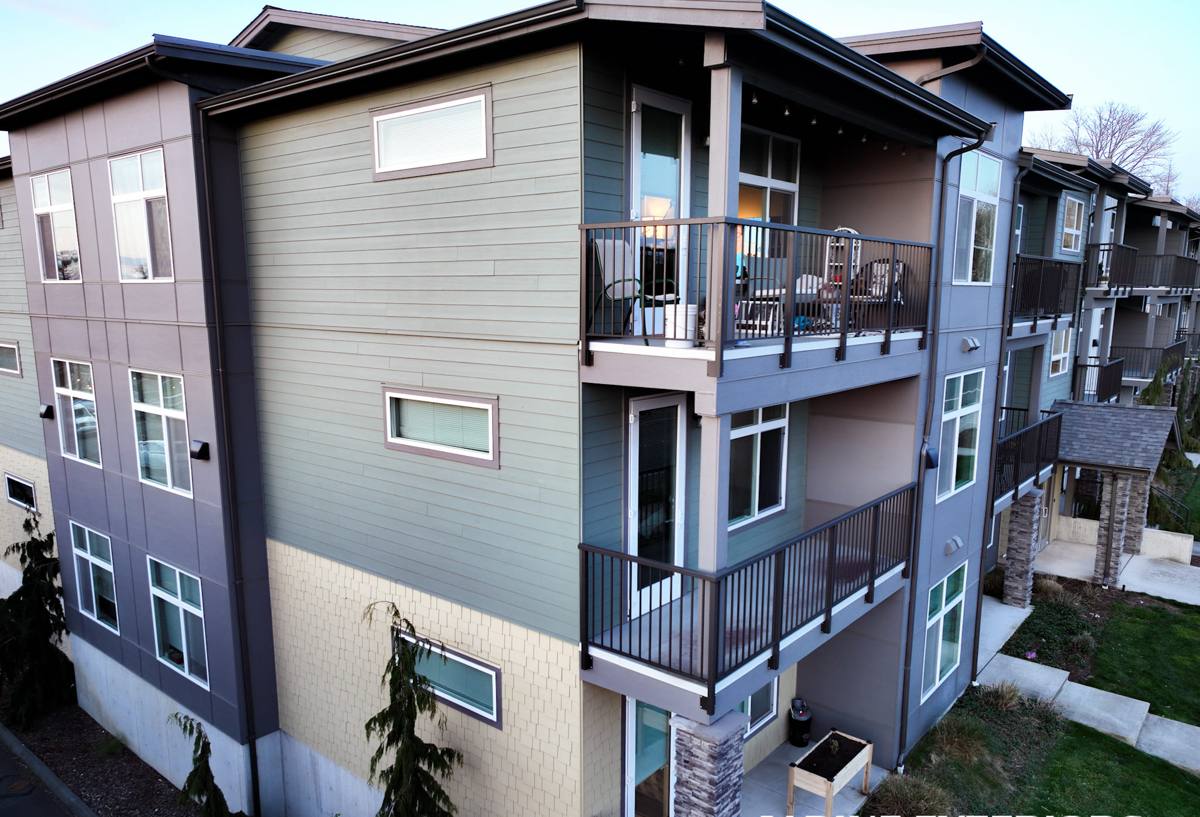
What Whatcom County's Climate Does to Windows Over Time
Bellingham's marine climate is generally mild, but mild doesn't mean easy on building materials. The combination that matters most for windows is persistent moisture plus salt-influenced air plus shaded, damp conditions that favor moss and algae growth on siding and trim near the window frames.
The three things we watch for in Barkley homes
- Driving rain intrusion — wind-driven rain off the bay can push water sideways into gaps around poorly flashed or aging window units, not just straight down.
- Salt air corrosion — hardware, weep holes, and metal components on older aluminum or poorly coated vinyl windows can corrode or gum up faster near the water than they would inland.
- Moss and organic buildup — moss doesn't just grow on roofs. It collects in window sills, tracks, and the joints between trim and siding, holding moisture against wood and finish longer than it should sit.
None of this means windows fail quickly in Barkley. It means the margin for a sloppy install or a mismatched product is smaller here than in a drier climate, and problems that start small — a soft sill, a sticking sash, a slow drip at the corner of a frame — tend to get worse faster if they're not addressed.
Signs a Barkley Home Needs Window Attention
Most homeowners don't think about their windows until something is obviously wrong, but there are earlier signs worth catching:
- Condensation forming between panes (a sign the seal on a double- or triple-pane unit has failed)
- Drafts you can feel near the frame even with the window fully closed and locked
- Wood sills that feel soft, spongy, or show dark staining
- Windows that are hard to open, close, or lock — often a sign the frame has shifted or swollen
- Visible moss, algae, or persistent green staining on the sill or surrounding trim
- Rising energy bills without another clear explanation
- Paint that's bubbling or peeling specifically around the window perimeter
Any one of these on its own isn't an emergency. Several of them together, or any sign of actual water intrusion into the wall cavity, is worth a closer look before the next wet season.
Choosing the Right Window for a Barkley Home
There's no single "best" window — the right choice depends on the home's exposure, age, and how much upkeep you want to take on. We walk through these trade-offs honestly rather than pushing one product line.
Frame material
Vinyl frames are a common, cost-effective choice and handle Whatcom County moisture well when properly installed, though quality varies a lot between manufacturers. Fiberglass frames cost more but resist warping and expansion/contraction better over decades, which matters with our seasonal temperature and moisture swings. Wood frames offer a traditional look that suits some of the older Barkley housing stock, but they demand real maintenance discipline in a climate this damp — we're candid with homeowners about that trade-off rather than downplaying it. Aluminum-clad options sit in between, but bare aluminum near salt-influenced air is one product category we steer clients away from because of how it corrodes and conducts cold over time.
Glazing and seals
Double-pane, low-E glass is the practical standard for this region — it balances cost against real energy performance. Triple-pane can make sense on north- or west-facing exposures that catch the worst of the wind-driven rain and cold, but it's not always worth the added cost on a sheltered south wall. What matters more than pane count, in our experience, is the quality of the seal and the spacer system, since a failed seal defeats the purpose of multiple panes regardless of how many there are.
| Factor | What to Consider | Why It Matters in Barkley |
|---|---|---|
| Frame material | Vinyl, fiberglass, wood, clad | Moisture and salt-air exposure vary by how sheltered the home is |
| Glazing | Double vs. triple pane, low-E coating | Wind-driven rain and heat loss differ by exposure and orientation |
| Flashing detail | Pan flashing, head flashing, sill drainage | Prevents driving rain from tracking behind the frame |
| Hardware finish | Coated vs. uncoated metal components | Reduces corrosion risk near the bay |
| Maintenance need | How often it needs painting, sealing, cleaning | Moss season adds upkeep burden to porous or wood surfaces |
What a Correct Custom Window Installation Actually Involves
The window unit itself is maybe half the job. The other half is how it's installed, and that's where a lot of problems we get called to fix in Barkley actually originate — not from a bad window, but from a rushed or generic install.
Our process
- On-site assessment — we measure the actual opening, check the condition of the surrounding framing and sheathing, and look for existing moisture damage before recommending anything.
- Product selection — based on that exposure (how much direct rain and wind the wall sees, sun exposure, and the age/style of the home), we recommend frame material and glazing that fits your budget and your maintenance appetite.
- Removal and opening prep — old units come out carefully so we can inspect and, if needed, repair the framing and sheathing underneath before anything new goes in. Installing a new window over a compromised opening just hides a problem.
- Flashing and drainage — this is the step that matters most for driving-rain performance. Proper pan flashing at the sill, correctly lapped house wrap or building paper, and head flashing that sheds water outward rather than trapping it are non-negotiable in our process.
- Setting and shimming — the unit is leveled, plumbed, and shimmed so it operates smoothly and doesn't stress the frame, which affects both the seal and the long-term function of the locks and hardware.
- Insulation and air sealing — the gap between the window frame and the rough opening is sealed with appropriate low-expansion foam or backer rod and sealant, not just packed with fiberglass, to control both air leakage and moisture.
- Exterior trim and sealant — finish trim and sealant beads are installed and inspected so water is directed away from the frame, not given a path to collect against it.
- Final walkthrough — every window is opened, closed, and locked to confirm smooth operation before we consider the job done.
Custom Sizing for Barkley's Housing Mix
Barkley includes a range of home ages and styles, and older openings in particular are rarely a perfect standard size. A true custom approach means building or ordering the window to fit the opening as it actually exists, rather than resizing the opening to fit a stock window — which often means cutting into framing that didn't need to be touched. This matters more for character-driven homes where the original proportions of the window openings are part of the look of the house. We measure and order (or fabricate specifications for) each opening individually rather than assuming uniformity across a home.
Maintenance That Actually Extends Window Life Here
A well-installed window in a damp climate like ours still benefits from some basic seasonal attention:
- Clear debris and moss from sills and tracks before the wet season sets in each fall
- Check and refresh exterior caulking or sealant beads every couple of years, sooner if you see cracking
- Wipe down and inspect hardware periodically, especially on homes closer to the bay, to catch early corrosion
- Watch for condensation between panes as an early sign of seal failure, and address it before it leads to fogged glass or moisture damage to the sill
- Keep gutters and downspouts clear so roof runoff isn't sheeting down across upper-story windows
Why Hiring a Crew That Already Works in Barkley Matters
General contractors and out-of-area window companies can install a window. What's harder to get right without local experience is anticipating how a specific wall orientation in Barkley will handle a wet Pacific storm system, or knowing which flashing details actually hold up through a Whatcom County winter versus which ones look fine on installation day and fail two years later. A crew that regularly works this neighborhood has already seen how different frame materials and installation shortcuts play out here over time, and that experience shapes the recommendations we make before a single window is ordered.
We also know that Barkley homeowners are often weighing window work against other exterior priorities — siding, trim, moss treatment — and we're happy to talk through how those projects overlap so you're not paying to redo trim work twice.
Get a Straightforward Estimate
If you're noticing drafts, fogged glass, sticking sashes, or just want an honest read on whether your current windows are holding up to Bellingham's weather, we're glad to take a look. The estimate is free, there's no pressure, and we'll tell you plainly what we see — including if the answer is that your windows have some life left in them yet. Use the form below to get started.