 Bellingham Siding
 Windows Built for Barkley's Weather, Not Just Its View
Barkley sits close enough to the water and the hills around Bellingham that its homes take a specific kind of weather beating: salt-tinged air rolling in off Bellingham Bay, driving rain that comes in sideways during winter storms, and a moss season that seems to stretch longer every year. None of that is dramatic on its own, but stacked together over years, it's exactly the combination that finds every weak point in a window installation. A window that's a perfect fit for a dry inland climate can fail early here if it wasn't installed with Whatcom County conditions in mind.
Window installation is one of those jobs that looks simple from the outside and is unforgiving when it's done wrong. The window itself is only part of the equation. How it's flashed, sealed, and tied into the surrounding wall assembly determines whether that window keeps water out for twenty-five years or starts letting moisture into your wall cavity within a few winters. In a neighborhood like Barkley, where homes range from established properties with original wood-frame windows to newer construction, getting that detail right matters more than the window brand printed on the label.
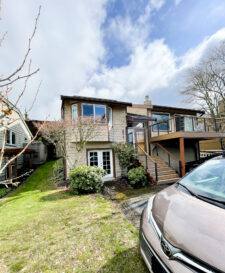
What Bellingham's Climate Actually Does to a Window Installation
It helps to understand the specific stresses at play, because they shape every decision we make on a window job.
Salt Air and Metal Fatigue
Proximity to Bellingham Bay means a low but steady level of salt in the air, especially on days with onshore wind. Salt accelerates corrosion on unprotected metal fasteners, hinges, and hardware. It also degrades certain sealants and finishes faster than they'd wear in a drier, inland location. This is why fastener choice and hardware finish are not places to cut corners on a coastal-adjacent installation.
Driving, Wind-Driven Rain
Bellingham doesn't just get a lot of rain — it gets rain that comes in at an angle, pushed by wind off the Sound. Wind-driven rain tests a window installation in a way that a light, straight-down drizzle never will. It finds gaps in flashing, pinholes in sealant beads, and any spot where the water-resistive barrier wasn't properly lapped. A window that looks watertight in calm weather can still leak during a January storm if the flashing details weren't done correctly.
Extended Moss and Damp Season
Whatcom County's moss season isn't a two-week nuisance — it's a stretch of months where surfaces stay damp, shaded areas rarely fully dry out, and organic growth gets a foothold anywhere water is allowed to sit. Around windows, that means sills, trim, and the base of the opening are at the highest risk. Proper drainage and sloped sills aren't cosmetic details; they're what keeps water moving out instead of sitting and feeding growth against your siding and framing.
What a Correct Window Installation Involves
A window replacement done right is a sequence, and skipping or rushing any step is where problems start.
- Remove the old window carefully and inspect the rough opening for hidden rot, soft framing, or prior water damage before anything new goes in.
- Repair any compromised framing — installing a new window into a damaged opening just seals the problem inside the wall.
- Install and lap the water-resistive barrier correctly around the opening so water is directed outward and downward, never trapped.
- Set flashing at the sill, jambs, and head in the correct shingle-style sequence so each layer sheds water onto the one below it.
- Slope the sill pan so any water that does get past the exterior cladding drains back out rather than pooling.
- Set the window plumb, level, and square — even a slightly out-of-square window stresses the frame and can cause premature seal failure.
- Insulate the gap between the window and framing properly, without overpacking, which can bow the frame.
- Seal and caulk the exterior with a product rated for our climate, at the correct joints — not everywhere, since some areas need to stay open to drain.
- Finish interior trim and confirm smooth operation before calling the job complete.
Wood, Vinyl, or Fiberglass: What Actually Holds Up in Barkley
Homeowners often come to us with a brand or material already in mind, and we're happy to talk through the trade-offs honestly rather than just install whatever's easiest for us.
| Material | Strengths in This Climate | Trade-offs to Know |
|---|---|---|
| Vinyl | Low maintenance, resists moisture and salt corrosion well, budget-friendly | Fewer high-end aesthetic options; quality varies a lot by manufacturer |
| Fiberglass | Very stable in temperature swings, strong moisture resistance, holds paint well | Higher upfront cost than vinyl |
| Wood | Classic look, especially on older Bellingham homes | Needs regular upkeep to resist rot given our damp, moss-prone seasons; failure is more likely if maintenance lapses |
| Wood-clad (wood interior, metal or fiberglass exterior) | Interior warmth of wood with exterior weather protection | Cladding seams are a detail that must be installed correctly to avoid moisture intrusion behind the cladding |
Our general standard for coastal Whatcom County installs is to steer homeowners toward vinyl or fiberglass for most full-exposure walls, and to reserve solid wood for covered or low-exposure locations where it can be properly maintained. This isn't a knock on wood windows — it's about matching material to how much upkeep a homeowner realistically wants to commit to given our extended damp season.
Energy Performance in a Marine Climate
Whatcom County sits in a mild but persistently damp marine climate, which shapes what actually matters for window performance here compared to a hotter or drier region.
U-Factor Over Solar Heat Gain
In our climate, keeping heat inside during the long cool season matters more than blocking solar heat gain, which is a bigger priority in sunnier climates. A window's U-factor — how well it resists heat transfer — is usually the number worth focusing on for Bellingham homes.
Condensation Resistance
High ambient humidity plus temperature swings between inside and outside air makes condensation resistance a real consideration, not a nice-to-have. Poorly rated windows can fog or even develop interior condensation during cold snaps, which over time contributes to the same moisture problems we're trying to avoid with good flashing.
Air Leakage Rating
A window with a poor air leakage rating undermines everything else — it lets conditioned air out and damp outside air in, regardless of how good the glass package is. This is one of the easier numbers to compare between window options and worth asking about directly.
Our Process for Barkley Window Installations
We keep our process straightforward because window installation doesn't need to be mysterious — it needs to be done thoroughly.
- On-site assessment of your current windows, framing condition, and any signs of past water intrusion.
- Honest recommendation on materials and window types suited to your home's exposure, orientation, and budget — not a one-size-fits-all pitch.
- Clear, written estimate before any work begins, with no surprise add-ons once we're underway.
- Careful removal and opening inspection so any hidden framing issues are caught and addressed, not covered up.
- Proper flashing, sealing, and installation following the sequence built for wind-driven rain and long damp seasons.
- Final walkthrough where we check operation, sightlines, and finish work with you before we consider the job done.
Why a Crew That Already Works Barkley Matters
Window installation quality comes down to details that don't show up in a brochure: how flashing is lapped, how much gap is left for expansion, whether the sill pan actually slopes the right direction. A crew that regularly works in Barkley and the surrounding Bellingham area has already seen how local homes are built, what their common trouble spots are, and how our specific mix of salt air, wind-driven rain, and moss season plays out over a full year — not just on install day. That local pattern recognition is what prevents callbacks two winters down the road.
It also means we're not guessing at code requirements or permitting expectations for Whatcom County — we handle that as a routine part of the job, not an afterthought.
Signs Your Barkley Home's Windows Need Attention
A few warning signs worth acting on before they become bigger problems:
- Fogging or condensation between glass panes, which usually means a failed seal
- Soft or discolored wood trim around the window frame
- Drafts you can feel near the window even when it's fully closed and latched
- Difficulty opening, closing, or locking the window smoothly
- Visible moss or persistent green staining on sills or nearby siding
- Peeling paint or bubbling on interior walls near window openings
Any one of these on its own might be minor. Several together, especially paired with an older installation, are worth having looked at before another wet season sets in.
Get a Straightforward Estimate
If you're weighing a window replacement or repair for your Barkley home, we're glad to come take a look and give you an honest read on what your windows actually need — no pressure, no upsell. Reach out using the form below for a free estimate.