 Bellingham Siding
 Why Birch Bay's Waterfront Location Changes the Siding Equation
Birch Bay sits directly on the water, and that exposure does things to a home's exterior that inland Whatcom County neighborhoods don't have to deal with. Salt-laden air moves off the Salish Sea and settles on siding, trim, and fasteners day after day. Add Bellingham's long wet season — driving rain that comes in sideways off the water, not just straight down — and siding here works harder than siding fifteen minutes inland. Then there's moss. Shaded, damp, north-facing walls near the water grow it fast, and once moss and algae take hold on a porous or poorly finished surface, they hold moisture against the wall long after the rain stops.
None of this means Birch Bay homes need something exotic. It means they need siding that was engineered for exactly this kind of exposure, installed by people who understand why the details matter more here than they do somewhere drier.
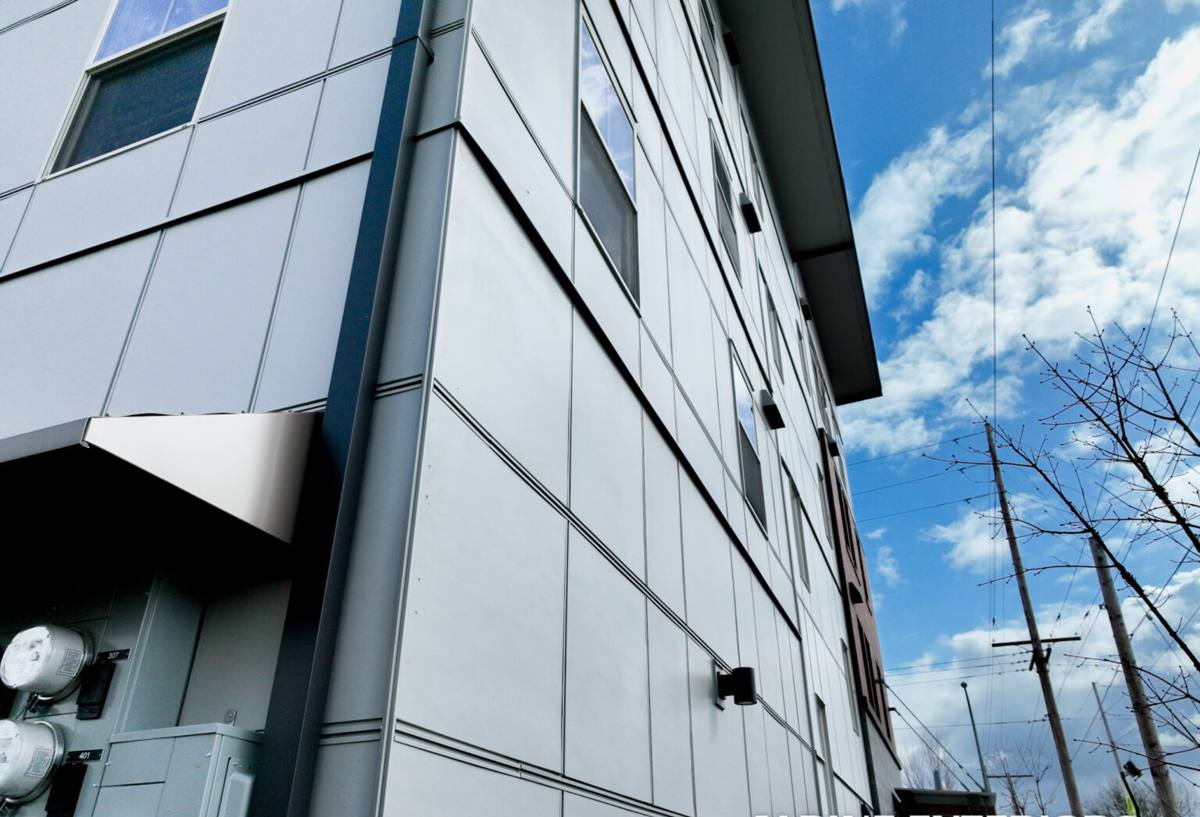
What Salt Air, Rain, and Moss Actually Do to Common Siding Materials
It helps to know what you're up against before choosing a product:
- Salt air accelerates corrosion on exposed metal fasteners, flashing, and hardware, and it can dull or chalk certain factory finishes faster than a standard warranty assumes.
- Driving rain finds every gap, seam, and undersized overlap. Water that gets behind siding on a coastal wall doesn't dry out quickly — the same humidity that makes the rain relentless also slows evaporation.
- Sustained moss and algae growth traps moisture against the substrate. On materials that swell, rot, or delaminate when wet, that's a slow, expensive problem. On a properly sealed, factory-finished fiber cement panel, it's mostly a cleaning issue.
This is the backdrop for every siding decision on a Birch Bay home, and it's why we treat this stretch of coastline as its own case, not a smaller version of a Bellingham city job.
Why We Only Install James Hardie Fiber Cement
We don't install LP SmartSide, vinyl, Cemplank, Allura, or bare cedar and primed spruce siding, and Birch Bay's climate is a big part of why. Fiber cement in general resists moisture, insects, and fire better than wood-based products, but not all fiber cement is finished or engineered the same way. We standardized on James Hardie specifically because of two things: their HZ climate-specific product lines, which are formulated for moisture exposure rather than a one-size-fits-all national spec, and ColorPlus Technology, a factory-applied, baked-on finish that holds up to UV and salt exposure far better than field-applied paint. A finish that's failing lets moisture into the substrate underneath it — and on a coastal wall, that failure shows up years sooner than it would inland.
We're not going to tell you every other product on the market is junk. Vinyl is inexpensive and low-maintenance in mild climates; cedar has a look some homeowners genuinely prefer. But on a home taking direct salt spray and driving rain off the water, we've made a professional call: we only put our name on a product line built to handle that exposure and backed by a warranty structure that reflects it.
Choosing the Right Hardie System for a Birch Bay Home
Product Line
For most Birch Bay homes we spec HardiePlank lap siding in the HZ5 formulation, which is engineered for the Pacific Northwest's moisture and freeze-thaw pattern rather than a hot, dry climate zone. Homes closer to the water or with more exposed elevations sometimes benefit from HardiePanel vertical siding on gable ends or accent walls, paired with HardieTrim for a clean, moisture-resistant edge detail.
Color and Finish
We push clients toward ColorPlus factory finishes over field-painted Hardie primed panels whenever the budget allows. A factory finish is cured under controlled conditions and carries its own finish warranty — a meaningful difference on a wall that's going to see years of salt exposure before it's ever repainted.
Texture
Smooth and cedarmill textures perform identically from a moisture standpoint; the choice is aesthetic. Where moss staining is a concern, a slightly lighter ColorPlus tone can make streaking less visible between cleanings, though it doesn't change how often the wall actually needs washing.
What a Correct Fiber Cement Installation Requires Here
Fiber cement siding fails almost exclusively because of installation mistakes, not the material itself. On a coastal Birch Bay wall, the margin for error is smaller. The details that matter most:
| Detail | Why it matters more in Birch Bay |
|---|---|
| Weather-resistive barrier and flashing sequencing | Driving rain tests every lap and penetration; water managed wrong here finds its way behind the cladding |
| Proper starter strip and bottom clearance | Splash-back near grade carries salt and moisture higher up the wall than in a dry climate |
| Corrosion-resistant fasteners | Standard fasteners can corrode faster in salt air, leading to staining and eventual fastener failure |
| Correct nailing pattern and blind-nailing where specified | Over-driven or face-nailed fasteners crack the board and create entry points for water |
| Caulking only where Hardie's spec calls for it | Over-caulking traps moisture; under-caulking lets it in — both are common shortcuts |
| Gaps and clearances at trim, window, and door penetrations | Every penetration is a place driving rain will test first |
Any one of these done wrong can void the manufacturer warranty and cause real damage within a few wet seasons — and on a waterfront property, "a few wet seasons" arrives faster than most homeowners expect.
Our Process for a Birch Bay Job
- On-site assessment — we look at the home's actual exposure: which walls take direct water off the bay, existing moisture damage, current siding condition, and moss/algae patterns.
- Moisture check on existing sheathing — before any tear-off, we confirm what's underneath is sound; siding hides a lot of problems that need to be addressed, not covered over.
- Tear-off and prep — removal of old material, repair of any damaged sheathing, and installation of a weather-resistive barrier suited to the exposure.
- Flashing and detailing — windows, doors, and penetrations are flashed to shed water before the first course of siding ever goes up.
- Hardie installation to spec — correct nailing, clearances, and fastener choice, following James Hardie's installation instructions rather than shortcuts that only show up as problems later.
- Final walkthrough and cleanup — we check every course, corner, and trim line before we consider the job finished.
What It Costs and What Drives the Range
| Factor | Effect on cost |
|---|---|
| Home size and number of stories | More surface area and access difficulty on multi-story coastal homes raise labor cost |
| Existing damage found during tear-off | Rotted sheathing or framing found on wet-exposed walls adds repair cost before siding goes up |
| ColorPlus vs. primed-for-paint panels | Factory finish costs more upfront but avoids a repaint cycle |
| Trim and detail complexity | Gable ends, multiple rooflines, and accent panels add labor |
| Site access | Waterfront lots with limited staging area or steep grades can add time |
We don't quote a fixed number here because every Birch Bay home's exposure and existing condition is different — that's exactly what the on-site assessment is for.
Living With Fiber Cement Siding in a Moss-Prone, Salty Climate
Correctly installed Hardie siding is low-maintenance, not no-maintenance. A short routine keeps it looking right and protects the warranty:
- Rinse salt film and grime off exterior walls with a garden hose a couple of times a year, focusing on water-facing elevations.
- Check shaded, north-facing walls for early moss or algae growth and wash it off before it builds up — a soft wash, not a pressure washer aimed directly at the siding.
- Keep gutters clear so overflow doesn't run down the wall face and feed moss growth at the top courses.
- Inspect caulk lines at trim and penetrations annually; failed caulk is easy to fix early and a real problem if ignored.
- Trim back vegetation and landscaping that keeps a wall shaded and damp longer than it needs to be.
Why Local Experience in Birch Bay Actually Matters
A lot of siding contractors can install Hardie board correctly on an inland home with average exposure. Fewer have spent time on walls that take direct salt spray and sustained driving rain off open water. A crew that already works Birch Bay knows which elevations on a typical waterfront lot need extra flashing attention, how far up a wall salt spray realistically travels, and where moss takes hold first in this specific setting. That's the difference between a siding job that looks right on install day and one that's still performing the way it should ten winters from now.
If you're weighing siding options for a home in Birch Bay, we're glad to walk the property with you, look at your specific exposure, and put together a straightforward, no-pressure estimate — no obligation, just an honest look at what your home actually needs.