 Bellingham Siding
 Asphalt Shingle Roofing Built for Birchwood's Weather
Birchwood homes sit in a part of Bellingham where the roof works harder than most people realize. You're close enough to the water to pick up salt-laden air, exposed to the driving, sideways rain that comes through Whatcom County in the fall and winter, and shaded by enough conifers and mature landscaping that moss has a long season to take hold. An asphalt shingle roof that's designed and installed with those three things in mind will outlast one that was installed the same way you'd install it in a dry inland climate. This page covers what that actually means for a Birchwood roof — the materials, the installation details, and the ongoing realities of owning one here.
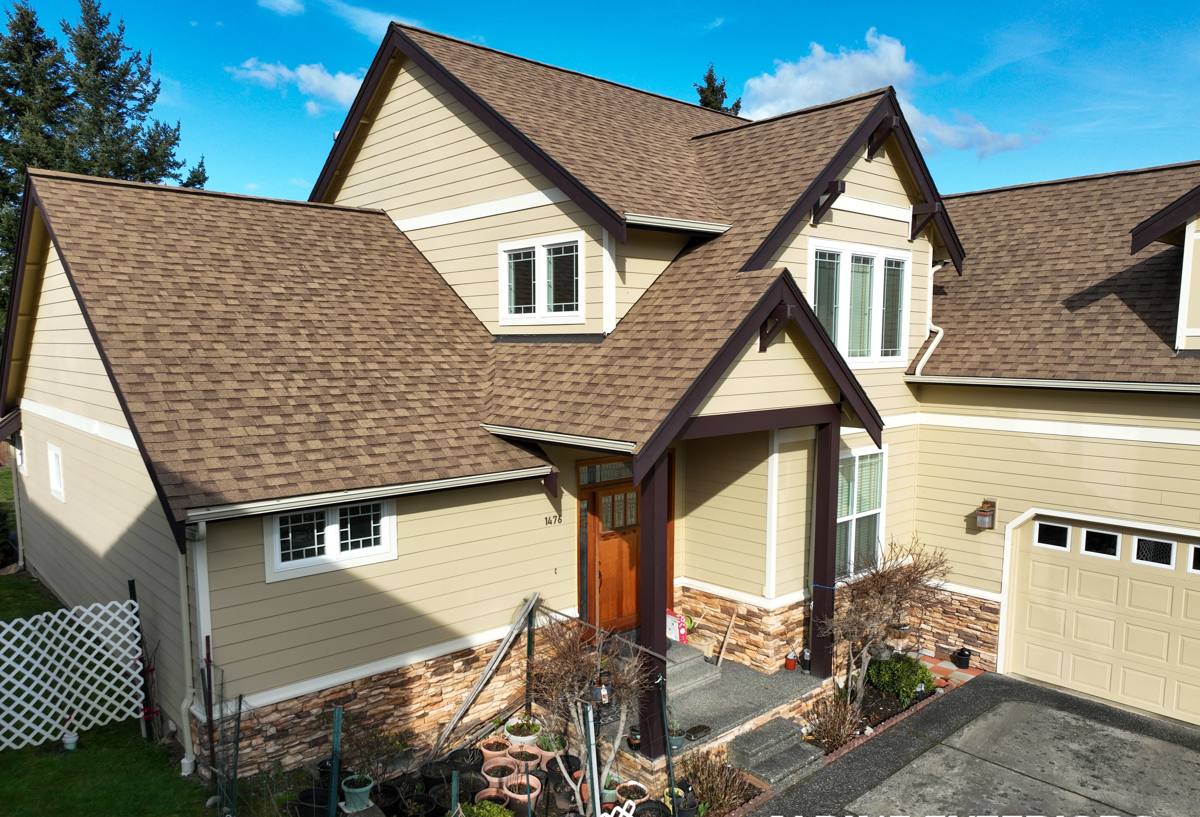
Why Birchwood's Conditions Matter More Than Generic Roofing Advice
Most asphalt shingle guidance you'll find online is written for climates that don't deal with sustained wet seasons or airborne salt. Birchwood deals with both, plus a moss season that can run eight months or longer depending on tree cover and roof orientation. None of that means asphalt shingles are the wrong choice — they're still the most practical, cost-effective roofing material for the vast majority of homes here. It means the details of the job matter more than they would somewhere drier.
Salt Air
Salt exposure accelerates corrosion on any exposed metal — nail heads, flashing, vent stacks, gutter hardware. A roof that looks fine from the ground can have fasteners or flashing quietly corroding underneath, which eventually shows up as leaks or lifted shingles. The fix isn't complicated: use corrosion-resistant fasteners and flashing rated for coastal exposure, and don't cut corners on the metal components just because they cost more than standard galvanized.
Driving Rain
Wind-driven rain doesn't just fall straight down — it gets pushed sideways and upward under shingle tabs, around vents, and along valleys and edges. This is where underlayment quality and correct overlap really earn their keep. A roof with proper ice-and-water shield at eaves and valleys, correctly lapped underlayment, and tight shingle nailing patterns sheds driving rain the way it's supposed to. A roof installed to minimum spec on a calmer, drier day can still fail here during the first real storm.
Moss
Whatcom County's shaded, moisture-heavy environment is close to ideal for moss growth. Moss holds moisture against the shingle surface, works its way under tabs as it grows, and can lift shingles enough to let water in even before you'd notice visible damage. A north-facing slope under tree cover in Birchwood can grow noticeably more moss than a south-facing slope on the same house. Addressing moss isn't optional maintenance here — it's part of protecting the investment you made in the roof.
What a Correctly Installed Asphalt Shingle Roof Includes
A shingle roof is a system, not just a layer of shingles nailed to plywood. Every layer underneath the visible shingle does specific work, and skipping or shortcutting any of them is where most premature failures start.
- Deck inspection and repair — soft, rotted, or delaminated sheathing gets replaced before anything else goes down, not covered over.
- Ice-and-water shield — self-adhering membrane at eaves, valleys, and around penetrations, sized generously for our wet season rather than the code minimum.
- Synthetic underlayment — a full water-resistant layer across the whole deck, properly lapped shingle-fashion so water always runs over, not into, a seam.
- Corrosion-resistant flashing — step flashing at walls and chimneys, valley flashing, and drip edge rated for coastal/high-moisture exposure.
- Proper nailing pattern — correct nail count, placement, and depth per the shingle manufacturer's specification, not a nail gun set on autopilot.
- Ventilation — balanced intake and exhaust so the attic doesn't trap moisture that condenses and rots the deck from underneath.
- Ridge cap and edge detailing — the finishing details that keep wind-driven rain from working its way in at the roof's most vulnerable lines.
Choosing the Right Shingle for a Birchwood Roof
Not every asphalt shingle product handles Pacific Northwest conditions equally well. The main decision points for a Birchwood home usually come down to algae/moss resistance, wind rating, and how the shingle performs over the long, low-angle sun exposure we get much of the year.
| Shingle Type | Typical Lifespan | Best Fit For |
|---|---|---|
| 3-Tab Standard | 15-20 years | Budget-conscious re-roofs on simpler rooflines |
| Architectural / Laminate | 25-30 years | Most Birchwood homes — better wind rating and moss resistance |
| Algae-Resistant (AR) Architectural | 25-30 years | Shaded lots, north-facing slopes, heavy tree cover |
| Premium/Designer Laminate | 30+ years | Steeper, more visible rooflines where appearance matters |
For most Birchwood properties, we recommend algae-resistant architectural shingles. The copper- or zinc-infused granules built into AR shingles slow moss and algae growth at the surface, which directly addresses the biggest long-term threat to a roof in this neighborhood. It costs a bit more upfront than standard architectural shingles but pays for itself in fewer moss treatments and a longer functional lifespan.
Our Process for a Birchwood Roof Replacement
1. On-Site Assessment
We walk the roof (not just look at it from the driveway), check the deck condition where accessible, note tree cover and shade patterns that affect moss risk, and look at ventilation, flashing condition, and any existing moisture damage.
2. Straightforward Written Estimate
You get a clear scope of work and pricing before anything is scheduled — what shingle, what underlayment, what flashing, and why, so you're not guessing what you're paying for.
3. Tear-Off and Deck Repair
Old roofing comes off down to the deck. Any damaged sheathing is identified and replaced — this is also when hidden moisture damage from moss or past leaks gets found and fixed, not covered up.
4. Full System Installation
Ice-and-water shield, underlayment, flashing, shingles, and ridge detailing installed in that order, to the standards described above — built for our rain and salt exposure, not just to code minimums.
5. Cleanup and Walkthrough
Site cleaned of debris and nails (magnetic sweep included), and we walk the finished roof with you so you know what was done and what to expect going forward.
Living With an Asphalt Shingle Roof in Birchwood
A well-installed roof still needs a little ongoing attention in this climate. None of it is complicated, but skipping it shortens the roof's life.
- Have moss growth removed before it gains a foothold — soft-washing or manual removal, not pressure-washing, which can strip granules and shorten shingle life.
- Keep gutters clear so water isn't backing up under the shingle edge during heavy rain events.
- Trim back overhanging branches where practical to reduce shade and debris buildup on north-facing slopes.
- Have the roof looked at after major windstorms — lifted or missing shingles are easiest to fix before the next rain gets underneath them.
- Schedule a periodic inspection every couple of years rather than waiting for a visible leak, since damage under shingles isn't always visible from the ground.
Why a Crew That Already Works in Birchwood Makes a Difference
Roofing crews who work regularly in this specific area already know which slopes in the neighborhood tend to hold moss longest, how the local wind patterns off the water push rain into valleys and wall flashing, and which fastener and flashing upgrades are worth the extra cost versus which ones aren't necessary for a given roof's exposure. That local pattern recognition shortens the assessment, avoids paying for protection you don't need, and makes sure you're not missing protection you do need. It also means service after the install — if something needs attention down the road, you're calling a crew that's still working in Bellingham and Whatcom County, not chasing down a company that only passed through once.
What Affects the Cost of a Birchwood Roof Replacement
| Factor | Why It Matters |
|---|---|
| Roof size and pitch | More surface area and steeper pitches take longer and require more safety setup |
| Number of layers to remove | Tear-off of multiple existing layers adds labor and disposal cost |
| Deck condition | Rotted or moss-damaged sheathing found during tear-off requires repair before shingles go down |
| Shingle grade chosen | Standard vs. algae-resistant vs. premium laminate changes material cost and expected lifespan |
| Flashing and ventilation upgrades | Coastal-rated flashing and improved attic ventilation add upfront cost but reduce long-term risk |
| Roof complexity | Valleys, dormers, chimneys, and skylights all add flashing detail and labor time |
We don't quote a number until we've actually seen the roof — anyone who gives you a firm price over the phone for a job like this is guessing. What we can tell you honestly is that the cheapest bid on paper is often the one that skipped ice-and-water shield, used standard shingles where algae-resistant made sense, or didn't account for deck repair. Those shortcuts show up as problems in a few years, not immediately.
Ready for a Straight Answer About Your Roof?
If your Birchwood roof is showing moss, lifted shingles, granule loss in the gutters, or you're simply past its expected lifespan, we're happy to take a look and give you an honest assessment — no pressure, no hard sell. Fill out the form below to schedule a free estimate.