 Bellingham Siding
 Storm Damage Roof Repair for Birchwood Homes
Birchwood sits close enough to Bellingham Bay and the surrounding tree cover that its roofs take a different kind of beating than roofs twenty miles inland. Wind off the water, driving rain that comes in sideways during winter fronts, and a moss season that runs longer here than almost anywhere else in Washington all add up over the years. When a storm passes through and does visible or hidden damage, the repair needs to account for all of that — not just patch the one spot that's leaking today.
This page covers what storm damage actually looks like on a Birchwood roof, how we assess and repair it, and why a crew that already works this specific pocket of Bellingham catches things an out-of-town estimator might miss.
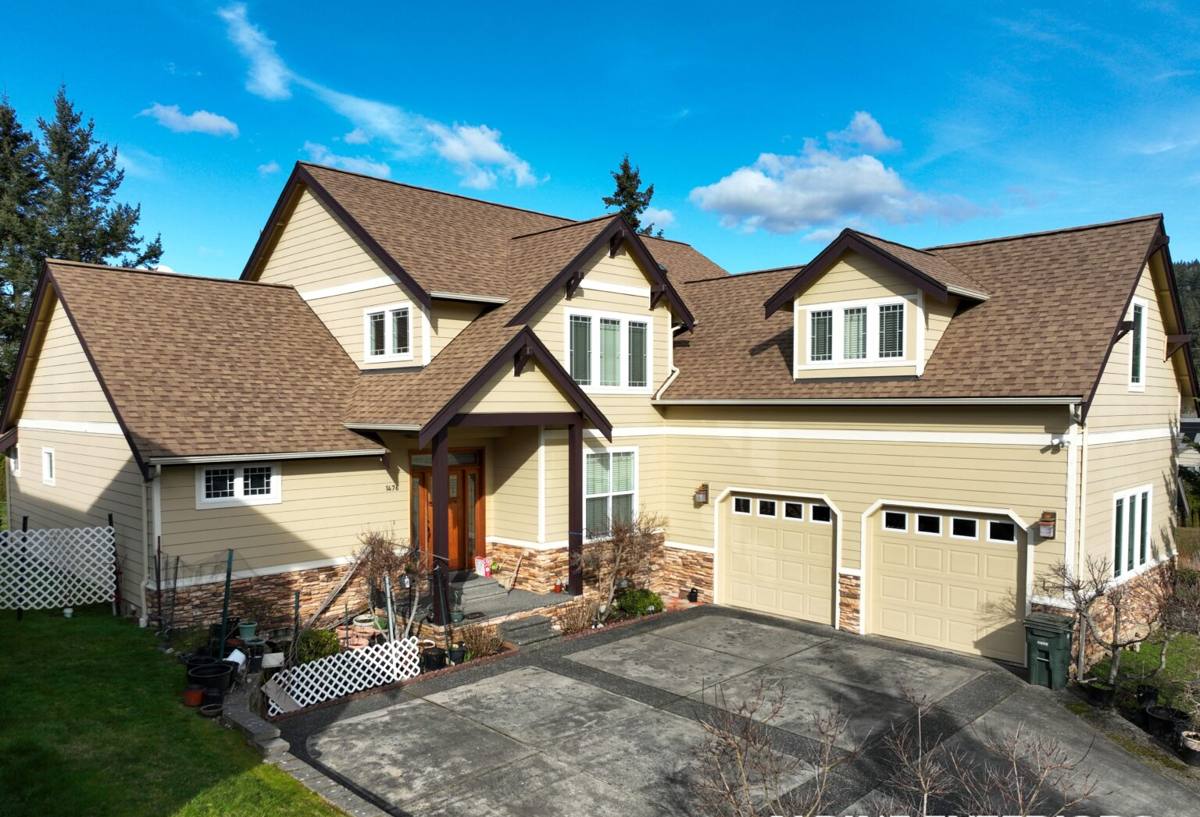
What Bellingham's Climate Does to a Roof Over Time
Whatcom County weather isn't dramatic in the way hail-belt or hurricane-zone weather is. It's persistent. That's the part homeowners underestimate.
Salt Air and Moisture
Homes closer to Bellingham Bay deal with a steady low-level exposure to salt-laden air. It doesn't destroy a roof on its own, but it accelerates corrosion on exposed metal — flashing, fasteners, gutter hardware — faster than the same materials would wear in a dry inland climate. Once a fastener or flashing seam starts to corrode, it stops sealing the way it should, and that's where storm-driven rain finds its way in.
Driving Rain
Wind-driven rain during a fall or winter storm doesn't just sit on a roof and run off — it gets pushed sideways and upward under shingle edges, around vents, and into any gap that's opened up from age or a prior repair that wasn't done tight. A roof that would shed a straight-down summer rain without issue can leak badly in a 40 mph gust event.
Moss Season
Bellingham's moss season runs long — often eight months or more in shaded, north-facing sections of a roof. Moss holds moisture against the shingle surface, lifts shingle edges as it grows, and creates a mat that channels water sideways instead of down and off the roof. A storm hitting a moss-compromised roof does more damage, faster, than the same storm on a clean one.
None of these three factors is dramatic by itself. Together, over the life of a roof, they're why storm damage in this area tends to be worse than it first looks, and why a repair that only addresses the visible symptom often fails again within a season or two.
What Counts as Storm Damage
Storm damage isn't always a hole you can see from the ground. On Birchwood roofs, we most commonly find:
- Wind-lifted or torn shingles — edges pried up by gusts, sometimes creased or cracked rather than fully missing.
- Flashing failures — around chimneys, skylights, and roof-to-wall transitions, especially where corrosion from salt air has already weakened the seal.
- Gutter and downspout damage — overflow from a clogged or wind-torn gutter can push water back under the roof edge and into fascia boards.
- Tree limb impact — bruised, cracked, or punctured shingles under mature trees, common in the more wooded parts of the neighborhood.
- Moss-accelerated leaks — a storm exploiting a channel moss has already carved into the roof surface.
- Ridge cap and vent damage — often the first thing to fail in high wind because it's the most exposed part of the roof.
Some of this is obvious from a ladder. Some of it only shows up as a stain on an interior ceiling weeks later, after enough rain events have pushed water through a small opening. That lag is exactly why a proper inspection after a storm matters even when nothing looks wrong from the driveway.
Why a Local Birchwood Crew Makes a Real Difference
A roofing crew that already works in this part of Bellingham has an advantage that has nothing to do with marketing: they've seen how this specific neighborhood's housing stock and tree cover behave in a storm. Roof pitches, common shingle ages, the shade pattern from mature trees, and how close a given block sits to the bay all affect what kind of damage shows up and where to look first.
There's also a practical response-time argument. After a significant wind or rain event, roofing companies get busy fast, and crews without local routes end up prioritizing jobs closer to their base. A contractor already running jobs in and around Birchwood can usually get someone out for an inspection or emergency tarp sooner, which matters when water is actively getting into a house.
What "Already Works Birchwood" Actually Means
- Familiarity with typical roof ages and construction in the neighborhood, so we know what to expect before we're even on the ladder.
- An understanding of which streets and lots sit in heavier tree shade and see worse moss buildup.
- Established relationships with local suppliers, which keeps material lead times short when a repair needs to happen quickly.
- A track record homeowners nearby can actually ask their neighbors about.
Our Storm Damage Repair Process
We run the same process on every storm damage call, whether it's a single lifted shingle or a full section of roof compromised by a falling limb.
- Initial assessment. We walk the roof (or use a camera pole where a walk-on inspection isn't safe) and check attic space from inside where accessible, since interior staining often tells us more than the exterior surface does.
- Documentation. We photograph the damage clearly — this is the same documentation that supports an insurance claim if you're filing one.
- Temporary protection. If there's an active leak or exposed decking, we tarp or otherwise stabilize the area same-day so the damage doesn't spread while repair materials are sourced.
- Scope and estimate. We tell you plainly whether this is a targeted repair or whether the damage points to a bigger underlying problem worth addressing now rather than twice.
- Repair. Shingle replacement, flashing rework, ridge and vent repair, or gutter correction — done to match the existing roofline as closely as possible rather than leaving a visibly patched section.
- Cleanup and final check. We clear debris, confirm the repair is sealed and weathertight, and walk you through what we did.
Repair vs. Replace: How We Decide
Not every storm-damaged roof needs full replacement, and not every roof is worth repairing indefinitely. Here's the honest breakdown of how we think about it.
| Factor | Repair Usually Makes Sense | Replacement Worth Considering |
|---|---|---|
| Roof age | Under 15 years, otherwise sound | Approaching or past expected material lifespan |
| Extent of damage | Localized — one section, a few shingles, one flashing point | Widespread across multiple sections or slopes |
| Underlying decking | Solid, no rot found during inspection | Soft spots or rot found in more than one area |
| Moss history | Manageable with cleaning and localized repair | Long-term moss damage has compromised multiple shingle courses |
| Prior repairs | Roof has no history of repeated patch jobs in the same area | Same section has failed and been repaired more than once |
We'll walk you through where your roof falls on this list before recommending anything. If a repair is the honest answer, that's what we'll quote — we don't upsell a full tear-off when a targeted fix will hold.
What Influences Repair Cost
Exact numbers depend on the roof, but the factors that move the price most are consistent from job to job.
| Cost Factor | Why It Matters |
|---|---|
| Roof pitch and access | Steeper roofs and hard-to-reach sections take longer and need more safety setup |
| Material match | Matching existing shingle color and profile can take longer to source than a generic replacement |
| Extent of decking damage | Rot found under the surface adds carpentry work beyond the visible repair |
| Flashing complexity | Chimneys, skylights, and multiple roof-wall intersections add labor |
| Storm demand | Material and scheduling costs can rise briefly after a widespread regional storm event |
We give a written estimate before any work starts, and we explain any factor that's pushing cost up rather than just handing you a number.
Materials and Methods We Rely On
For flashing, we favor corrosion-resistant metal and correct lap technique over sealant-heavy shortcuts — caulk and roofing cement break down faster under this region's UV and moisture cycle than a properly lapped and fastened flashing detail. For underlayment on repaired sections, we use synthetic or self-adhered ice-and-water membrane in the vulnerable spots — valleys, eaves, penetrations — because a storm-driven rain event is exactly the condition that membrane is built for.
On moss, our standard is treatment and physical removal rather than aggressive pressure washing, which can drive water under shingles and strip granules that protect against UV. We treat moss as an ongoing maintenance item, not a one-time fix, because in this climate it will come back if the roof's shade and moisture conditions haven't changed.
Insurance Claims: How We Help
Wind and storm damage is often covered under a standard homeowner's policy, but the claim only goes smoothly if the damage is documented clearly and promptly. We provide:
- Dated photo documentation of the damage as found, before any repair work begins.
- A written scope of damage and recommended repair that an adjuster can review.
- Availability to meet an adjuster on-site if that's useful to your claim.
We're not a public adjuster and we don't negotiate your claim for you, but we make sure the documentation on our end doesn't slow the process down or leave gaps an insurer can use to question the claim.
After a Storm: A Homeowner's Quick-Check List
You don't need to get on a ladder to do a useful first pass after a storm. From the ground and inside the house, check for:
- Shingle pieces or granules in the yard, gutters, or driveway.
- Visible gaps, curling, or discoloration on the roof plane from the ground or a second-story window.
- New or worsening water stains on interior ceilings, especially near chimneys or skylights.
- Sagging or overflowing gutters after rain.
- Debris or limbs resting on the roof surface, even if they look small.
- Any musty smell in the attic, which can mean moisture intrusion before it shows up as a visible stain.
If you see any of these after a storm, it's worth having it looked at promptly. Small openings get bigger with every additional rain event, and a repair caught early is almost always cheaper than one that's been left to soak into decking and framing.
Getting a Straight Answer on Your Roof
If your Birchwood home took storm damage — whether it's an obvious tear-off shingle or just a ceiling stain you noticed after the last front came through — we'll come take a real look, tell you plainly whether it's a repair or something bigger, and give you a written estimate with no pressure attached. There's a form below to get that scheduled.