 Bellingham Siding
 Why Decks in Blaine Take a Different Kind of Beating
Blaine sits right on the water, and that changes how a deck ages. Homes near Drayton Harbor and Semiahmoo Bay deal with a steady drift of salt-laden air on top of everything the rest of Whatcom County already gets from the Pacific Northwest's wet season. Salt air accelerates corrosion in fasteners and metal connectors, driving rain gets pushed sideways into ledger boards and railings by wind off the water, and the long stretch of gray, damp months each year gives moss and algae months to colonize any shaded or north-facing surface. None of this means a deck is doomed — it means a deck built or repaired for this specific environment needs different details than one built somewhere dry and inland.
We work decks throughout Whatcom County, and Blaine decks consistently show a particular pattern: framing and fasteners that fail before the decking boards do, moss buildup in shaded corners that traps moisture against the wood, and flashing details that were adequate when installed but were never upgraded to handle sustained wind-driven rain. Understanding that pattern is what separates a repair that lasts from one that's cosmetic.
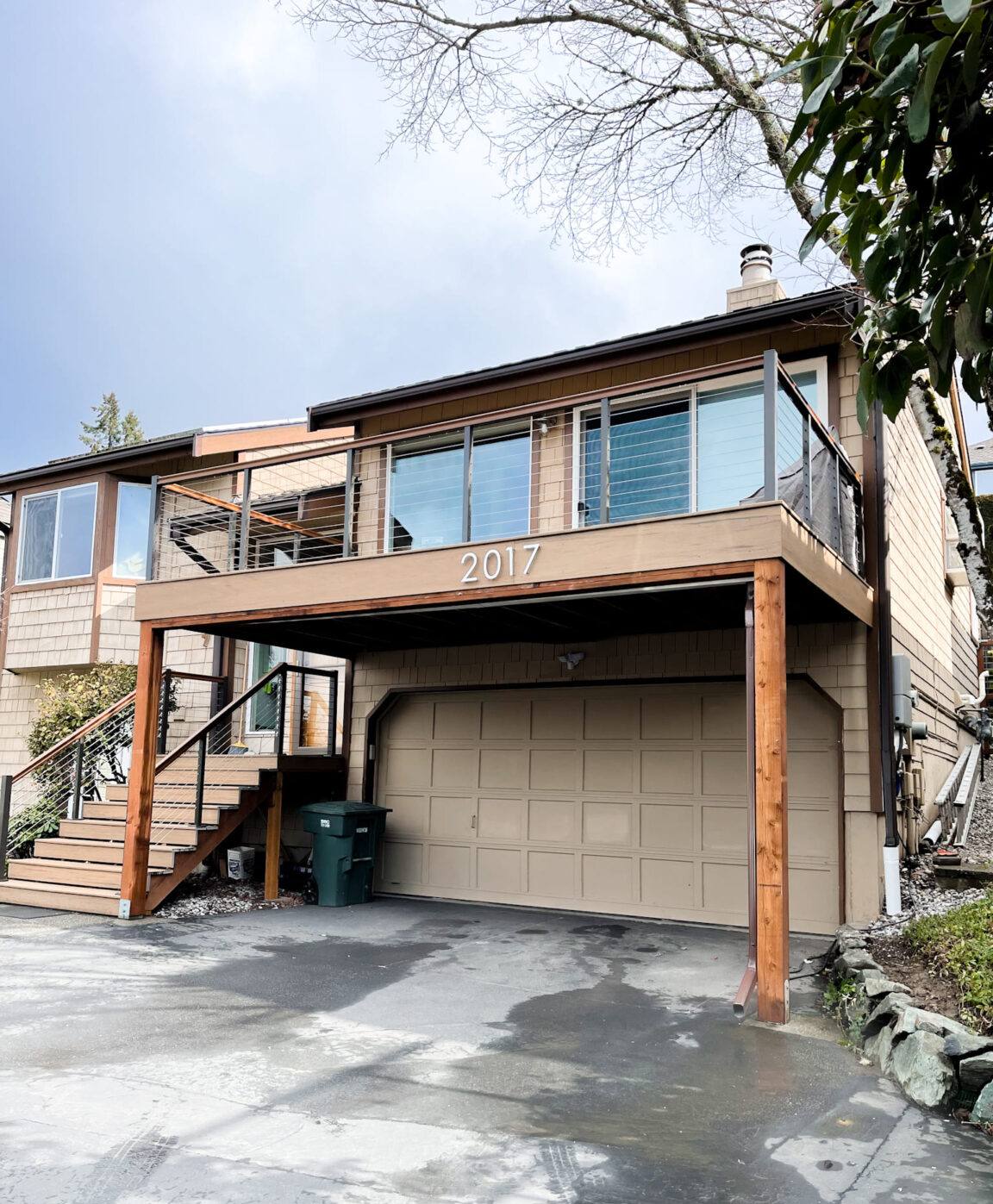
Signs Your Deck Needs Repair, Not a Full Rebuild
Most decks we look at in Blaine don't need to be torn out. They need targeted work on the parts that actually take the abuse. Here's what we check first, and what each sign usually means:
- Soft or spongy spots underfoot — usually localized rot in decking boards or the joist beneath, not a sign the whole structure is compromised.
- Rust streaks around screws or bolts — a strong indicator that fasteners were not rated for coastal exposure and are corroding from the inside out.
- Green or black film on boards, especially shaded areas — moss and algae holding moisture against the wood surface, which accelerates decay even before the wood looks damaged.
- Gaps or movement where the deck attaches to the house (the ledger board) — this is a structural safety issue, not cosmetic, and it's the single most common cause of deck collapse nationally.
- Wobbly or loose railings and posts — often a sign the post base or connection hardware has corroded or rotted, even if the railing looks fine from a distance.
- Cracked, cupped, or splintering boards — normal wear that's still repairable if caught before it spreads to the framing underneath.
If what you're seeing is confined to a section of decking or a handful of fasteners, repair is almost always the right call. Full replacement makes sense when the framing itself — the joists, beams, and ledger connection — has widespread rot or corrosion, since that's the part that's expensive and disruptive to redo piecemeal.
What a Correct Deck Repair Actually Involves
Starting Below the Surface
A repair that only replaces visible boards without checking what's underneath is a repair that fails again in a few years. Before we touch decking, we check the joists and beams for soft spots, check the ledger board flashing (the metal or membrane that's supposed to keep water from tracking into the house rim joist), and check every structural fastener for corrosion. In a salt-air location like Blaine, we've found perfectly good-looking decking sitting on joists that were quietly failing underneath.
Fasteners and Hardware
This is where a lot of older Blaine decks show their age. Standard galvanized fasteners can corrode faster in a coastal environment than they would inland, especially where two dissimilar metals meet or where the coating was scratched during original installation. We use hardware rated for coastal and treated-lumber exposure, which costs a little more up front but is the difference between a repair that holds for a decade and one that starts rusting again in three years.
Decking Boards and Surface Repair
Individual board replacement is straightforward when the framing underneath is sound. The harder judgment call is matching new boards to existing ones — wood decking weathers and changes color over time, so a patch repair will look different for a season or two before it blends in. We're upfront about that rather than pretending it'll be invisible on day one.
Railings and Guards
Railings take direct wind load off the water, and post connections are a common weak point. We check that posts are still solidly attached to the framing (not just the decking surface) and that guard height and spacing still meet current code, which matters for both safety and insurance if the deck is ever inspected.
Repair or Replace? A Straight Comparison
Homeowners often ask us to just tell them which one they need before we've even looked. Fair question — here's the honest breakdown of what tips the decision each way.
| Factor | Leans Toward Repair | Leans Toward Replacement |
|---|---|---|
| Framing condition | Joists and beams solid, minor surface damage only | Widespread rot or corrosion in structural members |
| Ledger board connection | Flashing intact, connection tight | Water staining, gaps, or soft wood at the house wall |
| Extent of damage | Isolated boards, fasteners, or railing sections | Damage spread across most of the deck surface |
| Age of original build | Under 15-20 years, built to a reasonable standard | Older construction with outdated framing methods |
| Budget goal | Extend usable life at lower cost | Want a longer-term reset and possibly a design change |
Cost for repair work varies a lot depending on how much framing is exposed and what fastener corrosion we find once we open things up, so we avoid quoting a number before an actual inspection. What we can say is that a well-targeted repair is almost always a fraction of full replacement cost, which is why we default to repair whenever the structure supports it.
How We Approach a Blaine Deck Repair
- Inspection. We walk the full deck, check underneath where accessible, test fasteners, and check the ledger connection — not just the boards you can see from standing height.
- Honest scope. We tell you what's actually damaged versus what's just weathered and cosmetic. Weathered wood doesn't need to be replaced to look better; it can often be cleaned and treated.
- Written plan. You get a clear breakdown of what's being repaired, what materials and hardware we're using, and why, before any work starts.
- The repair. Structural work first, then decking, then railings and hardware — in that order, so nothing gets covered up before it's checked.
- Final walkthrough. We go over the work with you and flag anything worth watching, like a section of decking that's older and may need attention down the road.
Materials: What We Use and the Trade-Offs We're Honest About
Wood decking is still common in Whatcom County and repairs perfectly well when maintained. Composite decking has become popular because it resists moss and moisture better than untreated wood, but it comes with its own trade-offs worth knowing before you decide what to repair with:
- Pressure-treated wood — lower material cost, repairable board by board, but requires periodic cleaning and sealing to resist moss and moisture in this climate.
- Cedar — naturally more rot-resistant and a good look, but still benefits from sealing in a wet coastal environment and costs more than treated lumber.
- Composite — resists moss and doesn't need sealing, but individual board repair can be pricier, and it requires correct ventilation underneath to avoid trapped moisture issues at the framing.
We don't push one material as universally better — the right call depends on your existing deck, your budget, and how much upkeep you want to do going forward. If you're repairing rather than replacing, matching your existing material is usually the simplest and most cost-effective path.
Why a Crew That Already Works Blaine Matters
Deck repair isn't just carpentry — it's knowing what to expect before you open up a section of decking. A crew that regularly works Blaine and the rest of Whatcom County knows to check ledger flashing more carefully on homes exposed to wind off the water, knows which fastener grades hold up and which corrode early, and isn't guessing at how moss and shade patterns on a given lot affect where rot tends to start. That local pattern recognition shortens the inspection, avoids surprises mid-repair, and means the fix accounts for the actual conditions the deck will keep facing, not generic textbook conditions.
Keeping Your Deck in Good Shape After the Repair
A repair holds up longer with a little regular attention, especially in a climate that gives moss and moisture months to work. A few habits go a long way:
- Sweep leaves and debris out of corners and along the house wall regularly — trapped debris holds moisture against the boards.
- Rinse or lightly scrub visible moss and algae buildup before it spreads, particularly in shaded areas.
- Check that gaps between boards stay clear so water can drain instead of pooling.
- Re-seal or re-stain wood decking on the schedule appropriate for the product — don't wait until it looks obviously weathered.
- Have fasteners and railings checked periodically, since corrosion often starts out of sight before it's visible on the surface.
If your deck is showing rust stains, soft boards, loose railings, or moss that keeps coming back no matter what you do, it's worth having it looked at before those issues reach the framing. We offer a free, no-pressure estimate for Blaine homeowners — walk us through what you're seeing and we'll tell you honestly whether it's a repair or something bigger, with no obligation either way. Use the form below to get started.