 Bellingham Siding
 Siding Built for Blaine's Coastal Exposure
Blaine sits right up against Semiahmoo Bay and Drayton Harbor, which means homes here take a different kind of beating than houses ten miles inland. Salt-laden air off the water works into seams and fastener heads. Wind-driven rain comes in sideways during winter storms, testing every lap and butt joint in a siding system. And the long, damp Whatcom County season keeps north-facing walls and shaded siding runs wet enough, long enough, for moss and algae to take hold. Any siding installed in Blaine has to be chosen and installed with all three of those conditions in mind at once — not just one of them.
We're a Bellingham-based crew that works Blaine regularly, and this page walks through what a correct siding installation looks like for this specific stretch of coastline: what the climate actually demands, what we install and why, and how our process is built around getting the water management right the first time.
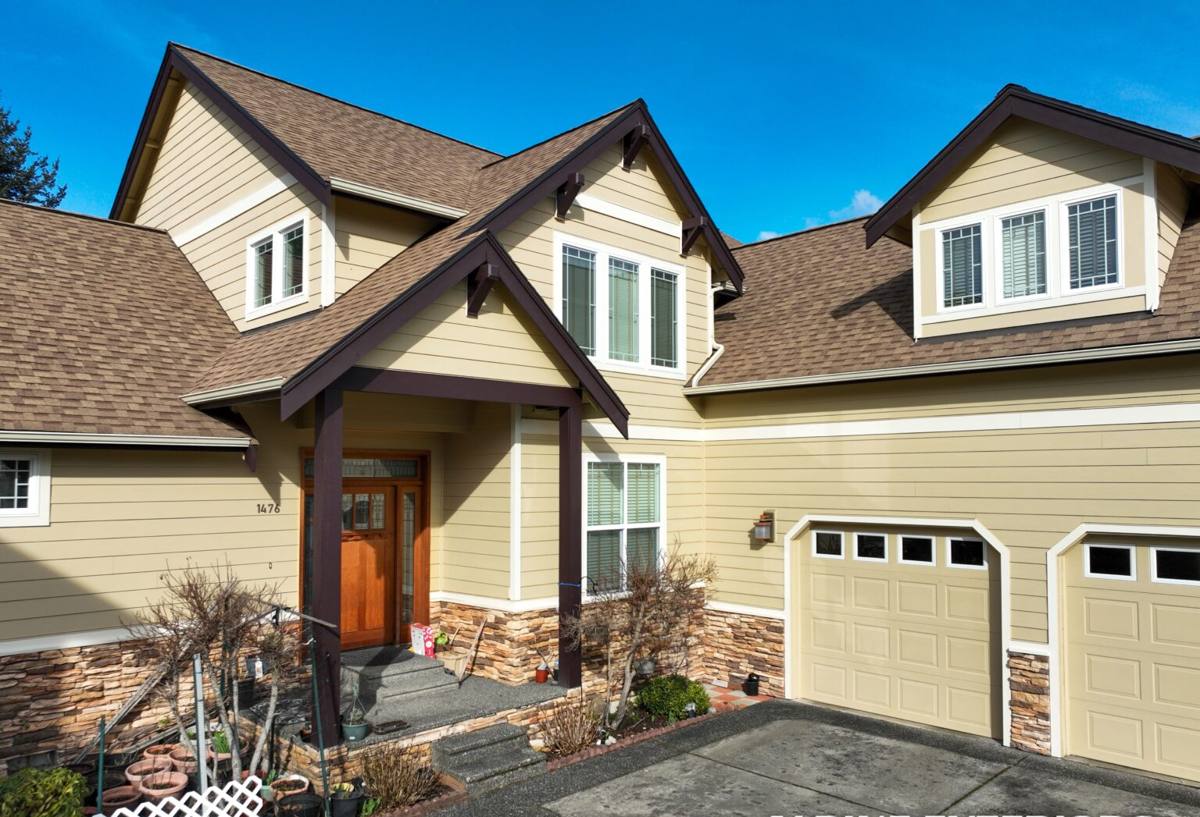
Why Blaine's Climate Is Harder on Siding Than It Looks
Salt Air
Proximity to saltwater doesn't just mean corrosion risk for metal fasteners and flashing — it also means airborne salt settles into any porous or absorbent siding surface and holds moisture there longer than it otherwise would. That matters most for products that rely on paint film or a wood-based substrate to keep water out, because salt-affected moisture cycling accelerates paint breakdown and edge swelling.
Driving Rain
Blaine's exposure to weather systems moving in off the Strait of Georgia means rain doesn't just fall straight down — it gets pushed horizontally into wall assemblies, especially on west- and southwest-facing elevations. A siding system with weak lap geometry, undersized overlaps, or inconsistent fastening is far more likely to let wind-driven rain past the surface and into the wall assembly here than it would be in a more sheltered inland location.
Moss Season
Whatcom County's wet season runs long — often eight months or more of the year with regular rainfall and short daylight hours that limit drying time. Shaded elevations, areas under tree cover, and north walls stay damp for extended stretches. That's exactly the environment moss and algae need to establish on a siding surface, and once established, they hold additional moisture against the substrate underneath.
What Correct Siding Installation Actually Involves
The siding itself is only part of the system. A correct installation in a climate like Blaine's depends on getting the water management layers right underneath it. That includes:
- Weather-resistant barrier: A continuous, properly lapped house wrap or building paper behind the siding, with all penetrations sealed.
- Flashing at every transition: Windows, doors, decks, roof lines, and any place two different materials meet need flashing detailed to shed water outward, not trap it.
- Rainscreen or drainage gap where called for: A small air gap between the siding and the weather barrier lets any water that does get past the surface drain and dry out instead of sitting against the wall.
- Correct fastening: Fastener type, spacing, and placement matter — under- or over-driven fasteners, or the wrong fastener for the substrate, create weak points exactly where wind-driven rain is most likely to test the assembly.
- Proper clearances: Siding held to code-minimum clearance from grade, roofing, and decks so it isn't sitting in standing water or splash-back.
Skipping or shortcutting any one of these doesn't show up as a problem on day one. It shows up two, five, or ten years later as trapped moisture, paint failure, or rot — usually on the elevations catching the worst of the wind-driven rain.
Why We Install James Hardie Fiber Cement — Only
We install James Hardie fiber cement siding exclusively. We don't install vinyl, LP SmartSide, Cemplank, Allura, primed spruce, or cedar, and that's a deliberate standard, not an oversight. Here's the reasoning, specific to a climate like Blaine's:
Fiber Cement vs. the Alternatives
Wood-based siding products — including engineered wood options — depend on an intact factory coating and careful field sealing of cut edges to resist moisture. In a location with sustained salt air and a long wet season, any gap in that coating becomes a point where moisture can wick into the substrate and start swelling or delaminating it. Vinyl siding handles moisture well on its own but relies on looser panel fit for expansion and contraction, which can let more wind-driven rain past the surface in a high-exposure coastal location, and it doesn't hold up structurally to sustained direct impact the way fiber cement does. Cedar is a real, attractive material, but it requires ongoing maintenance — refinishing, sealing cut ends, and moss/algae treatment — to perform in a climate this damp, and that maintenance burden falls on the homeowner indefinitely.
What James Hardie Gets Right for This Climate
| Requirement | How Hardie Fiber Cement Addresses It |
|---|---|
| Salt air exposure | Non-combustible, moisture-resistant cement composition doesn't rely on an organic substrate that can absorb and hold salt-laden moisture |
| Wind-driven rain | Engineered lap profiles and rigid panel geometry hold tighter, more consistent overlaps than more flexible materials |
| Moss and algae | ColorPlus factory finish is a baked-on, consistent coating — no exposed raw wood grain for organic growth to grab onto the way it can on untreated wood |
| Long-term appearance | Factory-applied finish resists fading and doesn't require the homeowner to repaint on a recurring schedule |
| Warranty | Transferable manufacturer warranty backed by a national brand, not dependent on a specific contractor staying in business |
James Hardie also makes climate-engineered product lines (their HZ5 formulation is built for the Pacific Northwest's specific combination of rain and moisture cycling), which is part of why we standardized on the brand rather than a generic fiber cement product.
Our Installation Process for Blaine Homes
- On-site assessment: We walk the exterior, check current siding and any water damage, note exposure on each elevation (especially west/southwest walls that take the brunt of wind-driven rain), and check for moss or trapped moisture on shaded sides.
- Water management plan: Before any siding goes up, we plan out weather barrier lapping, flashing details at every window, door, and roofline, and drainage gap where the wall assembly calls for it.
- Tear-off and substrate check: Old siding comes off, and we inspect the sheathing underneath for any existing rot or moisture damage before covering it back up.
- Weather barrier and flashing installation: This is the layer that does the real work if anything gets past the siding surface — we don't rush it.
- Hardie panel or plank installation: Installed to manufacturer spec for fastener type, spacing, and clearance, with attention to consistent, tight lap lines on the elevations facing prevailing weather.
- Trim, caulking, and final detail: All transitions sealed and finished so the whole system — not just the siding panels — is doing its job.
- Walkthrough: We go over the finished work with you before calling the job done.
What to Ask Any Siding Contractor Before Hiring in Blaine
- Do you install a weather-resistant barrier and drainage gap, or just fasten siding directly to sheathing?
- How do you flash windows, doors, and roof transitions specifically?
- Have you worked on homes with direct water exposure in this area before?
- What's the manufacturer warranty, and is it transferable if I sell the home?
- Will cut ends and field seams be sealed to manufacturer spec?
Signs Your Blaine Home's Siding Needs Attention
A few things worth checking, especially if your home has original siding that's aged or was installed without a strong water-management layer underneath:
- Soft or spongy spots when you press on the siding, particularly near the bottom courses or window sills
- Persistent moss or algae staining that comes back quickly after cleaning
- Peeling or bubbling paint, especially on west- or southwest-facing walls
- Visible gaps at seams, corners, or trim where wind-driven rain could be getting behind the siding
- Warping, cupping, or separation at panel joints
None of these are urgent overnight, but they're the kind of signs that get worse through another wet season if left alone, and they're worth having looked at before they turn into sheathing or framing repairs.
Why Local Experience in Blaine Matters
Blaine's exposure isn't uniform — a home a block off Semiahmoo Bay faces different wind-driven rain loads than one set back and sheltered by trees, and shaded, north-facing walls anywhere in town are going to see more moss pressure than sun-exposed ones. A crew that already works this specific stretch of Whatcom County coastline has a feel for which elevations need the most attention on flashing and lap detail, and which conditions call for extra care around drainage. That's not something you can substitute with a generic install approach from a crew that mostly works drier, inland jobs.
We're based in Bellingham and work Blaine regularly, which means we're not learning this coastline's quirks on your project — we already know what a correct installation here needs to hold up against salt air, driving rain, and a long moss season, year after year.
If you're planning a siding project in Blaine, we're happy to come take a look and talk through what your home specifically needs — no pressure, no obligation. Reach out using the form below to schedule a free estimate.