 Bellingham Siding
 Building a Deck That Holds Up in Columbia
Columbia sits close enough to Bellingham Bay that its homes deal with a version of coastal weather most inland Whatcom County neighborhoods don't see as intensely: salt-laden air off the water, driving rain that comes sideways more often than straight down, and a moss season that can run from October through May. A deck built to a generic set of plans, with generic materials, tends to show its age fast in this environment — soft spots in the decking, rusted fastener heads, slick green film on the walking surface by the second winter. A deck built for this specific climate does not have to fight those problems for the next 20-30 years.
This page covers what actually matters for a custom deck project in Columbia: the materials that hold up, the structural details that keep water from doing damage you can't see, the permitting realities in Bellingham, and what our process looks like from first call to final walkthrough.
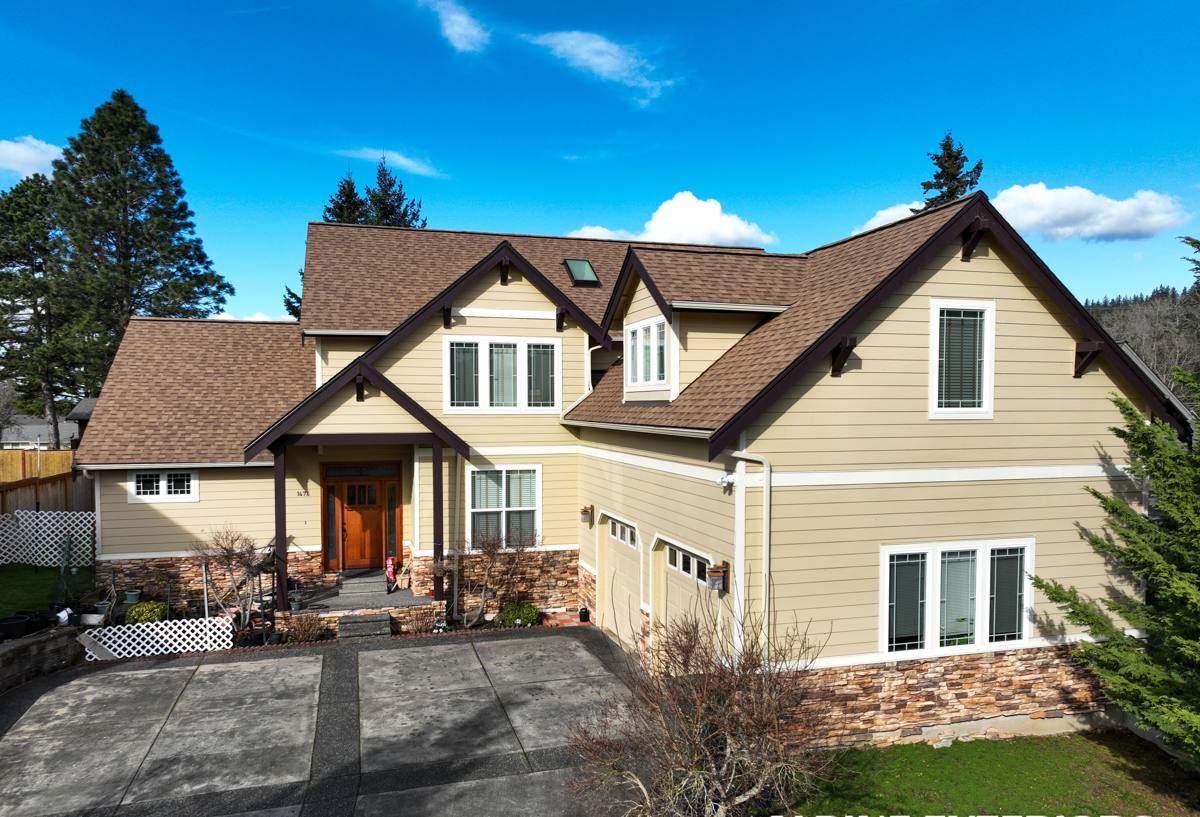
What Bay Proximity Actually Does to a Deck
Salt air and constant moisture don't destroy a deck overnight — they work on it steadily, in a few predictable places.
Fasteners and Metal Hardware
Standard galvanized screws and joist hangers corrode faster near the water than they would ten miles inland. Once a fastener starts rusting, it weakens, stains the wood around it, and eventually fails structurally — usually years before the decking itself is worn out. This is one of the most common reasons an otherwise decent-looking deck turns out to have real problems underneath once you pull a few boards.
Moss, Algae, and Standing Moisture
Bellingham's wet season keeps deck surfaces damp for long stretches, and shaded or low-airflow decks in Columbia grow moss and algae readily. Beyond being slippery and unattractive, that growth holds moisture against the decking material, which accelerates rot in wood and can void warranties on composite products if drainage wasn't designed correctly from the start.
UV and Rain in the Same Season
Western Washington's mix of intense summer sun and near-constant winter rain puts real stress on finishes and sealants. A coating or stain that would last five years in a drier climate often needs reapplication sooner here, and lower-grade composite decking can fade or chalk faster under that combination.
Choosing the Right Decking Material for This Climate
There's no single "best" decking material — the right choice depends on your maintenance tolerance, budget, and how exposed the deck is to weather. Here's how the common options actually perform in a Columbia-type environment.
| Material | Moisture Behavior | Maintenance | Typical Lifespan Here |
|---|---|---|---|
| Cedar | Naturally rot-resistant but still needs sealing; absorbs moisture at cut ends and fastener holes | Annual cleaning, re-stain or seal every 2-3 years | 15-20 years with upkeep |
| Pressure-Treated Fir/Pine | Treated for rot resistance but more prone to cupping and splitting in wet-dry cycles | Sealing every 1-2 years, regular inspection of fastener points | 12-18 years |
| Composite (capped) | Doesn't absorb moisture or rot, but poor drainage design can still trap water underneath | Periodic washing to prevent surface algae; no staining or sealing | 25-30 years |
| PVC | Fully moisture-resistant, most stable in wet-dry and freeze-thaw swings | Lowest maintenance; occasional washing | 25-30+ years |
We don't push one material on every homeowner. Cedar still makes sense for people who want a natural look and are willing to maintain it. But for a deck in Columbia that gets real weather exposure — shaded, near the water, or hard to access for upkeep — composite or PVC decking generally costs less over the deck's lifetime once you account for the sealing, sanding, and board replacement that wood eventually needs.
The Structural Details That Actually Matter
The decking surface is the part homeowners see, but the details underneath determine whether the deck lasts. In a wet climate, a few of these matter more than they would elsewhere.
Ledger Board Flashing
Where a deck attaches to the house, the ledger board is one of the most common places for hidden water damage to start. Correct flashing — installed so water sheds away from the house rather than behind the ledger — is not optional in this climate. A deck that's rotting from the ledger out is a repair we see on homes that were built quickly or by out-of-area crews unfamiliar with how much rain this region gets.
Joist Protection and Spacing
Joist tape or flashing over the tops of framing lumber keeps standing water from soaking into end grain, which is where rot typically starts even on pressure-treated framing. Proper board spacing between decking boards also matters more here than in drier climates — tight spacing traps moisture and debris, which feeds moss growth and slows drying between rain events.
Footings Sized for Local Soil
Footing depth and sizing need to account for local frost depth and soil conditions, which can vary block to block in Bellingham depending on drainage and fill history. We size footings to the site, not to a one-size-fits-all plan.
Fastener and Hardware Grade
Given the salt-air exposure near the bay, we use fasteners and structural hardware rated for coastal or high-moisture environments rather than standard-grade galvanized parts. It costs a bit more up front and saves the hidden corrosion problems that show up five to eight years in.
Permits and Code in Bellingham
Most raised decks in Bellingham and Whatcom County require a building permit, and the requirements can depend on the deck's height, size, and proximity to property lines. Rather than guess at your specific situation here, we handle the permit research and application as part of the project — pulling the right permit, meeting setback and guardrail requirements, and scheduling the inspections the city requires. Skipping this step is a common shortcut with lower-cost deck builds, and it can create real problems later when you go to sell the house and the deck shows up as unpermitted work.
Our Process for a Columbia Deck Project
- On-site assessment — we look at sun/shade exposure, drainage, soil, and how close the site is to the water, since that affects both material recommendations and hardware grade.
- Design and material selection — we walk through the material comparison above against your budget and maintenance preferences, and design the deck to fit how you'll actually use it.
- Permitting — we prepare and submit the permit package and handle the inspection scheduling.
- Framing and structural work — footings, framing, ledger flashing, and joist protection, done to hold up to Whatcom County's wet-dry cycles, not just to pass inspection.
- Decking and finish work — installation, railing, and any staining or sealing the material requires.
- Final walkthrough — we go over maintenance expectations specific to the material you chose so there are no surprises in year two or three.
Maintaining a Deck in a Wet, Mossy Climate
Whatever material you choose, a few habits go a long way toward getting the lifespan you paid for out of a Columbia deck.
- Sweep leaves and debris off the deck regularly in fall — trapped organic matter is what feeds moss growth over winter
- Wash the surface at least once or twice a year with a deck-safe cleaner to remove algae film before it gets slick
- Check and re-seal wood decking on the schedule the material calls for — don't wait until it looks dry and gray
- Keep gutters and downspouts near the deck clear so runoff isn't dumping directly onto or under the structure
- Inspect fastener heads and hardware once a year for rust staining, especially on decks closer to the water
- Trim back overhanging branches to improve airflow and sun exposure, which slows moss regrowth
Why a Crew That Already Works Columbia Matters
A lot of what makes a deck last in this neighborhood isn't on the blueprint — it's knowing that a shaded lot two blocks from the water needs different fastener hardware than a sunny lot further inland, or that certain older Columbia homes have foundation and drainage quirks that affect how a ledger board should be flashed. A crew that builds decks across a wide mix of climates might not think twice about any of that. A crew that works this neighborhood regularly builds it into the plan by default, because we've already seen what happens when it's skipped.
If you're planning a new deck or replacing one that's showing its age, we're happy to come take a look and talk through what makes sense for your property. Reach out for a free, no-pressure estimate using the form below.