 Bellingham Siding
 Siding Replacement in Columbia: What Bellingham Homes Actually Need
Homes in the Columbia neighborhood sit close enough to Bellingham Bay and the water's edge that siding takes a different kind of beating than it would ten or fifteen miles inland. It isn't one dramatic storm that wears out a wall system here — it's the daily grind of salt-laced air, wind-driven rain that hits siding sideways instead of straight down, and a moss season that can stretch from October well into April. Any siding replacement in this pocket of Whatcom County has to be evaluated against that combination, not against a generic "Pacific Northwest" checklist.
We work Columbia regularly, which matters more than it sounds. A crew that's replaced siding on a handful of homes in this specific neighborhood already knows which elevations catch the worst of the wind off the bay, where moss tends to colonize first, and how the local moisture pattern behaves against different wall assemblies. That's knowledge you can't fully get from a spec sheet.
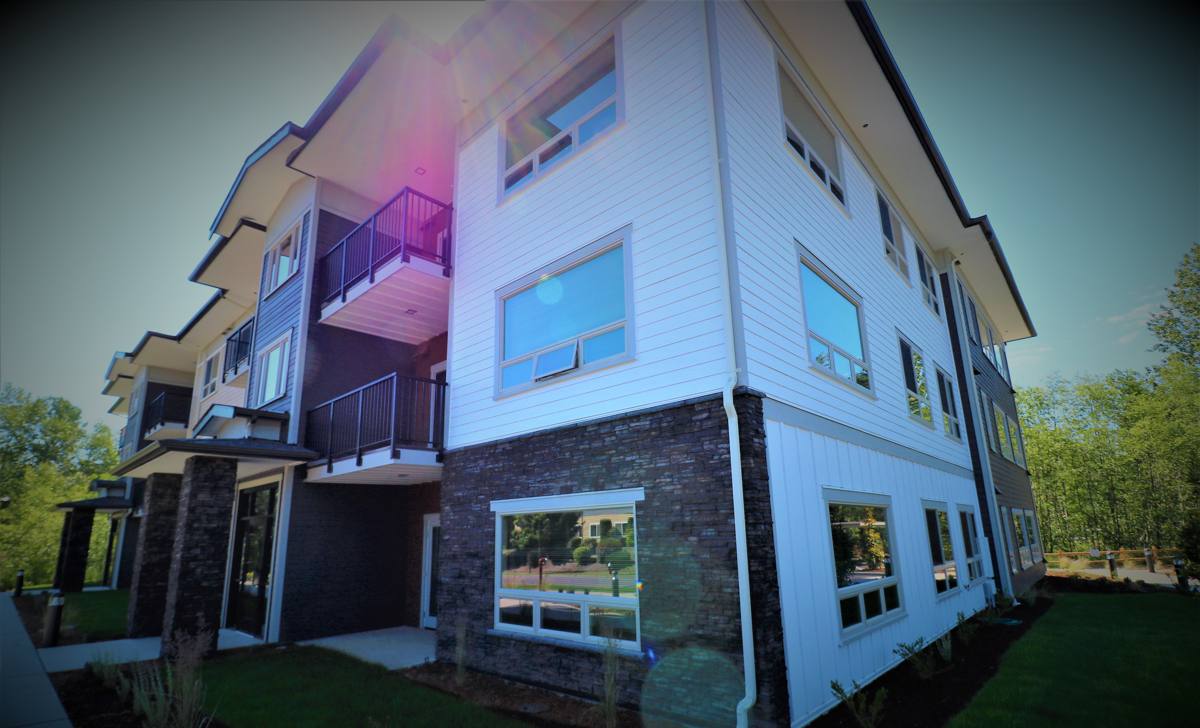
Why Columbia's Microclimate Is Harder on Siding Than It Looks
Salt Air and Slow Corrosion
Proximity to Bellingham Bay means airborne salt is a constant, low-level presence on exterior surfaces. It doesn't destroy siding overnight, but it accelerates the breakdown of fasteners, trim connections, and any paint film that isn't built to handle it. Over years, homes closer to the water show fastener staining, chalking, and finish failure earlier than homes just a mile or two inland — even when both were installed at the same time with the same basic product.
Driving Rain, Not Just Rain
Whatcom County gets a lot of rain, but the detail that matters for siding is direction. Wind off the water pushes rain sideways into wall assemblies, which means water-resistive barriers, flashing, and lap joints get tested far more than they would in a calmer inland location. A siding job that looks fine on a dry day can fail quietly behind the surface if the water management underneath wasn't done correctly.
Moss Season
Shade, moisture, and mild temperatures give moss and algae a long runway in Columbia — often most of the wet season. Moss holds moisture against a wall longer than open air would, which is exactly the condition that rots wood-based siding and degrades paint film. It's cosmetic at first, then it becomes a maintenance and moisture problem if it's left unaddressed.
What a Correct Siding Replacement Actually Involves
Replacing siding is not a surface-level swap. Done right, it's really a chance to fix or upgrade everything the old siding was hiding.
- Full tear-off and substrate inspection: old siding comes off so sheathing, framing, and any hidden rot or moisture damage can be found and repaired before anything new goes on.
- Water-resistive barrier: a correctly lapped, sealed weather barrier behind the siding, since this is the layer that actually stops driving rain from reaching the wall structure.
- Flashing at every penetration: windows, doors, deck ledgers, and roof-to-wall transitions all need proper flashing — these are the spots where water intrusion actually starts.
- Correct fastening pattern: nailing schedule and fastener type matched to the siding manufacturer's specification, not just "close enough."
- Proper clearances: siding held off grade, decks, and roof lines by the clearances the manufacturer requires, so water has somewhere to go instead of wicking upward.
- Caulking and sealant done selectively: sealed where it should be, left open where the assembly needs to drain or breathe.
Skip any one of these steps and the new siding can look great for a season or two while still failing underneath — which is a common story with siding jobs that were priced and installed too quickly.
Why We Install James Hardie Fiber Cement — and Nothing Else
We standardized on James Hardie fiber cement siding for every home we work on, including Columbia, and we don't install vinyl, LP SmartSide, primed wood, or cedar. That's not a marketing position — it's a decision based on what actually holds up against this specific climate.
Non-Combustible and Dimensionally Stable
Fiber cement doesn't expand and contract with moisture the way wood-based products do, and it isn't fuel for fire the way vinyl and engineered wood siding are. In a climate where a wall assembly stays damp for months at a stretch, dimensional stability directly affects how long caulk joints, trim, and paint lines hold up.
ColorPlus Factory Finish
James Hardie's ColorPlus finish is baked on at the factory under controlled conditions, which gives it better fade and moisture resistance than field-applied paint. In a salt-air environment where finish failure is one of the first visible signs of aging siding, a factory-cured finish is a meaningful advantage over anything painted on-site.
HZ5 Engineering for This Region
James Hardie's HZ product lines are engineered for specific climate zones, and the products we use are matched to the moisture and freeze-thaw conditions of Western Washington. That's a level of climate-specific engineering that generic siding products aren't built around.
Warranty That Actually Transfers
James Hardie backs its ColorPlus products with a long, transferable limited warranty — a real factor if the home sells before the siding's useful life is up, which matters to buyers evaluating a home near the water.
Vinyl, LP SmartSide, and Wood: Why We Don't Install Them Here
Each of these products has legitimate uses somewhere. In Columbia's specific combination of salt air, driving rain, and long moss season, each one has a trade-off we're not willing to build a job around.
| Product | What it does well | Why it's a poor fit for this climate |
|---|---|---|
| Vinyl siding | Low upfront cost, low maintenance in mild climates | Warps and becomes brittle with temperature swings; seams and J-channels give wind-driven rain more paths to get behind it |
| LP SmartSide | Wood-look appearance, easier to install than real wood | Engineered wood core is still moisture-sensitive; edge sealing has to be maintained perfectly or swelling and rot follow |
| Primed wood / cedar | Classic look, repairable in sections | Highest maintenance burden of any option; moss and algae take hold faster on wood and accelerate decay in a wet, shaded climate |
| James Hardie fiber cement | Non-combustible, factory finish, engineered for regional moisture | Higher upfront cost than vinyl; requires correct professional installation to perform as designed |
The honest trade-off with Hardie is cost and installation sensitivity — it costs more upfront than vinyl, and it has to be installed to spec to deliver on its warranty and performance. We consider that a fair trade for a product that's actually engineered for what Columbia's climate does to a wall.
Our Process for a Columbia Siding Replacement
- On-site assessment: we walk the exterior, check current siding condition, moss and moisture patterns, and flag any elevations taking the worst exposure from wind off the bay.
- Written estimate: scope, product line and color, and a realistic timeline — no vague allowances.
- Tear-off and substrate repair: old siding removed, sheathing and framing inspected, any rot or damage repaired before moving forward.
- Water management installed correctly: weather barrier, flashing, and clearances set to manufacturer spec.
- Hardie siding installed: correct fastening pattern, proper joint treatment, and finish detailing.
- Final walkthrough: we go over the finished job with you before calling it done.
Signs Your Columbia Home May Need Siding Replacement Soon
- Persistent moss or algae growth that comes back within weeks of cleaning
- Soft spots, bubbling, or visible warping in wood-based or engineered siding
- Paint that's chalking, peeling, or failing faster than it used to
- Visible gaps or separation at seams, corners, or trim boards
- Rust staining around fasteners or trim hardware
- Rising heating bills that track with drafts or cold spots along exterior walls
Any one of these on its own might just need a repair. Several at once, especially on a home more than 20 years old, usually points to a wall assembly that's been losing the fight with moisture for a while.
Why Local Experience in Columbia Specifically Matters
Bellingham as a whole shares a general Pacific Northwest climate, but Columbia's position near Bellingham Bay puts it in a slightly harsher version of it — more salt exposure, more direct wind-driven rain on certain elevations, and a moss season that can outlast what homes further from the water deal with. A crew that already works this neighborhood knows to check those things without being told, and can flag a problem area before it becomes a callback.
That local pattern recognition is part of why we don't treat a Columbia siding replacement the same way we'd treat one in a drier, more sheltered part of Whatcom County — the climate factors are real, and they change what "correct installation" needs to account for.
Get a Straight Answer on Your Siding
If your Columbia home is showing moss buildup, paint failure, or soft siding, it's worth getting a straightforward, no-pressure look before deciding what to do. We'll walk the exterior, tell you honestly what we see, and put together a written estimate for James Hardie siding replacement built for this specific climate — no upsell, no guesswork. Use the form below to request a free estimate.