 Bellingham Siding
 Cordata Decks Face a Different Set of Problems Than an Interior Remodel
A deck in Cordata isn't just an outdoor room — it's a structure that sits outside year-round, taking on whatever Whatcom County weather throws at it. Between the driving rain off Puget Sound, the salt-laden marine air that reaches most of Bellingham, and a moss season that can run from October well into spring, a deck built with the wrong materials or the wrong details starts showing problems fast: cupped boards, rusted fasteners, slick green film on the walking surface, and rot working its way into ledger boards and posts from the inside out. A deck built correctly for this climate looks the same way in year eight that it did in year one.
Cordata is a newer, growing residential pocket in north Bellingham, and a lot of the homes here were built within the last couple of decades. That means many original decks are now old enough to be showing their age, and a fair number of homeowners are either replacing a builder-grade deck for the first time or adding one to a house that never had a proper outdoor living space. Either way, the fundamentals are the same: this climate does not forgive shortcuts.
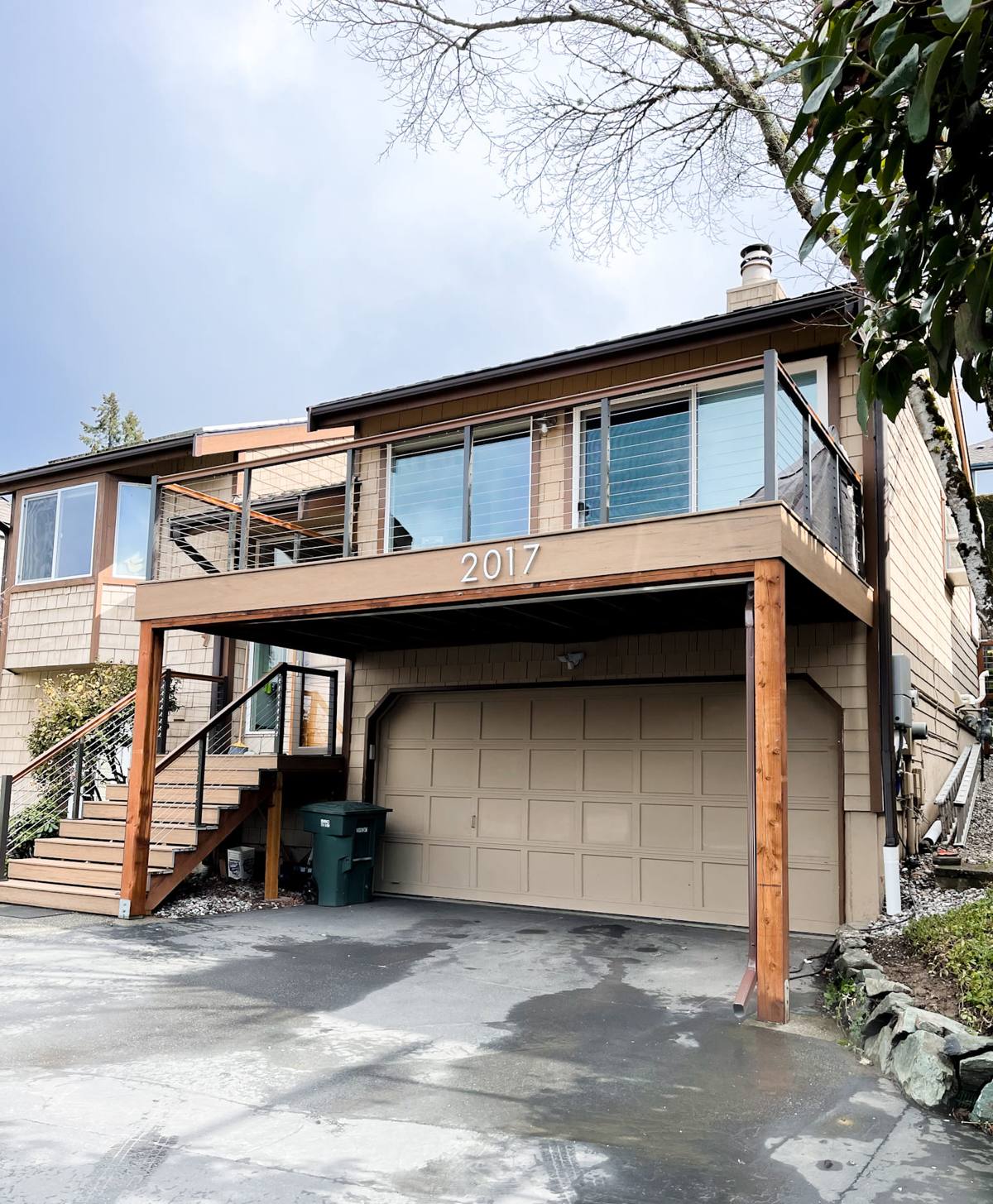
What Bellingham's Weather Actually Does to a Deck
It helps to be specific about what "Pacific Northwest weather" means for a wood or composite structure, because the failure modes are predictable once you understand the cause.
Driving Rain and Standing Moisture
Whatcom County doesn't just get rain — it gets long stretches of low-intensity, wind-driven rain that finds its way into every gap, seam, and fastener hole. On a deck, that moisture has to have somewhere to go. If the framing doesn't shed water, if flashing at the ledger board is missing or installed wrong, or if boards are laid tight with no drainage gap, water sits. Sitting water is what turns a 25-year decking product into a 10-year problem.
Salt Air
Bellingham sits right on the water, and that marine air carries salt further inland than most homeowners expect. Salt accelerates corrosion on any exposed metal — screws, joist hangers, post bases, railing brackets. Once a fastener starts rusting, it weakens, and a weakened fastener in a structural connection is a safety issue, not just a cosmetic one.
Moss and Organic Growth
Moss needs shade, moisture, and time — Cordata's yards, with mature landscaping and tree cover common in newer PNW developments, provide all three for a good chunk of the year. Moss and algae don't just look bad; they hold moisture against the decking surface and make boards dangerously slick, especially on stairs.
Decking Material Options for This Climate
There's no single "best" decking material — there's a best fit for a given budget, sun exposure, and maintenance appetite. Here's how the common options actually perform in a wet, shaded, salt-air environment like ours.
| Material | Moisture Behavior | Moss/Algae Resistance | Maintenance |
|---|---|---|---|
| Pressure-treated wood | Prone to cupping and checking if not sealed regularly | Low — needs regular cleaning | Annual cleaning and re-sealing |
| Cedar | Naturally moisture-resistant, but still moves with wet/dry cycles | Moderate | Periodic oiling or staining |
| Composite decking | Stable, doesn't absorb water like wood | Moderate to good, varies by brand and cap technology | Occasional washing, no sealing |
| PVC/capped polymer | Fully sealed surface, minimal water absorption | Good | Low — periodic rinse |
We install all of these depending on what a homeowner wants, but we're honest about the trade-offs. Composite and capped polymer cost more up front and save on maintenance over the life of the deck. Wood costs less initially but demands a real annual maintenance commitment in a climate this wet, or it will show the effects within a few seasons.
What's Underneath Matters More Than What's On Top
Homeowners naturally focus on the decking boards — the part they see and walk on — but the framing, fasteners, and footings underneath are what determine whether a deck lasts fifteen years or forty.
Framing and Ledger Attachment
The ledger board — where the deck attaches to the house — is the single most common failure point on older decks in this region, because it's the connection most exposed to water intrusion if flashing wasn't installed or was installed incorrectly. Proper ledger flashing directs water away from the house framing instead of trapping it against the rim joist.
Fasteners and Hardware
Given the salt air here, we use corrosion-resistant, code-rated fasteners and structural connectors rather than standard hardware. It costs more per piece and makes no visible difference on install day — but it's the difference between hardware that's still sound in fifteen years and hardware that's rusting through in five.
Footings
Frost depth and soil drainage both factor into footing design. Undersized or shallow footings in saturated Whatcom County soil are a common source of deck movement and settling over time.
Design Considerations Specific to Cordata Properties
Cordata's newer construction tends to bring a few recurring design questions:
- Yards with mature trees or fencing that create shaded, damp zones — these areas need a decking material and gap spacing chosen specifically to resist moss, not the same spec used on a sun-exposed deck.
- Newer subdivisions often have HOA guidelines on deck footprint, railing style, or setback from property lines — worth checking before design work goes too far.
- Sloped or graded lots common to newer development sometimes call for multi-level decks or taller foundation/post work, which changes both engineering and permitting requirements.
- Covered or partially covered decks are popular here for a practical reason — they let homeowners use the space through the rainy months instead of just June through August.
Permits and Code in the City of Bellingham
Most new decks and many deck replacements in the City of Bellingham require a building permit, particularly if the deck is elevated, attached to the house, or involves structural changes like new footings. Requirements typically cover guardrail height, stair rise and run, ledger attachment, and footing depth. We handle the permit process as part of the job — pulling permits, scheduling inspections, and building to the code that applies to the property, not just to what "looks about right." Skipping permits on an attached deck isn't just a compliance issue; it can also affect a home's insurability and resale if the work isn't documented.
Cost Factors Homeowners Should Understand
We don't post fixed prices because every deck is different, but the factors that move the number around are consistent. Broadly, a straightforward wood deck replacement tends to land at the lower end of the range, while a multi-level composite or PVC deck with custom railing and built-in features runs toward the higher end.
| Factor | Why It Matters |
|---|---|
| Decking material | Pressure-treated wood is the least expensive up front; composite and PVC cost more but reduce long-term maintenance |
| Size and levels | Multi-level decks require more framing, footings, and stairs, which adds labor and material |
| Railing style | Cable, glass, and metal railings cost more than standard wood or composite balusters |
| Site access and grading | Sloped Cordata lots sometimes need extra excavation or engineered footings |
| Covered structure | Adding a roof or pergola over the deck adds framing and, often, its own permit review |
Our Process, Start to Finish
Every project follows the same sequence, whether it's a full rebuild or a first-time deck addition:
- On-site visit to assess the existing structure (if any), the lot, sun/shade exposure, and drainage patterns
- Design conversation covering material options, layout, and budget range
- Written proposal with material specifications, not vague allowances
- Permit submission and scheduling with the City of Bellingham where required
- Demolition of the old deck (if applicable) and inspection of ledger/rim joist condition
- Framing, flashing, and footing work, inspected before decking goes down
- Decking, railing, and stair installation
- Final walkthrough and care guidance specific to the material installed
Before we hand a deck back to a homeowner, we walk through what routine care looks like for that specific material — because a composite deck and a cedar deck need different upkeep, and giving someone the wrong instructions is worse than giving none.
Why It Matters to Hire a Crew That Already Works This Area
A contractor who works Whatcom County regularly already knows the local permitting process, has a working relationship with the inspectors who sign off on the job, and has seen firsthand how different decking materials hold up after a few PNW winters — not just what a manufacturer's spec sheet claims. That local track record shows up in details a first-time or out-of-area crew is more likely to miss: correct ledger flashing for our rain patterns, fastener selection that accounts for salt air, and framing that accounts for how wet our soil actually gets. It's the difference between a deck that's built to pass inspection and one that's built to still be solid in twenty years.
If you're planning a new deck or replacing one that's past its prime, we're happy to take a look and talk through what makes sense for your property. The estimate is free, there's no pressure, and you'll get a straight answer about what your yard and budget actually call for — just fill out the form below to get started.