 Bellingham Siding
 Cordata's Climate Is Hard on Decks
Cordata sits in north Bellingham, close enough to Bellingham Bay and the Salish Sea that homes here deal with a steady mix of salt-laden air, driving rain off the water, and the long gray stretch of moss season that defines a Whatcom County winter. None of that is unusual for this part of Washington, but it adds up on an exterior wood structure that's exposed to weather twelve months a year. A deck built or repaired without that reality in mind tends to show problems years before it should.
The moisture itself isn't the only issue — it's how long it stays. Decks on Cordata's tree-shaded, moisture-holding lots often don't get the sun exposure needed to dry out between storms, so wood stays damp longer, fasteners corrode faster, and moss gets a foothold on boards, railings, and stair treads. We've built our repair process around that pattern rather than a generic checklist.
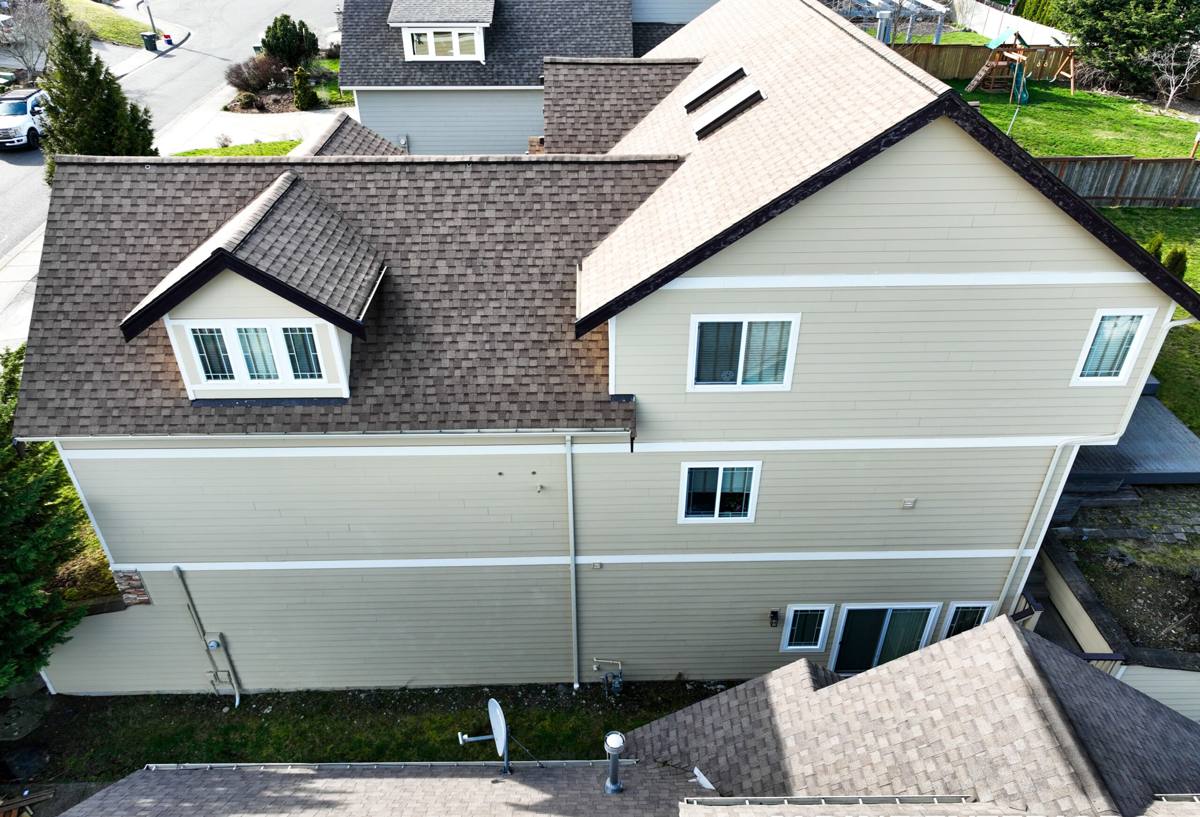
Warning Signs Your Cordata Deck Needs Attention
Most deck failures don't happen overnight. They start small and get ignored because the deck still looks usable. Here's what we tell homeowners to watch for between now and the next wet season:
- Boards that feel spongy, springy, or soft underfoot, especially near the house or stair landings
- Rust streaks running down from fasteners, joist hangers, or hardware
- Gaps opening up where the deck meets the house, a sign the ledger board is separating
- A guardrail or stair rail that wobbles or flexes when you lean on it
- Green or black moss and algae building up on boards that used to look clean
- A musty or mildew smell coming from underneath the deck
- Nails backing out or popping above the board surface
- Visible cracks or splits in support posts, beams, or stair stringers
Any one of these on its own might be minor. Two or three together usually means moisture has been working on the structure for a while, and it's worth a real inspection rather than a patch job.
What a Correct Deck Repair Actually Involves
A deck is only as sound as the parts you can't see from the top. We start every repair by getting underneath and looking at the structural pieces, not just the decking boards, because that's where the water damage that actually threatens safety tends to hide.
The Ledger Board
This is the board that bolts the deck to the house, and it's the single most common failure point on decks in our climate. If it wasn't flashed correctly when the deck was built — or if the flashing has failed over time — water gets trapped between the ledger and the siding and starts rotting both from the inside out. We check this connection first on every job.
Joists and Beams
We look for soft spots, delamination, and rust bleeding out of joist hangers. Galvanized hardware that was fine when it went in ten or fifteen years ago can be badly corroded now, especially on decks that catch salt-carrying wind off the bay. Corroded hangers lose their holding strength well before they look obviously broken.
Posts and Footings
Posts that sit in standing water or direct soil contact rot from the bottom up. We check post bases for rot, check that footings haven't heaved or settled, and confirm posts are still plumb and properly connected at both ends.
Guardrails and Stairs
Railings take a lot of lateral stress and get less attention than decking, but a loose or rotted rail post is a safety issue, not a cosmetic one. We test every rail and stair stringer for movement, not just visible damage.
Materials That Actually Hold Up Here
Not every decking material or fastener performs the same way in a wet, salt-influenced climate. We choose materials based on what we've seen fail — and what hasn't — on decks across Bellingham and Whatcom County, not just on price.
| Material | How It Handles Our Climate | Maintenance |
|---|---|---|
| Pressure-treated lumber | Good rot resistance if properly sealed and re-coated; end cuts and fastener holes need treating too | Re-seal every 1-2 years; regular moss removal |
| Cedar | Naturally moisture- and insect-resistant and ages well, but softer and can hold moss if not cleaned | Periodic cleaning and oil or stain |
| Composite decking | Doesn't rot and resists moss buildup better than wood, consistent performance in wet shade | Occasional wash; no sealing needed |
| Standard galvanized fasteners | Adequate inland, but corrode faster with salt air exposure closer to the bay | Inspect for rust yearly |
| Stainless steel fasteners | Best corrosion resistance for exposed, coastal-influenced conditions | Minimal — this is why we use them on structural connections |
Our standard is stainless or high-grade hot-dip galvanized hardware on structural connections, not the cheapest galvanized fasteners available. It costs a little more up front and can save a full rebuild years down the road.
Repair or Rebuild? How We Make That Call
Not every deck problem means starting over, and not every deck is worth patching. We look at where the damage is, how much of the structure it touches, and the age and condition of the deck before recommending either direction.
| Factor | Leans Toward Repair | Leans Toward Rebuild |
|---|---|---|
| Location of damage | Isolated to a few boards or one rail section | Ledger, multiple joists, or several posts affected |
| Age of structure | Under 15 years, built to a reasonable standard | Original construction quality was poor or unknown |
| Framing condition | Solid, dry framing under isolated surface damage | Soft or rotted framing found in more than one area |
| Code compliance | Already meets current guardrail and connection standards | Missing proper flashing, hangers, or rail spacing |
We'll always give you a straight answer on which side of that line your deck falls on, along with the reasoning, before we talk about cost.
Our Deck Repair Process
- Inspection. We get underneath the deck, check the ledger, joists, posts, and footings, and probe suspect wood rather than just looking at it.
- Written scope. You get a clear explanation of what's damaged, what's sound, and what we recommend — repair or rebuild — with reasoning, not just a number.
- Permits, if needed. Structural repairs involving framing, footings, or guardrails may require a permit through the local building department; we handle that conversation so you don't have to.
- The repair itself. We replace only what's actually compromised when a targeted repair is the right call, using treated or corrosion-resistant materials matched to the rest of the structure.
- Code check. Any hardware, flashing, or railing we touch gets brought up to current standards, even if that wasn't the original complaint.
- Walkthrough. We show you what was done and what to watch for going forward, including a realistic maintenance schedule for this climate.
Guardrails, Flashing, and Getting the Details Right
A lot of deck problems we're called out for in Cordata trace back to shortcuts taken during the original build, not just age. Most local codes call for guardrails in the 36 to 42 inch range with baluster spacing narrow enough that a small child can't slip through, and proper step flashing where the ledger meets the house. When those details were skipped or done poorly, the deck can look fine for years while water quietly does damage behind the scenes. Part of every repair is bringing those connection points up to a standard that will actually hold up to another decade of Whatcom County winters, not just patching the visible symptom.
Moss, Algae, and Long-Term Deck Care
Even a well-built, well-repaired deck needs some ongoing attention in this climate. Moss and algae aren't just a slip hazard — they hold moisture against the wood surface, which shortens the life of both the decking boards and the finish protecting them. A few habits go a long way:
- Sweep leaves and debris off the deck regularly through fall, especially in shaded corners
- Clean moss and algae off with a deck-safe cleaner rather than a pressure washer alone, which can drive water into the wood grain and damage the surface
- Re-seal or re-stain wood decking on a schedule suited to sun exposure — shadier sections typically need it more often
- Keep gutters and downspouts clear so runoff isn't draining directly onto or under the deck
- Check for standing water pooling on the deck surface after storms, which can point to a drainage or slope issue worth addressing
Why a Crew That Already Works Cordata Matters
Deck repair isn't a one-size-fits-all job. A crew that works this specific part of Bellingham regularly has already seen how the mix of shade, moisture, and salt-influenced air affects decks in this neighborhood — which fasteners hold up, where ledger boards tend to fail first, and how quickly moss comes back if it isn't addressed properly the first time. That local pattern recognition means less time spent diagnosing and more time spent fixing the right things.
It also means someone who understands Whatcom County's permitting expectations and can speak plainly about what's actually required versus what's optional. We're not interested in selling a full rebuild when a targeted repair will hold, and we're not interested in a quick patch that leaves the real problem — usually moisture getting somewhere it shouldn't — untouched.
If your deck has any of the warning signs above, or it's just been a while since anyone looked underneath it, we're happy to take a look. Reach out for a free, no-pressure estimate — we'll tell you honestly what we find and what we'd recommend, using the form below.