 Bellingham Siding
 Windows in Cordata Face a Different Climate Than a Sales Brochure Assumes
Cordata sits on the north side of Bellingham, close enough to Bellingham Bay and the Strait of Georgia that salt-laden air is a real factor in how exterior materials age, and far enough into Whatcom County's marine weather pattern that "dry season" is a relative term. Homes here deal with driving horizontal rain off winter storms, long stretches of damp overcast that keeps humidity high for months, and a moss and algae season that can run from October through May. Windows are one of the first places that shows up. Vinyl frames chalk and go brittle, wood sashes swell and stick, and old aluminum-frame units turn into cold spots and condensation magnets the moment the temperature drops.
None of that is exotic weather. It's just steady, low-grade exposure that adds up over 20-30 years. A window that was installed correctly and specified for this climate handles it without drama. A window that was installed with shortcuts, or specified for a drier inland market, tells on itself in year eight or nine with fogged glass, soft framing, or drafts you can feel standing in the room.
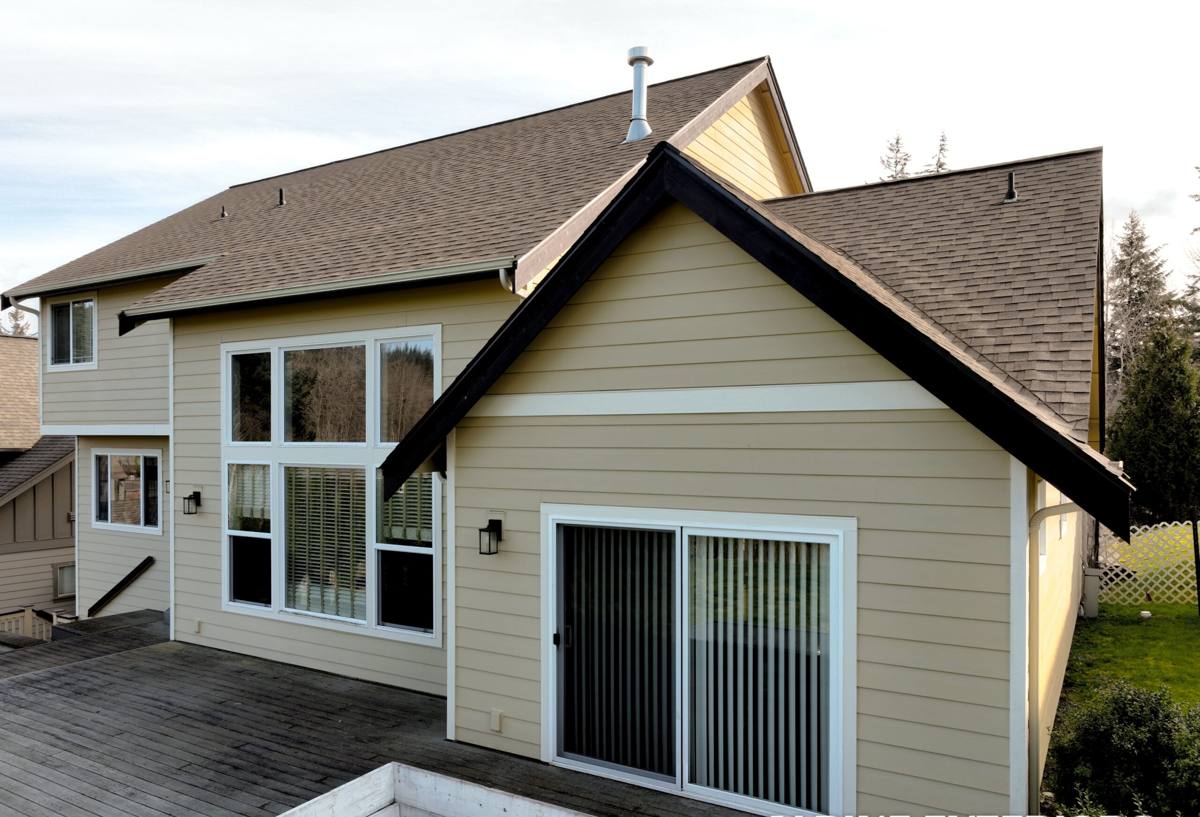
What Cordata Homes Actually Need From Replacement Windows
Moisture Management First, Efficiency Second
Energy efficiency gets top billing in most window marketing, and it matters here — Whatcom County winters are long and heating costs add up. But in this specific area, moisture management has to come first, because a window that leaks air but doesn't leak water is an inconvenience, while a window that lets water past the flashing is a rot problem waiting to happen behind the wall. We treat the water-management details (flashing, sill pans, sealant order, weep paths) as the non-negotiable part of the job and the glass package as the part we tune to the homeowner's budget and goals.
Glass Packages That Make Sense for This Climate
Double-pane low-E glass with argon fill is the practical baseline for this area — it's a meaningful step up from older double-pane or single-pane units without pushing cost into territory that doesn't pay back on a modest Pacific Northwest heating bill. Triple-pane is worth discussing for north- and east-facing rooms that catch the worst of the wind-driven weather, or for homeowners who are sensitive to noise or cold-spot drafts near the glass. We'll give you the honest comparison rather than upselling triple-pane across the board.
Frame Material Trade-Offs, Explained Plainly
Vinyl is the most common choice in this market for good reason: it doesn't rot, it doesn't need repainting, and quality vinyl frames handle damp cycling well. Fiberglass costs more up front but resists expansion and contraction better over decades and holds paint if you want a custom color. Wood-clad units look great and perform well when detailed correctly, but they carry more maintenance responsibility in a climate this wet — any gap in the cladding or sealant becomes a moisture entry point faster here than it would in a drier region. We'll walk you through which fits your home, your exposure, and your maintenance appetite rather than pushing one material as a default.
Signs a Cordata Home's Windows Are Due for Replacement
- Fogging or a visible haze between the panes — the seal has failed and the insulating gas is gone
- Visible condensation or frost on the inside of the glass during cold snaps
- Sashes that stick, won't latch fully, or have swollen so the window won't close flush
- A cold draft you can feel with your hand near the frame, even with the window latched shut
- Soft or discolored wood trim around the window, or paint that keeps failing in the same spot
- Visible daylight or gaps around the frame from outside
- Noticeably higher heating bills compared to similar-sized homes nearby
- Frame material that's chalky, cracked, or pitted from years of weather exposure
How the Job Actually Works
Assessment and Measurement
We start by looking at the existing window openings, not just the glass. Rot, soft framing, or old flashing failures need to be addressed before a new window goes in — installing a good window into a compromised opening just hides the problem for a few years instead of fixing it. We measure for either an insert (new window fits inside the existing frame) or a full-frame replacement (existing frame comes out entirely), and we'll tell you honestly which one your home needs. Full-frame costs more and takes longer, but it's the only option when the existing frame has moisture damage or when you're changing window size or style.
Flashing and Sealant Detail Work
This is the part of the job that doesn't show up in photos but determines whether the window performs for 20 years or 8. Proper flashing integrates with the home's existing water-resistive barrier so water is directed out and down, never trapped behind the new window. Sealant goes in specific locations, not everywhere — a window sealed shut on all four sides with no weep path traps any water that does get in, which is worse than an unsealed gap. We follow manufacturer installation instructions to the letter, because that's also what keeps the warranty valid.
Setting, Shimming, and Finish
The window gets shimmed square and plumb, fastened per the manufacturer's schedule, and insulated around the frame with a product that won't bow the frame inward (over-expanding foam is a common shortcut that causes operating problems down the line). Interior and exterior trim gets finished to match the home, and we clean up before we consider the job done.
Full-Frame Replacement vs. Insert: A Cordata-Specific Comparison
| Factor | Insert Replacement | Full-Frame Replacement |
|---|---|---|
| Best for | Sound existing frame, no rot, keeping same size | Damaged frame, moisture history, or resizing the opening |
| Typical cost | Lower | Higher |
| Time on site per window | Faster | Longer |
| Moisture risk if frame is compromised | Higher — problem gets sealed in, not fixed | Lowest — old frame and any hidden damage is exposed and corrected |
| Glass area gained | Slightly reduced (new frame nests inside old one) | Can restore or increase original glass area |
| Recommended when | Frame inspection comes back clean | Any sign of rot, soft wood, or old flashing failure |
Cost Factors Homeowners Should Understand Upfront
We don't publish fixed prices because every home is different, but the honest cost drivers on a Cordata window project are consistent:
| Factor | Why It Moves the Price |
|---|---|
| Insert vs. full-frame | Full-frame involves more labor, more material, and often carpentry repair |
| Frame material | Vinyl is generally most affordable; fiberglass and wood-clad cost more upfront |
| Glass package | Double-pane low-E is the baseline; triple-pane adds cost for added performance |
| Number and size of openings | Larger and custom-shaped windows cost more than standard sizes |
| Hidden rot or flashing repair | Not knowable until the old window is out; we flag this as a possibility upfront, not a surprise later |
| Access and site conditions | Second-story windows or tight access add labor time |
Why a Crew That Already Works Cordata Matters
Whatcom County building requirements and typical construction styles in this area aren't identical to what you'd find in a drier inland market, and neither is the weather exposure. A crew that regularly works Bellingham and the surrounding neighborhoods already knows the rhythm of the wet season, plans installation timing around it, and doesn't need a learning curve on how to detail flashing for a climate that gets sustained wind-driven rain rather than occasional downpours. Local experience also means straightforward answers when you ask what a particular product actually does in this climate, instead of a script written for a national market.
We also stand behind the work with our own installation warranty in addition to whatever the window manufacturer provides — the two are not the same thing, and homeowners are sometimes surprised to learn that a manufacturer's product warranty won't cover a problem caused by installation error. We'll explain clearly which warranty covers what before you sign anything.
Questions to Ask Before Hiring Anyone for This Job
- Will you do an insert or full-frame replacement, and why, for my specific windows?
- Who is doing the actual installation — your crew or a subcontractor?
- What's your plan if you find rot or moisture damage once the old window is out?
- What warranty do you provide on the installation itself, separate from the manufacturer's warranty?
- Can I see the flashing and sealant detail you plan to use before the work starts?
Maintenance That Actually Extends Window Life Here
Once new windows are in, a little seasonal attention goes a long way in this climate. Rinse pollen, salt residue, and grime off exterior glass and frames a couple times a year — salt air leaves a film that can dull finishes if it's never washed off. Check weep holes at the bottom of the frame periodically to make sure they haven't been painted or caulked shut, since that's what lets any incidental moisture drain back out. Keep an eye on exterior caulking lines and touch them up if you see cracking, especially after a hard winter. None of this is a big job, but skipping it is how a well-installed window ends up with an avoidable problem a decade in.
Ready for an Honest Look at Your Windows
If your Cordata home has windows that are fogging, drafting, sticking, or just past their reasonable service life, we're glad to take a look and give you a straight assessment — insert or full-frame, what glass package actually makes sense for your exposure, and a real cost range before any commitment. Reach out below for a free, no-pressure estimate.