 Bellingham Siding
 Windows Built for Cordata's Particular Climate
Cordata sits far enough inland from Bellingham Bay to feel a little sheltered, but don't let that fool you. This part of Whatcom County still gets the full package: salt-tinged marine air drifting in off the water, long stretches of driving rain that comes in sideways more often than straight down, and a moss and mildew season that can run from October clear through April. Windows here don't fail because of one dramatic storm. They fail slowly, from years of moisture finding its way into places it shouldn't be — sash corners, sill joints, and old glazing that's gone brittle.
A well-built custom window install accounts for all of that from the start. That means the right frame material, the right flashing detail, and installation that respects how water actually moves across a wall in this climate. We've worked on homes throughout Cordata and the surrounding Bellingham neighborhoods long enough to know which details matter here and which ones are just marketing.
What "Custom" Actually Means for a Cordata Home
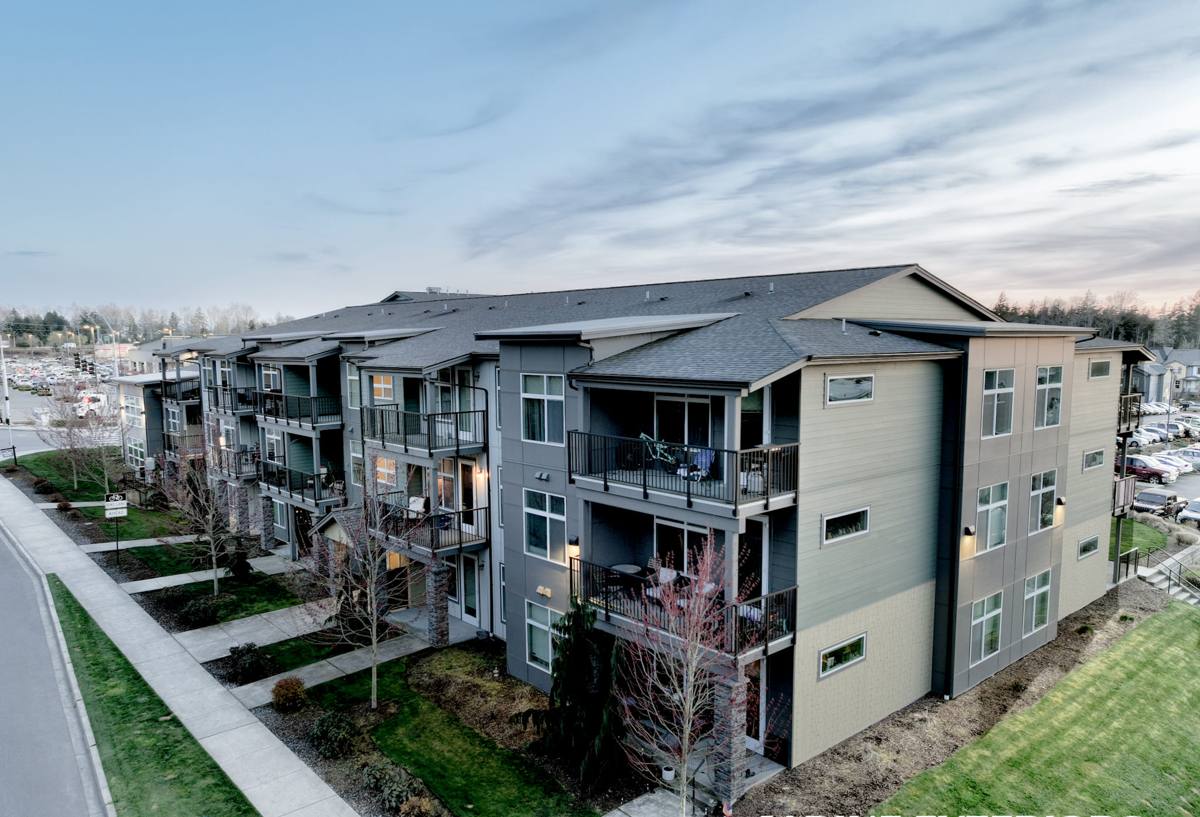
Custom doesn't mean fancy shapes or unusual colors, though we can do that too. For most homeowners here, custom simply means the window is built to the exact opening in your wall rather than forced into a stock size with shims and extra caulk. Cordata has a mix of housing stock — older single-family homes from earlier development waves, newer builds from the neighborhood's more recent growth, and everything in between. Openings settle, framing shifts slightly over decades, and no two houses are perfectly square.
When a window is manufactured to match your actual rough opening, you get a tighter seal with less reliance on caulk and foam to make up the difference. That matters a lot in a climate where wind-driven rain is testing every seam multiple times a month during the wet season.
Common Reasons Cordata Homeowners Replace Windows
- Wood or vinyl frames showing soft spots, discoloration, or visible rot at the bottom corners
- Persistent condensation between panes — a sign the seal has failed and the insulating gas is gone
- Drafts you can feel near the frame even when the window is fully latched
- Difficulty opening, closing, or locking due to warped sashes or swollen frames
- Visible moss or dark staining on exterior sills and trim that keeps coming back
- Simply wanting better energy performance ahead of another wet Whatcom County winter
Frame Materials: What Holds Up Here and What Doesn't
Material choice matters more in a marine climate than in drier parts of the state. Here's how the common options actually perform under Bellingham's rain and humidity, based on what we see when we replace old windows around Cordata.
| Material | Moisture Performance | Maintenance | Typical Lifespan Here |
|---|---|---|---|
| Vinyl | Excellent — won't rot, doesn't absorb water | Low; occasional cleaning | 20-30+ years |
| Fiberglass | Excellent — very stable, minimal expansion/contraction | Low | 30+ years |
| Aluminum-clad wood | Good on the exterior face, but any breach in the cladding exposes wood beneath | Moderate; watch cladding seams and interior wood finish | 15-25 years, dependent on maintenance |
| Bare wood | Poor to fair without diligent upkeep — wood absorbs moisture and swells | High; regular repainting and sealing required | Highly variable, often under 20 years in wet climates |
We don't refuse to install wood-frame windows, but we're upfront with Cordata homeowners about what bare or lightly-clad wood asks of you in a climate this wet. It's not that wood windows are bad products — it's that they demand a maintenance commitment that a lot of busy homeowners underestimate, especially on north- and west-facing walls that catch the worst of the driving rain. Vinyl and fiberglass simply give you more margin for error.
Glass Packages: More Than Just Double vs. Triple Pane
Most new windows sold today are at least double-pane with some form of low-E coating, and that's a reasonable baseline. But the details inside the glass unit matter more than most homeowners realize:
What to look for
- Low-E coating tuned for your exposure — a west-facing living room window benefits from different solar control than a shaded north-facing bedroom window
- Argon or krypton gas fill — improves insulation, but only if the seal holds long-term, which is why installation quality matters as much as the glass spec
- Warm-edge spacer systems — the material separating the panes affects both insulation and how well the seal resists the constant humidity cycling common here
- Triple-pane where it earns its keep — worth considering on exposed walls or rooms that run cold, though it's not always necessary on every elevation
We'll walk through glass options based on which direction each window faces, not sell you the same package for every opening in the house.
Installation Detail: Where Most Failures Actually Start
In our experience, a poorly installed high-end window fails faster than a well-installed mid-range one. Installation is where the climate-specific knowledge really pays off, and it's the part homeowners can't easily judge just by looking at the finished trim.
The details that matter in Whatcom County's rain
- Sill pan flashing — a properly sloped, sealed pan under the window gives any water that gets past the frame a way out instead of a place to pool
- Weather-resistive barrier integration — flashing tape needs to be layered correctly with the house wrap, shingle-style, so water sheds outward and down, never inward
- Proper shimming and squaring — an out-of-square install stresses the sash and can crack seals well before the window's rated lifespan
- Interior and exterior sealant done right — sealed on the outside to block bulk water, but with a way for any incidental moisture to escape rather than get trapped in the wall cavity
This is the work nobody sees once the trim goes back on, which is exactly why it's worth asking a contractor to explain their flashing method before you sign anything.
How Moss Season Factors In
Cordata's tree cover and shaded lots are part of what makes the neighborhood pleasant, but that same shade keeps surfaces damp longer after a storm. Around windows, that shows up as moss and algae staining on sills, trim, and the caulk lines themselves. It's mostly cosmetic on sound materials, but on wood trim or aging caulk, sustained moss growth holds moisture against the surface and accelerates whatever decay is already starting. Part of a good window replacement is choosing trim and sill materials that don't give moss much to hold onto, and detailing the sill with enough slope that water actually runs off instead of sitting.
Our Process for a Cordata Window Project
- On-site assessment — we look at existing frames, check for hidden moisture damage around openings, and measure each window individually since older homes rarely have uniform openings
- Material and glass recommendations by elevation — not a one-size answer for the whole house, but a plan based on sun exposure, wind exposure, and room use
- Custom manufacturing — windows built to your actual openings rather than adjusted on-site to fit stock sizes
- Removal and prep — old windows come out carefully, and we check the framing and sheathing underneath for any moisture damage before anything new goes in
- Flashing and installation — sill pans, weather-resistive barrier integration, and squared installation done to hold up through Whatcom County's wet season, not just look good on install day
- Interior and exterior finish work — trim, caulking, and cleanup so the job looks finished inside and out
- Final walkthrough — every window operated and checked with you before we consider the job done
Cost Factors Worth Understanding
We won't quote a number without seeing the actual openings, but here's what tends to move the price on a Cordata project, generally in the low-to-mid thousands per window installed, depending on size and specification:
| Factor | Why It Affects Cost |
|---|---|
| Frame material | Fiberglass and premium vinyl cost more upfront than economy vinyl, but often less over time given lower maintenance and longer lifespan here |
| Window size and configuration | Larger units, bay/bow configurations, and custom shapes require more material and labor |
| Number of openings | Whole-house projects typically bring a better per-window rate than single replacements |
| Condition of existing framing | Hidden rot or moisture damage found during removal adds repair work before new windows can go in |
| Glass package | Upgraded low-E coatings, gas fill, or triple-pane glass add cost but also long-term performance |
| Trim and finish complexity | Matching existing trim profiles or doing extensive interior finish work adds labor time |
Signs It's Time to Stop Patching and Replace
Caulking and weatherstripping can buy a window a few more seasons, but they don't fix a failed seal or rotting frame. If you're re-caulking the same window every year, seeing fogged glass that doesn't clear, or feeling drafts no amount of weatherstripping solves, you're spending money maintaining a problem instead of solving it. In a climate that tests window seals as often as ours does, that math tends to favor replacement sooner than homeowners expect.
Why Local Installation Experience Matters
Window manufacturers write installation guidelines for a generic climate. Whatcom County isn't generic. A crew that installs windows in Cordata regularly knows which elevations take the worst weather, how long moss season actually runs here, and how the area's mix of older and newer construction affects what's hiding behind existing trim. That's knowledge you only get from doing the work in this specific place, not from a manufacturer's install manual.
If your windows are drafty, fogged, or just tired of fighting Whatcom County's weather, we're happy to take a look and give you a straightforward, no-pressure estimate. Use the form below to get started.