 Bellingham Siding
 Building a Deck for Edgemoor's Conditions, Not a Generic Deck
Edgemoor sits close enough to Bellingham Bay that its homes deal with a different set of exterior stresses than a house a few miles inland in Whatcom County. Salt-laden air moves through the neighborhood, tree canopy keeps a lot of yards shaded and damp, and the wind off the water tends to drive rain sideways instead of straight down. A deck built with generic, big-box specs will show its age here faster than the same deck would in a drier, less exposed part of the county. That's the starting point for how we think about every Edgemoor deck project: what does this specific lot, this specific exposure, and this specific tree cover actually put the structure through over a Bellingham winter?
We're not going to pretend every yard in Edgemoor is identical. Some lots get more direct salt exposure than others, some are shaded most of the day, and some sit on slopes that change how water moves underneath the deck. What doesn't change is the general climate load the whole neighborhood shares, and that's what drives the material, fastener, and construction choices below.
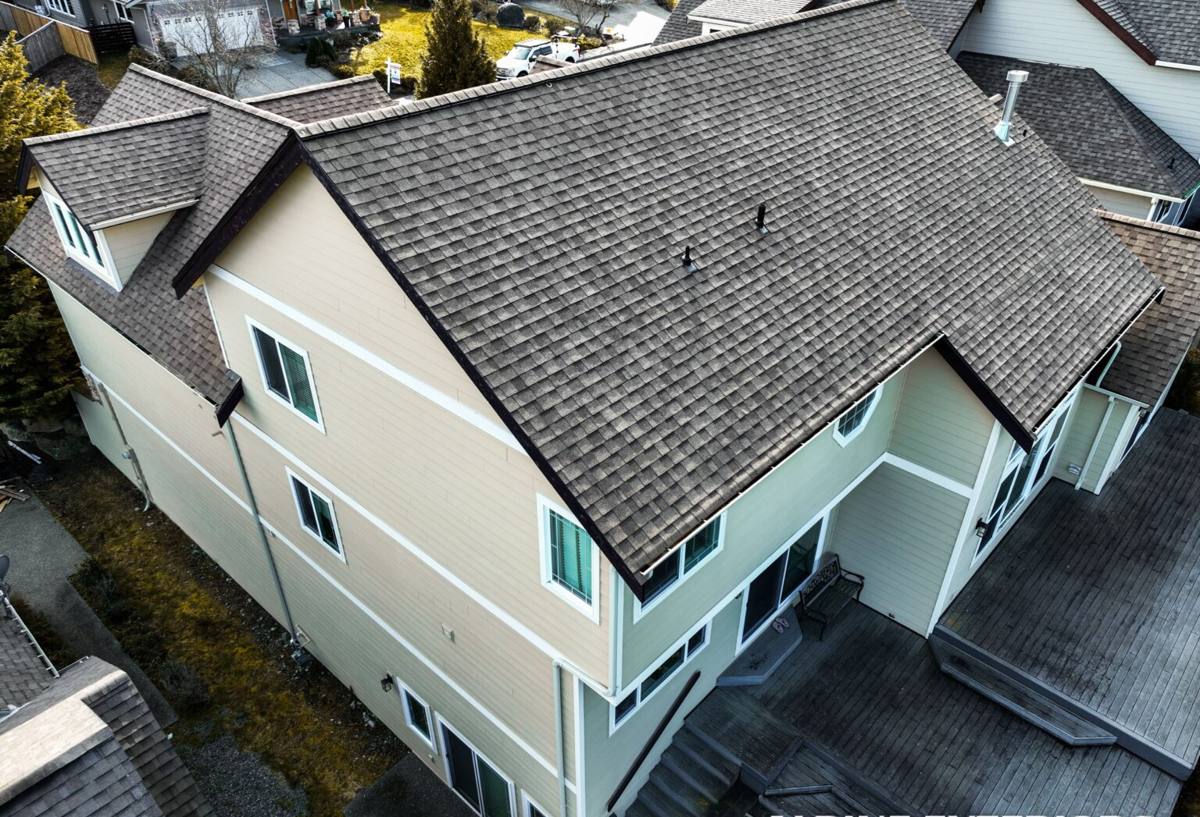
What Bellingham Bay's Salt Air Does to a Deck Over Time
Salt air is corrosive to bare or poorly coated metal, and a deck has a lot of metal in it — post bases, joist hangers, structural screws, bolts, and flashing. On a deck built to a minimum-code spec with standard galvanized hardware, that corrosion shows up first as rust streaking down framing members, then as hardware that's visibly pitted, and eventually as connections that have lost real holding strength. This isn't a cosmetic issue; a corroded joist hanger or a rusted-through ledger bolt is a structural problem, not a paint problem.
The fix isn't complicated, it just has to be done up front. Stainless steel or heavy-duty coated fasteners rated for coastal and treated-lumber exposure cost more per box than standard hardware, but the difference over the life of a deck is small compared to the cost of re-hanging joists or replacing a ledger connection in ten years because the original hardware failed quietly under the decking boards where nobody could see it.
Where Corrosion Shows Up First
- Joist hangers and post-to-beam connectors, especially where they sit in standing moisture
- Ledger board bolts and flashing where the deck attaches to the house
- Screw heads on the decking surface, particularly on the shaded side of the structure
- Any hardware installed with mismatched metals, which accelerates galvanic corrosion
Driving Rain, Moss, and the Parts of a Deck That Fail First
Whatcom County's long wet season isn't a surprise to anyone who lives here, but a deck experiences it differently than a roof or a wall does. Water doesn't just fall on a deck — it pools on horizontal surfaces, gets driven under railings and against the house by wind, and stays trapped underneath the structure where sun and air movement can't dry it out. Combine that with the shade many Edgemoor lots get from mature trees, and you get the conditions moss and algae need to take hold: constant low light, constant moisture, and organic debris collecting in board gaps.
Moss on a deck surface is more than a slip hazard, though it's absolutely that. It holds moisture directly against the wood or composite surface far longer than open air would, which speeds up rot in wood decking and can void warranties on composite products if debris isn't cleared regularly. The ledger connection — where the deck framing bolts into the house — is the single most consequence-heavy spot for water intrusion, since a poorly flashed ledger can let water into the house's wall framing, not just the deck.
A correct deck build in this climate treats water management as a structural requirement, not a finishing touch:
- Proper ledger flashing that sheds water away from the house framing, not just a bead of caulk
- Gapped decking boards installed with consistent spacing so water and debris don't collect
- Joist tape or cap protection on framing lumber to slow rot at the fastener penetration points
- Grading and airflow underneath the deck so the space can actually dry between rain events
- Railing post connections detailed to shed water rather than trap it at the base
Choosing Decking and Framing Materials That Hold Up Here
Framing
Pressure-treated lumber is still the standard for deck framing, and for good reason — it's structurally proven and cost-effective. What matters in this climate is using framing lumber rated for ground contact where it's within the required distance of soil or standing water, and pairing it with fasteners and connectors rated for that same treated-lumber chemistry so you don't get accelerated corrosion from a mismatch.
Decking Surface
For the visible decking boards, homeowners are choosing between a few real options, each with honest trade-offs. We'll walk through what each one actually asks of you in a salt-air, high-moisture, moss-prone yard rather than just quoting a price per square foot.
| Material | Upfront Cost | Maintenance Here | Realistic Lifespan |
|---|---|---|---|
| Pressure-treated pine | Lowest | Needs re-sealing every 1-2 years; prone to moss staining if not cleaned | 10-15 years with upkeep |
| Cedar | Moderate | Needs regular sealing or staining; naturally rot-resistant but not moss-resistant | 15-20 years with upkeep |
| Composite (capped) | Higher | Low — periodic washing to prevent moss buildup, no sealing or staining | 25+ years |
| PVC decking | Highest | Lowest — fully non-organic surface, moss can still grow on top but won't feed on it | 25-30+ years |
There's no universally "right" answer here — it depends on budget, how much upkeep you actually want to do, and how long you plan to be in the house. What we won't do is install a decking product without being upfront about its maintenance reality in this climate. A cedar deck that isn't resealed on schedule in a shaded, damp Edgemoor yard will weather and gray faster than the same board would in a sunnier, drier location, and that's worth knowing before you commit to it, not after.
Code, Permits, and Structural Basics in Whatcom County
Most new decks and significant deck replacements in Bellingham require a building permit, and the requirements cover things homeowners don't always think about until they come up: footing depth and size based on soil conditions, ledger attachment method to the house, guardrail height and baluster spacing for elevated decks, and stair geometry if the deck has steps. Skipping the permit process doesn't just create legal exposure — it also means nobody with code expertise ever checked the footing depth or ledger connection, which are exactly the two failure points that matter most in wet, shifting Pacific Northwest soil.
We pull permits and handle inspections as a standard part of the job, not an add-on. On a lot with significant tree cover or slope — common in Edgemoor — the footing plan sometimes needs adjusting once we see actual soil conditions on site, and that's a conversation we have with you before pouring anything, not after.
Our Process for an Edgemoor Deck Build
1. Site Walk and Honest Assessment
We look at sun exposure, tree cover, drainage patterns, and how close the lot sits to salt air exposure from the bay. This tells us how aggressive the moisture and corrosion protection needs to be for that specific yard.
2. Design and Material Selection
We talk through decking material trade-offs against your budget and how much maintenance you actually want to do, then design the framing and railing layout to fit the house and the way you'll use the space.
3. Permitting
We prepare and submit the permit package to the county or city as required, including footing and ledger details, and handle the inspection scheduling.
4. Construction
Ledger flashing, footings, framing, decking, and railings go in with fasteners and hardware matched to the treated lumber and rated for coastal exposure — not whatever's cheapest at the moment.
5. Final Walkthrough
We go over the finished deck with you, including what maintenance it actually needs on your specific schedule given the shade and moisture on your lot.
Maintaining a New Deck Through Bellingham's Wet Season
A well-built deck in this climate still needs seasonal attention — the difference is that a correctly built one needs less of it, and what it needs is straightforward rather than urgent repair work.
- Sweep leaves and debris out of board gaps regularly, especially in fall and under tree canopy
- Wash off moss and algae buildup at least once a year, more often on shaded sections
- Check railing post connections annually for movement or water staining at the base
- Inspect the ledger flashing line where the deck meets the house for gaps or caulk failure
- Re-seal or re-stain wood decking on the schedule the product actually requires, not "when it looks bad"
- Clear standing water or debris from underneath the deck after major storms
Signs Your Current Deck Is Past Repair
Not every aging deck needs full replacement, but there are signs that point toward it rather than a patch job:
- Soft or spongy spots in the decking surface, which usually means rot underneath, not just on top
- Visible rust streaking from hardware onto the framing or decking below
- A ledger board that's separated, water-stained, or shows soft wood at the house connection
- Railings that flex or move at the post base
- Persistent moss growth that returns within weeks of cleaning, suggesting the surface is staying wet longer than it should
If you're seeing one or two of these, a repair conversation makes sense. If several show up together, especially anything involving the ledger connection or footing movement, that's usually a sign the structure has reached the end of what's worth repairing.
Why a Crew That Already Works in Edgemoor Matters
A deck built by a crew that hasn't worked this specific stretch of Whatcom County tends to default to generic specs — standard hardware, standard sealing schedule, standard footing assumptions — because that's what works in most places. A crew that already builds and repairs decks in Edgemoor has already seen which hardware holds up against the salt air coming off the bay, which yards need extra attention to drainage because of tree cover, and which parts of a deck fail first when a Bellingham winter sets in. That's not a marketing point, it's the difference between a deck that needs real attention in eight years and one that's still solid in twenty-five.
We treat every Edgemoor deck project as a structure that has to survive this specific climate, not a generic build dropped into a Pacific Northwest zip code. That shows up in the fasteners we choose, how we detail the ledger flashing, and what we tell you honestly about the maintenance a given material will actually require in your yard.
If you're considering a new deck, a replacement, or want an honest opinion on whether your current deck is repairable, we're happy to take a look. The estimate is free and there's no pressure to move forward — just a straight assessment of what your deck needs and what it would take to build it right.